
In the realm of precision manufacturing, the investment casting process stands out as a versatile method for producing complex metal parts with high dimensional accuracy and excellent surface finish. As an engineer deeply involved in this field, I have encountered numerous challenges in optimizing the tree assembly for specific components, particularly elbow fittings. The tree assembly, akin to the gating system in conventional casting, is a critical aspect of the investment casting process that directly influences product quality, yield, and cost-effectiveness. This article delves into a comprehensive study on improving the tree assembly for stainless steel elbow castings, drawing from practical experiences and analytical insights. Through detailed examination of different assembly schemes, we aim to highlight the multifaceted considerations required in the investment casting process to achieve defect-free components.
The investment casting process involves several sequential steps: pattern creation, tree assembly, shell building, dewaxing, sintering, pouring, and post-processing. Each step interplays with the others, making the tree assembly a pivotal design element. For elbow components, which are commonly used in industries like chemical processing and shipbuilding due to their simple geometry, the tree assembly might seem straightforward. However, as we discovered in large-scale production runs, subtle variations in the assembly scheme can lead to significant defects such as shell weakness, wax entrapment, shell thickening, and shrinkage porosity. In this discussion, we will explore three distinct tree assembly schemes, analyze their associated issues, and present an improved approach that balances multiple process factors. Throughout, we will emphasize the importance of holistic design in the investment casting process, incorporating principles from fluid dynamics, heat transfer, and materials science.
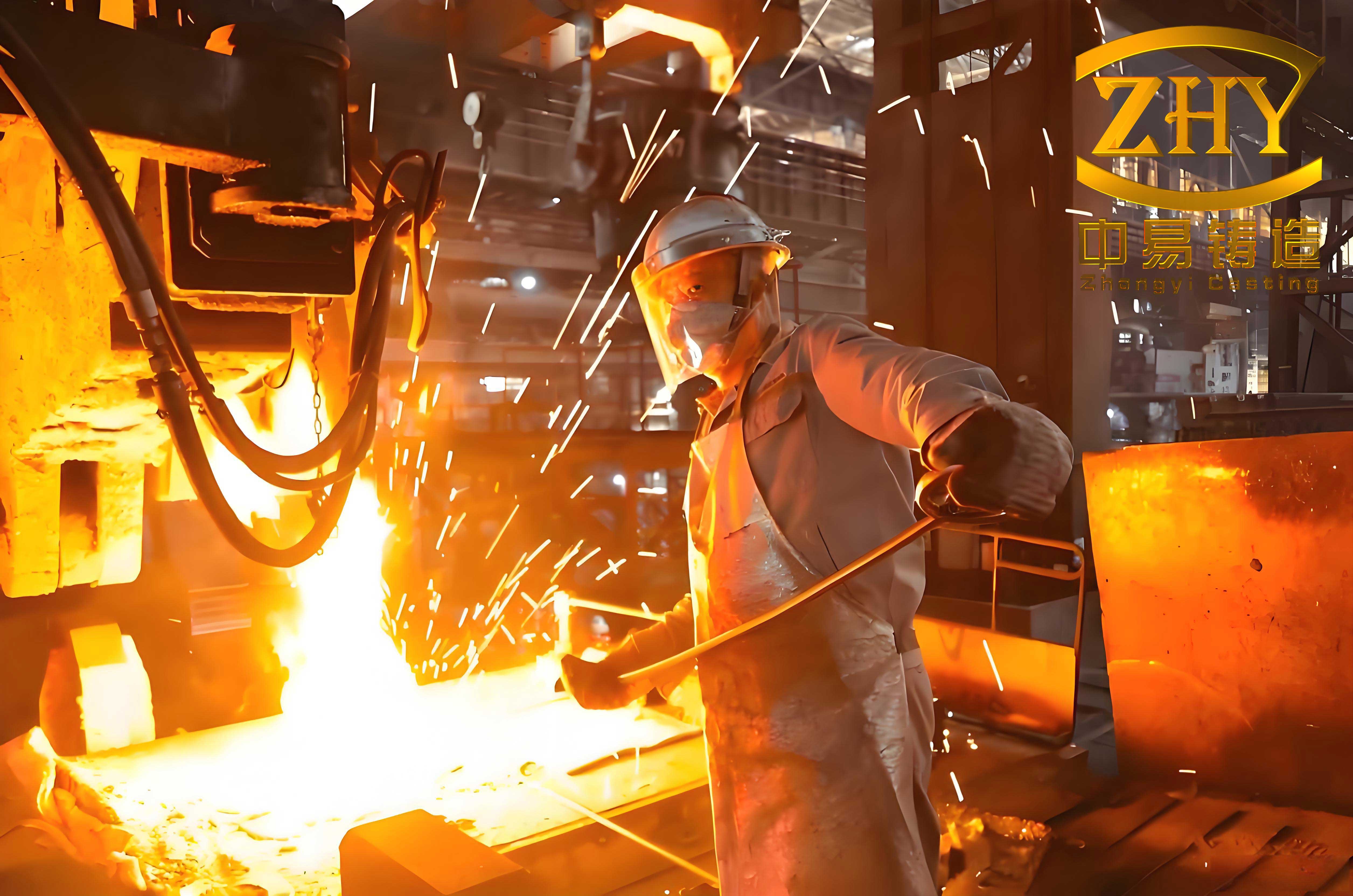
To set the stage, let’s review the fundamental principles of the investment casting process. The process begins with the fabrication of wax patterns, which are then assembled onto a central wax sprue to form a tree. This tree is repeatedly coated with ceramic slurry and stucco to build a multi-layered shell. After drying, the wax is melted out (dewaxing) to leave a hollow ceramic mold, which is then fired to achieve strength and remove residues. Molten metal is poured into the mold, and after solidification, the shell is removed to reveal the castings, which are then cut from the tree and finished. The tree assembly must facilitate efficient wax removal, proper metal feeding for solidification shrinkage, ease of shell building, and convenient cutting post-casting. Moreover, the investment casting process demands high yield, often measured as the casting yield ratio, defined as:
$$ \text{Casting Yield} = \frac{\text{Weight of Castings}}{\text{Weight of Metal Poured}} \times 100\% $$
Optimizing this yield while ensuring quality is a key goal in the investment casting process. For elbow components, the 90-degree bend introduces challenges in slurry coating, wax drainage, and heat dissipation during solidification. Our investigation focused on three tree assembly schemes, each with unique orientations and gating configurations. We will describe each scheme, identify defects, and derive改进 through analytical and empirical methods.
Scheme 1: Vertical Gating with Elbow Toes Pointing Upward
The first scheme involved a vertical sprue with two elbows assembled on each side, totaling four pieces per tree. The elbows were oriented with their 90-degree bend (toe) pointing toward the pouring cup. This design aimed to simplify assembly and maximize density. However, during shell building in the investment casting process, we observed a phenomenon called “air entrapment” at the inner corner of the elbow bend. When the tree was dipped into the ceramic slurry, the slurry entered the elbow cavity from both ends, but air became trapped at the sharp 90-degree corner, preventing complete coating. This resulted in a locally thin shell area, as illustrated in the schematic. Mathematically, the air entrapment can be modeled using fluid dynamics equations. For instance, the pressure difference $\Delta P$ at the corner can be expressed as:
$$ \Delta P = \rho g h + \frac{1}{2} \rho v^2 $$
where $\rho$ is the slurry density, $g$ is gravity, $h$ is the height difference, and $v$ is the slurry velocity. In practice, this led to “run-out” or “bleeding” defects during pouring, where molten metal penetrated the weak shell area. Additionally, during dewaxing, the tree was inverted to melt out the wax. Since the elbow toe was lower than the ingates, wax became trapped in the bend, as shown in the diagram. The residual wax upon burnout created ash that contaminated the mold surface, affecting casting quality. The wax drainage issue can be quantified by considering the flow resistance. The Poiseuille equation for laminar flow in a cylindrical channel gives:
$$ Q = \frac{\pi r^4 \Delta P}{8 \mu L} $$
where $Q$ is the flow rate, $r$ is the channel radius, $\mu$ is the wax viscosity, and $L$ is the channel length. For the trapped wax, $L$ effectively increased due to the bend, reducing $Q$ and causing retention. Thus, Scheme 1 was deemed unsuitable for the investment casting process due to shell integrity and wax removal problems.
Scheme 2: Vertical Gating with Elbow Toes Pointing Downward
In Scheme 2, we maintained the same vertical sprue and four-piece assembly, but reoriented the elbows so that the 90-degree bend pointed downward. This addressed the dewaxing issue: during inverted dewaxing, the wax could drain freely from the bend, as it was now at the highest point relative to the ingates. The drainage efficiency improved significantly, minimizing wax residue and ash formation. However, new problems emerged in the investment casting process. During shell building, after each slurry coating, the tree was hung to dry. Excess slurry tended to flow downward due to gravity and accumulate at the elbow toe, creating a localized thickening of the shell layers. This “slurry pooling” effect can be described by a mass accumulation model. If we denote the slurry deposition rate per layer as $m_i$ and the drainage factor as $\alpha$, the accumulated mass $M$ at the toe after $n$ layers is:
$$ M = \sum_{i=1}^{n} m_i (1 – \alpha_i) $$
where $\alpha_i$ decreases with viscosity and drying time. Over multiple layers, this led to a disproportionately thick shell at the bend. Consequently, during shell removal post-casting, the thick shell was difficult to break away, increasing labor and risk of damage. More critically, the thick shell acted as an insulator, creating a “hot spot” during solidification. This retarded cooling at the elbow toe, leading to shrinkage porosity and micro-shrinkage defects. After acid cleaning, these defects manifested as “acid eruption” or “bleeding spots.” The solidification time $t_s$ at a point can be estimated using Chvorinov’s rule:
$$ t_s = k \left( \frac{V}{A} \right)^2 $$
where $k$ is a mold constant, $V$ is volume, and $A$ is surface area. For the elbow toe, the effective $A$ decreased due to thick shell insulation, increasing $t_s$ and promoting shrinkage. Thus, Scheme 2, while solving dewaxing, introduced shell handling and solidification issues in the investment casting process.
Scheme 3: Inclined Orientation with Modified Gating
Based on the lessons from Schemes 1 and 2, we developed Scheme 3 as an改进. Here, the elbows were assembled with the 90-degree bend tilted at an angle, neither vertical nor horizontal, but inclined. This orientation required widening one of the vertical sprues to accommodate the assembly while maintaining symmetry. The key advantages were twofold. First, during dewaxing, the inclined orientation ensured that no low points trapped wax; the bend was positioned such that wax could flow out smoothly through the ingates. Second, during shell building, the inclined surface allowed excess slurry to drain off rather than pool, preventing localized thickening. The drainage angle $\theta$ relative to horizontal influenced the slurry flow; we optimized it empirically to around 30-45 degrees. The force balance on a slurry droplet on an inclined plane gives:
$$ mg \sin \theta = \mu_d v $$
where $m$ is droplet mass, $\mu_d$ is dynamic viscosity, and $v$ is velocity. A steeper $\theta$ promotes drainage but may affect assembly stability. Additionally, the modified gating ensured adequate feeding for solidification. We introduced a tapered sprue design to enhance pressure head and feeding efficiency. The metal flow during pouring can be analyzed using Bernoulli’s equation:
$$ P + \frac{1}{2} \rho v^2 + \rho g h = \text{constant} $$
where $P$ is pressure, $v$ is velocity, and $h$ is height. The widened sprue helped maintain velocity and reduce turbulence. Moreover, to address shrinkage, we incorporated small feeders at critical sections based on thermal analysis. The feeder size can be determined using the modulus method, where the modulus $M$ is:
$$ M = \frac{V}{A} $$
and the feeder modulus $M_f$ should satisfy $M_f > 1.2 M_c$ for the casting section $M_c$. Through these adjustments, Scheme 3 produced sound castings without the defects observed earlier. The investment casting process benefits greatly from such integrated design thinking.
To summarize the comparative analysis, the following table outlines the key parameters and outcomes for each scheme in the investment casting process:
| Scheme | Orientation | Dewaxing Efficiency | Shell Uniformity | Solidification Defects | Casting Yield |
|---|---|---|---|---|---|
| Scheme 1 | Toe upward | Poor (wax trapped) | Poor (thin at bend) | Run-out, surface defects | ~65% |
| Scheme 2 | Toe downward | Good (wax drained) | Poor (thick at bend) | Shrinkage porosity | ~70% |
| Scheme 3 | Inclined toe | Excellent (wax free) | Good (uniform) | Minimal | ~85% |
The table clearly shows the progressive improvement in the investment casting process metrics. Furthermore, we can quantify the thermal effects using numerical simulations. For instance, the temperature distribution $T(x,y,z,t)$ in the mold during pouring can be modeled by the heat conduction equation:
$$ \rho C_p \frac{\partial T}{\partial t} = k \nabla^2 T + \dot{q} $$
where $\rho$ is density, $C_p$ is specific heat, $k$ is thermal conductivity, and $\dot{q}$ is heat source from solidification. Using finite element analysis, we predicted hot spots and optimized the tree assembly accordingly. This highlights how advanced modeling can augment the investment casting process.
Beyond the elbow case study, the investment casting process demands attention to numerous factors. For tree assembly design, we must consider:
- Feeding and Solidification: Ensure adequate metal feed to compensate for shrinkage. Use of feeders, chills, and proper gating geometry is crucial. The feeding distance $L_f$ can be estimated as $L_f = 4.5 \sqrt{t}$ for steel, where $t$ is section thickness.
- Dewaxing Compatibility: Orient patterns to allow complete wax removal. Avoid closed cavities or low points. The wax flow rate should exceed the melting rate to prevent residue.
- Shell Building Ease: Promote uniform slurry coating and stucco adhesion. Avoid sharp corners or deep recesses that cause air entrapment or slurry pooling.
- Cutting and Finishing: Design gates and connections that are easy to cut without damaging the casting. Minimize gate cross-section to reduce cleanup effort.
- Yield Optimization: Maximize the number of parts per tree while maintaining quality. The yield equation can be extended to include tree weight $W_t$: $$ \text{Yield} = \frac{N \cdot W_c}{W_t + W_m} $$ where $N$ is number of castings, $W_c$ is casting weight, and $W_m$ is metal poured.
In the investment casting process, each of these factors interrelates. For example, adding feeders improves solidification but reduces yield, so a balance must be struck. Our experience with elbow components underscores the need for iterative design and testing. We also experimented with different slurry compositions and drying parameters to complement the tree assembly. The slurry viscosity $\eta$ as a function of temperature $T$ can be approximated by the Arrhenius equation:
$$ \eta = A e^{E_a / (RT)} $$
where $A$ is a constant, $E_a$ is activation energy, and $R$ is the gas constant. Controlling viscosity helped achieve better coating in complex geometries like elbows.
Looking at broader applications, the investment casting process is used for aerospace, medical, and automotive components. The principles discussed here—such as orientation effects on shell quality and dewaxing—are universally applicable. For instance, in turbine blade casting, similar issues with trailing edge cooling can arise, and inclined assembly might be beneficial. The investment casting process continually evolves with materials and technologies, such as using additive manufacturing for pattern production, which allows more flexible tree designs. However, the core challenges remain: achieving defect-free castings through holistic process integration.
In conclusion, the investment casting process is a sophisticated manufacturing method where tree assembly plays a decisive role. Through detailed analysis of three schemes for elbow castings, we demonstrated how orientation affects shell building, dewaxing, and solidification. Scheme 3, with inclined elbow orientation and modified gating, emerged as the optimal solution, addressing prior defects and enhancing yield. This case study reinforces that successful tree design must balance multiple factors: feeding requirements, wax removal efficiency, shell uniformity, and post-processing ease. By applying engineering principles—from fluid dynamics to heat transfer—and leveraging empirical data, we can refine the investment casting process for diverse components. Future work could explore automated optimization algorithms for tree assembly, further pushing the boundaries of precision casting. Ultimately, a systematic approach to the investment casting process ensures high-quality production, meeting the demands of modern industry.
To further illustrate the importance of integrated design in the investment casting process, consider the following extended table comparing key process parameters across different component geometries:
| Component Type | Typical Tree Assembly Challenges | Recommended Solutions | Impact on Investment Casting Process |
|---|---|---|---|
| Elbow fittings | Sharp bends causing air entrapment and slurry pooling | Inclined orientation, widened sprues | Improved shell integrity and dewaxing |
| Turbine blades | Thin sections requiring precise feeding | Directional solidification, use of chills | Enhanced mechanical properties |
| Medical implants | Complex surfaces needing uniform coating | Rotary dipping, optimized slurry rheology | Better surface finish and accuracy |
| Valve bodies | Internal cavities complicating dewaxing | Core inserts, strategic gating | Reduced defects and higher yield |
This table underscores how tailored approaches in the investment casting process can address specific challenges. Moreover, the economic aspect cannot be ignored. The total cost $C_t$ of the investment casting process includes material, labor, and energy costs, which are influenced by tree design:
$$ C_t = C_m + C_l + C_e + C_s $$
where $C_m$ is metal cost, $C_l$ is labor, $C_e$ is energy, and $C_s$ is scrap cost. An efficient tree assembly reduces $C_s$ and improves overall profitability. Therefore, continuous improvement in the investment casting process is essential for competitiveness.
In summary, the investment casting process demands a multidisciplinary approach, combining metallurgy, chemistry, and mechanical engineering. The elbow case study serves as a microcosm of broader principles: careful design, thorough analysis, and iterative refinement are key to mastering the investment casting process. As technologies advance, we anticipate further innovations in tree assembly automation, real-time monitoring, and simulation-driven design, all aimed at perfecting the investment casting process for future generations of precision components.