
Grey cast iron remains a cornerstone material in the manufacturing of critical components like diesel engine cylinder blocks and heads, owing to its exceptional castability, favorable comprehensive mechanical properties, and relatively low cost. In my extensive experience within the foundry industry, I have consistently observed that the precise control of alloying elements is paramount for enhancing the material’s performance while managing production expenses. This article delves into a detailed investigation I conducted, focusing on the influence of manganese (Mn) and sulfur (S) on the mechanical properties of grey cast iron, with the dual aim of improving tensile strength and hardness while exploring avenues for cost reduction. The ubiquitous presence of grey cast iron in automotive and heavy machinery sectors necessitates a deep understanding of its metallurgy, and this work presents a systematic approach to optimizing its composition through designed experimentation and production validation.
The fundamental appeal of grey cast iron lies in its unique graphite microstructure, which imparts excellent damping capacity, machinability, and thermal conductivity. However, achieving the desired balance of strength and ductility often requires careful alloying and inoculation practices. Among the various elements, manganese and sulfur have historically been subjects of both interest and debate. Manganese is traditionally viewed as a carbide stabilizer and a mild strengthener, while sulfur, often considered a detrimental impurity, is now recognized for its potential role in graphite morphology modification and nucleation enhancement. My investigation was driven by the hypothesis that a synergistic, low-level control of these elements could yield superior mechanical properties without escalating material costs, a premise crucial for competitive foundry operations specializing in high-integrity castings like cylinder blocks and heads.
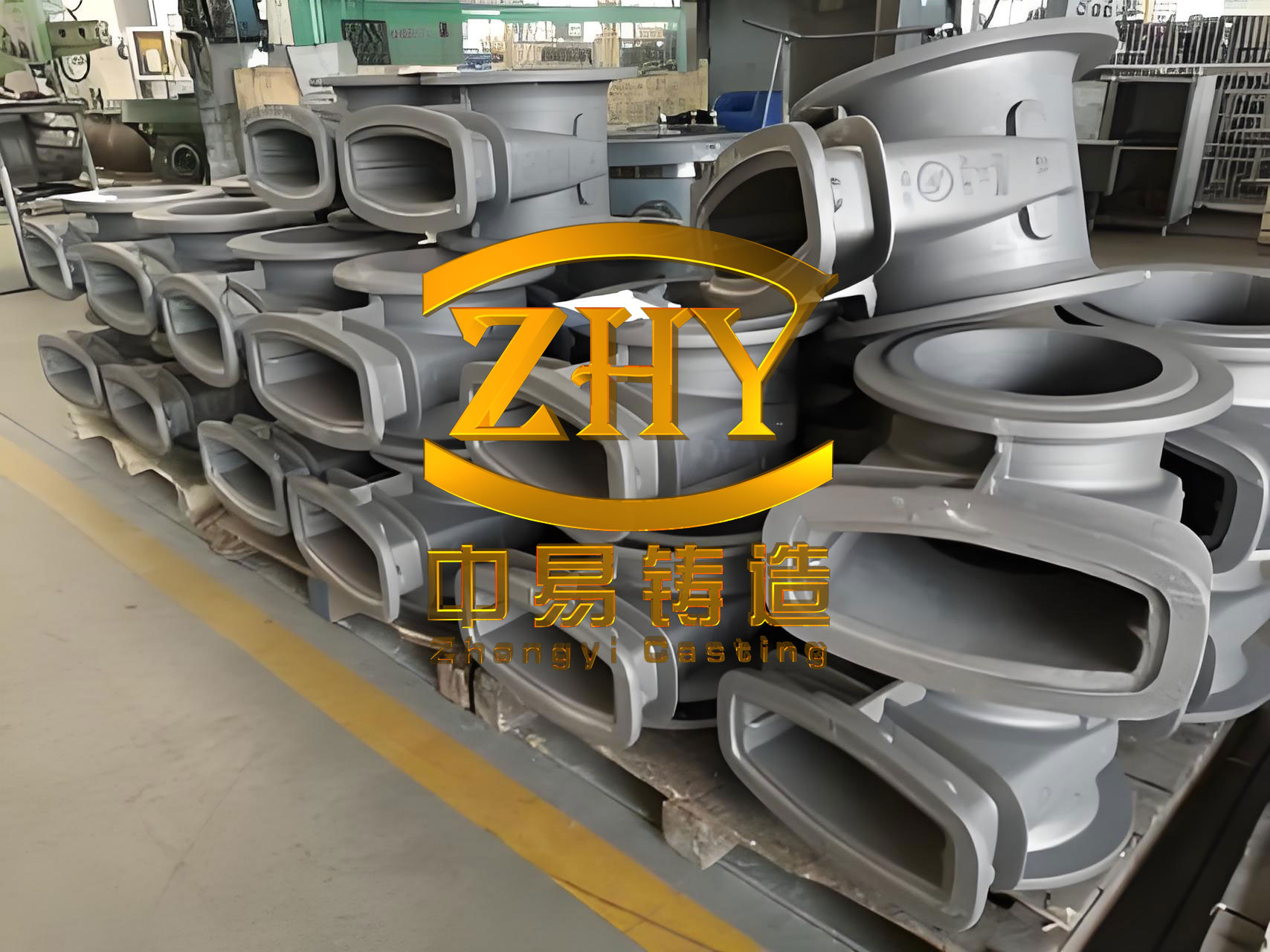
To rigorously assess the individual and interactive effects of manganese and sulfur, I employed a structured Design of Experiments (DoE) methodology. A two-factor, three-level full factorial orthogonal array was chosen for its efficiency in isolating main effects and interactions with a minimal number of experimental runs. The factors and their designated levels were selected based on prevailing industry practices for engine castings and a specific focus on cost-effectiveness. The target mass fractions for manganese were set at 0.3%, 0.6%, and 0.9%, while for sulfur, the levels were 0.04%, 0.06%, and 0.10%. This matrix, comprising nine distinct compositional combinations, allowed for a comprehensive analysis of the response variables: ultimate tensile strength (UTS) and Brinell hardness (HBW). The experimental design is summarized in Table 1 below.
| Experiment Run | w(Mn) | w(S) |
|---|---|---|
| 1 | 0.3 | 0.04 |
| 2 | 0.3 | 0.06 |
| 3 | 0.3 | 0.10 |
| 4 | 0.6 | 0.04 |
| 5 | 0.6 | 0.06 |
| 6 | 0.6 | 0.10 |
| 7 | 0.9 | 0.04 |
| 8 | 0.9 | 0.06 |
| 9 | 0.9 | 0.10 |
The melting campaign was executed using medium-frequency induction furnaces to ensure precise temperature and compositional control. Multiple furnaces were utilized to prepare the base iron with the primary elements (carbon, silicon, etc.) held constant within a narrow range to isolate the effects of Mn and S. The charge materials comprised selected pig iron, steel scrap, and returns, all carefully weighed to achieve the desired base chemistry. After initial melting, the iron was superheated to approximately 1510°C for homogenization and refining. The crucial step of adjusting manganese and sulfur was then performed. Manganese was added in the form of ferromanganese, while sulfur was introduced using iron sulfide compounds. Following alloy addition, the melt was held at the superheating temperature for a sufficient time to ensure complete dissolution and uniformity. A critical aspect of processing grey cast iron is effective inoculation. For all experimental heats, a rare-earth-calcium-barium inoculant was added at a rate of 0.35% mass fraction during tapping into the pouring ladle. This practice is standard for promoting Type A graphite formation and enhancing the mechanical properties of grey cast iron. The treated iron was then poured into standard sand molds to produce 30-mm diameter keel blocks, from which tensile test bars were machined. The pouring temperature was meticulously controlled between 1400°C and 1420°C to minimize casting defects and ensure consistent solidification characteristics across all samples.
The resulting test bars were subjected to standard mechanical testing procedures. Tensile strength was determined using a universal testing machine, and Brinell hardness was measured on the grip sections of the broken test bars or on separately cast pads. The raw data for each of the nine experimental runs are presented in Table 2. This data forms the foundation for the subsequent statistical analysis and the derivation of trends governing the behavior of this specific grade of grey cast iron.
| Run | w(Mn) (%) | w(S) (%) | Tensile Strength (MPa) | Hardness (HBW) |
|---|---|---|---|---|
| 1 | 0.33 | 0.04 | 290.5 | 201 |
| 2 | 0.32 | 0.06 | 290.0 | 205 |
| 3 | 0.32 | 0.10 | 263.5 | 218 |
| 4 | 0.62 | 0.04 | 268.0 | 204 |
| 5 | 0.64 | 0.06 | 262.5 | 200 |
| 6 | 0.61 | 0.10 | 268.0 | 205 |
| 7 | 0.89 | 0.04 | 260.0 | 205 |
| 8 | 0.88 | 0.06 | 260.0 | 205 |
| 9 | 0.89 | 0.10 | 262.0 | 206 |
To distill clear trends from the data, I calculated the average response for each level of the two factors. This analysis, presented in the form of response tables, is instrumental in identifying the main effects. The average tensile strength and hardness for each level of manganese and sulfur are shown in Tables 3 and 4, respectively.
| Factor Level | w(Mn) | w(S) |
|---|---|---|
| Level 1 (Low) | 281.3 | 272.8 |
| Level 2 (Medium) | 266.2 | 270.8 |
| Level 3 (High) | 260.7 | 264.5 |
| Delta (Max-Min) | 20.6 | 8.3 |
| Rank (Effect Strength) | 1 | 2 |
| Factor Level | w(Mn) | w(S) |
|---|---|---|
| Level 1 (Low) | 208.0 | 203.3 |
| Level 2 (Medium) | 203.0 | 203.3 |
| Level 3 (High) | 205.3 | 209.7 |
| Delta (Max-Min) | 5.0 | 6.4 |
| Rank (Effect Strength) | 2 | 1 |
The response tables reveal compelling patterns. For tensile strength, both manganese and sulfur exhibit a negative effect; as their content increases, the average strength of the grey cast iron decreases. The delta value, representing the range of the response, is substantially larger for manganese (20.6 MPa) compared to sulfur (8.3 MPa), indicating that manganese has a more pronounced influence on the degradation of tensile strength in this system. The relationship can be qualitatively expressed as a decreasing function: $$ \sigma_{UTS} \propto -\left[ C_{Mn} + k C_{S} \right] $$ where $\sigma_{UTS}$ is the ultimate tensile strength, $C_{Mn}$ and $C_{S}$ are the concentrations of manganese and sulfur, and $k$ is a constant less than 1, reflecting the smaller effect of sulfur. This finding challenges the conventional wisdom of using higher manganese solely for strengthening purposes in grey cast iron.
In contrast, the hardness response is more nuanced and of lower magnitude. The variation across all conditions is within a narrow band of 10 HBW. Interestingly, hardness tends to be higher at the extreme levels (low Mn/low S and high Mn/high S) and lower at intermediate levels. The highest average hardness corresponds to the high sulfur level (209.7 HBW), suggesting a mild hardening effect from sulfur, possibly due to the dispersion of MnS particles or subtle changes in the pearlite matrix. The effect of manganese on hardness is non-monotonic, showing a slight dip at the medium level. This behavior can be partially modeled by considering the combined effect on the matrix and graphite structure: $$ HBW = f(Matrix_{hardness}, Graphite_{morphology}) $$ where both manganese (affecting carbide stability and pearlite fineness) and sulfur (affecting graphite nucleation and growth) play interdependent roles.
To solidify these findings from the controlled orthogonal experiment, I initiated a validation trial under actual production conditions for cylinder head castings. The melting process employed a duplex method involving a cupola furnace followed by a holding and refining induction furnace. The base iron was adjusted in the cupola to a manganese level of approximately 0.47% and a low sulfur level of 0.04%. After transfer to the induction furnace, one batch was processed as-is (low S). For subsequent batches, controlled additions of sulfur were made to raise the sulfur content to 0.06% and 0.08%, while manganese was held steady. All melts were inoculated with 0.4% rare-earth-calcium-barium inoculant during tapping. Test bars were poured alongside production castings. The results of this production-scale verification are summarized in Table 5.
| Batch | w(Mn) (%) | w(S) (%) | Tensile Strength (MPa) | Hardness (HBW) |
|---|---|---|---|---|
| A | 0.47 | 0.04 | 339.0 | 217 |
| B | 0.47 | 0.06 | 331.5 | 222 |
| C | 0.47 | 0.08 | 305.0 | 226 |
The production data strongly corroborates the orthogonal experiment’s conclusion. With manganese stabilized at a moderate level, a systematic increase in sulfur from 0.04% to 0.08% led to a significant and consistent decrease in tensile strength—a drop of 34 MPa. Concurrently, hardness showed a steady increase of 9 HBW. This inverse relationship between strength and hardness with increasing sulfur, under constant manganese, is a critical insight for foundries processing high-strength grey cast iron for demanding applications like cylinder blocks and heads.
Delving into the metallurgical analysis, the role of manganese in grey cast iron is multifaceted. While it is known to increase hardenability and combine with sulfur, its primary function concerning graphite formation is that of a carbide stabilizer. It slows down the diffusion of carbon, thereby suppressing graphite growth and promoting undercooling. In hypoeutectic grey cast iron, excessive manganese can lead to the formation of steadite (phosphide eutectic) at grain boundaries and increased carbide content, both of which can embrittle the matrix and reduce tensile strength despite a potential increase in hardness. The observed decrease in strength with rising manganese aligns with this mechanism. The optimal manganese content must therefore balance its positive effect on matrix strengthening (through solid solution and pearlite refinement) against its negative effect on graphite formation and the risk of brittle phases. For the grade of grey cast iron targeted for cylinder components, my results suggest that lower manganese levels are beneficial for tensile strength.
The behavior of sulfur is intricately linked to manganese. Sulfur is a surface-active element in molten iron. At low levels and in the presence of sufficient manganese, it reacts exothermically to form manganese sulfide inclusions: $$ [Mn] + [S] \rightarrow (MnS)_{(s)} $$ The free energy of this reaction is highly negative, ensuring virtually complete combination when manganese is in stoichiometric excess relative to sulfur (typically aiming for a Mn/S ratio > 2). These finely dispersed MnS particles can act as heterogeneous nucleation sites for graphite during eutectic solidification, potentially refining the graphite flakes and improving the matrix structure. This can explain the beneficial effects often associated with a minimum sulfur level. However, as my experiments show, when sulfur content rises excessively, even with adequate manganese, the increasing volume fraction of non-metallic inclusions (MnS) can act as stress concentrators and initiation sites for micro-cracks, leading to a reduction in tensile strength. Furthermore, very high sulfur can increase surface tension and reduce fluidity, though a moderate amount is sometimes said to improve it. The key is to maintain sulfur at a level sufficient to aid nucleation but low enough to avoid compromising the integrity of the grey cast iron matrix.
The interaction between manganese and sulfur is therefore not simply additive but stoichiometric and morphological. The concept of “available sulfur” or “active sulfur” that participates in nucleation is governed by the Mn-S balance. A useful parameter is the residual sulfur index, which could be conceptualized as the sulfur not tied up as MnS. The mechanical properties of grey cast iron might be correlated to this index. An empirical relationship considering the combined effect could be proposed as: $$ P = \alpha – \beta \cdot w(Mn) – \gamma \cdot \left( w(S) – \frac{w(Mn)}{A} \right)^2 $$ where $P$ represents a property like tensile strength, $\alpha$, $\beta$, $\gamma$ are constants, and $A$ is the atomic weight ratio factor for MnS formation. This model attempts to capture the strengthening from low Mn, the benefit of a specific Mn/S balance, and the detriment of excess free sulfur.
From a practical cost perspective, reducing the alloy addition of manganese directly lowers material expenditure. Manganese, typically added via ferromanganese, constitutes a measurable cost factor in large-scale production of grey cast iron. Discovering that a lower manganese range (0.3-0.5%) can yield optimal or superior tensile strength compared to higher levels (0.6-0.9%) presents a clear opportunity for cost savings without sacrificing, and indeed potentially enhancing, the performance of castings like cylinder blocks and heads. Similarly, maintaining sulfur at the lower end of the typical range reduces the need for desulfurization treatments (if sulfur is too high from charge materials) and minimizes the potential for casting defects related to slag formation and inclusion content. Therefore, the optimization strategy derived from this study aligns technical superiority with economic efficiency for grey cast iron production.
In conclusion, based on the systematic orthogonal experimentation and subsequent production validation trials, I have established clear guidelines for the control of manganese and sulfur in high-quality grey cast iron intended for critical automotive components. The pursuit of enhanced mechanical properties in grey cast iron, particularly tensile strength, is best served by adopting a low-alloy philosophy for these two elements. I recommend maintaining the manganese mass fraction within the range of 0.3% to 0.5%. Levels below 0.3% may risk issues with fluidity and excessive oxidation, while levels exceeding 0.5% consistently demonstrate a detrimental effect on the tensile strength of grey cast iron. For sulfur, a controlled window of 0.04% to 0.07% is advised. This range ensures sufficient sulfur is available to promote favorable graphite nucleation through MnS formation without introducing an excessive volume of inclusions that weaken the metal matrix. This combination fosters a microstructure in grey cast iron that features well-formed Type A graphite in a refined pearlitic matrix, delivering an optimal balance of strength, hardness, and castability. The consistent application of these compositional parameters, coupled with effective inoculation practices, provides foundry engineers with a reliable and cost-effective pathway to producing superior grey cast iron castings that meet the rigorous demands of modern engine technology. Future work could involve integrating these findings with other alloying elements like chromium or copper to develop multi-variable predictive models for grey cast iron properties, further advancing the science and art of producing this indispensable engineering material.