
The role of cone crushers in modern industrial processes is indispensable. These machines are the workhorses for intermediate and fine crushing of ores and rocks across critical sectors such as metallurgy, chemical engineering, construction materials, hydropower, and road building. Their operational reliability, stable performance, high efficiency, and ability to produce uniformly sized products are paramount. The fundamental crushing action occurs within the crushing chamber, where the mantle (or破碎壁) and the concave (or轧臼壁) undergo relative motion to exert compressive and bending forces on the feed material, leading to fracture. Consequently, the geometry of the crushing cavity and, more critically, the wear resistance of these high manganese steel casting components directly govern product size distribution and overall crushing efficiency. Maximizing the service life of these castings through optimized material design and processing is therefore a key economic and operational driver.
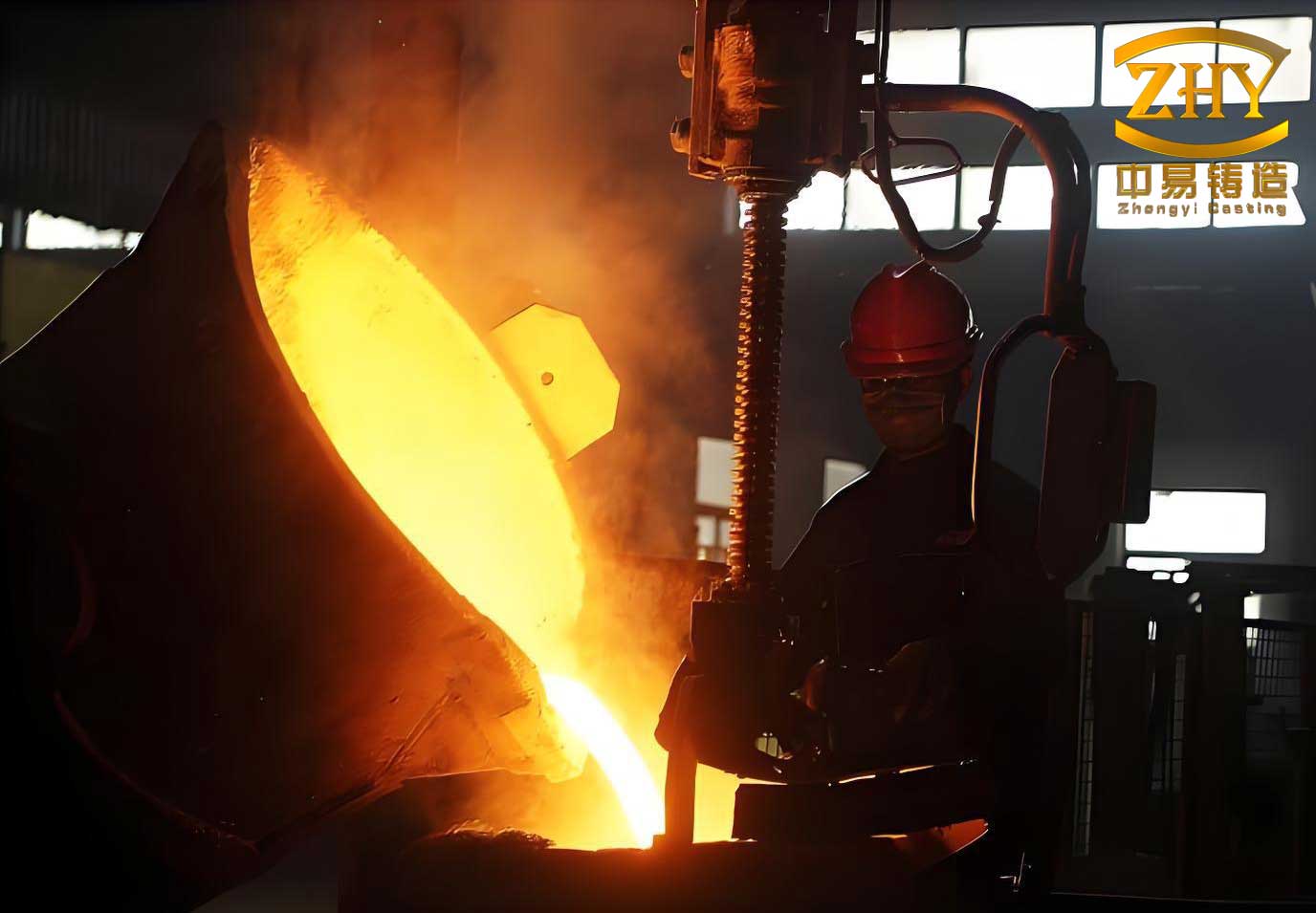
The exceptional work-hardening capability of traditional Hadfield steel (nominally 1.2% C, 12% Mn) stems from its metastable austenitic structure. Upon severe impact or deformation, this austenite transforms to martensite, creating an extremely hard surface layer that resists further wear while the core remains tough. However, under conditions of lower-impact stress or high-stress abrasion—often encountered in certain ore processing applications—the standard alloy may not work-harden sufficiently, leading to accelerated wear. This limitation has spurred the development of modified high manganese steel casting grades. The strategic selection of chemical composition and subsequent heat treatment for these manganese austenitic steels under specific service conditions is crucial to unlocking their full wear-resistant potential.
This article delves into an experimental investigation focused on enhancing the performance of cone crusher liners. Based on a thorough analysis of service conditions, failure modes, and performance requirements for these components, a systematic study was conducted on the chemical composition, heat treatment processes, and the resulting comprehensive mechanical properties of modified high manganese steels. The goal was to optimize a complete technical protocol encompassing melting, casting, and heat treatment, culminating in trial production and field testing in operational crushers.
Fundamentals of Heat Treatment for Modified High Manganese Steel Castings
The performance of a high manganese steel casting is not inherent in its as-cast state but is primarily bestowed through specific heat treatments. For modified grades, two principal thermal processing routes are employed: water toughening (solution treatment) and precipitation strengthening treatments.
1. Water Toughening (Solution Treatment): This is the classical process for achieving the standard work-hardening microstructure. The high manganese steel casting is heated to a temperature above the Acm line (typically 1050-1100°C) and held for a sufficient time. This soak accomplishes several critical tasks: it dissolves the network of brittle carbides (e.g., (Fe,Mn)3C) that form along austenite grain boundaries during solidification, it homogenizes the austenitic structure by eliminating any pearlite or other transformation products, and it allows for diffusion to create a chemically uniform single-phase austenite matrix. The component is then rapidly quenched in water. This swift cooling suppresses the re-precipitation of carbides, preserving a supersaturated single-phase austenitic solid solution at room temperature. This structure is relatively soft and tough initially but possesses the profound capacity to work-harden under impact, providing excellent wear resistance in high-stress, high-impact environments. The process can be summarized by the following phase stability objective:
$$ \text{Austenite (γ) + Carbides (M}_3\text{C)} \xrightarrow[\text{Heating > Acm}]{\text{Soak}} \text{Homogeneous Single-Phase γ} \xrightarrow[\text{Water Quench}]{\text{Fast Cooling}} \text{Supercooled γ (Supersaturated)} $$
2. Precipitation Strengthening Heat Treatment: For applications where impact is substantial but perhaps less extreme than required for full Hadfield-type work-hardening, or where additional initial hardness is beneficial, a precipitation strengthening approach is adopted. This involves a thermal cycle designed to precipitate fine, hard, and uniformly dispersed secondary carbide particles within the austenite matrix. These particles strengthen the austenite itself (dispersion strengthening) and provide inherent resistance to abrasive wear, complementing the work-hardening ability. This treatment is particularly effective when the high manganese steel casting is alloyed with strong carbide-forming elements like chromium (Cr) and molybdenum (Mo). The process typically involves a lower-temperature aging step after solution treatment, or a modified solution treatment cycle with controlled cooling. The formation of these alloy carbides (e.g., M23C6, M7C3) alters the optimal balance of manganese and carbon in the steel compared to standard grades.
Experimental Design: Composition and Heat Treatment Variants
The core of this study involved evaluating seven distinct chemical compositions of modified high manganese steel, each subjected to three different heat treatment schedules. The base composition was altered primarily in Carbon (C), Manganese (Mn), Chromium (Cr), and Molybdenum (Mo) content. A key variable was the addition of Rare Earth Silicide (RE-Si-Fe) for melt inoculation/grain refinement in some heats. The detailed chemical compositions of the experimental high manganese steel casting variants are presented in Table 1.
| Heat ID | C | Mn | Si | Cr | Mo | RE-Si-Fe | S | P |
|---|---|---|---|---|---|---|---|---|
| 1 | 1.28 | 12.7 | 0.68 | 2.50 | 0.82 | – | 0.02 | 0.047 |
| 2 | 1.28 | 12.7 | 0.67 | 1.80 | 0.82 | – | 0.02 | 0.045 |
| 3 | 1.28 | 12.7 | 0.67 | 1.80 | 0.82 | 0.20 | 0.02 | 0.045 |
| 4 | 1.25 | 12.8 | 0.65 | 1.57 | 0.47 | – | 0.02 | 0.045 |
| 5 | 1.25 | 12.7 | 0.66 | 2.50 | 0.48 | – | 0.02 | 0.045 |
| 6 | 1.13 | 11.6 | 0.60 | 1.58 | 0.46 | 0.20 | 0.017 | 0.047 |
| 7 | 1.35 | 10.2 | 0.78 | 0.45 | – | – | 0.02 | 0.050 |
The presence of alloying elements like Cr and Mo, which form stable carbides, necessitates adjustments to the standard heat treatment parameters. Their carbides are more difficult to dissolve into the austenite matrix. Therefore, the solution treatment temperature for these modified high manganese steel castings must be increased by approximately 30–50°C compared to standard Hadfield steel to ensure complete carbide dissolution and homogeneity. For this study, a solution temperature of 1080°C was selected as the baseline high-temperature stage.
Three distinct heat treatment cycles were applied to each of the seven compositions:
Process A: Heat to 950°C, hold for 1.5 hours, furnace cool. Then reheat to 1080°C, hold for 2 hours, water quench.
Process B: Heat to 600°C, hold for 12 hours. Then heat to 1080°C, hold for 2 hours, water quench.
Process C: Heat to 1080°C, hold for 2 hours, water quench. Then temper at 350°C for 8 hours, air cool.
Process A involves a high-temperature pre-treatment intended to partially homogenize the structure before final solution treating. Process B employs a prolonged hold in the intermediate temperature range (600°C), which is within the pearlite transformation zone for high Mn steels. This aims to decompose the as-cast structure, spheroidize carbides, and create a more uniform matrix prior to austenitization. Process C is a classic solution treatment followed by a low-temperature aging step designed to precipitate fine secondary carbides within the austenite grains for precipitation strengthening.
Influence of Heat Treatment on Microstructure and Mechanical Properties
The mechanical properties—Tensile Strength (σb), Yield Strength (σs), Elongation (δ), Impact Toughness (αk), and Hardness (HB)—for all composition and process combinations were meticulously measured. The consolidated results are presented in Table 2, providing a comprehensive dataset for analysis.
| Heat Treatment | Heat ID | Mechanical Properties | ||||
|---|---|---|---|---|---|---|
| σb (MPa) | σs (MPa) | δ (%) | αk (J/cm²) | HB | ||
| Process A | 1 | 650.6 | 458.7 | 22.5 | 130 | 219 |
| 2 | 698.7 | 436.8 | 18.7 | 136 | 217 | |
| 3 | 745.4 | 467.0 | 25.8 | 210 | 210 | |
| 4 | 738.0 | 448.6 | 27.6 | 202 | 207 | |
| 5 | 692.5 | 437.2 | 25.4 | 170 | 211 | |
| 6 | 776.6 | 478.9 | 34.6 | 196 | 201 | |
| 7 | 683.5 | 466.4 | 22.0 | 180 | 205 | |
| Process B | 1 | 714.3 | 461.0 | 21.9 | 177 | 217 |
| 2 | 749.6 | 472.9 | 22.2 | 180 | 207 | |
| 3 | 799.1 | 485.4 | 31.1 | 230 | 217 | |
| 4 | 726.0 | 448.7 | 27.2 | 178 | 217 | |
| 5 | 735.3 | 461.7 | 25.9 | 157 | 213 | |
| 6 | 768.9 | 472.1 | 21.7 | 198 | 215 | |
| 7 | 708.6 | 440.5 | 24.7 | 160 | 221 | |
| Process C | 1 | 644.0 | 451.7 | 18.7 | 143 | 217 |
| 2 | 687.8 | 457.1 | 21.4 | 161 | 207 | |
| 3 | 720.5 | 466.1 | 16.0 | 170 | 221 | |
| 4 | 670.2 | 424.8 | 22.6 | 164 | 207 | |
| 5 | 623.8 | 441.1 | 20.3 | 133 | 214 | |
| 6 | 668.0 | 445.1 | 19.8 | 166 | 207 | |
| 7 | 633.2 | 439.8 | 23.7 | 152 | 219 | |
Analysis of Process A (950°C Pre-treatment + 1080°C Water Quench):
Microstructural analysis revealed significant differences. Heat 1, with high Cr (2.5%), exhibited coarse austenite grains with a continuous network of carbides at the boundaries, explaining its relatively poor tensile strength (650.6 MPa) and low impact toughness (130 J/cm²). The high Cr content increases hardenability and promotes carbide formation but can reduce toughness if carbides are not properly dissolved. Heat 2, with reduced Cr (1.8%), showed slightly fewer grain boundary carbides but still had coarse grains, yielding marginally better properties. The transformative effect was seen in Heat 3, which was identical to Heat 2 but with the addition of 0.2% RE-Si-Fe. The rare earth addition led to pronounced grain refinement, effectively breaking the carbide network. This resulted in a superior combination of high tensile strength (745.4 MPa), good elongation (25.8%), and excellent impact toughness (210 J/cm²), demonstrating the critical role of inoculation in producing a sound high manganese steel casting.
Heat 6, with lower C (1.13%), lower Mn (11.6%), and RE addition, achieved the best overall mechanical profile in this process: the highest tensile strength (776.6 MPa), very high yield strength (478.9 MPa), exceptional elongation (34.6%), and good toughness (196 J/cm²). This composition appears to offer an optimal balance for austenite stability and solid solution strengthening. Heat 7, with high C (1.35%) and low Mn/Cr, showed coarse grains with extensive carbides, leading to mediocre properties, highlighting the negative effect of unbalanced composition.
Analysis of Process B (600°C Prolonged Hold + 1080°C Water Quench):
This process yielded the most consistently improved mechanical properties across nearly all compositions compared to Process A. The extended hold at 600°C is critical. According to the Fe-Mn-C phase diagram, this temperature lies within the range for pearlitic transformation. The long isothermal treatment allows for the near-complete decomposition of the as-cast austenite into a finer, more chemically uniform aggregate of ferrite and spheroidized carbides. Upon subsequent heating to 1080°C, this transformed structure dissolves more uniformly than the original as-cast structure, leading to a more homogeneous austenite with fewer residual carbides. The kinetics of this homogenization can be conceptually related to the diffusion-controlled dissolution process:
$$ \text{Dissolution Rate} \propto D_0 \exp\left(-\frac{Q}{RT}\right) \cdot \frac{(C_s – C_0)}{r} $$
Where \( D_0 \) is the diffusion coefficient pre-factor, \( Q \) is the activation energy, \( R \) is the gas constant, \( T \) is temperature, \( C_s \) is the solubility limit at the interface, \( C_0 \) is the bulk concentration, and \( r \) is the carbide particle radius. The 600°C pretreatment effectively reduces \( r \) (spheroidizes carbides) and reduces the compositional gradient \( (C_s – C_0) \), facilitating more complete dissolution during the final austenitization.
This is reflected in the data: Heat 3 (with RE) under Process B achieved the peak performance in the entire study: σb = 799.1 MPa, αk = 230 J/cm². Heats 1 and 2 also showed marked improvements in both strength and toughness over Process A. The high-carbon Heat 7 also benefited, with increased strength and toughness.
Analysis of Process C (1080°C Water Quench + 350°C Aging):
This precipitation-strengthening route generally resulted in a degradation of tensile strength and impact toughness compared to Processes A and B, though hardness sometimes increased slightly. Microstructurally, the water quench from 1080°C did not fully dissolve all primary carbides in some high-Cr or high-C heats (like Heat 1), leaving brittle networks. The subsequent 350°C aging then precipitated additional fine carbides within the austenite grains. While these intra-granular precipitates increase hardness and might improve low-stress abrasion resistance, they often act as sites for crack initiation under impact, reducing overall toughness. The significant drop in elongation for many heats (e.g., Heat 3 fell to 16.0%) confirms embrittlement. For the targeted application in cone crushers, which involves significant impact, this trade-off was not favorable. The precipitation process can be described by the general aging kinetics equation for volume fraction transformed:
$$ f = 1 – \exp(-k t^n) $$
where \( f \) is the fraction of precipitate formed, \( k \) is a temperature-dependent rate constant, \( t \) is time, and \( n \) is a time exponent. At 350°C, the process leads to a fine, potentially detrimental dispersion for high-impact service.
Optimized Protocol and Industrial Performance
Based on the comprehensive analysis of mechanical properties and microstructural integrity, an optimal manufacturing protocol for the high manganese steel casting crusher components was established:
- Composition: A modified chemistry similar to Heat 6 (lower C ~1.15%, Mn ~11.5%, balanced Cr/Mo ~1.5%/0.45%) combined with rare earth inoculation (RE-Si-Fe addition) for grain refinement.
- Heat Treatment: Adoption of Process B: a prolonged intermediate temperature treatment at 600°C for 12 hours followed by full austenitization at 1080°C for 2 hours and immediate water quenching.
Field trials of cone crusher mantles and concaves produced with this optimized high manganese steel casting protocol were conducted over an extended period. The performance metrics were compelling:
- Service Life: The domestically produced optimized components remained in service for over 11 months (1750 operational hours), exceeding the typical 6-8 month lifespan of imported equivalents.
- Processing Capacity: Assuming a consistent throughput rate, the optimized castings processed an estimated 350,000 tons of ore per set, compared to approximately 240,000 tons for the imported parts—an increase of nearly 46%.
This translated to a service life enhancement of 1.3 to 1.5 times that of standard high manganese steel castings, coupled with a significant increase in total ore processed, delivering substantial economic benefits through reduced downtime, lower parts replacement frequency, and higher overall equipment effectiveness.
Conclusions
The performance of alloyed high manganese steel casting components is not a function of composition alone but is critically dependent on the integrated control of melting practice, foundry techniques, and most importantly, heat treatment. This study systematically demonstrated that:
- The addition of carbide-forming elements like chromium and molybdenum modifies the phase stability and requires adjusted heat treatment parameters, particularly higher solution temperatures.
- Rare earth inoculation is a highly effective method for refining the as-cast austenite grain structure of high manganese steel casting, leading to a breakdown of continuous grain boundary carbide networks and consequent dramatic improvements in toughness and strength.
- Among the tested thermal cycles, a heat treatment incorporating a prolonged isothermal hold in the pearlite transformation range (600°C) prior to final solution treatment and quenching (Process B) produced the most favorable and consistent microstructure. This process promotes the decomposition and spheroidization of unstable as-cast constituents, enabling the formation of a more chemically homogeneous and defect-free austenitic matrix upon final austenitization.
- A simple solution treatment plus low-temperature aging (Process C), while increasing hardness, often leads to embrittlement in these modified grades and is less suitable for high-impact crushing applications compared to the optimized homogenization treatment.
- The successful implementation of the optimized composition (featuring grain refinement) and the two-stage heat treatment (600°C pre-treatment + 1080°C water quench) in production yielded high manganese steel casting components with demonstrably superior service life and operational throughput compared to both standard domestic and imported alternatives, validating the laboratory findings with concrete industrial performance.
Therefore, the pathway to maximizing the potential of high manganese steel casting in demanding applications like cone crushing lies in a holistic approach: careful compositional design targeting specific service conditions, stringent control of melt quality and solidification, and the precise application of a thermally engineered processing route designed to produce a clean, homogeneous, and tough austenitic microstructure capable of extreme work-hardening.