
In the demanding field of aerospace propulsion and hydraulic systems, the manufacturing of critical components presents unique challenges. Many of these parts, such as pipe fittings and flanges for fuel or oil circuits, are produced as steel castings. Materials like ZG1Cr14Ni3W2VB are favored for their excellent structural strength and corrosion resistance. However, the casting process inevitably introduces a tenacious, layered oxide scale (often called “heat tint” or “slag”) that adheres to the surface, particularly within complex internal cavities. This scale not only detracts from the component’s aesthetics but, more critically, poses a severe risk to system cleanliness and functional reliability. For a high-performance steel casting serving in a sensitive environment, the complete removal of this oxide and the attainment of a high-integrity, polished surface are non-negotiable requirements.
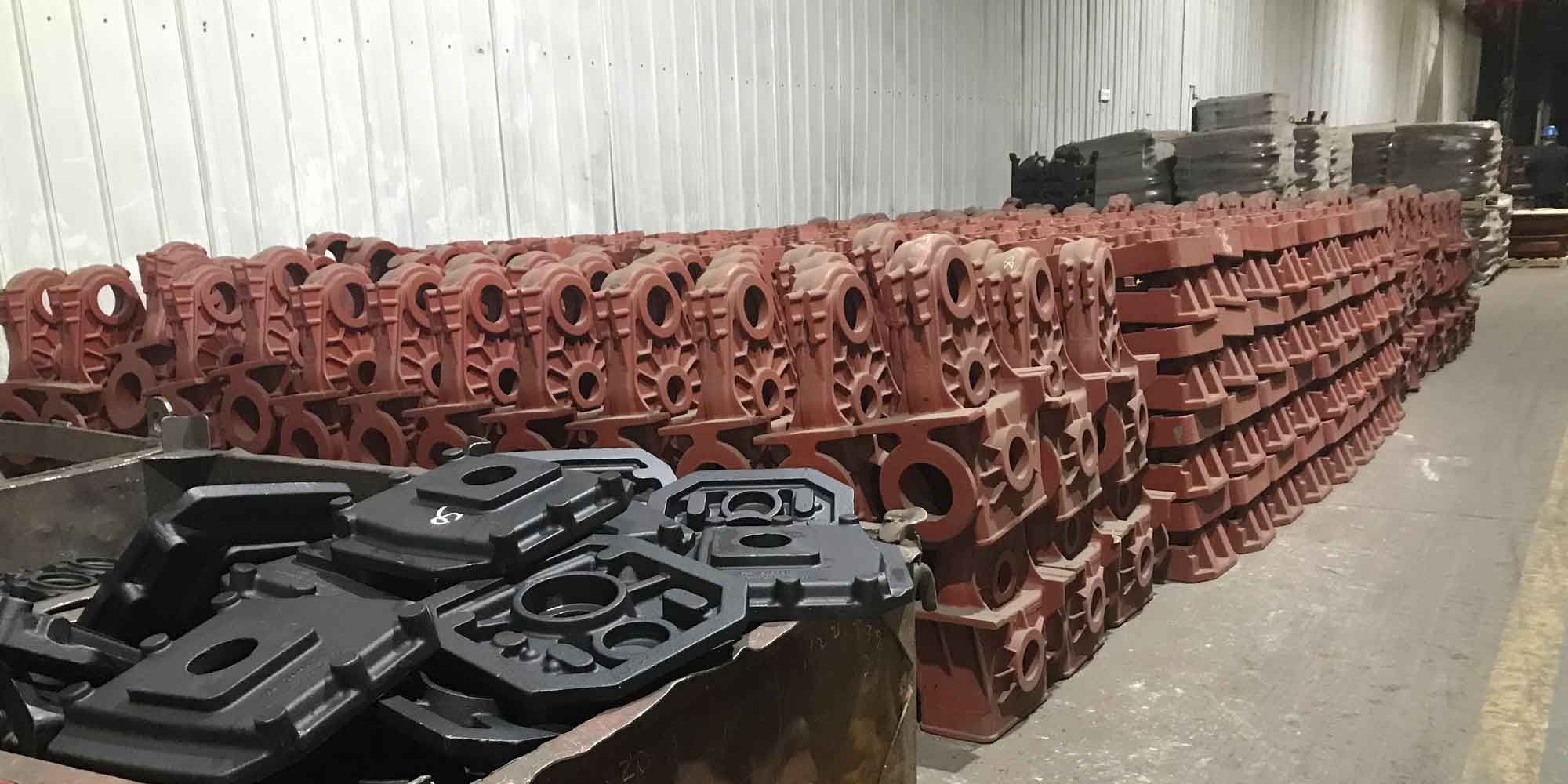
Traditional methods for descaling and polishing these intricate steel castings, such as abrasive blasting, acid pickling, or conventional electropolishing, often fall short. They struggle with blind spots in complex internal geometries, produce inconsistent results on curved surfaces, and can introduce environmental and worker safety concerns due to chemical waste or airborne particulates. The need for a precise, eco-friendly, and universally applicable technique is paramount. This investigation delves into the application of Plasma Electrochemical Polishing (PEP), a green and highly efficient technology, specifically for the post-processing of ZG1Cr14Ni3W2VB steel castings with internal cavities. Through systematic experimentation, we aim to establish a robust process, understand its interaction with casting-specific surface conditions, and develop a reliable finishing route for high-integrity aerospace components.
Fundamental Principles of Plasma Electrochemical Polishing
Plasma Electrochemical Polishing operates on principles distinct from traditional methods. The workpiece, acting as the anode, is immersed in a specially formulated, low-concentration, neutral-pH aqueous electrolyte (typically a dilute salt solution). When a high DC voltage (typically 200-400V) is applied between the anode and the cathode (the processing tank), a critical phenomenon occurs. The high current density at the workpiece surface causes instantaneous Joule heating, vaporizing the adjacent electrolyte to form a continuous, thin vapor-gaseous envelope that insulates the metal from the bulk liquid.
This envelope is not uniform. At microscopic peaks and asperities on the steel casting surface, the electric field becomes concentrated. When the field strength exceeds the dielectric breakdown strength of the vapor layer, micro-discharges or plasma channels are ignited at these discrete points. This plasma, comprising ionized gas and vapor, creates an extreme local environment of high temperature and pressure. The combined action within this envelope can be described by several synergistic mechanisms operating in a multi-field coupling regime:
- Electrochemical Dissolution & Oxide Formation: Under the high anodic potential, the metal surface undergoes rapid electrochemical dissolution into ions. Simultaneously, a thin, dense oxide/hydroxide layer (a passivation film) forms.
$$ \text{M} \rightarrow \text{M}^{n+} + n\text{e}^- $$
$$ \text{M}^{n+} + n\text{OH}^- \rightarrow \text{M(OH)}_n $$ - Plasma Discharge & Micro-Etching: The localized plasma discharges at micro-peaks thermally and chemically disrupt this passivation film, preferentially removing the protruding material.
- Cavitation & Mechanical Stripping: The continuous formation and violent collapse of bubbles within the vapor envelope generate powerful micro-jets and shockwaves. This cavitation effect mechanically strips away the loosened material and the native oxide scale from the steel casting.
$$ P_{\text{cav}} \propto \frac{\rho}{2} \left( \frac{dR}{dt} \right)^2 $$
Where $P_{\text{cav}}$ is the cavitation pressure, $\rho$ is the liquid density, and $dR/dt$ is the bubble collapse velocity. - Thermal Activation & Complexation: The elevated temperature of the electrolyte and the plasma region accelerates all chemical reactions. Some electrolyte components may act as complexing agents, solubilizing metal ions and preventing redeposition.
The synergy of these mechanisms ensures that material removal is differential: micro-peaks are attacked more aggressively than valleys, leading to global smoothing and brightening. Crucially, because the vapor envelope conforms to any geometry, this process is equally effective on external contours and deep, narrow internal cavities of a steel casting, overcoming the primary limitation of mechanical methods.
Experimental Methodology: From Coupon to Component
Our research was structured in two phases: first, establishing baseline parameters using flat coupons, and second, applying and adapting the process to a real, geometrically complex steel casting.
Materials & Equipment: The substrate material for all experiments was martensitic stainless steel casting alloy ZG1Cr14Ni3W2VB. Initial studies used machined coupons (30 mm × 50 mm × 4 mm). The production component was a triangular flange with an internal through-cavity of Ø18 mm and varying wall thicknesses, representing a typical challenging geometry. The PEP system comprised a pulsed DC power supply (0-400V, 0-50A), a temperature-controlled electrolytic bath with circulation, a custom fixture for holding components, and a safety enclosure.
Phase 1: Coupon-Level Parameter Optimization: A single-factor experimental design was employed to isolate the effects of key process variables on surface finish. The baseline electrolyte was a 5% aqueous solution of ammonium salts. The variables and their tested ranges are summarized in Table 1.
| Process Variable | Tested Levels | Primary Influence |
|---|---|---|
| Voltage (V) | 260, 280, 300 V | Governs plasma ignition energy and removal rate. |
| Electrolyte Temperature (T) | 70, 80, 90 °C | Affects conductivity, reaction kinetics, and vapor layer stability. |
| Processing Time (t) | 3, 5, 7 min | Determines total material removal and degree of leveling. |
| Electrolyte Concentration (C) | 3%, 5%, 7% | Influences solution conductivity and ionic activity. |
The primary response variable was the average surface roughness, $R_a$, measured using white-light interferometry. Secondary assessment included visual inspection for gloss and microscopic examination (Optical Microscopy and Scanning Electron Microscopy) to detect defects like pitting, intergranular corrosion, or surface burning.
Phase 2: Component-Level Process Development: Using the optimized parameters from Phase 1, we directly processed an as-cast triangular flange, which had a thick, dual-layer oxide scale from heat treatment. After identifying a critical defect mode, a modified two-step process was developed and validated:
Step 1: Abrasive blasting to remove the loose, outer oxide layer.
Step 2: Plasma Electrochemical Polishing for final descaling, smoothing, and brightening.
The component was fixtured to ensure the internal cavity was vertical, allowing free egress of generated gas bubbles. Post-processing evaluation included visual inspection of internal and external surfaces, profilometry on accessible areas, and metallographic cross-sectioning at critical locations (flat zones, external radii, internal cavity walls) to examine near-surface integrity.
Results and Analysis: Unveiling Process-Property Relationships
1. Coupon Studies and Parameter Effects: The initial surface roughness of the machined coupons was $R_a = 0.709 \ \mu\text{m}$. PEP treatment dramatically improved the surface finish across nearly all parameter sets. No evidence of pitting, intergranular attack, or re-melted layers was found in the micrographs, confirming the process’s gentleness on the bulk material when starting from a scale-free surface.
The main effects of the process parameters on the final $R_a$ are consolidated below. The achieved roughness values ranged from $R_a = 0.019 \ \mu\text{m}$ to $0.078 \ \mu\text{m}$, representing an improvement of over 90%.
| Factor | Effect on $R_a$ | Mechanistic Rationale |
|---|---|---|
| Voltage (V) ↑ | $R_a$ tends to increase slightly | Higher voltage intensifies plasma discharges, potentially increasing localized etching and micro-roughness if not perfectly uniform. |
| Temperature (T) ↑ | $R_a$ decreases | Elevated temperature lowers electrolyte resistivity, stabilizes the vapor blanket, and enhances ionic diffusion, promoting more uniform dissolution. |
| Time (t) ↑ | $R_a$ decreases | Longer processing allows for more complete leveling of micro-peaks, approaching a limiting roughness value for the process. |
| Concentration (C) ↑ | $R_a$ increases slightly | Higher ion concentration increases current density and plasma activity, which can lead to a more aggressive, less selective removal. |
A balanced parameter set was selected for component trials: V = 280 V, T = 80 °C, t = 5 min, C = 5%. This set promised a combination of high smoothing efficiency and process stability.
2. The Challenge of Direct Oxide Scale Polishing: When the as-cast flange with its native oxide scale was processed using the above parameters, the visual result was initially promising: the surface attained a uniform, silvery-white metallic luster. However, metallographic analysis revealed a serious, unexpected defect. While planar areas appeared sound, subsurface “inter-phase layer cracks” were observed in certain regions, particularly near geometric transitions. These cracks propagated along the boundaries of the tempered martensite (sorbite) structure of the steel casting.
3. Root Cause Analysis: The Role of Oxide Morphology: To understand this failure, we examined the morphology of the original oxide scale. It exhibited a classic two-layer structure:
- Outer Layer: Highly porous, friable, and loosely adherent. This layer results from the outward diffusion and oxidation of iron.
- Inner Layer: Denser, more continuous, and richer in alloying elements like chromium. This layer forms by inward oxygen diffusion.
The porous outer layer was the root cause of the problem. During PEP, this porous structure created a multitude of microscopic “points” or “bridges” where the electrical field could concentrate with extreme intensity. This led to non-uniform, hyper-localized plasma discharges that acted like micro-arcs. The intense, localized electrochemical and thermal attack at these points selectively corroded the metal matrix along the susceptible sorbite lath boundaries, creating the observed inter-phase cracks. In essence, the non-conductive but porous oxide layer destabilized the ideal uniform vapor blanket, leading to destructive localized breakdown.
4. The Solution: A Hybrid Two-Step Process: The analysis pointed to a clear solution: remove the problematic porous outer oxide layer before PEP. Abrasive blasting was chosen as the ideal pre-treatment. It effectively strips the loose outer scale, exposing the denser inner scale and the underlying metal substrate. This creates a more electrically and geometrically uniform starting surface for the plasma process.
5. Validation with the Hybrid Process: Implementing the “Abrasive Blasting + PEP” sequence yielded outstanding results. The final steel casting component exhibited a bright, uniform finish on both external and internal surfaces. Most critically, metallographic examination of cross-sections from all critical zones—flat surfaces, external fillets, and the internal cavity wall—confirmed complete absence of inter-phase cracks, pitting, or intergranular corrosion. The near-surface microstructure was pristine, demonstrating that PEP, when preceded by proper surface preparation, is a safe and highly effective finishing technique for high-integrity steel castings.
Discussion: Toward a Generalized Processing Framework
The findings from this study allow us to propose a generalized framework for applying Plasma Electrochemical Polishing to complex steel castings. The process is not merely a simple immersion but a sequence of critical steps and considerations.
1. Surface State is Paramount: The initial condition of the steel casting surface dictates the process strategy. A machined or uniformly blasted surface (State A) allows for direct application of PEP for polishing and minor descaling. An as-cast surface with tenacious, layered oxide (State B) mandates a two-step approach: mechanical descaling (blasting) followed by PEP. Attempting to use PEP as a primary descaling method for State B surfaces risks subsurface damage due to the non-uniform dielectric properties of the oxide.
2. Parameter Interplay and Optimization: The process parameters are interdependent. We can model the material removal rate ($MRR$) as a function of these key variables:
$$ MRR \approx k \cdot f(V, I, T, C) \cdot t $$
Where $k$ is a material-dependent constant, and the function $f$ embodies the complex, non-linear relationship between the electrical and thermal parameters. For a given steel casting alloy, the optimal window is where $MRR$ is high enough for efficiency but low and uniform enough to prevent defect formation. Our study identified Voltage and Time as the most sensitive controls for final roughness on ZG1Cr14Ni3W2VB.
3. Geometric Considerations and Fixturing: The advantage of PEP is its conformity to geometry. However, component orientation and gas bubble management are crucial. Internal cavities must be oriented to allow bubbles to escape freely (e.g., vertical orientation for through-holes). Stagnant zones can lead to uneven processing or localized overheating. Custom non-conductive fixtures are essential for holding complex steel castings and ensuring even current distribution.
4. Advantages Over Traditional Methods: The benefits of this approach for finishing steel castings are substantial:
- Geometric Accessibility: Perfect for internal cavities, undercuts, and complex curves unreachable by mechanical tools.
- Uniformity: Provides a consistent finish across the entire component, independent of local geometry.
- Surface Integrity: Produces a clean, stress-free, and passivated surface with improved corrosion resistance.
- Environmental Profile: Uses dilute, neutral electrolytes, generating minimal hazardous waste compared to strong acid pickling or electroplating baths.
Conclusion and Future Perspectives
This investigation successfully demonstrates that Plasma Electrochemical Polishing is a powerful and viable technology for finishing high-value, complex ZG1Cr14Ni3W2VB steel castings. The key to its successful application lies in understanding and controlling the interaction between the process and the initial surface state of the casting.
We conclusively established that:
- For scale-free surfaces, PEP can rapidly and dramatically enhance the surface finish of this steel casting alloy, reducing roughness from the micron scale to the tens of nanometers without inducing metallurgical defects.
- For steel castings with thick, dual-layer oxide scale, a direct PEP approach can cause subsurface inter-phase corrosion cracking due to non-uniform plasma ignition through the porous outer scale.
- A hybrid process combining abrasive blasting (to remove the porous oxide) followed by Plasma Electrochemical Polishing is an effective and reliable finishing route. This sequence delivers a bright, high-integrity surface on both the external and internal geometries of complex cast components.
The insights gained into parameter effects, defect mechanisms, and necessary pre-treatment steps provide a solid technological foundation for the engineering application of PEP in aerospace and other precision industries. Future work should focus on expanding the material database to other grades of steel castings and superalloys, developing real-time process monitoring and control systems to adjust parameters for varying geometry, and further refining the electrolyte chemistry to optimize polishing efficiency and waste stream management. The journey toward perfecting the surface of every complex steel casting continues, with Plasma Electrochemical Polishing representing a significant leap forward in capability and sustainability.