
As a practitioner deeply involved in advancing foundry technologies, I have observed a significant evolution in the investment casting process in recent years. While the industry has expanded remarkably, challenges related to internal quality, particularly shrinkage porosity, shrinkage cavities, and hot tearing, persist and limit the performance envelope of critical cast components. My research and experimental work have focused on a powerful, yet elegantly simple, method to mitigate these issues: the application of controlled mechanical vibration during the pouring and solidification stages. This technique, known as vibration-assisted casting, has proven to be a highly effective and economically viable strategy for refining the as-cast microstructure, enhancing mechanical properties, and improving the overall integrity of components produced via the investment casting process.
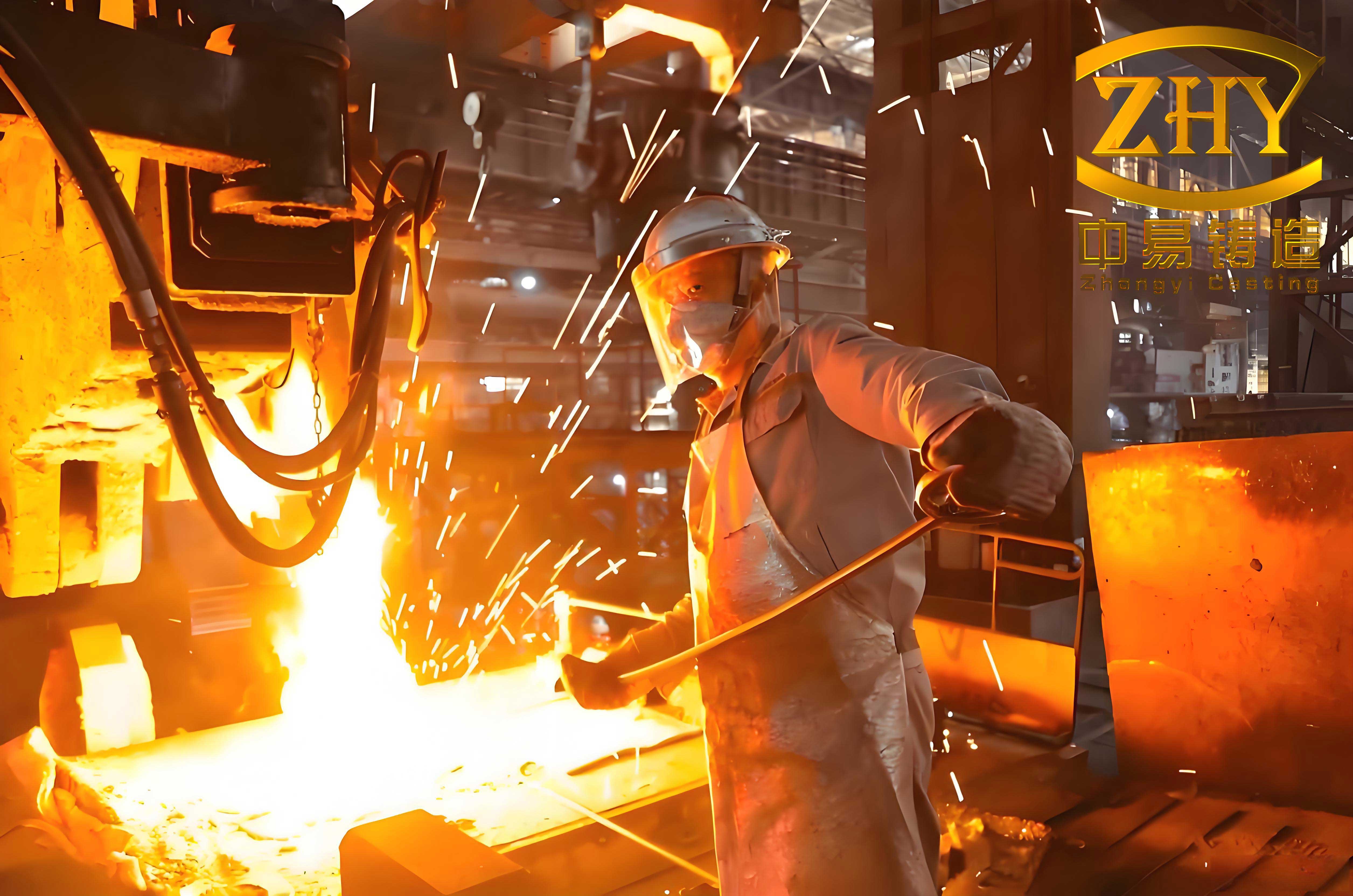
The fundamental principle behind this method is the introduction of external kinetic energy into the solidifying metal. During the crucial phase transition from liquid to solid, the application of vibration—whether mechanical, ultrasonic, or electromagnetic—creates dynamic conditions within the melt. This agitation promotes several key physical phenomena that are central to microstructural refinement. The shear forces induced by the oscillatory motion can fragment developing dendrite arms. These fragmented arms, transported into the bulk liquid by convective flows, then act as new, independent nucleation sites. Furthermore, the vibration enhances bulk and interdendritic fluid flow, which improves feeding to counteract shrinkage and facilitates a more uniform temperature field. This action effectively reduces the size and interconnectivity of shrinkage defects. Among the various vibration methods, mechanical vibration stands out for its operational simplicity, relatively low equipment cost, and significant positive impact on final casting quality, making it an ideal candidate for enhancing the investment casting process.
Fundamental Mechanisms of Vibration-Assisted Solidification
The benefits observed in vibration-assisted casting are not incidental; they are the direct result of well-understood physical mechanisms activated by the imposed oscillatory energy. When vibration is transmitted through the mold and into the solidifying metal, it initiates a cascade of effects that fundamentally alter the solidification pathway.
Firstly, the forced convection dramatically increases the rate of heat extraction from the liquid-solid interface, leading to a localized increase in constitutional undercooling, represented by:
$$\Delta T_C = -m_L C_0 (1-k) \left(1 – e^{-\frac{R}{D_L}x}\right)$$
where $m_L$ is the liquidus slope, $C_0$ is the initial composition, $k$ is the partition coefficient, $R$ is the solidification rate, $D_L$ is the diffusion coefficient in the liquid, and $x$ is the distance from the interface. This enhanced undercooling boosts the nucleation rate, $I$, which can be described by classical nucleation theory:
$$I = K \cdot exp\left(-\frac{\Delta G^*}{k_B T}\right)$$
where $K$ is a kinetic pre-factor, $\Delta G^*$ is the activation energy barrier for nucleation, $k_B$ is Boltzmann’s constant, and $T$ is the absolute temperature.
Secondly, the viscous shear stresses generated by the relative motion between the liquid and the fragile dendritic network can mechanically break off dendrite arms. This process, known as dendrite fragmentation, is governed by the balance between the shear force and the mechanical strength of the solid dendrite at a high solid fraction. The fragments are then carried into the melt, becoming “effective grain refiners.” The final grain size, $d$, can be related to the vibration parameters and undercooling through a relationship of the form:
$$d \propto \left( \frac{1}{A \cdot f} \cdot \frac{1}{\Delta T} \right)^n$$
where $A$ is the vibration amplitude, $f$ is the vibration frequency, $\Delta T$ is the undercooling, and $n$ is an empirical exponent. This refined, equiaxed grain structure directly translates to superior mechanical properties and reduced hot tearing susceptibility. Finally, the intense fluid motion ensures a more efficient transport of liquid metal to feed shrinkage occurring in the interdendritic and mushy zones, directly reducing the volume and size of porosity. This makes the application of vibration a comprehensive solution for improving the investment casting process.
Systematic Experimental Analysis of Vibration Parameters
To translate the theoretical benefits into practical, repeatable outcomes within the investment casting process, a systematic investigation of key vibration parameters is essential. My experimental work focused on three critical variables: the timing of vibration initiation relative to pouring, the total duration of vibration, and the frequency of the applied mechanical oscillation. The base material for this study was a standard cast steel grade, ZG310-570, with the nominal composition detailed in Table 1.
| C | Si | Mn | P | S | Fe |
|---|---|---|---|---|---|
| 0.45 | 0.29 | 0.62 | ≤0.03 | ≤0.02 | Bal. |
Ceramic shells, typical for the investment casting process, were prepared and fired according to standard practice. After firing, the hot shells were placed in a sand-filled flask positioned on a programmable mechanical vibration table. Molten steel was poured under different vibrational regimes. Following standard post-casting procedures—cleaning, cut-off, and shot blasting—the castings were evaluated using X-ray radiography to assess internal soundness and the degree of shrinkage defects.
Influence of Vibration Timing (Synchronization with Pouring)
The phase relationship between metal filling and vibration application is a decisive factor. I compared three distinct regimes: conventional static pouring (no vibration), vibration applied immediately *after* the completion of pour (“Post-Pour Vibration”), and vibration initiated *before* and maintained *during* the pour (“Simultaneous Vibration”). The vibration frequency was held constant at 50 Hz, and the active vibration time was approximately 4 minutes for the dynamic cases.
The results were striking and consistent. Castings produced with Simultaneous Vibration exhibited the most significant improvement. Radiographic analysis showed a marked reduction in both the number and size of shrinkage porosity and cavity defects compared to static castings. The Post-Pour Vibration regime also showed improvement over the static baseline, but it was less effective than Simultaneous Vibration. A tangible, indirect measure of this improvement was observed in the feeding behavior: the sink depth at the top of the main feeding channel (pour cup) was greatest for the Simultaneous Vibration condition, indicating more efficient liquid feeding and denser final solidification. This can be rationalized by the fact that initiating vibration before pouring establishes strong convective currents from the very moment the metal enters the mold. This dynamic state promotes superior mold filling, delays the formation of a rigid dendritic network, and maintains an open channel for feeding throughout the critical early stages of solidification, thereby optimizing the investment casting process.
| Vibration Regime | Relative Shrinkage Defect Severity | Feeding Efficiency (Sink Depth) | Probable Mechanism Dominance |
|---|---|---|---|
| Static (No Vibration) | Highest | Lowest | Planar/Columnar growth, poor feeding |
| Post-Pour Vibration | Medium | Medium | Dendrite fragmentation, improved late-stage feeding |
| Simultaneous Vibration | Lowest | Highest | Enhanced nucleation, strong convection from t=0, optimal feeding |
Influence of Vibration Duration
While vibration is beneficial, it is not a case of “more is always better.” My experiments involving different vibration durations at a fixed frequency revealed a critical trade-off. Extending the vibration time significantly—for instance, from a controlled period matching the local solidification time to an excessively long period—can lead to detrimental effects. Specifically, prolonged agitation can facilitate the initiation and propagation of hot tears. This is likely because the continued mechanical disturbance, applied after the formation of a coherent but weak solid skeleton, can induce strains at grain boundaries or between the casting and the mold that exceed the low-strength, high-temperature fracture limit of the material. Therefore, optimizing the investment casting process with vibration requires identifying a duration sufficient to influence the entire mushy zone formation but not so long as to damage the solidifying structure. A reasonable guideline is to maintain active vibration through the solidification of the main thermal center of the casting.
Influence of Vibration Frequency
The frequency of oscillation is a key parameter that controls the intensity of shear and the resonance characteristics of the system (mold, flask, melt). My work with ZG310-570 steel involved testing frequencies of 25 Hz, 35 Hz, and 45 Hz using the Simultaneous Vibration approach. The outcomes demonstrated a clear optimum. Castings vibrated at 35 Hz consistently showed the deepest sink at the feeder, indicating the best feeding and lowest shrinkage. Radiographic inspection confirmed these castings had the most sound internal structure with minimal dispersed porosity. The 45 Hz condition showed moderate improvement over static casting, while the 25 Hz condition provided only marginal benefit.
This frequency-dependent effectiveness can be explained by the coupling efficiency between the vibrating table’s input energy and the response of the liquid-paste-solid system within the mold. Too low a frequency (e.g., 25 Hz) may not generate sufficient shear forces or acceleration to effectively fragment dendrites or induce strong enough convection. Too high a frequency (e.g., 45 Hz) might lead to wave attenuation within the viscous mushy zone or cause the system to vibrate in a mode that does not optimally transfer energy to the solidification front. The 35 Hz frequency likely represents a resonant or near-resonant condition for the specific experimental setup and shell geometry, maximizing energy transfer and the beneficial effects on the investment casting process.
| Vibration Frequency (Hz) | Relative Feeding Efficiency | Internal Soundness (X-Ray) | Inferred Energy Coupling |
|---|---|---|---|
| 25 | Poor | Visible micro-porosity | Low – Insufficient shear force generation |
| 35 | Excellent | Most sound, minimal defects | Optimal – Efficient energy transfer to melt |
| 45 | Good | Improved over static, some porosity | Moderate – Possible attenuation effects |
Extended Analysis: Beyond Basic Mechanical Vibration
While the focus here is on mechanical vibration, it is instructive to place it within the broader spectrum of dynamic solidification techniques applicable to the investment casting process. Each method has distinct mechanisms and practical considerations.
- Ultrasonic Vibration (20 kHz – 100 kHz): This method utilizes high-frequency sound waves introduced via a sonotrode. It is extremely effective at generating cavitation and acoustic streaming. Cavitation bubbles implode, creating shock waves that can break dendrites and create massive undercooling for nucleation. The energy is highly localized but intense. The challenge lies in efficiently coupling the ultrasonic energy into larger molds and preventing sonotrode degradation at high melting temperatures.
- Electromagnetic Vibration/Stirring: This non-contact method uses alternating electromagnetic fields to induce Lorentz forces in the conductive melt, causing stirring or vibration. It offers excellent control and avoids mold wear, but requires significant power and complex coil design, especially for the intricate geometries common in investment casting.
The comparative advantage of mechanical vibration in the context of the investment casting process is its scalability, simplicity, and ability to treat the entire mold volume uniformly. The governing equation for the pressure wave introduced into the melt by a mechanical oscillator can be simplified for analysis:
$$P(x,t) = P_0 \cdot e^{-\alpha x} \cdot \sin(2\pi f t – kx)$$
where $P_0$ is the initial pressure amplitude, $\alpha$ is the attenuation coefficient dependent on melt viscosity and frequency, $f$ is frequency, $t$ is time, $k$ is the wave number, and $x$ is the distance from the source. This shows how frequency directly influences attenuation and effective treatment depth.
Quantitative Relationships and Process Modeling
To move from empirical optimization to predictive control, developing quantitative models is vital. The primary goal of vibration in the investment casting process is to reduce the critical defect size, $a_{crit}$, which for shrinkage porosity is related to the local pressure drop, $\Delta P$, and the surface tension, $\gamma$:
$$\Delta P > \frac{2\gamma}{a_{crit}}$$
Vibration improves feeding by dynamically increasing the local pressure head. The average flow velocity, $v_{avg}$, in an interdendritic channel under a sinusoidal body force can be approximated by:
$$v_{avg} \approx \frac{A \omega \rho_l \phi^2}{32 \mu} \cdot \frac{d^2}{L}$$
where $A\omega$ represents the peak vibration acceleration, $\rho_l$ is liquid density, $\phi$ is the liquid volume fraction, $\mu$ is dynamic viscosity, $d$ is the characteristic channel diameter, and $L$ is its length. This illustrates how higher acceleration (via $A$ or $f$, since $\omega=2\pi f$) and a more open structure (larger $\phi$ and $d$) promote feeding.
The grain refinement effect can be modeled by considering the final grain density, $N_v$, as a sum of native nuclei and those generated by fragmentation:
$$N_v = N_0 + \int_{0}^{t_s} \dot{N}_{frag}(t) dt$$
where $N_0$ is the initial nucleation site density, $t_s$ is the local solidification time, and $\dot{N}_{frag}(t)$ is the time-dependent dendrite fragmentation rate, which is a function of shear rate $\dot{\gamma}(t)$:
$$\dot{N}_{frag}(t) \propto [\dot{\gamma}(t)]^m \cdot f_s(t)$$
Here, $m$ is an exponent and $f_s(t)$ is the solid fraction. The shear rate itself is driven by the vibration-induced velocity field. Optimizing the investment casting process requires maximizing this integral within the constraint of avoiding hot tears, which imposes a limit on the strain rate, $\dot{\epsilon}$, during the vulnerable coherency period:
$$\dot{\epsilon}_{vib} < \dot{\epsilon}_{crit}(T, f_s)$$
where $\dot{\epsilon}_{crit}$ is a temperature- and structure-dependent critical strain rate for crack initiation.
Practical Implementation and Process Integration
Successfully integrating vibration technology into a production investment casting process requires careful engineering. The vibration system must be robust and capable of handling the thermal load from hot molds. The flask fixturing must securely hold the shell assembly while allowing efficient transmission of vibration energy. It is also crucial to consider the resonant characteristics of the entire system—vibrator, table, flask, sand bed, and shell—to select an operating frequency that provides uniform energy distribution. For complex castings with varying section thicknesses, simulation software can help identify thermal centers and guide the placement of the casting on the vibration table or even suggest tailored vibration profiles. The optimal parameters (frequency, amplitude, duration, timing) are ultimately alloy-specific and geometry-dependent, necessifying initial trials or simulation-guided design. A general framework for parameter selection is summarized in Table 4.
| Parameter | General Effect | Guideline for Steel Alloys (e.g., ZG310-570) | Considerations |
|---|---|---|---|
| Timing | Governs initial convective state and feeding pathway development. | Initiate vibration before pour; maintain through solidification of thermal centers. | Simultaneous vibration is most effective for defect reduction. |
| Frequency (f) | Controls shear rate and energy penetration depth. | Experiment in 30-50 Hz range. An optimum often exists (e.g., ~35 Hz). | Depends on system resonance. Low f gives poor shear; high f may cause attenuation. |
| Amplitude (A) | Controls acceleration (Aω²) and shear force magnitude. | Use sufficient amplitude to induce visible mold/melt response without damaging shell. | Acceleration is proportional to A·f². Balance effectiveness with equipment load. |
| Duration (t) | Must cover critical solidification period. | Match to solidification time of casting section of interest. Avoid excessive duration. | Too short: incomplete effect. Too long: risk of hot tearing or fatigue. |
Conclusion
In summary, the strategic application of mechanical vibration during pouring and solidification represents a transformative enhancement to the conventional investment casting process. My experimental and analytical work confirms that this technique directly addresses persistent quality challenges by promoting a finer, more equiaxed grain structure and significantly reducing shrinkage-related defects. The key to harnessing its full potential lies in the precise control of operational parameters: initiating vibration synchronously with pouring to establish beneficial convection from the outset, employing an optimal frequency (around 35 Hz for the tested steel system) to maximize energy coupling, and carefully limiting the vibration duration to positively influence solidification without inducing hot tears. The underlying mechanisms—enhanced nucleation, dendrite fragmentation, and improved interdendritic feeding—are well-supported by physical models. By adopting a systematic, parameter-optimized approach to vibration-assisted casting, foundries can reliably produce investment cast components with superior internal soundness, enhanced mechanical properties, and increased yield, thereby pushing the boundaries of performance for this already versatile manufacturing process.