
In our production of ductile iron castings for agricultural machinery components, we faced significant challenges in achieving the desired microstructural properties in thick-section areas. The front axle, a critical part of the suspension system, required a material grade equivalent to QTD1050-6, with a single casting weight of 190 kg and maximum dimensions of 1,300 mm × 400 mm × 200 mm. The most problematic region was a 110 mm thick section, where initial trials revealed a dark gray断面 with shadowing effects, accompanied by a low graphite nodule count of approximately 50 nodules/mm² and the presence of碎块状石墨. These issues threatened the integrity of the ductile iron castings after austempering, as the target was a nodularity ≥ 85% and graphite nodule count ≥ 100 nodules/mm² in the as-cast state to ensure optimal post-heat-treatment performance.
The solidification characteristics of thick-section ductile iron castings are dominated by a short liquidus solidification time followed by an extended eutectic solidification period, which accelerates near the end of solidification. This prolonged eutectic stage, combined with the insulating properties of resin sand molds, leads to共晶凝固衰退, where slow cooling rates and extended times promote the formation of degenerate graphite forms, such as碎块状石墨. The primary mechanisms involve reduced nucleation sites and graphite distortion due to insufficient cooling. To address this, we focused on decreasing the solidification time and enhancing the melt’s resistance to衰退 through multiple integrated approaches.
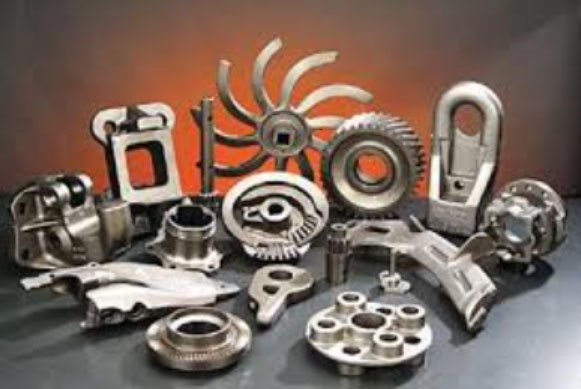
One of the initial measures involved the application of chills to accelerate cooling in the thick sections. We positioned chills on the upper, lower, and side surfaces of the 110 mm region to enhance heat extraction. The effectiveness of chills can be modeled using the solidification time equation derived from Chvorinov’s rule: $$ t = B \cdot \left( \frac{V}{A} \right)^2 $$ where \( t \) is the solidification time, \( V \) is the volume of the casting section, \( A \) is the surface area, and \( B \) is a mold constant. By increasing the effective surface area through chills, we reduced \( t \), thereby promoting faster austenite shell formation and inhibiting碎块状石墨. However, for very thick sections, chills alone are insufficient, necessitating complementary strategies.
To improve graphite nucleation, we incorporated graphite-based carburizers into the melt. Unlike conventional petroleum coke, graphite-type carburizers offer higher carbon activity and better dissolution characteristics. We added 0.1% to 0.3% of graphite carburizer to the furnace prior to tapping, which enhanced the graphitization potential during treatment. The carbon equivalent (CE) plays a crucial role in graphite formation, calculated as: $$ \text{CE} = \%C + \frac{1}{3}(\%Si + \%P) $$ By optimizing CE through carburization, we increased the number of potential nucleation sites for graphite nodules in ductile iron castings.
The selection of spheroidizing agents was critical. Rare earth (RE) elements, particularly cerium and lanthanum, aid in desulfurization and neutralize trace elements that impede nodularity. However, excessive RE can prolong eutectic solidification and promote碎块状石墨 by stabilizing liquid channels between austenite-graphite eutectic cells. We used a low-RE spheroidizer containing 1.2% to 1.4% pure lanthanum to balance these effects. The role of RE in forming high-melting-point compounds can be expressed as: $$ \text{RE} + \text{Impurities} \rightarrow \text{RE-Compounds} $$ This reaction purifies the melt and provides heterogeneous nucleation sites, increasing graphite nodule count without inducing degeneration in ductile iron castings.
Inoculation was implemented through a triple-treatment approach to maximize graphite nucleation throughout solidification. We combined ladle inoculation, in-mold inoculation, and stream inoculation during pouring, with total inoculant additions ranging from 0.6% to 1.0%. The effectiveness of inoculation in increasing nodule count \( N \) can be related to the cooling rate \( \frac{dT}{dt} \) and inoculant potency: $$ N = k \cdot \left( \frac{dT}{dt} \right)^n \cdot [\text{Inoculant}] $$ where \( k \) and \( n \) are material constants. This multi-stage inoculation ensured a high density of stable nuclei, critical for preventing graphite degeneration in thick-section ductile iron castings.
| Parameter | Baseline Value | Optimized Value | Impact on Nodule Count (nodules/mm²) | Impact on Nodularity (%) |
|---|---|---|---|---|
| Chill Application | None | Full coverage | +20 | +5 |
| Carburizer Type | Petroleum Coke | Graphite-Based | +15 | +3 |
| Spheroidizer RE Content | High RE | Low RE (La-based) | +25 | +7 |
| Inoculation Stages | Single | Triple | +30 | +10 |
The combined implementation of these measures resulted in a significant improvement in the microstructural quality of the ductile iron castings. In the 110 mm thick section, the graphite nodule count increased to 130 nodules/mm², and nodularity exceeded 85%. The austempering heat treatment subsequently yielded a tensile strength of 980 MPa and an elongation of 4.5%, meeting the stringent requirements for agricultural applications. The refinement in graphite morphology underscores the importance of a holistic approach in producing high-integrity ductile iron castings.
Further analysis of the solidification kinetics reveals that the cooling rate \( \frac{dT}{dt} \) is a dominant factor influencing graphite nucleation. For ductile iron castings, the relationship between nodule count \( N \) and cooling rate can be approximated by: $$ N = A \cdot \exp\left(-B \cdot \frac{1}{\frac{dT}{dt}}\right) $$ where \( A \) and \( B \) are constants derived from experimental data. This exponential dependence highlights why accelerated cooling through chills is vital. Additionally, the role of inoculation in providing nucleation sites can be quantified using the interfacial energy theory, where the critical radius for nucleation \( r^* \) is given by: $$ r^* = \frac{2\gamma}{\Delta G_v} $$ where \( \gamma \) is the interfacial energy and \( \Delta G_v \) is the volumetric free energy change. Effective inoculation reduces \( r^* \), facilitating more graphite nodules in ductile iron castings.
| Element/Parameter | Target Range | Measured Value | Influence on Graphite Formation |
|---|---|---|---|
| Carbon (C) | 3.6-3.8% | 3.7% | Enhances graphite nucleation |
| Silicon (Si) | 2.2-2.5% | 2.4% | Promotes ferrite formation |
| Magnesium (Mg) | 0.04-0.06% | 0.05% | Essential for spheroidization |
| Lanthanum (La) | 0.01-0.02% | 0.015% | Controls trace elements |
| Inoculant Addition | 0.6-1.0% | 0.8% | Increases nodule count |
| Solidification Time | Minimized | Reduced by 30% | Prevents graphite degeneration |
In conclusion, the production of thick-section ductile iron castings requires a multifaceted strategy to counteract inherent solidification challenges. By integrating chills for accelerated cooling, graphite-based carburizers for enhanced graphitization, low-RE spheroidizers to optimize rare earth effects, and multi-stage inoculation to boost nucleation, we achieved consistent microstructural quality. The success of these ductile iron castings in demanding applications validates the need for synergistic process controls, emphasizing that no single measure can fully eliminate defects in heavy sections. Future work may explore dynamic solidification modeling to further refine these parameters for ductile iron castings.