
In the production of grey cast iron components, such as pump bodies for hydraulic systems, achieving a consistent and high pearlite content throughout the cross-section is paramount for ensuring mechanical strength, wear resistance, and overall reliability. A recurring challenge I have encountered in industrial foundry practice is the significant disparity in pearlite content between the surface layer (approximately 1-2 mm thick) and the core of the casting. While the core typically exhibits a desirable pearlite content exceeding 90%, the surface layer often shows a markedly lower value, sometimes falling to 70-80%. This surface deficiency in pearlite, the strong, lamellar mixture of ferrite and cementite, effectively reduces the load-bearing cross-section and can act as a initiation site for cracks, compromising the component’s service life. This article, drawing from extensive practical investigation, delves into the root causes of this phenomenon and details effective process improvements from the perspective of a practicing foundry engineer. The focus remains squarely on grey cast iron, its metallurgy, and the practical levers available to control its as-cast microstructure.
The fundamental issue stems from the inherent nature of the casting process. The surface of a grey cast iron casting solidifies and cools in direct contact with the molding sand, leading to a significantly higher cooling rate compared to the thermally insulated core. This rapid cooling induces a state of high undercooling at the casting-mold interface. According to solidification theory, the critical nucleus size for graphite formation, $r^*$, is inversely related to the undercooling, $\Delta T$:
$$ r^* = \frac{2 \gamma_{SL}}{\Delta G_v} $$
Where $\gamma_{SL}$ is the solid-liquid interfacial energy and $\Delta G_v$ is the volume free energy change, which increases with undercooling. Higher undercooling ($\Delta T \uparrow$) decreases $r^*$, enabling a much larger number of potential graphite nuclei to become active. Consequently, the surface region becomes populated with a high density of fine graphite particles. Often, this manifests not as the desirable uniformly distributed Type A graphite, but as the undesired undercooled graphite forms: Type D (interdendritic) or Type E (eutectic with austenite).
The connection between graphite morphology and pearlite formation is crucial. During the subsequent eutectoid transformation, where austenite decomposes into ferrite and graphite or pearlite, the existing graphite particles act as preferred sites for carbon diffusion and precipitation. When the surface layer contains an excessive number of fine, dispersed graphite particles (as in D/E types), they provide a vast number of sinks for carbon atoms diffusing from the decomposing austenite. This promotes the formation of ferrite around these graphite particles, depleting the carbon in the surrounding matrix and suppressing the formation of pearlite. Therefore, a primary objective is to shift the surface graphite morphology towards Type A, which is characterized by longer, well-distributed flakes that present fewer, more organized sites for carbon deposition during the eutectoid reaction, thereby favoring pearlite formation.
However, graphite morphology is not the sole dictator of pearlite content. I have observed instances where the graphite structure was predominantly Type A (>50%), yet the pearlite percentage remained below 90%. This indicates that while graphite morphology sets the stage, the stability of the austenite during cooling and the driving force for pearlite nucleation are independently critical. Therefore, a successful strategy must be two-pronged: (1) modify solidification to promote favorable Type A graphite at the surface, and (2) chemically stabilize the austenite to favor its decomposition into pearlite rather than ferrite. The following sections outline the specific process parameters I manipulated to achieve this dual goal for grey cast iron castings.
Theoretical Framework and Process Improvement Levers
The chemical composition of grey cast iron is the primary tool for controlling its microstructure. The Carbon Equivalent (CE) is a foundational concept, approximating the combined effect of key graphitizing elements:
$$ CE = C + \frac{1}{3}(Si + P) $$
For a grade like HT250, CE is typically maintained around 4.0% to ensure adequate fluidity and avoid excessive chilling while achieving the required strength. Within this constraint, the ratio of Silicon to Carbon (Si/C) emerges as a powerful, yet often overlooked, parameter. Silicon is a potent graphitizer, but in the high-undercooling environment of the casting surface, its effect can be counterproductive if excessive. A high Si/C ratio (e.g., 0.70) with high silicon content provides a strong graphitizing force that, under rapid cooling, can still lead to a proliferation of small graphite nuclei. By reducing the Si/C ratio (e.g., to approximately 0.55-0.56) while keeping CE constant, we effectively increase the absolute carbon content. This higher carbon content favors the growth of larger, Type A graphite flakes during the eutectic reaction, as the carbon diffusion distance is better utilized for growth rather than nucleation of new particles. The relationship can be conceptualized by considering the growth velocity $v$ of a graphite flake, which is influenced by carbon diffusion:
$$ v \propto D_C \cdot \frac{\Delta C}{l} $$
where $D_C$ is the carbon diffusion coefficient, $\Delta C$ is the carbon concentration gradient, and $l$ is a characteristic diffusion distance. A higher overall carbon content can influence the gradient and stability of growth fronts.
The second lever is inoculation. Inoculation is the late addition of small amounts of materials (like FeSi containing Ca, Ba, Zr) to the molten iron to provide heterogeneous nucleation sites for graphite. Standard practice might involve a single inoculation at the spout during tapping. To combat surface undercooling, I enhanced this by implementing a double inoculation practice: a primary inoculation of 0.3% at tap and a secondary, late stream inoculation of 0.1% during pouring. The late inoculation introduces fresh, active nuclei just before solidification, effectively reducing the effective undercooling ($\Delta T_{eff}$) by providing more nucleation sites earlier in the cooling curve. This can be modeled as increasing the number of potent substrates, $N$, thereby shifting the start of the eutectic reaction to a higher temperature and promoting a more cooperative growth of austenite and graphite, leading to Type A graphite. The number of graphite nodules/flakes per unit volume, $N_v$, after inoculation can be related to the potency and number of inoculant particles added.
The third lever is alloying with pearlite-stabilizing elements. While the above measures target graphite morphology, we must also directly influence the eutectoid transformation. Elements like Tin (Sn), Copper (Cu), and Chromium (Cr) increase the stability of pearlite by reducing the transformation temperature and slowing the diffusion of carbon, making the formation of ferrite more difficult. Tin is particularly effective in small quantities. Its mechanism involves segregating to the austenite grain boundaries and interfaces, inhibiting the diffusion-controlled growth of ferrite. The effect on the eutectoid reaction temperature, $T_e$, can be approximated for dilute additions. The key is to keep the Sn addition below 0.1% to avoid the formation of brittle intermetallic phases at grain boundaries. The choice of Sn, as opposed to Cr or Cu, was based on its potent effect at very low levels and cost-effectiveness for the specific application. The stabilizing effect can be thought of as increasing the energy barrier, $\Delta G^*$, for ferrite nucleation relative to pearlite nucleation within the austenite matrix.
Experimental Methodology and Process Parameters
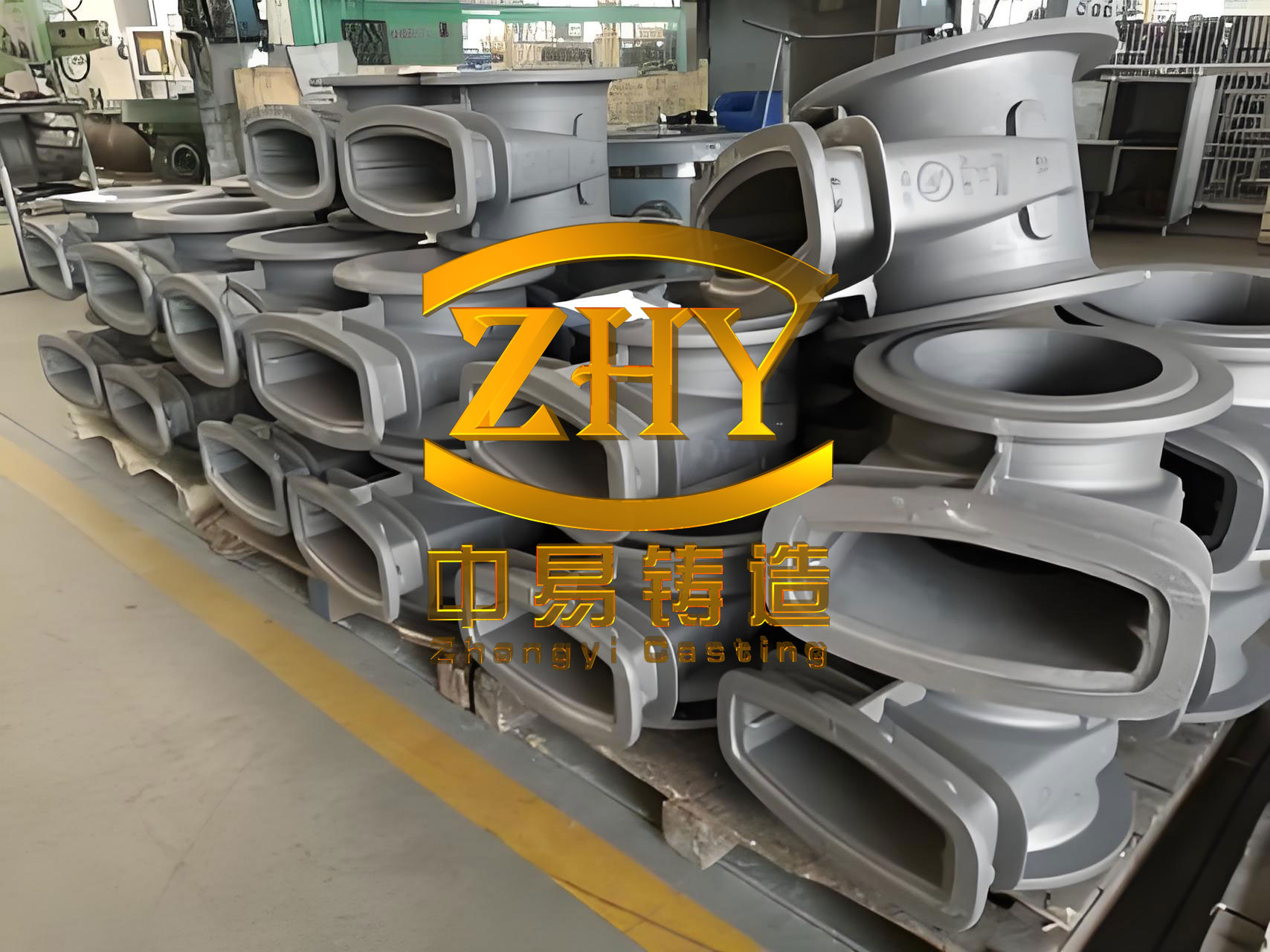
The investigations were conducted on the production of a hydraulic pump body weighing approximately 17 kg with an average wall thickness of 10 mm, specified as HT250 grey cast iron. The melting was carried out in a 1-ton medium-frequency induction furnace. The base chemistry was tightly controlled using spectroscopic and carbon/sulfur analyzers. The molding process employed green sand on an automated molding line, with sand moisture content maintained between 3.2-3.5%. Pouring temperatures were consistently in the range of 1480-1520°C. For each experimental batch, the first casting produced was selected for destructive testing. Samples for Brinell hardness (HB-3000 tester), tensile strength (WEW-30C machine), and metallographic analysis were taken from identical locations on the casting, specifically comparing the subsurface region (1-2 mm depth) and the core.
The experimental matrix was designed to isolate and combine the effects of the three key levers. The baseline condition represented the original problematic process. Subsequent trials systematically introduced changes. The chemical targets and process modifications for the key trials are summarized below:
| Trial ID | Target C (wt.%) | Target Si (wt.%) | Target Si/C Ratio | Sn Addition (wt.%) | Inoculation Practice | Primary Focus |
|---|---|---|---|---|---|---|
| A (Baseline) | ~3.26 | ~2.29 | 0.70 | 0 | Single (0.4% at tap) | Original Parameters |
| B | ~3.30 | ~1.81 | 0.55 | 0 | Single (0.4% at tap) | Effect of Low Si/C |
| C | ~3.32 | ~1.87 | 0.56 | 0 | Double (0.3% tap + 0.1% pour) | Effect of Enhanced Inoculation |
| D (Optimized) | ~3.29 | ~1.85 | 0.56 | 0.062 | Double (0.3% tap + 0.1% pour) | Combined Low Si/C, Inoculation, and Sn |
All trials maintained a Carbon Equivalent close to 4.0%. The inoculant used throughout was a commercially available Ca-Ba-Zr-bearing ferrosilicon. Tin was added to the ladle in pure form during tapping for Trial D. Metallographic examination involved standard sample preparation, etching with nital, and observation under an optical microscope to quantify graphite type (according to ASTM A247), graphite size, and the percentage of pearlite in the matrix using point-count or image analysis methods.
Results, Analysis, and Discussion
The comprehensive results from the experimental trials are presented in Table 2. This data forms the core of the analysis, clearly demonstrating the impact of each parameter shift on the subsurface microstructure and mechanical properties of the grey cast iron castings.
| Trial ID | Measured C (wt.%) | Measured Si (wt.%) | Si/C Ratio | Sn (wt.%) | Inoc. Count | Subsurface Pearlite (%) | Core Pearlite (%) | Tensile Strength (MPa) | Hardness (HB) | Subsurface Graphite Type (A-type %) | Graphite Length (Scale) |
|---|---|---|---|---|---|---|---|---|---|---|---|
| A | 3.26 | 2.29 | 0.70 | 0 | 1 | 70-80 | >90 | 223 | 207 | <50 | — |
| B | 3.30 | 1.81 | 0.55 | 0 | 1 | 70-80 | >90 | 245 | 217 | <50 | — |
| C | 3.32 | 1.87 | 0.56 | 0 | 2 | 75-85 | >90 | 235 | 213 | <70 | 6 |
| D | 3.29 | 1.85 | 0.56 | 0.062 | 2 | >90 | >90 | 265 | 214 | >70 | 5 |
Analysis of Individual Effects:
1. Effect of Reducing Si/C Ratio (Trial A vs. B): Comparing Trial A (baseline, Si/C=0.70) and Trial B (Si/C=0.55) shows that merely lowering the Si/C ratio, while maintaining single inoculation, did not significantly improve the subsurface pearlite content—it remained in the 70-80% range. However, a notable increase in tensile strength (from 223 MPa to 245 MPa) and hardness was observed. This suggests that the lower Si/C ratio, with its higher carbon content, began to improve the overall matrix strength, potentially by slightly refining the graphite structure or increasing the density of the metal, but it was insufficient to overcome the strong undercooling-driven ferrite formation at the surface. The graphite morphology likely remained a mix, with significant undercooled types present.
2. Effect of Enhanced Inoculation (Trial B vs. C): Trial C introduced double inoculation while keeping a low Si/C ratio similar to Trial B. This resulted in a marginal improvement in subsurface pearlite (75-85%) and a slight change in graphite parameters (A-type increased to <70%, length scale recorded). The tensile strength was slightly lower than Trial B. This indicates that enhanced inoculation alone helped modify the graphite morphology somewhat, increasing the proportion of Type A graphite and slightly coarsening the flakes (longer length, scale 6). This shift created a slightly more favorable condition for pearlite formation, explaining the 5-10% increase in its content. The minor drop in strength could be attributed to the coarsening of graphite, which can slightly reduce strength despite a more favorable matrix.
3. Effect of Combined Optimization (Trial D): The synergistic effect of all three levers is dramatically evident in Trial D. By combining the low Si/C ratio (~0.56), double inoculation, and the addition of 0.062% Sn, the subsurface pearlite content exceeded 90%, effectively eliminating the deficiency. The graphite morphology was significantly improved, with A-type graphite exceeding 70% and a controlled flake length (scale 5). Most importantly, this microstructural optimization translated into superior mechanical properties: the tensile strength reached 265 MPa, the highest among all trials, while hardness remained consistent at a desirable level. This confirms that the strategy successfully addressed both aspects of the problem: the low Si/C and enhanced inoculation promoted the formation of a more favorable, uniformly distributed Type A graphite network at the surface, reducing the number of potent carbon sinks. Simultaneously, the addition of Sn provided a strong chemical stabilizing force, increasing the driving force for the austenite to transform into pearlite instead of ferrite during the eutectoid reaction, even in the presence of the modified graphite structure.
The role of Sn can be further conceptualized using a simplified model for the eutectoid transformation kinetics. The growth rate of ferrite, $G_\alpha$, is highly diffusion-controlled, while pearlite growth, $G_P$, involves a coupled interface diffusion. An alloying element like Sn, which segregates to interfaces, can disproportionately slow down $G_\alpha$ more than $G_P$. The resulting shift in the Time-Temperature-Transformation (TTT) diagram pushes the “nose” for ferrite formation to longer times, making pearlite the predominant transformation product under normal casting cooling conditions. The effective transformation product, $f_{pearlite}$, can be thought of as:
$$ f_{pearlite} \approx 1 – \exp\left(-k \cdot (G_P \cdot t)^n\right) $$
where $k$ and $n$ are constants, $G_P$ is the pearlite growth rate, and $t$ is time below the eutectoid temperature. Sn addition effectively increases the effective $G_P$ relative to competing transformations for the given cooling curve $T(t)$ of the casting surface.
Practical Implications and Broader Context for Grey Cast Iron
The findings from this systematic study have direct and actionable implications for foundries producing high-integrity grey cast iron castings. The three-pronged approach—adjusting the Si/C ratio, optimizing inoculation practice, and employing minor alloying with elements like Tin—provides a robust framework for solving the problem of low surface pearlite. It is important to note that these parameters are interrelated. For instance, the effectiveness of inoculation can be influenced by the base composition (Si/C, sulfur level). Therefore, a holistic view of the melting and treatment process is necessary.
While Tin proved highly effective in this case, other pearlite stabilizers like Copper and Chromium are also widely used. Copper (typically 0.3-0.5%) not only promotes pearlite but also enhances corrosion resistance and slightly improves strength. Chromium (0.25-0.35%) is a strong carbide former and pearlite promoter, but caution is required as levels above 0.35% can promote chilling, increase hardness unevenly, and increase shrinkage tendency. The choice depends on the specific grade, section size, and property requirements of the grey cast iron casting. The general formula for achieving a high, consistent pearlite content can be summarized as a multi-variable optimization:
$$ \text{High Pearlite} \propto \left( \text{Low Si/C} + \text{Optimal Inoculation} + \text{Controlled Pearlite Stabilizer} \right) \times \text{Consistent Process Control} $$
Process control extends beyond chemistry to include pouring temperature, mold properties (like sand moisture and permeability which affect cooling rate), and casting design.
Furthermore, the economic aspect must be considered. Tin, though potent, is a relatively expensive addition. The cost-benefit analysis must justify its use based on the criticality of the component. In many cases, a combination of Cu and Cr might offer a more cost-effective solution, provided the risk of carbides is managed. The key takeaway is that a deficiency in surface pearlite in grey cast iron is not an intractable problem but a metallurgical challenge that can be systematically addressed by understanding and controlling the solidification and transformation phenomena.
Conclusion
In conclusion, the challenge of low pearlite content in the surface layer of grey cast iron castings, which jeopardizes component reliability and fatigue life, stems from the combined effects of rapid surface cooling and the resulting microstructural outcomes. The high undercooling promotes fine, undercooled graphite morphologies (Type D/E) that, along with the lack of pearlite-stabilizing elements, favor ferrite formation during the eutectoid transformation. Through targeted process improvements, this issue can be effectively mitigated. The experimental evidence clearly demonstrates that a synergistic approach is necessary. Simply lowering the Si/C ratio improves matrix strength but does not fully rectify the subsurface pearlite deficit. Enhancing inoculation moves the graphite morphology in the right direction. However, it is the combination of a reduced Si/C ratio (around 0.56), an enhanced double inoculation practice, and the strategic addition of a small amount of pearlite-stabilizing element like Tin (approximately 0.06%) that delivers a comprehensive solution. This optimized process results in a surface microstructure characterized by a high percentage of Type A graphite and a pearlite content exceeding 90%, leading to a significant improvement in tensile strength and ensuring a more uniform and reliable property profile throughout the grey cast iron casting. This methodology provides a practical and effective framework for foundry engineers to enhance the quality and performance of critical cast components.