
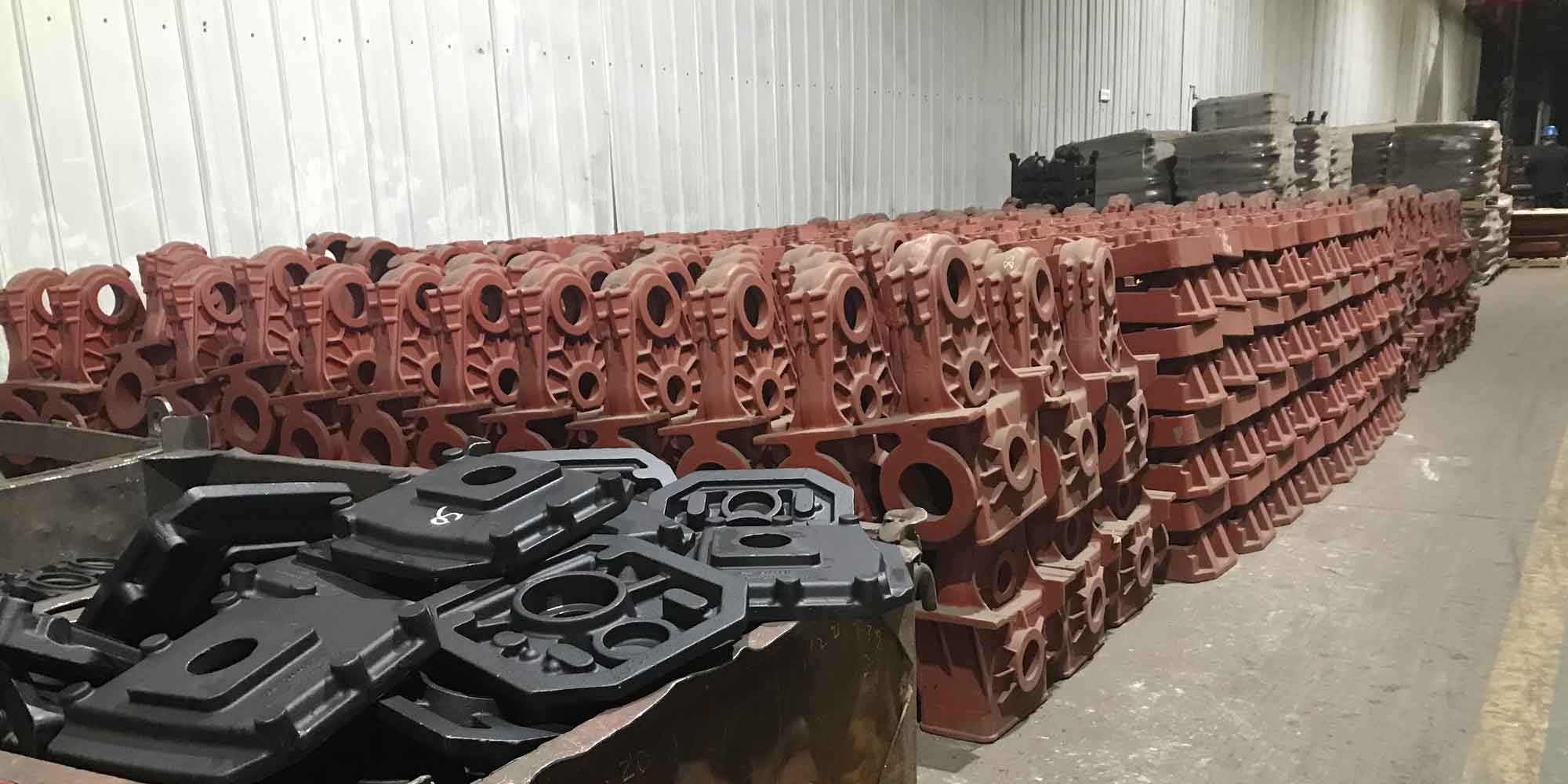
In the production of large-scale steel castings, the complexity of the metallurgical process and casting technology presents significant challenges. High pouring temperatures and intricate procedures frequently lead to the formation of various metallurgical and casting defects. These defects, to varying degrees, compromise both the internal integrity and the external appearance of the final product. The visual quality of a steel casting is not merely an aesthetic concern; it is a critical product metric that shapes the client’s initial perception and overall satisfaction. From a practical, on-the-floor perspective, numerous latent factors can influence this outcome. However, my experience consistently identifies two dominant variables: the cleanliness of the mold cavity and the surface condition of the pattern. This analysis, grounded in extensive production practice, delves into the impact of these key factors and proposes targeted improvement strategies. The objective is to systematically enhance the surface state of steel castings, thereby elevating overall product quality and reliability.
The Critical Role of Mold Cavity Cleanliness
During the pouring of molten steel, the cleanliness of the mold cavity is paramount for achieving a superior surface finish. Inclusions from the smelting process and loose sand that infiltrates the gating system during setup can be carried into the cavity by the flowing metal. As the steel solidifies, these low-density inclusions and sand particles tend to float upwards. Nevertheless, a significant portion can become trapped and solidify at locations like changes in cross-section, corners, and the upper surfaces of the casting. When these impurities are exposed on the casting surface, they necessitate removal through grinding or other costly rework. Therefore, implementing effective measures to prevent the ingress of loose sand is not a suggestion but a necessity for quality steel castings.
The gating systems for large steel castings are often complex, involving lengthy networks of ceramic tubes that can extend over 40 meters. This length and complexity increase the probability of sand contamination during assembly. Consequently, protecting each tube junction during the铺设 process is crucial. Through validation on products such as gas turbine casings, steam turbine components, and hydroelectric runner castings, three primary material-based protection methods have proven effective in enhancing cavity cleanliness.
1. PVC Plastic Film
PVC plastic film offers an excellent balance of cost-effectiveness and operational convenience. A recommended thickness ranges from 0.4 to 1 mm, with the specific choice depending on shop-floor requirements. Transparent film is preferred for ease of inspection. The procedure involves first checking the interior of the ceramic tube for existing contaminants. The film is then wrapped snugly around the open end of the tube to be protected. The tightness should be sufficient to seal the opening but not hinder the connection with the adjacent tube. During tube coupling, any floating sand or debris is blocked by the film. Notably, the film does not require removal after the gating system is complete. During pouring, as molten steel fills the cavity, the displaced air pressurizes and exits through the vents, carrying the thin film out of the system without contaminating the metal.
2. Thin Steel Sheet
Steel sheets with a thickness of less than 1 mm can also be employed for protection. Although the initial cost is higher, they are reusable, needing only a basic clean between uses. The sheet must be pre-fabricated to a size slightly larger than the outer diameter of the ceramic tube. After a cleanliness check, the sheet is placed over the tube junction. Once the tube is adequately covered by molding sand, the sheet must be manually withdrawn. This step is critical—failure to retrieve it could obstruct the flow of metal. However, the withdrawal process is challenging in compacted sand, risks disturbing aligned tubes, and complicates any secondary cleanliness inspection.
3. Polystyrene Foam Board
Polystyrene foam board is a low-cost, single-use option. It is machined into cylindrical plugs matching the inner diameter of the ceramic tubes. Precision in sizing is essential: an oversized plug won’t fit, while an undersized one allows sand infiltration. The plug must also have sufficient thickness to remain upright in the tube. Like the plastic film, the foam plug remains in place during pouring and is expelled from the cavity by escaping gases, posing no contamination risk.
The universal principle for all three methods is that they must not impede the flow of molten steel or introduce foreign substances into the cavity. A comparative summary is provided below:
| Material | Cost per Unit Area | Reusable? | Application Difficulty | Potential Impact on Molten Steel | Protection Efficacy |
|---|---|---|---|---|---|
| PVC Plastic Film | Low | No | Easy | None | Excellent |
| Thin Steel Sheet | High | Yes | Difficult | Obstruction if not retrieved | Good |
| Polystyrene Foam | Very Low | No | Moderate (precision machining required) | None | Good |
Based on this analysis, while thin steel sheets and foam boards offer good protection, their practical drawbacks in fabrication and application are notable. PVC plastic film emerges as the optimal choice, delivering superior protection with straightforward application and high cost-effectiveness, making it highly recommended for ensuring clean cavities in steel castings production.
Influence of Pattern Surface Condition on Casting Finish
The surface finish of the pattern is directly replicated onto the mold and, consequently, onto the casting itself. For large steel castings, patterns are frequently constructed from wood and consist of numerous loose pieces to facilitate moldmaking. With repeated use, these patterns sustain damage during the draw process. Natural defects such as dents, scratches, and wear at parting lines and loose-piece junctions inevitably develop. Unaddressed, these defects not only degrade the casting’s shape and surface but also shorten the pattern’s service life. Furthermore, repaired areas on patterns, especially at joints and fillets, if not sanded smooth, can lead to casting defects like veining or grooves.
To quantitatively understand the relationship between pattern surface imperfection and casting surface roughness, a controlled experiment was conducted. Artificial defects of specific depths were created on a test pattern in areas representing planes, curved surfaces, and fillet roots. The goal was to establish a correlation that could guide pattern maintenance standards.
Experimental Methodology and Quantitative Analysis
Three defect depth ranges were engineered: 1-2 mm, 2-4 mm, and 4-6 mm. For each depth and surface type (plane, curve, fillet), three distinct 300 mm x 300 mm test zones were marked. Defects were created using fillers (for positive features) or grinding tools (for negative features), with their depths meticulously measured. Standard molding practices were followed in these zones, ensuring proper sand compaction. After casting, heat treatment, and initial shot blasting, the corresponding areas on the steel castings were inspected and their surface roughness assessed.
The results demonstrated a clear correlation. The depth of the pattern defect ($d_p$) directly influences the severity of the resultant casting surface irregularity. We can model this relationship for a given molding material and process as a transfer function. The apparent depth or height of the defect on the casting ($d_c$) is not necessarily equal to $d_p$ due to factors like metal shrinkage ($S$) and the filling dynamics, but it is directly proportional. A simplified expression can be:
$$ d_c \propto f(d_p, S, \phi) $$
where $\phi$ represents process-related factors (sand type, coating, etc.).
More practically, the inspection results were categorized to establish a pass/fail criterion for pattern maintenance. The casting surface roughness was graded (e.g., Grade A1: excellent, A4: unacceptable). The experimental correlation is summarized below:
| Pattern Surface Defect Depth Range (mm) | Expected Casting Surface Roughness Grade | Action Required on Pattern |
|---|---|---|
| 0 – 1 | A1 (Acceptable) | None. Standard maintenance. |
| 1 – 2 | A2 / A3 (Marginal to Requires Review) | Repair recommended based on criticality of casting area. |
| > 2 | A4 (Unacceptable) | Mandatory repair and surface refinishing before next use. |
This empirical data provides a quantitative basis for pattern shop procedures. To ensure the surface quality of steel castings meets specified grades, patterns must be regularly inspected. Any defect exceeding the permissible depth limit for the desired casting grade must be repaired and the surface refinished to a smooth state. This proactive maintenance is far more cost-effective than correcting defective castings.
Integrative Quality Control Model
The overall surface quality ($Q_s$) of a steel casting can be conceptualized as a function of multiple variables, with cavity cleanliness ($C_c$) and pattern surface condition ($P_s$) being the primary controlled variables discussed here. Other factors include molding sand properties ($M$), coating quality ($K$), and pouring parameters ($T_p$ for temperature, $V_p$ for velocity).
We can express this relationship as:
$$ Q_s = \Psi(C_c, P_s, M, K, T_p, V_p, …) $$
For the purpose of focusing on the factors within the mold-making domain, we can isolate a sub-function:
$$ Q_{s(mold)} = \Gamma(C_c, P_s) $$
Where $\Gamma$ is maximized when $C_c \rightarrow 1$ (perfect cleanliness) and $P_s \rightarrow S_{max}$ (optimal pattern smoothness).
The improvement measures proposed directly optimize these two inputs. Implementing film protection for gating systems drives $C_c$ closer to 1, reducing inclusions. Enforcing a pattern maintenance standard based on defect depth limits ensures $P_s$ is maintained at a high level, minimizing replicated surface defects. The synergy of these actions provides a robust foundation for significantly enhancing the visual and dimensional quality of steel castings.
Conclusion
In the pursuit of high-integrity steel castings, controlling mold cavity cleanliness and pattern surface condition is fundamental. For cavity cleanliness, the use of PVC plastic film (0.4-1 mm thickness) at ceramic tube junctions is a highly effective, economical, and operator-friendly solution that significantly reduces sand-based inclusions. For pattern condition, establishing and enforcing a quantitative maintenance standard—where defects beyond a critical depth (e.g., >2 mm for high-grade surfaces) are mandatorily repaired—prevents the transfer of irregularities to the casting. By systematically addressing these two pivotal factors, foundries can achieve a marked and consistent improvement in the surface quality of their steel castings, leading to reduced rework, improved customer satisfaction, and stronger market competitiveness. The methodologies and empirical correlations presented here serve as a practical reference for quality enhancement in steel casting production.