
The integrity and service life of critical structural components, such as bogie frames in railway vehicles, are profoundly dependent on the quality of the base materials and the processes used to join or repair them. Steel castings are favored in these applications due to their design flexibility, high structural strength, and isotropic mechanical properties. However, defects inevitably arise during casting, machining, or in-service. Rather than scrapping valuable components, weld repair offers a cost-effective method to restore integrity and functionality. The effectiveness of this repair directly impacts the component’s performance and longevity, making the optimization of weld repair processes for steel castings a subject of significant engineering importance. This investigation focuses on the E260-450-MS grade steel casting, a material specified under international railway standards, and systematically evaluates the influence of three distinct post-weld repair protocols on the microstructure and mechanical properties of the repaired joint.
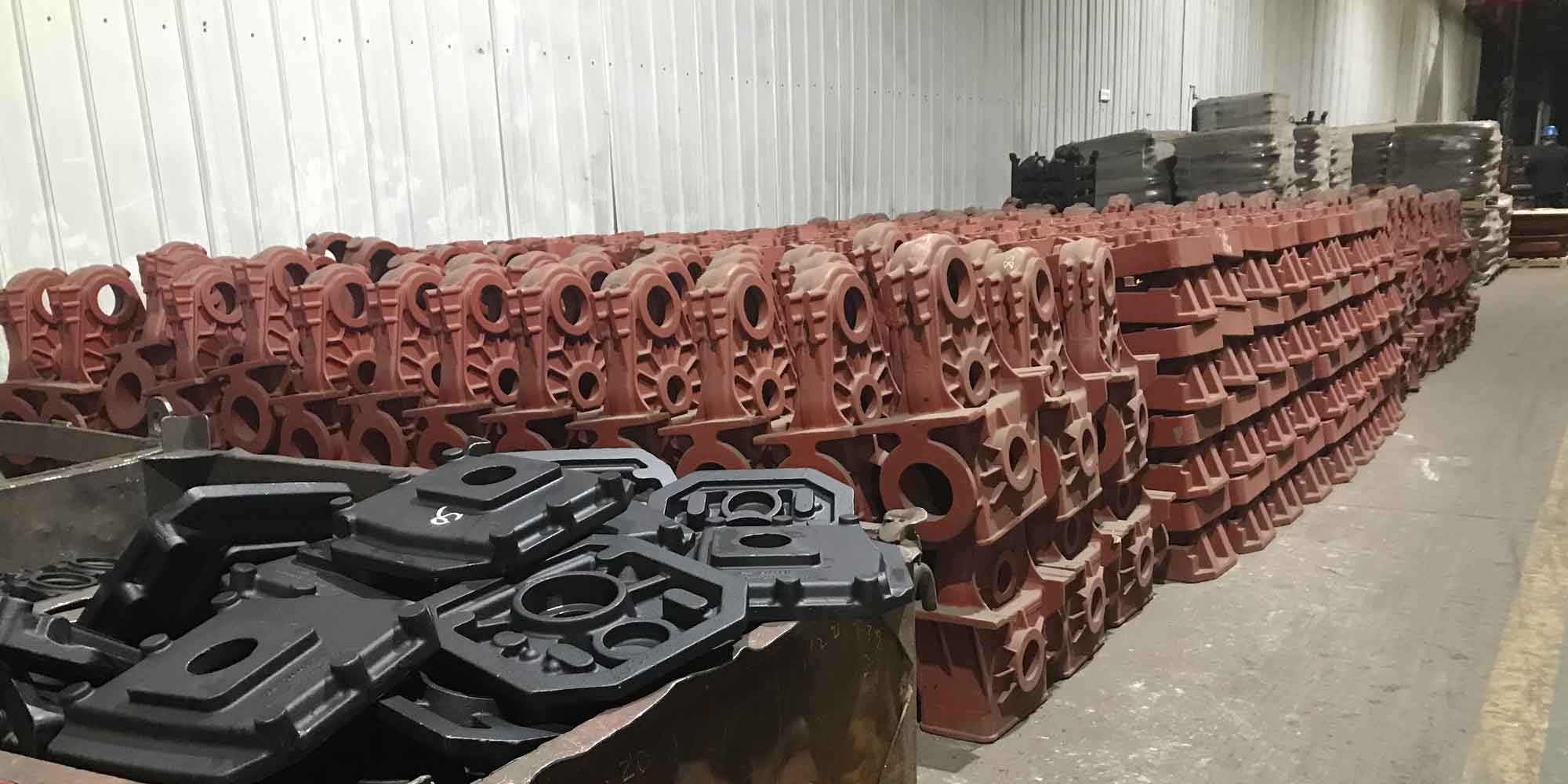
The primary challenge in welding or repairing steel castings lies in managing the thermal cycle to avoid the formation of detrimental microstructural phases, such as martensite, which can lead to embrittlement and cracking, particularly in the heat-affected zone (HAZ). The selection of appropriate preheating, interpass temperature control, and post-weld heat treatment (PWHT) is crucial. These parameters are designed to slow down cooling rates, allowing for more diffusion-controlled phase transformations and reducing thermal stresses. This study employs Metal Active Gas (MAG) welding, a common industrial process, to simulate a full-thickness repair on E260-450-MS steel casting. The core of the experiment is a comparative analysis of three different treatment sequences applied after the identical welding procedure. The goal is to determine the most efficient and effective protocol that yields a sound joint with mechanical properties meeting or exceeding the base material requirements, without necessarily resorting to energy-intensive and time-consuming full heat treatments.
Materials and Experimental Methodology
Base Material and Consumable
The substrate material used in this investigation is a low-carbon, manganese-silicon steel casting designated E260-450-MS. This grade is engineered to provide a minimum yield strength of 260 MPa and a minimum tensile strength of 450 MPa, with good impact toughness, making it suitable for dynamically loaded structures. The weld repair was performed using a solid wire classified as A-G46 4M21 4Si1, which is a common choice for joining and repairing medium-strength steels. The chemical composition and room-temperature mechanical properties of both the steel casting and the welding wire are detailed in Table 1 and Table 2, respectively. The wire exhibits a higher strength level compared to the base steel casting, constituting a high-strength (overmatching) weld metal configuration.
| Material | C | Si | Mn | P | S | Cr | Cu | Ni | V |
|---|---|---|---|---|---|---|---|---|---|
| Steel Casting | ≤0.25 | ≤0.50 | ≤1.00 | ≤0.04 | ≤0.04 | ≤0.25 | — | ≤0.35 | — |
| Welding Wire | 0.06–0.14 | 0.80–1.20 | 1.60–1.90 | ≤0.025 | ≤0.025 | ≤0.15 | ≤0.15 | ≤0.15 | ≤0.03 |
| Material | Yield Strength (Rp0.2, MPa) | Tensile Strength (Rm, MPa) | Elongation (A, %) | Impact Energy (J) at -40°C |
|---|---|---|---|---|
| Steel Casting | ≥260 | ≥450 | ≥20 | — |
| Welding Wire | ≥460 | 530–680 | ≥20 | ≥47 |
Weld Repair Procedure and Specimen Designation
Plates of dimensions 500 mm × 150 mm × 12 mm were extracted from the steel casting. A single-V groove preparation with a 30° bevel angle and a 2 mm root face was machined to simulate a repair joint. The MAG welding process was employed using a shielding gas mixture of 80% Ar and 20% CO2. The joint was filled in four passes: root, two filler, and a final cap pass. The essential welding parameters are consolidated in Table 3.
| Weld Pass | Current (A) | Voltage (V) | Travel Speed (mm/s) | Approx. Heat Input (J/mm) |
|---|---|---|---|---|
| Root (1st) | 155–170 | 17–19 | 3–4 | 527–861 |
| Filler (2nd) | 270–300 | 28–31 | 7–9 | 672–1063 |
| Filler/Cap (3rd/4th) | 280–310 | 29–32 | 4–5 | 1299–1984 |
The key variable in this study was the thermal management protocol applied before and after welding. Three distinct conditions were evaluated, as defined in Table 4.
| Specimen ID | Preheat / Interpass Temperature | Post-Weld Treatment |
|---|---|---|
| E1 | 120–150 °C | Air Cooled + Full Stress Relief Anneal* |
| E2 | 120–150 °C | Air Cooled (No Heat Treatment) |
| E3 | No Preheat | Insulated & Covered for Slow Cooling (No Heat Treatment) |
*Annealing Cycle: Heat to 590 ±15 °C at ≤150 °C/h, hold for 3 hours, cool to ≤200 °C at ≤120 °C/h.
Characterization Techniques
Transverse sections were extracted from the welded joints for comprehensive analysis. Metallographic specimens were prepared, etched with 5% nital, and examined using optical microscopy to characterize the microstructure in the weld metal (WM), heat-affected zone (HAZ), and base metal (BM) regions of the steel casting.
Tensile tests were conducted on transverse-weld specimens according to relevant standards. The yield strength (Rp0.2), ultimate tensile strength (Rm), and elongation (A) were measured. Vickers microhardness (HV3) traverses were performed across the weld cross-section along two lines: one near the top surface (2 mm below) and one along the mid-thickness. The hardness distribution provides insight into local strength variations and potential hardening.
Charpy V-notch impact tests were performed at room temperature. Notches were placed separately in the center of the weld metal, the coarse-grained heat-affected zone (CGHAZ), and the base steel casting to evaluate the toughness of each distinct region. Fracture surfaces of the impact specimens were subsequently examined using scanning electron microscopy (SEM) to identify the fracture micromechanisms (e.g., dimpled rupture vs. cleavage).
Results: Microstructure and Mechanical Property Analysis
Metallographic Examination
Macroscopic examination revealed sound, defect-free joints for all three protocols (E1, E2, E3), with good fusion between the weld metal and the parent steel casting. No evidence of cracks, porosity, or significant slag inclusions was observed.
Weld Metal (WM) Microstructure: The microstructure of the weld metal was consistent across all three conditions. It was primarily characterized by a matrix of granular bainite and acicular ferrite. Proeutectoid ferrite was observed delineating the prior austenite grain boundaries. This as-deposited microstructure is typical for the chosen welding wire and cooling conditions, indicating that the post-weld thermal protocols did not significantly alter the primary solidification structure of the weld metal itself.
Heat-Affected Zone (HAZ) Microstructure: The HAZ of the steel casting showed the expected gradient in microstructure. The coarse-grained HAZ (CGHAZ), adjacent to the fusion line, experienced peak temperatures well above the A3 transformation point, leading to austenite grain growth. Upon cooling, this region transformed to a mixture of proeutectoid ferrite and pearlite. In all specimens, localized areas within the CGHAZ exhibited a Widmanstätten ferrite sideplate morphology. According to standard rating charts, this Widmanstätten structure was assessed as a mild Grade 2, which is generally not considered detrimental to properties. Critically, in none of the three protocols was martensite observed in the HAZ. This confirms that the welding heat input combined with the applied thermal controls (preheat or slow cooling) was sufficient to suppress the formation of this hard, brittle phase. The fine-grained HAZ (FGHAZ) and intercritical HAZ (ICHAZ) showed progressively refined ferrite-pearlite structures and partially transformed microstructures, respectively, as expected.
Base Metal (BM) Microstructure: The unaffected base metal of the steel casting exhibited a classic microstructure of polygonal ferrite and pearlite bands, which is standard for this grade of normalized or cast steel.
Tensile Properties
The results of the transverse tensile tests are summarized in Table 5. A key and consistent finding was that all tensile failures occurred in the base metal region of the steel casting, away from the weld and HAZ. This is direct evidence of the “overmatching” condition, where the weld metal strength exceeds that of the parent material, making the base steel casting the weakest link in the joint.
| Specimen ID | Average Tensile Strength, Rm (MPa) | Average Elongation, A (%) | Fracture Location |
|---|---|---|---|
| E1 | 475.7 | 28.33 | Base Metal (Steel Casting) |
| E2 | 500.3 | 22.50 | Base Metal (Steel Casting) |
| E3 | 479.7 | 22.08 | Base Metal (Steel Casting) |
The specimen that underwent full stress relief annealing (E1) showed the lowest tensile strength but the highest ductility (elongation). This is a classical effect of recovery and stress relaxation during annealing, which reduces dislocation density and residual stresses, leading to a slight decrease in strength and an increase in plastic deformation capacity. Specimens E2 and E3, which did not receive PWHT, retained higher strength levels but with slightly lower elongation. All average tensile strength values surpassed the 450 MPa minimum requirement for the E260-450-MS steel casting, and all elongation values exceeded 20%.
Microhardness Distribution
The hardness profiles for all three conditions followed a similar trend, as illustrated in Figure 1. The hardness was lowest in the base metal (BM) of the steel casting (primarily ferrite-pearlite). A significant increase in hardness was observed in the HAZ, with the peak hardness consistently located in the CGHAZ. This peak is attributed to the finer transformation products (ferrite-pearlite mix with possible Widmanstätten ferrite) in this region compared to the coarser base metal. The hardness then decreased in the weld metal (WM), which had a bainitic-acicular ferrite structure.
The most notable difference was the absolute hardness value. The annealed specimen E1 showed the lowest peak hardness (~208 HV3), followed by the slow-cooled specimen E3 (~230 HV3), and the preheated but air-cooled specimen E2 showed the highest peak hardness (~248 HV3). Crucially, all peak hardness values remained below the commonly referenced threshold of 250 HV, which is often associated with good resistance to hydrogen-induced cracking in carbon-manganese steels. The absence of martensite is confirmed by these sub-250 HV values. The relationship between hardness (H) and strength can be broadly approximated for steels by relations such as:
$$ R_m \approx k \cdot H $$
where \( k \) is a material-dependent constant typically ranging from 3 to 3.5 for HV units, explaining the correlation between the hardness trends and measured tensile strengths.
Impact Toughness and Fractography
Room temperature Charpy impact energies are presented in Table 6. A clear hierarchy was established for all three weld repair conditions: the weld metal exhibited the highest impact absorption energy, followed by the HAZ, with the base metal of the steel casting showing the lowest toughness.
| Specimen ID | Weld Metal (J) | Heat-Affected Zone (J) | Base Metal – Steel Casting (J) |
|---|---|---|---|
| E1 | 147.7 | 75.3 | 68.3 |
| E2 | 133.3 | 70.0 | 66.3 |
| E3 | 150.3 | 74.7 | 69.0 |
The post-weld anneal (E1) improved the impact energy of all zones compared to the simple preheat+air cool condition (E2), consistent with its stress-relieving and softening effect. Interestingly, the simplest protocol—no preheat with insulated slow cooling (E3)—yielded weld metal toughness superior to even the annealed condition, while maintaining HAZ and BM toughness on par with E1. This suggests that the controlled slow cooling from the welding temperature in E3 was sufficient to produce a favorable microstructure without the need for a separate thermal cycle.
SEM fractography provided a mechanistic explanation. The fracture surfaces of weld metal specimens from all conditions showed a dense population of deep, equiaxed dimples, characteristic of microvoid coalescence and high-energy, ductile fracture. In stark contrast, the fracture surfaces of both the HAZ and base metal specimens from the steel casting exhibited classic cleavage facets, river patterns, and brittle tear ridges, indicative of low-energy, brittle fracture. This fundamental difference in fracture mode directly explains the superior impact toughness of the weld metal compared to the HAZ and the parent steel casting material itself. The impact energy (KV) can be related to the work done in fracture, which is significantly higher for ductile dimple formation than for brittle cleavage, as described by the underlying energy balance:
$$ KV = \int F \, dx \approx U_{plastic} + U_{surface} $$
where \( U_{plastic} \) (plastic work) dominates in ductile fracture and is much larger than \( U_{surface} \) (surface energy creation), which dominates in cleavage.
Discussion: Process Optimization for Steel Casting Repair
The evaluation of the three weld repair protocols for the E260-450-MS steel casting reveals that all successfully produced joints meeting the minimum specified mechanical properties. The consistent fracture location in the base metal during tensile testing confirms the structural adequacy of the weld repair itself; the joint will not fail before the surrounding steel casting material. The primary metallurgical concern—avoiding martensite formation—was successfully mitigated in all cases, as evidenced by the microstructures and peak hardness values below 250 HV3.
The differences between the protocols lie in their efficiency and subtle effects on final properties. The full stress relief anneal (E1) provides the benefit of minimized residual stresses and slightly improved ductility and HAZ/base metal toughness, but at the cost of an additional, lengthy, and energy-intensive thermal cycle. It also results in a slight overall softening of the joint. The preheat and air cool protocol (E2) is more efficient than full annealing but requires preheating equipment and control. It leaves the joint in a higher-strength, higher-residual-stress state with marginally lower toughness.
The most compelling protocol is E3: no preheat, followed by immediate insulation and covering to facilitate slow cooling. This method leverages the heat from the welding process itself. By insulating the component, the cooling rate through the critical transformation temperature range (e.g., between 800°C and 500°C, often denoted as Δt8/5) is effectively reduced. This slower cooling promotes diffusional transformations (ferrite, pearlite, bainite) over shear transformations (martensite). The kinetic transformation behavior can be conceptually linked to continuous cooling transformation (CCT) diagrams, where slower cooling shifts the transformation products to the right, avoiding the martensite start (Ms) line. The cooling rate \( \dot{T} \) is a key parameter:
$$ \dot{T} \propto \frac{Q}{d^2 \cdot c \cdot \rho} $$
where \( Q \) is heat input, \( d \) is thickness, \( c \) is specific heat, and \( \rho \) is density. Insulation effectively reduces the effective heat transfer coefficient, lowering \( \dot{T} \).
Protocol E3 achieved an excellent balance: it prevented hard phase formation, yielded a joint strength matching the base steel casting requirements, and produced the highest weld metal toughness of all three conditions. Furthermore, it eliminates the need for preheating equipment and complex PWHT furnaces, simplifying on-site or workshop repair operations, reducing energy consumption, and shortening the total repair cycle time for the steel casting component.
Conclusion
This systematic study on weld repairing E260-450-MS steel casting leads to the following conclusions:
- Metal Active Gas (MAG) welding with an overmatching filler wire (A-G46) is a suitable and effective process for repairing defects in this grade of steel casting. All three investigated post-weld thermal protocols produced joints with tensile properties superior to the base metal minimums.
- The microstructural analysis confirmed the absence of martensite in the heat-affected zone for all protocols. A mild Widmanstätten structure (Grade 2) observed in the coarse-grained HAZ did not adversely affect the overall joint performance. The consistent tensile fracture in the base metal region validates the integrity of the repaired joint.
- The hardness distribution across the weld was characteristic, with a peak in the coarse-grained HAZ. All peak hardness values remained below 250 HV3, indicating good resistance to cold cracking. The stress relief anneal (Protocol E1) resulted in overall softening of the joint.
- Impact toughness varied by region: Weld Metal > HAZ > Base Metal. Fractography revealed ductile dimple rupture in the weld metal and brittle cleavage in the HAZ and base steel casting. Protocol E3 (slow cooling) produced the highest weld metal toughness.
- Considering operational efficiency, energy consumption, and final mechanical properties, the optimal weld repair protocol for the E260-450-MS steel casting is Protocol E3: welding without preheat, followed immediately by insulation and covering to enforce a slow cooling rate, with no subsequent post-weld heat treatment. This protocol provides a robust, property-adequate repair while maximizing practicality and minimizing cost and process time for the restoration of steel casting components.