
The formation of subsurface gas porosity, or more broadly, porosity in casting, remains one of the most persistent and economically significant defects in foundry operations. As a foundry engineer with extensive practical experience, I have encountered countless variations of this defect. Its manifestation—often as pinholes, blowholes, or worm-like cavities just beneath the cast surface—can compromise the structural integrity, pressure tightness, and machinability of components. The battle against porosity in casting is fundamentally a battle against the complex interplay of metallurgical reactions, fluid dynamics, and heat transfer during the crucial moments of mold filling and initial solidification. This article delves deep into the underlying mechanisms, presents a detailed case analysis, and systematizes the strategies to combat this pervasive issue, employing formulas and tables to crystallize the core concepts.
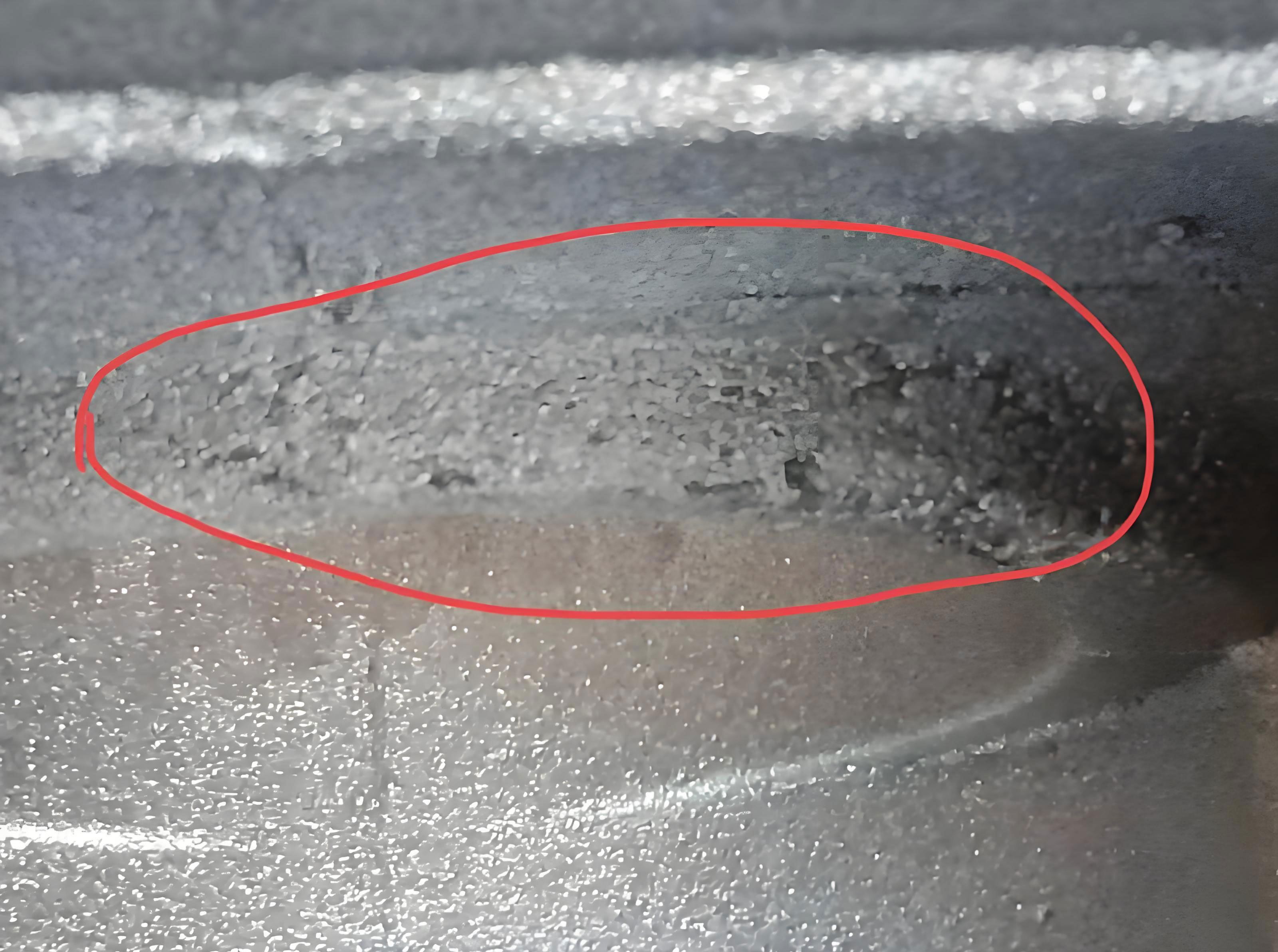
The quest to eliminate porosity in casting begins with a precise diagnosis. Not all pores are created equal; they originate from different sources. Broadly, we classify them into three primary categories: reaction-induced, gas-entrainment (or invasive), and shrinkage-assisted or precipitated. In steel casting, especially with green sand molds, the first two types are often intertwined and particularly prevalent during the initial stages of mold filling.
1. The Genesis of Porosity: Fundamental Mechanisms
1.1 Reaction-Induced Porosity (Oxidation-Driven)
This type of porosity in casting stems from chemical reactions at the metal-mold interface or within the molten metal itself, generating gaseous products. When the first wave of molten metal, which I term the “pioneer metal,” enters a cold, green sand mold, an intense physio-chemical battle ensues.
Interfacial Reactions with Moisture: The water (free and combined) in the bentonite-bonded sand undergoes violent vaporization. At steel pouring temperatures (~1600°C), water vapor is highly unstable and reacts exothermically with alloying elements. The primary reaction is with iron:
$$ \text{Fe} + \text{H}_2\text{O}_{(v)} \rightarrow \text{FeO} + 2[\text{H}] $$
Simultaneously, other elements like Si, Mn, C, and Al can participate:
$$ \text{C} + \text{H}_2\text{O}_{(v)} \rightarrow \text{CO} + 2[\text{H}] $$
$$ \text{Si} + 2\text{H}_2\text{O}_{(v)} \rightarrow \text{SiO}_2 + 4[\text{H}] $$
The atomic hydrogen [H] dissolves into the thin liquid metal layer at the interface, drastically increasing its local concentration. Furthermore, the formation of solid oxides like FeO and SiO2 provides potent nucleation sites for gas bubbles.
Reaction with Atmospheric and Organic Gases: The pioneer metal also reacts with oxygen from the air trapped in the mold cavity and sand interstices:
$$ 2\text{Fe} + \text{O}_2 \rightarrow 2\text{FeO} $$
Organic binders (e.g., dextrin) in the sand burn, producing CO2 and CO. CO2 can further react:
$$ \text{CO}_2 + \text{Fe} \rightarrow \text{FeO} + \text{CO} $$
During the subsequent solidification, a critical micro-segregation reaction can occur in the mushy zone where FeO and carbon [C] are concentrated:
$$ \text{FeO} + [\text{C}] \rightarrow \text{Fe} + \text{CO}_{(g)} \uparrow $$
This CO gas, often forming at the last stages of freezing, is a classic source of reaction-induced porosity in casting. The bubbles grow by diffusion of other gases (H2, N2) into them, becoming trapped as the dendrites solidify.
1.2 Invasive (Entrainment) Porosity
This form of porosity in casting occurs when high-pressure gases from the mold physically penetrate the liquid metal surface before it can solidify. The driving force is a pressure imbalance at the metal-mold interface. Consider the forces acting on a small volume of pioneer metal at the advancing flow front:
The metallostatic pressure \( P_j \) resisting gas invasion is:
$$ P_j = \rho g h + P_a $$
where \( \rho \) is the metal density, \( g \) is gravity, \( h \) is the height of liquid metal above the point, and \( P_a \) is the ambient gas pressure at the top of the cavity.
The total gas pressure \( \sum P_G \) in the sand pores at the interface is the sum of partial pressures:
$$ \sum P_G = P_{\text{H}_2\text{O}} + P_{\text{H}_2} + P_{\text{CO}} + P_{\text{CO}_2} + P_{\text{N}_2} + … $$
At the instant the pioneer metal contacts the unconditioned mold, \( P_{\text{H}_2\text{O}} \) is enormous due to the rapid vaporization of moisture. One gram of water can generate over 7 liters of steam at casting temperatures. Simultaneously, \( P_{\text{H}_2} \), \( P_{\text{CO}} \), and \( P_{\text{CO}_2} \) rise from the described chemical reactions.
For gas to invade, the condition \( \sum P_G > P_j + P_\sigma \) must be met, where \( P_\sigma \) is the capillary pressure due to surface tension \( \sigma \) and pore radius \( r \):
$$ P_\sigma = \frac{2\sigma \cos \theta}{r} $$
The pioneer metal, with its initially small \( h \), has a low \( P_j \). The violently generated gases create a very high \( \sum P_G \), easily surpassing the threshold. Bubbles nucleate in the sand pores and are pushed into the liquid metal. If the metal is stagnant, cold, and viscous, these bubbles cannot float out and become trapped as invasive porosity in casting.
1.3 Key Differentiating Factors
The following table summarizes the primary characteristics of these two major porosity types commonly seen in green sand steel castings.
| Feature | Reaction-Induced Porosity | Invasive Porosity |
|---|---|---|
| Primary Gas | CO, H2 (from reactions) | H2O, H2, N2, CO/CO2 |
| Formation Site | Within metal, often at oxide inclusions or in mushy zone. | At metal-mold interface, forced into metal. |
| Bubble Surface | Often shiny, may have oxide films. | Usually smooth and clean. |
| Typical Shape | More spherical or elongated along thermal gradient. | Often larger, spherical or flattened. |
| Trigger | Chemical potential (FeO + C), gas supersaturation. | Pressure imbalance (Pgas > Pmetal + Psurface). |
| Critical Factor | Oxygen availability, alloy composition (C, deoxidizer level). | Mold gas pressure, metal head pressure, sand permeability. |
2. The Perfect Storm: A Case Study in Systemic Failure
The theoretical mechanisms become starkly real in specific casting geometries. A classic example is a medium-section steel housing casting, such as a heavy-duty vehicle axle bridge. The geometry typically features a central body with flanges and two cylindrical sleeve ends. A typical initial gating design might use a combination of bottom and parting-line gates.
The Problem: After machining, severe subsurface porosity in casting was found in two specific, repeatable locations: 1) on the flange edge opposite the main gating points, and 2) on the outer and side surfaces of the cylindrical sleeve ends. The pores were 1-3 mm in diameter, 1-10 mm deep, oriented perpendicular to the surface, and concentrated—a textbook case of reaction/invasive porosity.
Root Cause Analysis – The “Pioneer Metal” Theory: The defect pattern points directly to the fate of the first metal to enter the mold. Analyzing the filling pattern:
- Long Flow Paths: The pioneer metal entering through the side gates had to travel the entire length of the sleeve to reach its end. Metal entering through bottom gates had to flow along the central body and then around the entire perimeter of the flange to reach the point opposite the gates. These are exceptionally long flow paths for the initial, uncontaminated melt.
- Severe Oxidation & Gas Pickup: During these long journeys, the pioneer metal’s free surface was continuously exposed to the aggressive environment of the unconditioned mold—high moisture, high oxygen, cold mold walls. This maximized both reaction-induced gas generation (Eq. 1-6) and the pressure differential for gas invasion (Eq. 7).
- Stagnation and Cooling: Both target locations were natural flow “dead ends.” The pioneer metal would arrive there last, after other areas had begun filling. It would then become stagnant. Simultaneously, its temperature dropped significantly due to the long journey and contact with the cold mold. This decreased gas solubility (Sieverts’ Law: \( S = k \sqrt{P} \), where S is solubility and P is partial pressure) and increased viscosity, making it impossible for the entrained or generated bubbles to escape.
- Contrast with Later Metal: Metal arriving later encountered a “conditioned” mold: moisture had migrated inward, the sand was hotter, the atmosphere was more reducing (rich in CO), and the metal head pressure \( P_j \) was higher. Consequently, this later metal was far less prone to defect formation.
The core issue was not just that gas was generated, but that the most contaminated metal was delivered to the most unfavorable locations (stagnant, cold) for gas removal. This created a perfect storm for severe, localized porosity in casting.
3. Strategic Countermeasures: Overflow and Flushing
The solution flowed logically from the diagnosis: prevent the contaminated pioneer metal from settling in critical sections of the final casting. Two principal techniques were employed: strategic overflow and controlled flushing.
3.1 The Overflow Principle
This involves placing small sacrificial reservoirs (overflow risers or vents) at the locations where pioneer metal is predicted to stagnate. The concept is to provide a low-resistance exit path for this bad metal, allowing it to be replaced by fresher, hotter metal from later in the pour.
Implementation in the Case Study:
1. A substantial overflow riser was attached to the problematic flange edge opposite the original gates. Its volume was designed to be approximately equal to the volume of the flange section it served.
2. Smaller overflow wells were added at the ends of the main runner, before the metal even entered the casting cavity through the sleeve-end gates. This “pre-overflow” captures the most contaminated metal from the gating system itself.
The effectiveness hinges on thermal and fluid dynamics. The overflow must be the path of least resistance. The thermal condition can be approximated by comparing the solidification moduli. The overflow should have a higher modulus (slower freezing) than the adjacent casting section to ensure it remains liquid and accepting metal longer. While simplified, Chvorinov’s rule frames this:
$$ t_s = B \left( \frac{V}{A} \right)^n $$
where \( t_s \) is solidification time, \( V \) is volume, \( A \) is cooling surface area, and \( B \) and \( n \) are constants. We design for \( (V/A)_{\text{overflow}} > (V/A)_{\text{casting section}} \).
3.2 The Flushing (or “Wash”) Principle
This technique involves modifying the gating to actively direct the metal flow to wash through and agitate stagnant areas. Agitation promotes the detachment and flotation of gas bubbles. Changing a gate from a parting-line fill to a bottom fill is a classic flushing action.
Implementation in the Case Study: The gates feeding the sleeve ends were relocated from a point 100mm from the end to a position only 25mm from the end, and changed from horizontal parting-line gates to downsprue gates at the bottom of the sleeve. This achieved two things:
1. The pioneer metal now entered at the very bottom of the sleeve and immediately began to rise upward, creating a turbulent, washing action along the sleeve’s inner surface where porosity formed.
2. This upward flow naturally carried the initial contaminated metal up into the existing top risers on the sleeves, effectively flushing it out of the critical zone.
The momentum of the metal stream is key. The pressure head driving the flush can be analyzed from Bernoulli’s principle, considering energy losses:
$$ h = \frac{v^2}{2g} + h_f $$
where \( h \) is the effective sprue height, \( v \) is gate velocity, and \( h_f \) is the head loss due to friction and bends. A well-designed flush ensures sufficient velocity \( v \) to create agitation but not excessive turbulence that could entrain air or erode the mold.
The application of these two principles completely eliminated the chronic porosity in casting defect in the axle housing. This success has been replicated on numerous other steel castings like bracket and support components.
4. A Generalized Framework for Preventing Porosity
Beyond the specific overflow/flush solution, a systematic approach to mitigating porosity in casting must address the entire process chain. The following table consolidates the key control factors.
| Process Stage | Control Objective | Specific Actions & Checks | Governing Principle |
|---|---|---|---|
| Melting & Metallurgy | Minimize gas content & oxides in charge. | • Use dry, clean charge materials. • Effective deoxidation (Al, Si, Ca). • Proper slag formation and removal. • Controlled holding time/temperature. |
Sieverts’ Law. Lower initial [H], [N], [O]. |
| Mold & Core Making | Minimize gas generation & pressure. | • Control green sand moisture (4.0-4.5%). • Use low-gas organic binders. • Ensure adequate permeability (>100). • Apply mold coatings (barrier). • Thorough drying of cores. |
Reduce \( P_{\text{H}_2\text{O}} \), \( \sum P_G \). Increase gas escape paths. |
| Gating System Design | Deliver clean, quiet, non-turbulent fill. | • Use tapered sprue, well-designed runners. • Employ filters (ceramic, mesh). • Design for laminar flow (low Re). • Incorporate runner extensions/overflows. |
Bernoulli, Reynolds Number. Minimize dross and air entrainment. |
| Filling Pattern Design | Prevent stagnation of pioneer metal. | • Place gates at dead-end features. • Use bottom or side fill for thin sections. • Implement overflow risers at last-to-fill areas. • Consider tangential gating for rotors/disks. |
Thermo-fluid simulation. Direct contaminated metal to overflows. |
| Solidification Control | Promote directional solidification for gas escape. | • Proper risering (size, location). • Use of chills to orient thermal gradient. • Optimize casting geometry if possible. |
Chvorinov’s Rule, thermal gradient \( \frac{dT}{dx} \). Keep liquid path open. |
5. Quantitative Insights and Modeling
Advanced foundries increasingly rely on simulation to predict and prevent porosity in casting. The key is to model the coupled phenomena:
1. Fluid Flow: Tracking the pioneer metal and identifying stagnant zones.
2. Gas Pressure Build-up: Modeling moisture evaporation, gas generation, and pressure \( \sum P_G \) in the sand.
3. Gas Solubility and Precipitation: Calculating local hydrogen/oxygen/nitrogen supersaturation based on temperature and segregation.
4. Bubble Nucleation and Growth: Applying criteria for pore initiation (e.g., at oxides) and growth kinetics.
A simplified criterion for invasive porosity onset is often expressed as:
$$ \frac{P_{\text{gas}}(t)}{\rho g h(t) + P_\sigma} > 1 $$
where both gas pressure \( P_{\text{gas}} \) and metal head \( h \) are time-dependent during filling. Simulation software solves these complex equations across the entire mold domain, visually highlighting high-risk areas for porosity in casting before a pattern is ever built.
In conclusion, the defect of porosity in casting, particularly in steel castings produced in green sand molds, is a direct consequence of the hostile environment encountered by the first metal to fill the mold. Its formation is a certainty if the process is passive. The solution lies in active process design: first, to understand the precise filling and thermal history through the lens of fundamental mechanisms; second, to strategically intervene by either diverting the contaminated pioneer metal away via overflows or actively flushing it out of critical sections. This problem-solving framework, grounded in metallurgical and transport principles, and supported by modern simulation tools, provides a powerful methodology for achieving sound, high-integrity castings free from the scourge of gas porosity.