
In the marine industry, propeller castings manufactured from copper alloys are critical components responsible for generating direct thrust in vessels. The production of these castings, particularly large-scale ones exceeding tens of tons, presents significant challenges due to their complex spatial curved surfaces and stringent quality standards. Among various casting defects, porosity in casting stands out as a prevalent and detrimental issue, leading to substantial economic losses and potential safety hazards. This article delves into the root causes of porosity in casting within copper alloy propellers, exploring the interplay of alloy properties, melting processes, and mold conditions. By examining these factors and proposing targeted mitigation strategies, we aim to provide a thorough understanding of how to minimize porosity in casting and enhance the reliability of these essential marine components.
The inherent characteristics of copper alloys used for propellers, such as the inclusion of elements like aluminum (Al), manganese (Mn), and nickel (Ni), make them particularly susceptible to gas absorption during melting. This susceptibility directly contributes to the formation of porosity in casting. Porosity defects can manifest as surface blowholes, internal voids, or even gross defects like riser lifting, severely compromising mechanical properties and fatigue resistance. The detection and control of such defects are complex, as some internal flaws may not be visible with conventional non-destructive testing methods. Therefore, a proactive approach focused on understanding and addressing the sources of porosity in casting is paramount for ensuring casting integrity.
Porosity in casting primarily stems from the entrapment or evolution of gases within the molten metal during solidification. In copper alloys, hydrogen (H₂) is the most harmful gas responsible for porosity. The solubility of hydrogen in copper is influenced by several factors, which can be expressed by the following relationship:
$$S_{H} = k \sqrt{P_{H_2}}$$
Where \(S_{H}\) represents the solubility of hydrogen in the melt (typically in cm³/100g of metal), \(k\) is a temperature-dependent coefficient, and \(P_{H_2}\) is the partial pressure of hydrogen in the surrounding atmosphere. This relationship highlights that hydrogen solubility increases with the square root of its partial pressure. Furthermore, solubility rises significantly with temperature. For instance, at approximately 1200°C, 100g of copper melt can dissolve about 6 cm³ of hydrogen. The addition of certain alloying elements, such as Al and Mn, further exacerbates the tendency for gas absorption, making alloys like aluminum bronze more prone to porosity in casting compared to others.
The mechanisms leading to porosity in casting can be broadly categorized into two types: precipitated porosity and reactive porosity. Precipitated porosity occurs when gases dissolved in the molten metal (primarily hydrogen) are rejected during solidification, forming bubbles that become trapped. Reactive porosity arises from chemical reactions within the mold or melt, producing gases that cannot escape. For copper alloy propellers, both mechanisms are active, and their prevalence depends on specific process conditions.
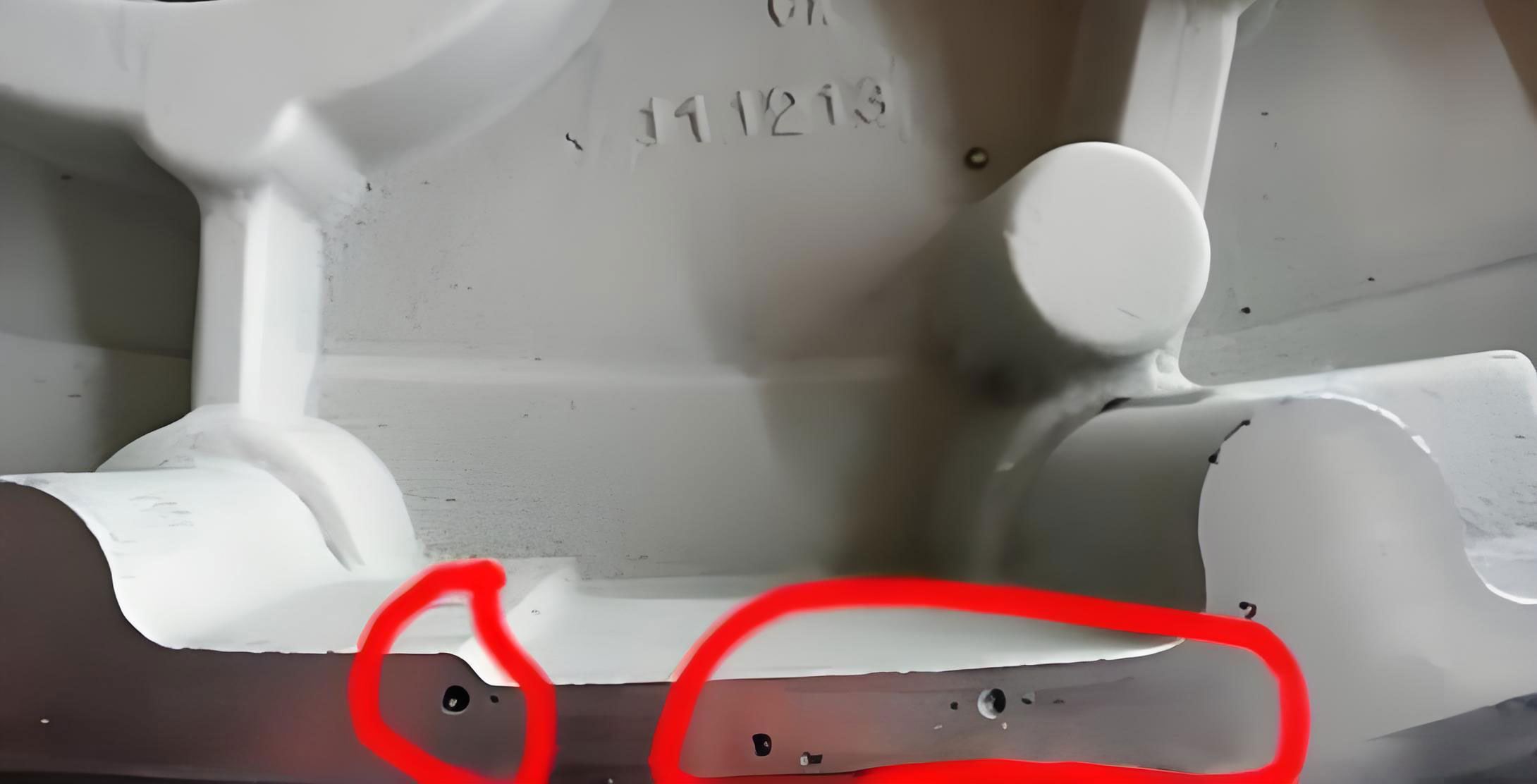
To systematically analyze the causes, we must consider the entire casting process chain, from raw materials to final solidification. The following table summarizes the key factors contributing to porosity in casting for different copper alloy families commonly used in propeller manufacturing:
| Alloy Type | Typical Composition (Example) | Primary Gas Absorption Elements | Dominant Porosity Mechanism | Critical Process Stage |
|---|---|---|---|---|
| High-Strength Manganese Brass | Cu-Zn-Mn-Fe-Al (e.g., ZCuZn38Mn2Pb2) | Al, Mn, Zn | Precipitated (H₂ from moisture), Reactive (H₂ from mold-metal reaction) | Melting (Zn boiling), Mold Drying |
| Aluminum Bronze | Cu-Al-Fe-Ni-Mn (e.g., ZCuAl8Fe4Ni4Mn2) | Al, Ni, Mn | Precipitated (H₂ absorption), Reactive (H₂ from mold-metal reaction) | Melting temperature, Mold atmosphere, In-mold degassing |
| Nickel-Aluminum Bronze | Cu-Al-Ni-Fe-Mn (e.g., ZCuAl9Fe4Ni4Mn2) | Al, Ni, Mn | Precipitated and Reactive (severe H₂ absorption) | All stages: Melting, Mold preparation, Pouring |
The melting process is a critical stage where the foundation for porosity in casting is often laid. For high-strength brasses containing zinc (Zn), the boiling of zinc at elevated temperatures (around 907°C) can serve as a natural degassing action. The vaporization of zinc agitates the melt, promoting the release of dissolved hydrogen. This process can be described by considering the vapor pressure of zinc:
$$P_{Zn} = P_{0} \exp\left(-\frac{\Delta H_{vap}}{RT}\right)$$
Where \(P_{Zn}\) is the vapor pressure of zinc, \(P_{0}\) is a constant, \(\Delta H_{vap}\) is the enthalpy of vaporization, \(R\) is the universal gas constant, and \(T\) is the absolute temperature. When \(P_{Zn}\) exceeds the ambient pressure, boiling occurs. Effective Zn boiling can reduce hydrogen content below the critical threshold for porosity formation. However, this natural degassing is highly dependent on melt superheat and atmospheric conditions. In environments with high humidity, moisture adsorbed on charge materials or incompletely dried furnace linings can introduce significant amounts of water vapor, which decomposes at high temperatures to release hydrogen:
$$2H_2O \rightarrow 2H_2 + O_2$$
The generated hydrogen dissolves into the melt according to the solubility law, potentially overwhelming the degassing effect of Zn boiling. Consequently, even with proper melting procedures, porosity in casting can occur if charge materials or furnace conditions are not meticulously controlled.
For aluminum bronze alloys, the situation is more challenging. Aluminum has a high affinity for oxygen and hydrogen. During melting, aluminum can react with water vapor to form alumina (Al₂O₃) and hydrogen:
$$2Al + 3H_2O \rightarrow Al_2O_3 + 3H_2$$
This reaction not only introduces hydrogen but also creates oxide inclusions that can act as nucleation sites for gas bubbles, exacerbating porosity in casting. Moreover, the solubility of hydrogen in aluminum-containing copper alloys is notably higher than in pure copper. The combined effect of high solubility and reactive generation makes aluminum bronze castings exceptionally vulnerable to porosity defects, often observed in internal sections like hub bores.
Mold-related factors are equally pivotal in the formation of porosity in casting. The drying degree of sand molds, especially those using water glass (sodium silicate) as a binder, is crucial. Inadequate drying leaves residual moisture in the mold surface. Upon contact with the molten metal, this moisture rapidly vaporizes, creating a local high-pressure steam zone. Part of this steam can dissociate, and the hydrogen produced may diffuse into the metal surface, causing subsurface pinholes or blowholes—a classic example of reactive porosity. The rate of this reaction depends on the mold surface temperature and the concentration of moisture. For effective prevention, the mold must be dried sufficiently to ensure a dry sand layer of at least 50 mm from the surface.
The drying process can be analyzed by considering heat and mass transfer. The temperature profile within the mold during drying can be approximated by the heat conduction equation:
$$\frac{\partial T}{\partial t} = \alpha \frac{\partial^2 T}{\partial x^2}$$
Where \(T\) is temperature, \(t\) is time, \(x\) is the distance from the mold surface, and \(\alpha\) is the thermal diffusivity of the mold material. Incomplete drying, often due to poor hot air circulation in large mold cavities, results in damp pockets that become localized sources of gas. Furthermore, the permeability of the mold impacts the escape of gases generated during pouring. Low permeability traps gases, increasing the likelihood of porosity in casting. The following table outlines key mold-related parameters and their influence on porosity:
| Mold Parameter | Optimal Condition | Effect if Suboptimal | Associated Porosity Type |
|---|---|---|---|
| Moisture Content (sand molds) | < 0.5% after drying | Excess moisture leads to H₂ generation via metal-mold reaction | Reactive porosity (surface/subsurface) |
| Drying Depth (water glass sand) | > 50 mm dry layer | Shallow dry layer allows steam penetration into metal | Reactive and precipitated porosity |
| Mold Permeability | High (e.g., > 100 AFS) | Low permeability traps evolved gases, causing internal voids | Precipitated porosity |
| Mold Coatings | Dry, refractory coatings | Damp coatings create localized gas pockets | Reactive porosity (localized blowholes) |
Beyond melting and molding, pouring practices also influence porosity in casting. Turbulent pouring can entrap air into the melt, while slow pouring might allow excessive heat loss, affecting fluidity and gas evolution rates. The design of the gating system is critical to ensure smooth, laminar flow that minimizes air entrainment. Additionally, the solidification pattern of the propeller casting, with its varying section thicknesses, affects how and where porosity forms. Thick sections solidify slowly, allowing more time for gas bubbles to coalesce and grow, leading to macro-porosity. In contrast, thin sections might trap micro-porosity due to rapid solidification that pins small bubbles.
The prevention of porosity in casting requires a holistic and targeted approach. Based on extensive foundry experience, the following measures have proven effective in mitigating porosity defects in copper alloy propeller castings:
1. Controlled Melting Practices: For large reverberatory furnaces, the melting process should be staged. During the charge preheating phase, maintaining a reducing atmosphere helps prevent excessive oxidation and minimizes hydrogen pickup from combustion products. Once the charge is molten, switching to a slightly oxidizing atmosphere and employing rapid melting techniques shortens the exposure time to high temperatures, thereby reducing hydrogen absorption. The melting temperature should be carefully monitored. For brass alloys, a superheat sufficient to induce Zn boiling is beneficial, but excessive temperatures increase hydrogen solubility and metal loss. The optimal temperature range can be expressed as:
$$T_{melt, optimal} = T_{liquidus} + \Delta T_{superheat}$$
Where \(\Delta T_{superheat}\) is typically 50-100°C for brasses to promote degassing without excessive gas pickup. For aluminum bronzes, lower superheats are preferred to minimize hydrogen dissolution.
2. Charge Material and Furnace Preparation: All charge materials—ingots, returns, and additives—must be stored in dry conditions and preheated to remove adsorbed moisture. Furnace linings, particularly after repairs or prolonged shutdowns, require thorough baking at temperatures above 500°C to drive off chemically bonded water. This step is crucial for electric induction furnaces as well, where a prolonged baking cycle below the alloy melting point can effectively remove moisture from refractories.
3. Active Degassing Techniques: For aluminum bronze and other highly gassy alloys, passive methods are insufficient. In-ladle degassing using inert gases like nitrogen (N₂) is a highly effective and economical solution. The process involves bubbling dry, oxygen-free nitrogen through the melt via a graphite lance. The nitrogen bubbles act as scavengers, collecting dissolved hydrogen through diffusion and carrying it to the surface. The efficiency of this process can be modeled using mass transfer principles. The rate of hydrogen removal is proportional to the interfacial area between the gas bubbles and the melt and the concentration gradient. Implementing this technology has dramatically reduced the incidence of porosity in casting for complex aluminum bronze propellers.
4. Rigorous Mold Drying and Venting: Mold drying must be uniform and thorough. For large propeller molds dried with hot air, ensuring adequate airflow across all surfaces, especially in deep pockets and the root of blades, is essential. Increasing the final drying temperature for water glass sand molds to 180-220°C ensures deeper moisture removal. Additionally, incorporating vent channels and permeable cores facilitates the escape of gases generated during pouring, reducing back-pressure that can force gases into the solidifying metal.
5. Process Monitoring and Quality Control: Implementing real-time monitoring of melt hydrogen levels using devices like reduced pressure testers or hydrogen sensors allows for corrective actions before pouring. Statistical process control (SPC) of key variables—charge moisture, melting temperatures, drying times—helps maintain consistency and identify drift toward conditions favoring porosity in casting.
The economic impact of porosity in casting cannot be overstated. A single scrapped large propeller casting represents a loss of material, energy, and labor worth hundreds of thousands of dollars. Moreover, welding repairs in critical “no-weld” zones designated by classification societies are often prohibited, making prevention the only viable strategy. By integrating the scientific understanding of gas solubility and reaction kinetics with robust foundry engineering practices, the occurrence of porosity in casting can be minimized to levels that meet the demanding standards of marine propulsion.
In conclusion, porosity in casting within copper alloy propeller components is a multifaceted defect rooted in the physicochemical behavior of alloys during melting and solidification, combined with process variables in mold preparation. The primary culprit is hydrogen, originating from moisture in materials, furnace atmospheres, or mold binders. Alloys rich in aluminum, manganese, and nickel exhibit heightened susceptibility. Successful mitigation hinges on a disciplined approach encompassing dry charge materials, controlled melting atmospheres and temperatures, active degassing (notably nitrogen bubbling for aluminum bronzes), and impeccably dry, permeable molds. Through diligent application of these targeted measures, foundries can substantially reduce the risk of porosity in casting, yielding sound, high-integrity propeller castings that ensure vessel safety and performance. The continuous refinement of these practices, supported by ongoing research into alloy behavior and process optimization, remains key to advancing the reliability of marine castings and combating the persistent challenge of porosity in casting.