
Porosity in casting remains one of the most persistent and economically significant defects in the production of high-integrity components, particularly for demanding applications such as hydraulic valves, cylinders, and pumps. These castings are characterized by complex internal geometries, stringent material property requirements (often involving high-grade, pressure-resistant iron alloys), and machining allowances that leave no room for subsurface flaws. The presence of porosity in casting, especially on critical sealing surfaces, directly leads to leakage under pressure, catastrophic part failure, and substantial financial loss due to scrap rates that can escalate to 30% or more in severe cases, with porosity alone accounting for a dominant share. This article, drawn from extensive production experience, provides a first-person, in-depth analysis of the multifaceted root causes of gas porosity in casting and outlines a systematic framework of proven countermeasures.
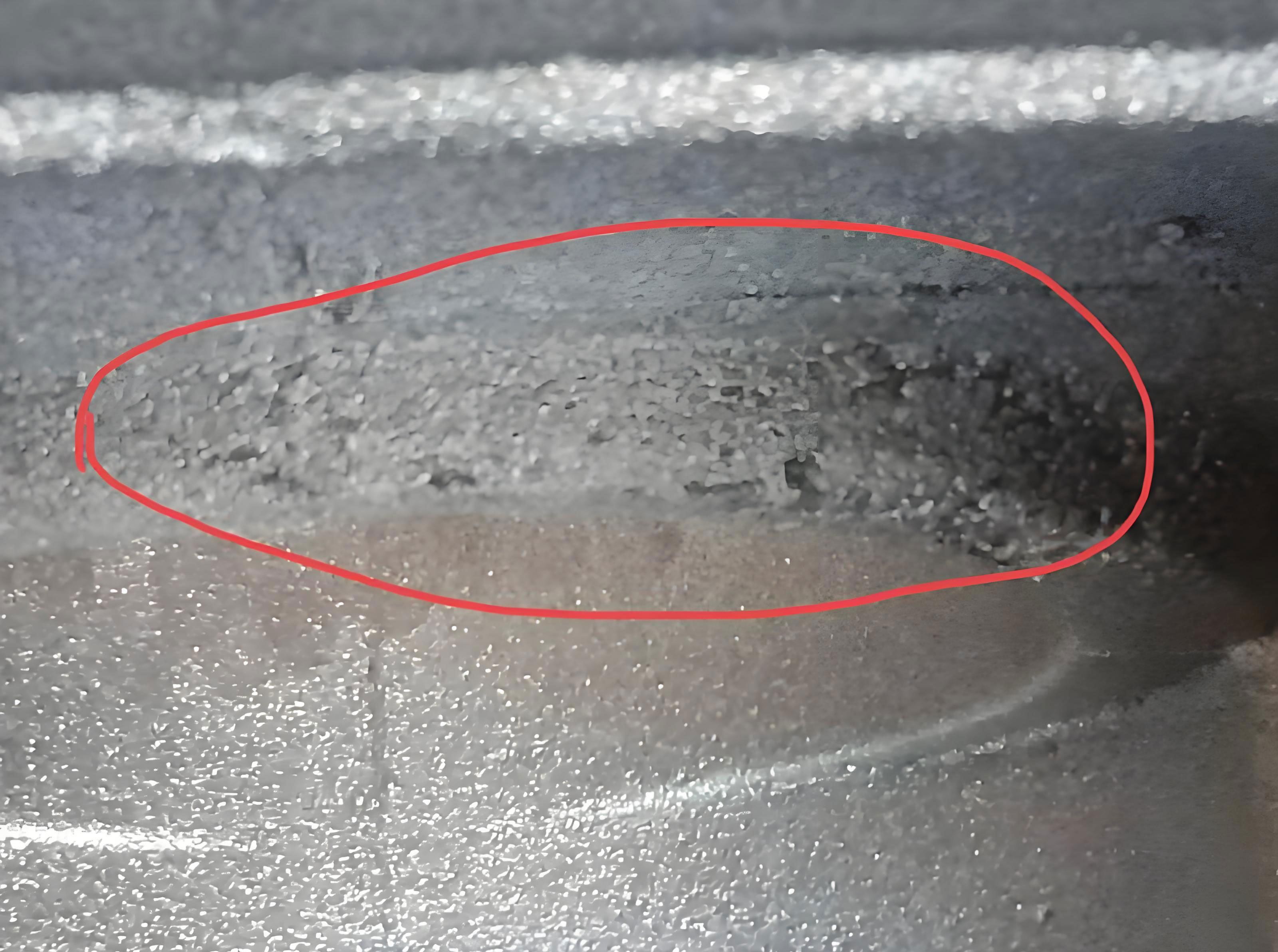
The manifestation of porosity in casting within hydraulic components typically involves irregularly shaped or, less frequently, spherical cavities with shiny, oxidized surfaces. These defects are predominantly sub-surface, revealing themselves only during machining operations, though severe cases can break through to the external surface. Their distribution is non-random; they are frequently found in the upper sections of castings relative to the pouring orientation and in areas surrounding sand cores, precisely where gas entrapment is most likely.
1. A Systematic Deconstruction of Porosity Causation
The formation of porosity in casting is not the result of a single failure but rather a convergence of factors from nearly every stage of the foundry process. We can model the propensity for gas defect formation, $P_{porosity}$, as a function of multiple interactive variables:
$$P_{porosity} = f(G_{mold}, G_{core}, P_{gas}, T_{pour}, \eta_{slag}, t_{vent})$$
Where:
- $G_{mold}$ = Gas generation from the mold
- $G_{core}$ = Gas generation from the core
- $P_{gas}$ = Gas pressure buildup within the mold cavity
- $T_{pour}$ = Pouring temperature
- $\eta_{slag}$ = Slag/dross inclusion factor
- $t_{vent}$ = Venting efficiency (inverse relationship)
1.1 The Foundational Role of the Molding Sand System
While basic sand properties like permeability (>80), low moisture (3-4%), and low clay content (<10%) are prerequisites for minimizing gas evolution, the most critical and often overlooked parameter is sand temperature. High return-sand temperature is a primary catalyst for porosity in casting.
Mechanism: Hot return sand (often exceeding 60-70°C) causes rapid moisture migration and evaporation upon mold closure. This creates a strong, hot, humid air current that flows through vents and sprue. When this moisture-laden air contacts cooler cores, water vapor condenses on their surface, significantly increasing the local moisture content. During pouring, this superheated water vapor generates gas at a rate that can overwhelm the venting system, leading to high local gas pressure and subsequent porosity in casting.
Our long-term production data unequivocally shows a strong correlation. Monitoring over several years revealed that scrap rates due to porosity in casting tracked almost perfectly with seasonal spikes in sand temperature. We quantified this relationship, which can be approximated by a quadratic function:
$$P \approx k_1 (T_s – T_{th})^2$$
Where $P$ is the porosity scrap rate, $T_s$ is the average sand temperature at the molding station, $T_{th}$ is a threshold temperature (~35°C), and $k_1$ is a process constant.
The following table summarizes the problem magnitude and the effect of interventions:
| Condition | Return Sand Temp. | Molding Sand Temp. | Avg. Porosity Scrap Rate | Key Mitigation Actions |
|---|---|---|---|---|
| Pre-Intervention (Summer) | ~80°C | 50-55°C (Peak: 58°C) | ~25% | None |
| Post-Intervention | ~65°C | 35-40°C | ~10% | Water spray on return belt, forced air cooling at screens, open elevator tops for heat extraction |
Controlling sand temperature below 40°C is not merely beneficial; it is a non-negotiable foundation for controlling porosity in casting.
1.2 The Critical Impact of Core Quality and Design
Cores, trapped within molten metal, are the most potent internal source of gas. Their contribution to porosity in casting is governed by four pillars: material, design, venting, and bonding.
Core Material Selection: The gas generation potential, often indicated by Loss on Ignition (LOI), varies drastically. Our evaluation of three common systems is summarized below:
| Core Material | Binder System | Typical LOI (%) | Gas Generation (ml/g @ 850°C) | Relative Impact on Porosity |
|---|---|---|---|---|
| Oil Sand (Tall Oil) | Manual | ~2.5 | ~12 | Lowest (But not suitable for high volume) |
| Phenolic Urethane Cold Box | Machine | ~1.8 | ~20-25 | Moderate |
| Low-Gas Phenolic Coated Sand | Hot Box/Shell | <1.5 | ~15-18 | High (Requires excellent venting) |
Core Design and Venting: A poorly vented core is a bomb waiting to explode inside the casting. The gas pressure inside a core, $P_{core}$, can be conceptualized by a simplified version of the ideal gas law under non-ideal, rapidly heating conditions:
$$P_{core}(t) \approx \frac{n_{gas}(t) \cdot R \cdot T_{core}(t)}{V_{void}}$$
Where $n_{gas}(t)$ increases rapidly with temperature, and $V_{void}$ is the limited volume of the core’s internal porosity and vent channels. If $P_{core}$ exceeds the metallostatic pressure $(\rho g h)$ of the surrounding liquid metal, gas will be forced into the solidifying metal, causing porosity in casting.
Therefore, proactive venting is mandatory:
- Integral vent pins in core boxes must be sufficiently long and of adequate diameter (≥3mm).
- For complex cores, manual drilling of vent holes post-curing using extended drill bits (300-500mm) is essential to create connected pathways to the core prints.
- Vent channels must be explicitly carved or marked in core prints before assembly to ensure a clear exhaust path to the exterior of the mold.
Core Bonding and Assembly: The bonding interface is a critical failure point. Simple butt joints in hot, enclosed areas are prone to metal penetration, which blocks gas escape routes. Superior methods include:
- Lap Joints: Provide a longer, more tortuous path for metal, reducing penetration risk.
- Tongue-and-Groove (Male-Female) Joints: These offer precise alignment, minimize glue application area (reducing gas from adhesive), and contain the adhesive within the groove, preventing squeeze-out into critical cavities.
Core Drying: Cores coated with water-based refractory coatings (e.g., graphite) must be thoroughly dried a second time. Residual moisture from the coating, if not reduced to below 0.3%, will vaporize instantly upon metal contact, creating severe local porosity in casting. A standardized drying protocol (150-180°C for 2-4 hours depending on core mass) is critical. Neglecting this step has led to batch scrap incidents.
1.3 The Influences of Metal Quality and Pouring Parameters
The condition of the molten metal itself is a decisive factor in the battle against porosity in casting.
Pouring and Melting Temperature: Higher temperatures generally suppress gas solubility in the melt and improve metal fluidity, allowing bubbles to float out more easily. Our production data clearly supports this. The transition from lower-temperature cupola melting to medium-frequency induction melting yielded an immediate improvement.
| Melting Process | Typical Tap Temp. Range | Overall Scrap Rate | Scrap Attributable to Porosity |
|---|---|---|---|
| Cupola (Historical) | 1380-1420°C | ~18% | ~12% |
| Induction Furnace | 1480-1520°C | ~9% | ~4% |
Furthermore, within a single process, controlling pouring temperature is vital. Below a critical threshold (approximately 1350°C for our iron grades), the rate of porosity in casting increases markedly. The relationship can be expressed as:
$$P \propto \frac{1}{T_{pour} – T_{liquidus}} \quad \text{for} \quad T_{pour} < T_{critical}$$
Slag and Dross Formation: Oxides, sulfides, and other non-metallic inclusions act as nucleation sites for gas bubbles, leading to subcutaneous pinhole porosity in casting. Sources are multifold: oxidation during melting, reaction products from inoculation/ treatment, and re-oxidation during pouring. These inclusions, such as MnS or complex silicates, can be identified via SEM-EDS analysis. Countermeasures are procedural:
- Use of high-quality, low-aluminum inoculants that are pre-dried.
- Proper gating system design with choke ratios ensuring non-turbulent filling and effective slag trapping (e.g., a well-proportioned runner system where the height of the runner is 4-6 times that of the ingate).
- Maintaining a rapid, uninterrupted pour with a full pouring basin to minimize atmospheric contact.
2. Proactive Process Design: Venting and Gating as a System
Beyond controlling source materials, the casting process itself must be designed to actively manage and evacuate gases. This is the most direct engineering solution to prevent porosity in casting.
Strategic Vent and Riser Placement: The goal is to provide a low-resistance path for gas to escape before it can be trapped. Key principles implemented include:
- Placing direct vents or small blind risers on the highest points of the casting cavity, especially over large cores.
- Creating vent channels from core prints to the mold exterior, ensuring they are not blocked by sealing paste.
- For side-gated components, positioning vents or open risers on the side opposite or lateral to the ingate, at the farthest point gas must travel. These vents should be located in the upper 1/3 of the mold cavity height.
- Incorporating vent grooves along the parting line and connecting large risers to atmosphere.
Temporal Control: The time interval between mold closing and pouring must be minimized. Molds left overnight can absorb moisture from the atmosphere, particularly in humid conditions, reintroducing the gas problem. A “close-and-pour-same-day” discipline is enforced.
3. Integrated Control Strategy: A Summary Framework
Success in eliminating porosity in casting requires a holistic, monitored approach. The following table synthesizes the key control points, parameters, and targets into a manageable framework.
| Process Area | Key Control Parameters | Target / Optimal Range | Monitoring Frequency |
|---|---|---|---|
| Molding Sand | Temperature, Permeability, Moisture, Clay Content | <40°C, >80, 3.0-4.0%, <10% | Per shift / Per batch |
| Cores (Material) | LOI (Loss on Ignition), Tensile Strength | <2.0%, >2.5 MPa (as per spec) | Per resin/sand lot |
| Cores (Process) | Vent Hole Depth/Diameter, Drying Temp/Time, Bonding Integrity | Fully through, 150-180°C for 2-4h, Lap/T&G joints in hot zones | First-piece audit, Batch check |
| Melting & Pouring | Tap Temperature, Pour Temperature, Slag Condition | >1480°C, >1380°C, Clean, Oxidized layer removed | Per heat, Per pour |
| Mold Design | Vent Area Ratio, Pouring Time, Gating Ratio (Pressurized) | ≥1:1 vs. ingate area, Fast & uninterrupted, ΣA_choke : ΣA_runner : ΣA_ingate ≈ 1 : 1.5 : 2 | At process design stage |
The economic impact of this systematic approach is significant. By addressing the root causes—specifically sand temperature, core venting, and metal temperature—we have observed a sustained reduction in overall scrap rate from a historical average near 25% to a controlled level below 10%, with defects due to porosity in casting now constituting a minor fraction rather than the majority.
4. Conclusion
Porosity in casting, particularly for high-performance hydraulic components, is a defect with complex, interdependent origins. It is not a mystery but a quantifiable outcome of process physics. The primary drivers are excessive gas generation from hot molding sand and under-vented cores, coupled with marginal metal temperatures and inclusion content. The solution lies not in a single silver bullet but in the rigorous, simultaneous control of all contributing factors: aggressively cooling the sand system, engineering cores for maximum gas evacuation with robust bonding, elevating metal temperatures, and designing the mold process to actively guide gases out of the cavity. A disciplined, data-driven approach to these parameters transforms porosity in casting from a chronic scrap generator into a reliably managed aspect of production, enabling the consistent manufacture of dense, pressure-tight hydraulic castings.