
In my extensive experience within the investment casting field, the challenge of internal gas defects, commonly termed ‘porosity,’ remains a primary concern affecting yield, mechanical integrity, and economic viability. The formation of porosity in investment castings is a multifaceted issue, arising from a complex interplay between the ceramic shell, the molten metal, and the entire process chain. Unlike other casting methods, the investment casting process, with its intricate shell-building, pattern removal, and high-temperature firing, presents unique pathways for gas generation and entrapment. This article synthesizes my practical observations and analyses on the mechanisms behind pore formation and outlines comprehensive strategies for its mitigation, utilizing process data, chemical principles, and thermodynamic analysis.
The prevalence of porosity is not constant; it exhibits significant seasonal and environmental fluctuations. Data from production typically shows a marked increase in scrap rates during humid summer months compared to drier periods. This variation underscores the sensitivity of the process to ambient conditions, particularly those affecting shell drying and the stability of process materials. The economic impact is substantial, with scrap rates from gas-related defects alone often ranging significantly, directly affecting profitability. Therefore, a deep, systematic understanding of the sources of gas is the first critical step toward implementing effective countermeasures.
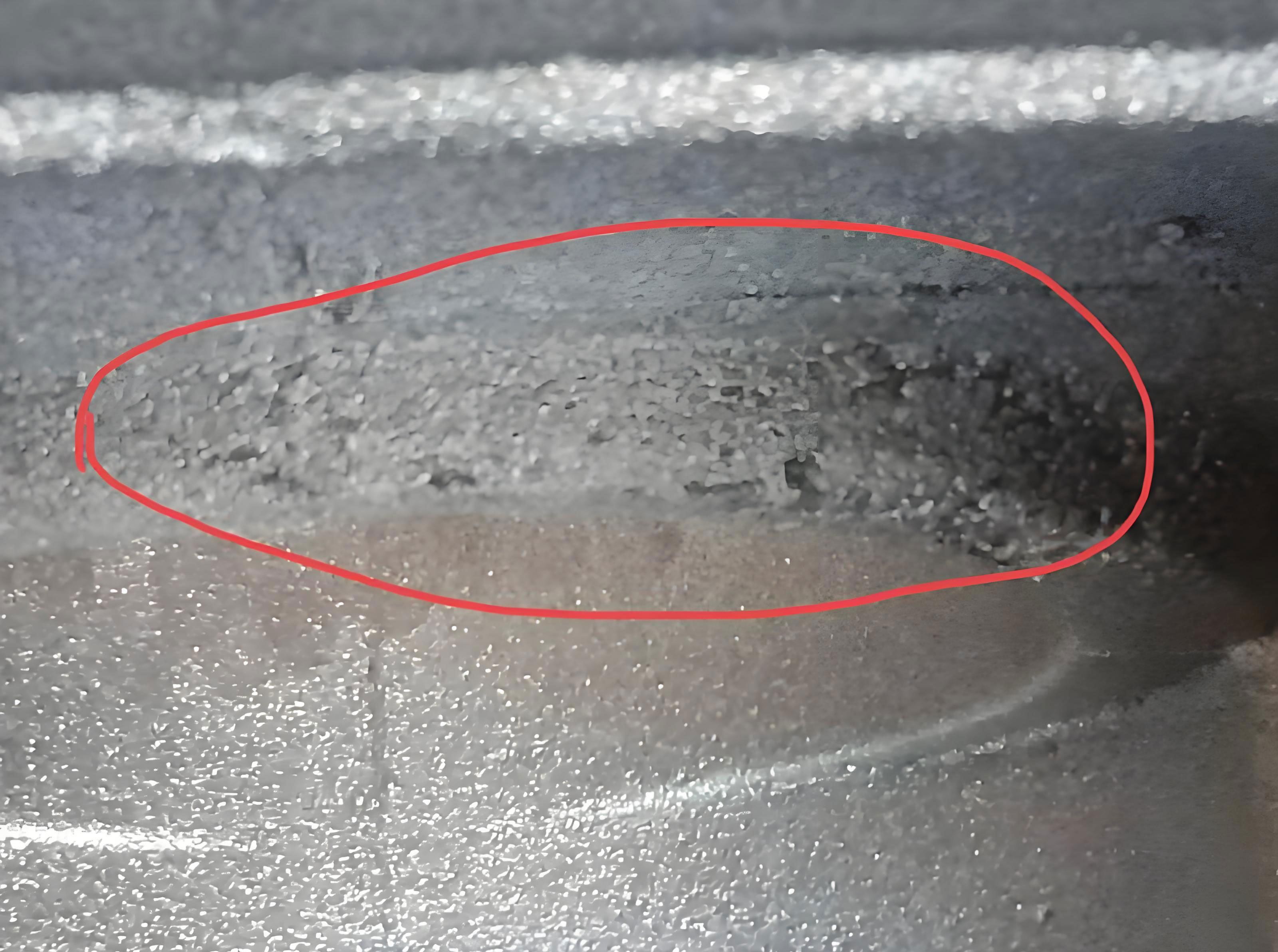
I. Shell-Related Porosity: The Ceramic Contribution
A significant portion of defects classified as porosity in casting originates not from the metal itself, but from reactions and decompositions within the ceramic shell during pouring. The shell is far from inert; it is a potential reservoir of gases waiting to be liberated by the heat of the molten alloy.
1.1 Incomplete Dewaxing and Shell Burnout: The “Black Spot” Phenomenon
Visible black or dark spots on a fired shell are clear indicators of incomplete wax removal. These spots are carbonaceous residues—unburned hydrocarbons or carbon-hydrogen-oxygen compounds from the pattern material. When molten metal fills the mold, these residues undergo rapid pyrolysis and oxidation in the presence of the hot metal, generating substantial volumes of gas. The primary reactions involve the breakdown of these hydrocarbons into carbon monoxide and hydrogen:
$$ C_xH_yO_z \ (residue) + Heat \rightarrow C\ (soot) + CO\ (g) + CO_2\ (g) + H_2\ (g) + H_2O\ (g) $$
$$ C\ (soot) + O_2\ (from\ air/steel) \rightarrow CO\ (g) $$
$$ 2C\ (soot) + O_2 \rightarrow 2CO\ (g) $$
The rapid evolution of these gases, notably $CO$ and $H_2$, often manifests as violent bubbling or even spattering in the pouring cup. Upon solidification, this leads to surface pinholes or irregular subsurface blowholes in the casting. The prevention strategy is straightforward but critical: ensure complete dewaxing (via steam, flash fire, or solvent) followed by adequate shell firing. A firing cycle that reaches and holds at $850^\circ\text{C} – 1050^\circ\text{C}$ for a sufficient duration (e.g., 1-2 hours) is essential to combust all organic residues, thereby eliminating this potent source of porosity in casting.
1.2 Impurities and Binder Chemistry
The choice of refractory materials, binders, and process parameters profoundly influences the shell’s gas-generating potential.
a) Refractory Impurities: Contaminants in stuccos or slurries, such as calcium carbonate ($CaCO_3$), are extremely deleterious. $CaCO_3$ undergoes thermal decomposition at casting temperatures:
$$ CaCO_3\ (s) \xrightarrow{> 800^\circ\text{C}} CaO\ (s) + CO_2\ (g) $$
Approximately 0.44 kg of $CO_2$ gas is produced per kg of $CaCO_3$. This gas is generated precisely as the metal is poured, leading to gross surface defects. Rigorous control of refractory supply chains and storage is non-negotiable to prevent such contamination.
b) Binder Type and Shell Permeability: The binder system directly dictates the shell’s gas permeability. A comparison reveals distinct behaviors:
- Sodium Silicate (Water Glass): Shells exhibit relatively high permeability. The violent gelling reaction with hardening agents (e.g., $NH_4Cl$) causes micro-cracking around refractory grains during drying. These micro-cracks, often 10-30 µm in width, provide channels for gases to escape, which can be beneficial but also indicates a less dimensionally stable shell.
- Ethyl Silicate & Silica Sol: These colloidal binders produce denser, more uniform, and less permeable shells. While this minimizes metal penetration, it also traps gases more easily, requiring more meticulous process control to prevent gas-related defects.
The following conceptual table summarizes the gas-related characteristics:
| Binder System | Typical Permeability | Primary Gas Escape Mechanism | Risk for Shell-Gas Porosity |
|---|---|---|---|
| Sodium Silicate | High | Micro-crack network | Lower (if dewaxed/fired well) |
| Ethyl Silicate | Medium-Low | Intrinsic pore structure | Higher (traps shell gases) |
| Silica Sol | Low | Intrinsic pore structure | Highest (requires excellent process control) |
1.3 Process-Induced Contaminants
a) Residual Soluble Cores: Complex internal passages are often formed using water-soluble cores, typically based on urea ($CO(NH_2)_2$). Incomplete dissolution leaves urea within the shell, which decomposes upon heating:
$$ CO(NH_2)_2 \rightarrow NH_3\ (g) + HNCO\ (g) $$
$$ HNCO + H_2O \rightarrow CO_2\ (g) + NH_3\ (g) $$
The resulting ammonia and carbon dioxide gases create internal porosity in casting sections adjacent to the core. Prevention mandates thorough flushing of cored wax patterns in agitated warm water and meticulous inspection.
b) Oxidation of Reinforcement Wires: Steel wires used to reinforce shells or bind clusters will oxidize during prolonged shell preheating:
$$ 3Fe + 2O_2 \rightarrow Fe_3O_4 $$
The iron oxide ($Fe_3O_4$) can then react with elements in the steel melt, particularly carbon [$C$]:
$$ Fe_3O_4 + 4[C]_{steel} \rightarrow 3Fe + 4CO\ (g) $$
The generated $CO$ gas causes large, crust-like surface cavities or “scabs.” Minimizing preheat time for wired shells or using more oxidation-resistant materials is advised.
c) “Efflorescence” or “Bloom”: The white, powdery deposit (“bloom”) sometimes seen on dried shells is primarily sodium chloride ($NaCl$) and residual ammonium chloride ($NH_4Cl$). It forms from the reaction between sodium silicate and $NH_4Cl$ hardener:
$$ Na_2O \cdot mSiO_2 + 2NH_4Cl \rightarrow mSiO_2 \cdot nH_2O (gel) + 2NaCl + 2NH_3\uparrow $$
The $NaCl$ (melting point $\sim 800^\circ\text{C}$, boiling point $\sim 1465^\circ\text{C}$) can vaporize at metal-pouring temperatures, creating fine pinhole porosity. $NH_4Cl$ sublimes at $\sim 340^\circ\text{C}$ and is less problematic. Control measures include: limiting free $NH_3$ in hardener, reducing shell storage time between dewax and firing (to < 48 hrs), and employing a low-temperature “flash fire” ($200-400^\circ\text{C}$) to rapidly dehydrate the shell and inhibit $NaCl$ crystal growth.
d) Saponified Residues: In recycled wax systems using stearic acid as an emulsifier, reactions with aluminum, iron, or ammonium from process contact can form metallic stearates (e.g., aluminum stearate, $C_{54}H_{105}AlO_6$). These have low melting points (Al-stearate ~$120^\circ\text{C}$) and can accumulate in shell cavities. During pouring, they violently vaporize, causing large, localized surface pits or “crater” defects. Prevention involves using non-reactive wax handling equipment (stainless steel, ceramic) and ensuring thorough wax drainage from shells.
II. Metal-Related Porosity: Melting, Deoxidation, and Solidification
Even with a perfectly prepared shell, porosity in casting can originate from the molten metal itself. Non-vacuum melting in induction furnaces inherently exposes the charge and melt to atmospheric gases ($N_2$, $O_2$, $H_2O$), which can dissolve into the steel.
2.1 Gas Solubility and Evolution
The solubility of gases like hydrogen [$H$], nitrogen [$N$], and oxygen [$O$] in liquid steel is a reversible function of temperature ($T$), generally following a relationship like Sieverts’ Law for diatomic gases:
$$ [Gas]_{solubility} \propto \sqrt{P_{gas}} \cdot e^{(-\frac{\Delta H}{2RT})} $$
where $P_{gas}$ is the partial pressure of the gas, $\Delta H$ is the heat of solution, $R$ is the gas constant, and $T$ is temperature. As the metal cools from pouring temperature to the solidification point, gas solubility drops sharply, forcing the excess gas to nucleate and form bubbles—pores. The primary gases of concern are:
- Hydrogen ($H_2$): Often from moisture in charge materials, slag compounds, or atmosphere. Leads to fine, circular “pinhole” porosity.
- Nitrogen ($N_2$): From air entrainment or charge materials. Can form porosity or nitride inclusions.
- Carbon Monoxide ($CO$): The most significant source of gross porosity in casting from the metal side, resulting from the reaction between dissolved carbon [$C$] and oxygen [$O$] in the melt.
2.2 The Carbon-Oxygen (C-O) Reaction and Deoxidation
In inadequately deoxidized steel, the dissolved oxygen reacts with carbon during cooling and solidification:
$$ [C] + [O] \rightarrow CO\ (g) $$
The $CO$ gas bubbles can form during pouring (causing “rimming” action in the pour cup) or in the mushy zone during solidification. In the latter case, the bubbles become trapped between dendrites, creating interdendritic porosity, often appearing as “honeycomb” or “sponge” structures near the thermal center of thick sections.
Effective deoxidation is therefore paramount to prevent this type of porosity. Traditional practice relies on “killing” the steel with elements having a higher affinity for oxygen than carbon does. The thermodynamic driving force is expressed by the standard Gibbs free energy of oxide formation, $\Delta G^\circ = -RT \ln K$, where more negative $\Delta G^\circ$ indicates a stronger oxide former. A comparison of common deoxidizers reveals the following order of increasing potency (at $1600^\circ\text{C}$): Cr < Mn < Si < Al < Zr < Ca < Rare Earth Elements (e.g., Ce, La).
$$\Delta G^\circ_{Al_2O_3} \ll \Delta G^\circ_{SiO_2} \ll \Delta G^\circ_{CO}$$
This shows why aluminum is a powerful deoxidizer; its oxide is far more stable than $CO$ gas, locking up the oxygen before it can react with carbon.
2.3 Advanced Metal Treatment: The “Complex Deoxidation” Approach
To achieve ultra-low gas levels and minimize porosity in casting, moving beyond simple aluminum addition is beneficial. A sequential or “complex deoxidation” strategy leverages synergistic effects:
- Primary Deoxidation: Add Ferro-Manganese (Fe-Mn) and Ferro-Silicon (Fe-Si) in the furnace to lower oxygen to intermediate levels.
- Strong Deoxidation: Add Aluminum (Al) in the furnace or ladle to further reduce oxygen.
- Polishing/Cleaning: Add a small amount of Rare Earth (RE) alloy or Calcium-bearing alloy (e.g., Ca-Si) in the ladle. These elements form highly stable, globular oxides/sulfides that agglomerate and float out rapidly. They also modify any remaining inclusions, improving mechanical properties.
The efficacy of this approach is demonstrated by data. For a standard carbon steel melt, the sequence can reduce dissolved oxygen content from the range of 60-100 ppm after basic deoxidation to below 20 ppm, often reaching 10-15 ppm.
| Deoxidation Practice | Deoxidizer Addition Sequence & Amount (kg/ton) | Estimated Resulting [O] (ppm) | Typical Porosity Risk |
|---|---|---|---|
| Simple (Ladle only) | Al: 1.0 | 40 – 80 | High |
| Standard (Furnace + Ladle) | Fe-Mn: 5.0 → Fe-Si: 3.0 → Al: 0.8 | 25 – 40 | Moderate |
| Complex (Sequential) | Fe-Mn: 5.0 → Fe-Si: 3.0 → Al: 0.6 → RE or Ca-Si: 0.5-1.0 (in ladle) | 10 – 20 | Low |
The electromagnetic stirring in the induction furnace crucially aids this process by accelerating the collision and flotation of deoxidation products, cleansing the melt before it is poured.
III. Integrated Process Control for Porosity Minimization
Preventing porosity in casting requires a holistic view, integrating shell and metal practices with precise thermal management.
3.1 Thermal Management: Shell & Metal Temperature
The temperature differential between the shell and the molten metal at the moment of pour is a critical but often overlooked factor influencing both gas evolution and solidification shrinkage feeding. Pouring hot metal ($\sim 1550-1650^\circ\text{C}$ for steels) into a cold shell ($< 200^\circ\text{C}$) creates extreme thermal shock. This can exacerbate shell degassing (rapid heating of contaminants) and promotes rapid metal solidification at the surface, potentially trapping gases and inhibiting feeding to form shrinkage porosity. Conversely, pouring into a properly preheated shell ($> 600-800^\circ\text{C}$) offers several benefits:
- Reduces thermal shock, minimizing shell cracking and associated gas release.
- Slows the metal’s cooling rate, allowing more time for dissolved gases to diffuse and escape via the shell’s permeability.
- Promotes directional solidification, aiding in the feeding of shrinkage.
For thin-walled or complex castings prone to mistruns, a hotter shell is essential. For heavy-section castings, a slightly lower shell temperature might be used to control grain size, but it must be balanced against the risk of increased porosity.
3.2 A Comprehensive Prevention Checklist
Based on the mechanisms discussed, a systematic approach to controlling porosity in casting includes:
| Process Stage | Key Control Parameters | Target/Action |
|---|---|---|
| Raw Materials | Refractory purity, Wax quality, Alloy charge cleanliness | Certified low-carbonate refractories; Dry, rust-free charge; Controlled wax acidity. |
| Shell Building | Drying environment, Hardener control, Soluble core washout | Controlled humidity & temp; Limit free NH₃; Verify complete core removal. |
| Dewax & Firing | Method, Firing temperature & time, “Bloom” control | Complete wax removal; Fire >$850^\circ\text{C}$ for >1 hr; Short storage or flash fire. |
| Melting & Pouring | Melt temperature, Deoxidation sequence, Shell preheat temp, Pouring speed | Avoid superheating; Use complex deoxidation; Match shell temp to casting geometry; Pour smoothly. |
| Process Environment | Ambient humidity, Foundry air quality | Dehumidify in summer; Control drafts at shell drying stations. |
IV. Economic and Quality Impact
The implementation of a rigorous, science-based approach to combat porosity yields direct and significant financial returns. Let’s consider a case study: A complex, fully machined steel component (like a valve housing or pump impeller) historically experienced a 15% scrap rate due to gas-related defects when using simple deoxidation and inconsistent shell practice. By implementing complex deoxidation, controlled shell firing, and optimized pouring temperatures, the scrap rate was reduced to 3%.
The economic calculation is compelling:
- Annual Production: 10,000 castings
- Cost per Casting (at scrap point): $50 (including metal, shell, labor, overhead)
- Savings: $(15\% – 3\%) \times 10,000 \times $50 = 12% $\times$ 10,000 $\times$ $50 = $60,000
This $60,000 annual saving is a direct contribution to profit, not to mention the indirect benefits of improved on-time delivery, reduced machining scrap, and enhanced customer satisfaction due to higher reliability. For high-integrity castings used in aerospace, medical, or energy applications, where part cost can run into hundreds or thousands of dollars, the savings and quality assurance are exponentially greater.
V. Conclusion
Porosity in investment casting is a pervasive challenge, but it is not an insurmountable one. Its formation is a consequence of specific, identifiable chemical reactions and physical processes occurring at the shell-metal interface and within the solidifying metal itself. By categorizing the sources—whether from incomplete shell burnout ($C_xH_y$ residues), refractory impurities ($CaCO_3$), binder by-products ($NaCl$), or inadequate metal treatment ($[C]+[O]$ reaction)—we can target specific countermeasures.
The most effective strategy is integrative, combining:
- Meticulous Shell Process Control: Ensuring complete dewaxing, proper firing, and minimizing chemical contaminants.
- Advanced Metal Metallurgy: Employing staged, complex deoxidation using strong deoxidizers like aluminum followed by “polishing” agents like rare earths or calcium to achieve ultra-low dissolved gas levels.
- Precise Thermal Management: Coordinating shell preheat temperature with metal pouring temperature to control cooling rates and gas evolution.
The battle against porosity is won through meticulous attention to detail at every step, from receiving raw materials to pouring the final mold. The payoff is not only a dramatic reduction in scrap rates and associated costs but also the production of higher-integrity castings capable of meeting the demanding performance standards of modern industry. Continuous monitoring, data collection on scrap types, and a culture of root-cause analysis are essential to sustain these improvements and push the quality frontier further in investment casting.