
In the field of metal casting, the solidification process is a critical phase where liquid metal transforms into a solid component. This transition often involves volumetric shrinkage, which, if not properly compensated, leads to the formation of defects such as porosity. Porosity in castings, particularly in sand castings, can significantly degrade mechanical properties, including strength, ductility, and fatigue resistance. As a result, predicting and controlling porosity has been a longstanding challenge in casting technology. My research focuses on evaluating the applicability of various porosity criteria in aluminum alloy sand castings produced under counter-gravity conditions. This study aims to provide insights into optimizing casting processes to enhance the integrity and performance of sand castings.
Porosity in castings typically arises from two primary mechanisms: shrinkage due to inadequate feeding during solidification and gas evolution from dissolved hydrogen. In sand castings, the low thermal conductivity of the mold material can lead to extended solidification times and wide mushy zones, exacerbating porosity formation. Counter-gravity casting, where metal is forced upward into the mold under controlled pressure, offers advantages such as reduced turbulence and improved feeding. However, porosity prediction in such sand castings remains complex due to interactions between thermal conditions, alloy composition, and pressure effects. Over the years, several porosity criteria have been developed to predict the likelihood of porosity formation based on local solidification parameters. These criteria, derived from models of fluid flow through porous mushy zones, include the well-known Niyama, Lee, and Suri criteria. My work involves a comparative analysis of these criteria for an A-l4.5%Cu alloy in sand castings under counter-gravity conditions, using experimental data and numerical simulations to assess their predictive capabilities.
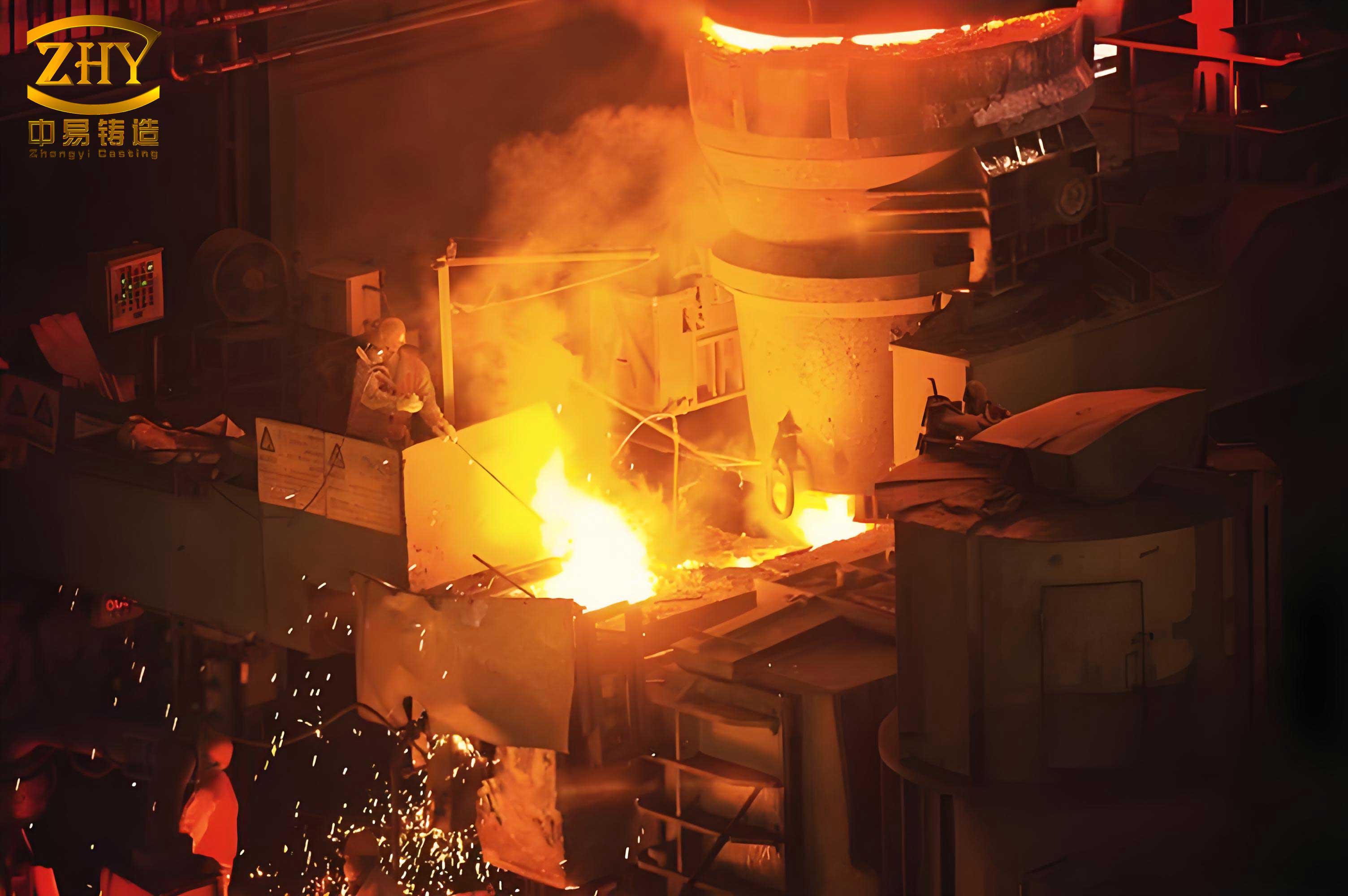
The experimental setup involved the use of a custom-built counter-gravity casting apparatus designed for precise pressure control. The mold was fabricated from clay-bonded sand, a common material in sand castings due to its cost-effectiveness and versatility. The alloy selected for this study was A-l4.5%Cu, chosen for its relevance in industrial applications and its propensity for porosity formation. Prior to casting, the alloy melt was subjected to degassing through vacuum treatment to minimize hydrogen content, thereby reducing the influence of gas porosity. The degassing process involved evacuating the chamber to -91.2 kPa and holding for 600 seconds. Subsequently, the mold was filled under a counter-gravity pressure difference of 50.7 kPa, with a pouring temperature of 705°C. After filling, the pressure was increased to a specified feeding pressure and maintained for 120 seconds to enhance feeding during solidification. To evaluate the effect of feeding pressure, three sets of sand castings were produced under different pressures: 50.7 kPa, 101.3 kPa, and 151.0 kPa. This approach allowed for the investigation of pressure-induced feeding on porosity reduction in sand castings.
The cast specimens were wedge-shaped to create a gradient in solidification conditions, with the thin section experiencing higher cooling rates and the thick section lower cooling rates. After casting, the specimens were extracted from the sand mold, cleaned, and sectioned for analysis. From each specimen, a thin plate was cut, and multiple samples were taken along the length to capture porosity distribution. Metallographic preparation involved grinding, polishing, and etching to reveal the microstructure. Porosity analysis was performed using image analysis software, where micrographs were stitched together to form a continuous image of each sample. The porosity ratio, defined as the area fraction of pores relative to the total area, was calculated for each location. This method provided detailed data on porosity size and distribution in the sand castings. The results indicated that porosity was predominantly shrinkage-based, with larger pores concentrated in the thicker sections where feeding was more challenging. Increasing the feeding pressure significantly reduced porosity, highlighting the importance of pressure-assisted feeding in sand castings.
To complement the experimental data, numerical simulation of the solidification process was conducted using ProCAST software. The thermal properties of the A-l4.5%Cu alloy and the sand mold were defined based on standard databases, with boundary conditions set to match the experimental environment. The initial conditions for the simulation are summarized in the table below:
| Parameter | Value |
|---|---|
| Metal Pouring Temperature | 705°C |
| Mold Initial Temperature | 25°C |
| Heat Transfer Coefficient (Mold-Environment) | 10 W/m²K |
| Heat Transfer Coefficient (Specimen-Mold) | 1000 W/m²K |
The simulation output included temperature-time curves at various points corresponding to the metallographic sample locations. From these curves, key solidification parameters were extracted: the temperature gradient (G) and the cooling rate (R). For porosity analysis, G was evaluated at a temperature of $$ T = T_S + 0.1(T_L – T_S) $$, where $$ T_S $$ is the solidus temperature and $$ T_L $$ is the liquidus temperature. For the A-l4.5%Cu alloy, this corresponded to 558.2°C. The cooling rate R was averaged over the temperature range from $$ T_S $$ to $$ T_L + 2°C $$, specifically from 548°C to 652°C. These parameters are critical for applying porosity criteria, as they govern the mushy zone characteristics and feeding flow in sand castings. The simulation results showed that the temperature gradient decreased from the thin to thick sections, while the cooling rate also varied, leading to differences in porosity susceptibility. This alignment with experimental observations validated the simulation approach for sand castings.
The porosity criteria evaluated in this study are mathematical functions derived from models of Darcy flow in the mushy zone. They relate porosity formation to the local temperature gradient G and cooling rate R. The four criteria considered are:
- Niyama Criterion: $$ CF_{Niyama} = \frac{G}{\sqrt{R}} $$
- Lee Criterion: $$ CF_{Lee} = \frac{R^5}{G^6} $$
- Suri Criterion for Columnar Dendrites: $$ CF_{Suri,col} = \frac{R^{1.6}}{G^{1.652}} $$
- Suri Criterion for Equiaxed Dendrites: $$ CF_{Suri,eq} = \frac{1}{R^{0.35} G^{0.318}} $$
These criteria were applied to the calculated G and R values at each sample location. To assess their predictive performance, the porosity ratio p was fitted against each criterion using a power-law equation: $$ p = A (CF)^B $$, where A and B are fitting constants. The coefficient of determination $$ R^2 $$ was computed to measure the goodness of fit, with higher values indicating better predictive capability for sand castings. The fitting was performed for each feeding pressure condition, and the results are consolidated in the table below:
| Feeding Pressure (kPa) | Criterion | A | B | R² |
|---|---|---|---|---|
| 50.7 | Niyama | 0.0001939 | 7.875 | 0.5102 |
| Lee | 0.001216 | -0.4921 | 0.7765 | |
| Suri (Columnar) | 0.001496 | -1.393 | 0.7905 | |
| Suri (Equiaxed) | 0.003972 | 2.923 | 0.8245 | |
| 101.3 | Niyama | 0.0001356 | 5.895 | 0.5455 |
| Lee | 0.0005781 | -0.3866 | 0.8005 | |
| Suri (Columnar) | 0.0006180 | -1.015 | 0.8053 | |
| Suri (Equiaxed) | 0.001247 | 2.111 | 0.8202 | |
| 151.0 | Niyama | 0.0001161 | 4.918 | 0.3677 |
| Lee | 0.0003767 | -0.3413 | 0.6904 | |
| Suri (Columnar) | 0.0004365 | -0.9738 | 0.7136 | |
| Suri (Equiaxed) | 0.0008974 | 2.113 | 0.7963 |
From the table, it is evident that the Suri criterion for equiaxed dendrites consistently yielded the highest $$ R^2 $$ values across all feeding pressures, with an average of 0.8137. In contrast, the Niyama criterion showed the lowest average $$ R^2 $$ of 0.4745, indicating poor applicability for these sand castings. The Lee and Suri columnar criteria performed moderately, with average $$ R^2 $$ values of 0.7558 and 0.7698, respectively. This suggests that the Suri equiaxed criterion is the most suitable for predicting porosity in counter-gravity sand castings of A-l4.5%Cu alloy. The superiority of this criterion can be attributed to the microstructural characteristics of sand castings, where the low thermal conductivity of the sand mold promotes equiaxed grain formation. Additionally, the pressure application during counter-gravity casting may fragment dendritic arms, further encouraging equiaxed solidification. Therefore, the underlying assumptions of the Suri equiaxed criterion, which relate permeability to dendrite length, align well with the conditions in sand castings.
The discussion extends to the implications of these findings for industrial sand castings. In sand castings, the mold material’s insulating properties often lead to slower cooling and wider mushy zones, increasing the risk of porosity. The counter-gravity process, combined with optimized feeding pressure, can mitigate this by enhancing liquid metal flow. However, accurate porosity prediction is essential for designing effective feeding systems. My analysis demonstrates that traditional criteria like Niyama, developed primarily for steel castings, may not translate well to aluminum alloy sand castings. Instead, criteria that account for equiaxed microstructures, such as Suri’s, offer better predictions. This is particularly relevant for sand castings used in automotive and aerospace applications, where lightweight aluminum alloys are prevalent. Furthermore, the use of numerical simulations, as shown in this study, can aid in determining optimal process parameters for sand castings, reducing trial-and-error in foundry practices.
To delve deeper into the theoretical basis, the porosity criteria are derived from the Darcy law for flow in a porous medium. The general form of the criterion function CF can be expressed as $$ CF = f(G, R) $$, where f is a function specific to each model. For instance, the Niyama criterion assumes a linear relationship between permeability and liquid fraction, while Lee uses a quadratic relationship. Suri’s criteria differentiate between columnar and equiaxed structures by incorporating dendritic parameters. In sand castings, the evolution of permeability during solidification is influenced by grain morphology, which is why the Suri equiaxed criterion outperforms others. Additionally, the effect of feeding pressure can be integrated into these criteria by modifying the pressure term in the Darcy equation, though this was not explicitly done here. Future work could explore hybrid criteria that combine thermal parameters with pressure data for improved accuracy in sand castings.
Another aspect to consider is the role of alloy composition in porosity formation. The A-l4.5%Cu alloy has a relatively wide freezing range, which exacerbates mushy zone feeding difficulties. In sand castings, this can lead to localized porosity clusters, as observed in the experimental results. The porosity distribution maps revealed that porosity decreased with increasing feeding pressure, emphasizing the importance of pressure control in counter-gravity sand castings. This aligns with industry trends where sand castings are increasingly produced using advanced casting techniques to meet quality standards. Moreover, the vacuum degassing step prior to casting effectively minimized gas porosity, allowing the study to focus on shrinkage porosity. This is crucial for sand castings, as hydrogen pickup from moisture in sand molds can be a significant issue. Therefore, process integration—combining degassing, counter-gravity filling, and pressure feeding—is key to producing high-integrity sand castings.
In conclusion, my comparative study of porosity criteria in counter-gravity sand castings of A-l4.5%Cu alloy highlights the importance of selecting appropriate predictive models. The Suri criterion for equiaxed dendrites demonstrated the best correlation with experimental porosity data, outperforming the Niyama, Lee, and Suri columnar criteria. This finding underscores the relevance of microstructural considerations in porosity prediction for sand castings. The research also confirms that increasing feeding pressure in counter-gravity casting reduces porosity, offering a practical method for enhancing the quality of sand castings. For foundries engaged in producing aluminum alloy sand castings, adopting criteria like Suri’s equiaxed model, along with numerical simulation tools, can lead to more reliable defect prediction and process optimization. Future investigations could extend this work to other aluminum alloys and mold materials, further refining porosity criteria for diverse sand castings applications. Ultimately, this contributes to the advancement of casting science, enabling the production of lighter, stronger, and more reliable components through improved sand castings technologies.