
The development of a new bottom nozzle for nuclear fuel assemblies using precision investment casting represents a significant advancement in component manufacturing for the nuclear energy sector. This article details the comprehensive process, challenges, and solutions encountered during the research and development phase. The primary objective was to transition from a traditionally machined assembly to a single, integrally cast piece with exceptional dimensional accuracy and surface finish, leveraging the unique capabilities of the precision investment casting process.
The component in question is a critical structural element within a Pressurized Water Reactor (PWR) fuel assembly. Unlike previous designs that were fabricated from multiple machined parts, this new nozzle was designed as a monolithic casting. Its geometry is remarkably complex, featuring a large planar surface area punctuated by 264 curved protrusions and an intricate network of thin-walled, variably-thickened flow holes. The material specified was a modified CF3 austenitic-ferritic stainless steel, requiring a controlled ferrite content between 10% and 30% to optimize its performance in the reactor environment. The key chemical composition requirements for the casting alloy are summarized below.
| Element | Specification (wt.%) |
|---|---|
| C | ≤ 0.03 |
| Si | ≤ 1.20 |
| Mn | ≤ 2.30 |
| Cr | 17.0 – 20.0 |
| Ni | 9.0 – 12.0 |
| Co | ≤ 0.04 |
| Fe | Balance |
The technical hurdles for successful precision investment casting were substantial. First, achieving a surface roughness of Ra=3.2 μm on such a large and intricate surface pushes the limits of the process. Second, forming the network of flow holes with wall thicknesses ranging from a mere 0.5 mm to 2.65 mm presented a severe challenge for complete mold filling and avoiding mistruns. Third, the component lacked natural locations for traditional feeding risers, making it difficult to compensate for solidification shrinkage, particularly in the thicker support leg sections. Finally, the significant difference in thermal mass between the dense lattice of thin walls and the open frame structure created a high risk of distortion during the pattern, casting, and heat treatment stages due to differential contraction, which can be described by the fundamental relationship for thermal strain:
$$ \epsilon_{thermal} = \alpha \cdot \Delta T $$
where $\epsilon_{thermal}$ is the thermal strain, $\alpha$ is the coefficient of thermal expansion (CTE), and $\Delta T$ is the temperature change. Managing this differential strain was paramount.
Gating System Design and Optimization
The initial gating system for this precision investment casting project employed a multi-level approach with two-tier horizontal runners. This design aimed to distribute metal evenly and avoid direct impingement on critical features. However, initial trials revealed a major flaw: insufficient filling of the numerous thin ribs and small protrusions. The metal stream was losing too much heat and momentum before reaching these remote, thin sections.
A fundamental analysis of fluid flow and heat transfer was necessary. The velocity $v$ of the molten metal as it flows through the gate and into the thin section is crucial. Using a simplified Bernoulli-based energy balance, the pressure head $P$ available to drive flow into these features can be expressed as:
$$ P = \rho g h – \frac{1}{2} \rho v_{gate}^2 – \Delta P_{loss} $$
where $\rho$ is the metal density, $g$ is gravity, $h$ is the effective metallostatic head, $v_{gate}$ is the gate velocity, and $\Delta P_{loss}$ represents pressure losses due to friction and turbulence. For very thin sections, $\Delta P_{loss}$ becomes dominant if the flow path is long and circuitous.
The optimization strategy was radical: eliminate the intermediate runner tier. The revised gating system provided a more direct, shorter flow path for the molten metal to reach the critical thin-walled areas immediately upon entering the mold cavity. This change drastically improved the fluidity and reduced heat loss prior to filling the most challenging geometries. The success of this modification highlights a core principle in precision investment casting of complex parts: sometimes, simplifying the filling path to prioritize the most difficult-to-fill areas is more effective than attempting perfect distribution from the outset.
Pattern Material and Process Evolution
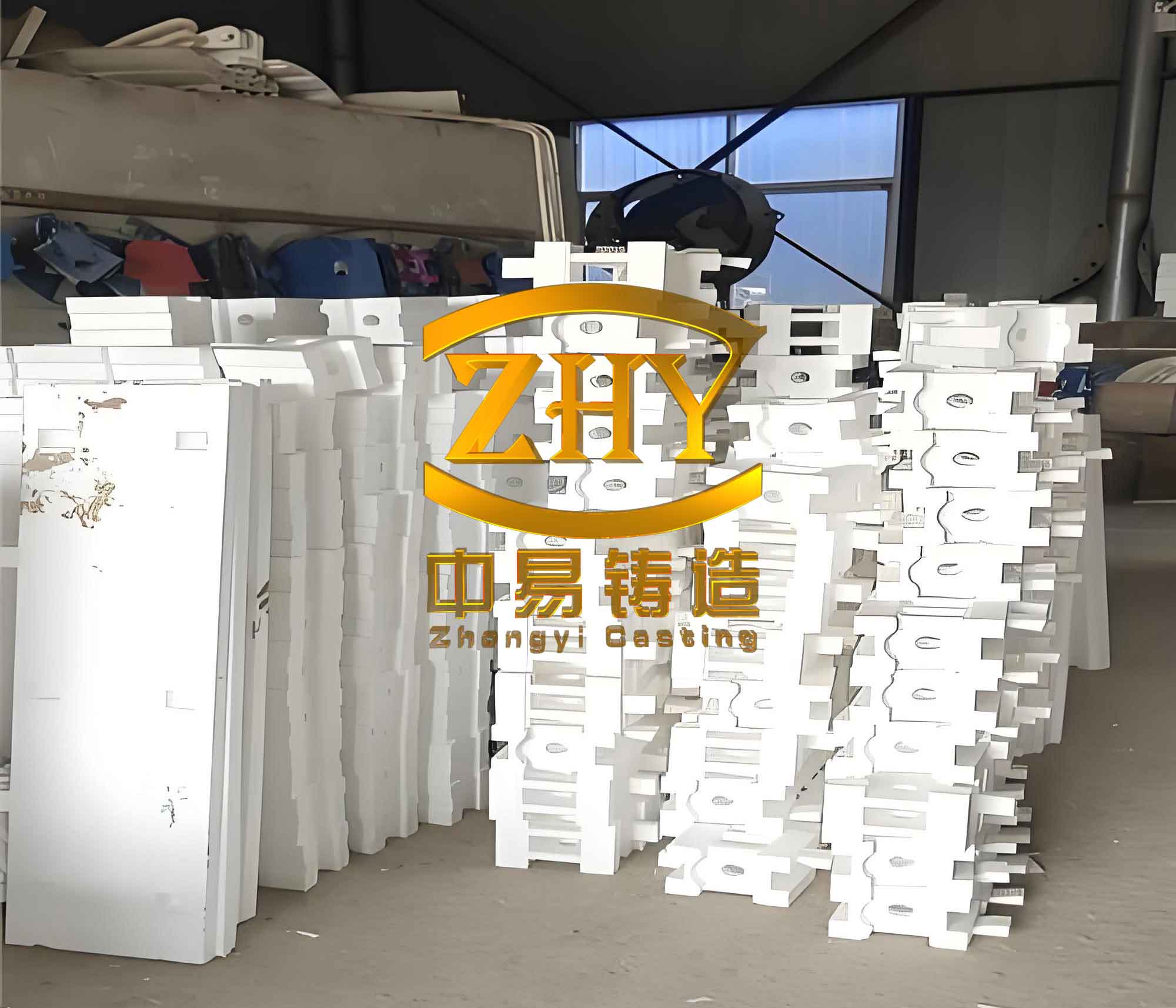
The pattern, or wax model, is the heart of the precision investment casting process, as it defines the final shape. Our initial approach used a filled wax system. While common, it failed to deliver the required surface fidelity and dimensional stability for this part. We then investigated photopolymer resin systems, common in rapid prototyping for investment casting. A domestic industrial-grade UV-curable resin provided improved surface quality and pattern strength. However, a critical issue emerged: its relatively high coefficient of thermal expansion (CTE) during the subsequent dewaxing process. The thermal expansion exerted excessive pressure on the fragile ceramic shell, leading to cracks and failures. The stress $\sigma$ induced in the shell due to pattern expansion can be approximated by:
$$ \sigma \approx E_{shell} \cdot (\alpha_{pattern} – \alpha_{shell}) \cdot \Delta T $$
where $E_{shell}$ is the Young’s modulus of the fired ceramic shell, and $\alpha_{pattern}$ and $\alpha_{shell}$ are their respective CTEs. A high $\alpha_{pattern}$ generates high stress.
The solution was to source a specialized, imported desktop-grade photopolymer resin formulated for precision investment casting. This material exhibited a significantly lower CTE, mitigating the shell-cracking problem. To further economize on material usage and minimize expansion volume, the pattern was designed as a hollow structure with an internal support lattice. This successful resolution underscores the importance of selecting pattern materials with thermomechanical properties tailored not just to shaping, but specifically to the demands of the precision investment casting shell-building and dewaxing cycles.
Shell Building and Process Control
Building a robust ceramic shell capable of withstanding the metal’s pouring temperature and ferrostatic pressure while replicating fine details is a cornerstone of precision investment casting. We employed a colloidal silica binder system. Precise control over slurry viscosity and the powder-to-binder ratio (P:B) for each coating layer was critical. The viscosity $\eta$ directly affects the thickness and uniformity of the ceramic coating. A balance must be struck: too low a viscosity fails to build sufficient thickness, while too high a viscosity can obscure fine details. The P:B ratio, often determined empirically, controls the slurry’s rheology and the final green strength of the layer. A generalized relationship for the thickness $t$ of a dipped layer as a function of withdrawal speed $U$ and viscosity is given by the Landau-Levich equation for viscous drag:
$$ t \propto k \cdot \left( \frac{\eta U}{\rho g} \right)^{1/2} $$
where $k$ is a constant and $\rho$ is the slurry density.
The shell was built with nine distinct layers. The primary coats used fine 320-mesh zircon flour and 100/120-mesh zircon sand to capture surface detail. Subsequent backup coats employed progressively coarser sands (30/60 mesh zircon, then 16/30 mesh molochite) to build bulk and strength. Drying times were strictly controlled—24 hours for face coats and 48 hours for backup coats—to ensure complete hydrolysis and strengthening of the silica gel bonds before applying the next layer. The dewaxing method was also carefully chosen: a localized, controlled melting of the gate wax was performed first to create a pressure relief channel, followed by a steam autoclave cycle. This two-stage approach prevented thermal shock and cracking of the intricate shell. Final firing was conducted at 900°C to develop full ceramic strength and remove any residual organics.
| Process Stage | Material (Primary) | Key Control Parameter |
|---|---|---|
| Primary Slurry | Zircon Flour (320 mesh) in Colloidal Silica | Viscosity: 18-22 seconds (Ford Cup #4); P:B Ratio ~3:1 |
| Primary Stucco | Zircon Sand (100/120 mesh) | Rainfall sifting for uniform application |
| Secondary Stucco | Zircon Sand (30/60 mesh) | Ensuring complete coat coverage |
| Tertiary+ Stucco | Molochite Sand (16/30 mesh) | Building shell thickness & permeability |
| Drying | Controlled Humidity & Temperature | Face Coat: 24h; Backup Coats: 48h minimum |
| Dewaxing | Steam Autoclave | Preceded by manual gate wax removal |
| Firing | Gas-fired Furnace | 900°C for 2 hours, ramp from 550°C |
Melting, Pouring, and Post-Casting Operations
To achieve the required metallurgical quality and surface cleanliness, melting and pouring were conducted under vacuum. A vacuum induction melting furnace was used to process a 50 kg heat. Pouring parameters were tightly constrained: a superheat temperature of 1500-1600°C, a vacuum level ≤ 1.5 Pa, and a total pour time ≤ 3 seconds. The rapid pour under vacuum is essential in precision investment casting to minimize oxide formation and ensure turbulent-free filling of thin sections. The preheated ceramic shells (at 1150°C) were placed in foundry sand for support during pouring.
Post-cast shell removal presented another challenge due to the part’s complex internal geometry. Traditional mechanical methods risked damaging the thin walls. Therefore, an alkaline cleaning process was adopted. The castings, with the bulk of the shell knocked off, were subjected to a pressurized (0.2 MPa) boil in a concentrated (~30 wt.%) sodium hydroxide (NaOH) solution for approximately 0.3 hours. This aggressive chemical process effectively dissolved the residual silica-based ceramic core material from the internal passages without imposing mechanical stress, a technique perfectly suited for delicate precision investment castings.
Heat Treatment and Surface Engineering
Following rough machining, the castings underwent a full solution annealing heat treatment at 1050-1070°C for 3 hours, followed by water quenching. This process homogenizes the microstructure, dissolves detrimental secondary phases, and ensures the desired austenite-ferrite phase balance is achieved.
A critical surface enhancement step was then employed: shot peening. This mechanical treatment induces a layer of compressive residual stress on the surface and creates a nano-crystalline/severely deformed layer. This modification profoundly improves the component’s resistance to stress corrosion cracking (SCC) and general corrosion in the reactor environment. The peening process enhances the diffusion of chromium to the surface, promoting the formation of a more protective, chromium-rich oxide scale (Cr2O3). The growth kinetics of such a protective scale can be described by the parabolic rate law:
$$ x^2 = k_p \cdot t $$
where $x$ is the scale thickness, $k_p$ is the parabolic rate constant (a function of temperature and material), and $t$ is time. Shot peening effectively increases the value of $k_p$ for the formation of the protective chromia layer during subsequent high-temperature exposure, as it provides numerous diffusion short-circuit paths. Comparative oxidation tests confirmed that peened samples developed a more uniform, adherent, and chromium-enriched oxide compared to unpeened castings, directly translating to enhanced in-service performance for this precision investment casting.
Conclusion
The successful production of the advanced fuel assembly bottom nozzle demonstrates the extraordinary capability of modern precision investment casting to manufacture highly complex, high-integrity components for critical applications. The journey required a holistic, iterative approach addressing every step of the process chain. Key to success was the strategic optimization of the gating system to prioritize thin-section fillability, the selection of a low-expansion photopolymer pattern material to ensure shell integrity, the meticulous control of ceramic shell build parameters, the use of vacuum melting and pouring for superior metal quality, and the implementation of advanced post-casting treatments like alkaline core removal and shot peening. This project stands as a testament to the fact that precision investment casting is not merely a shaping process but a comprehensive manufacturing discipline integrating materials science, fluid dynamics, thermal management, and surface engineering to solve some of the most demanding component challenges.