
In the realm of aero-engine manufacturing, particularly for small and medium-sized engines, the demand for lightweight, integrated, and complex structural components has driven the extensive adoption of precision investment casting. This process, also known as lost-wax casting, involves creating a wax pattern replica of the part, coating it with refractory materials to form a ceramic shell, melting out the wax, and then pouring molten metal into the cavity to produce a near-net-shape casting. The historical roots of precision investment casting trace back centuries, but its application in producing critical aero-engine hot-end components, such as turbine casings, guide vanes, and blades, began in the mid-20th century and has since become indispensable due to its ability to fabricate intricate geometries that are difficult or impossible to machine. However, the shift towards highly integrated, irregularly-shaped structural components—characterized by compact spatial arrangements, uneven wall thicknesses, and complex internal features—poses significant technical challenges in ensuring metallurgical quality, dimensional accuracy, and defect-free production. Throughout this discussion, I will delve into the key technological advancements and methodologies that address these challenges, emphasizing the central role of precision investment casting in modern aerospace manufacturing.
The fundamental process of precision investment casting encompasses multiple sequential steps, each critical to the final outcome. A typical workflow can be summarized as follows:
| Process Step | Key Activities | Primary Technical Challenges |
|---|---|---|
| 1. Wax Pattern Injection | Forming the wax replica using dies or assembly methods. | Controlling anisotropic shrinkage, ensuring surface finish, and managing complex geometries. |
| 2. Wax Assembly & Gating | Attaching wax patterns to a central gating system. | Maintaining dimensional consistency and avoiding weld defects in assembled patterns. |
| 3. Ceramic Shell Building | Successive dipping in slurry, stuccoing with refractory grains, and drying. | Achieving uniform coating coverage, proper hardening, and avoiding shell cracks. |
| 4. Shell Drying & Hardening | Controlled environmental conditioning to solidify binders. | Ensuring complete hydrolysis and strength development in thick sections. |
| 5. Wax Removal (Dewaxing) | Melting or dissolving the wax pattern from the shell. | Preventing shell fracture due to wax expansion and thermal shock. |
| 6. Shell Firing | High-temperature baking to develop shell strength and remove residues. | Controlling thermal stresses to minimize distortion and sintering defects. |
| 7. Melting & Pouring | Superheating the alloy and filling the shell cavity. | Ensuring complete mold filling, minimizing turbulence, and controlling solidification. |
| 8. Shell Removal & Finishing | Breaking away the ceramic shell and cutting off the gating system. | Preventing damage to the casting and achieving required surface integrity. |
Each step in precision investment casting introduces variables that can affect the final casting’s quality. For irregularly-shaped components, these challenges are magnified due to their non-uniform geometries. For instance, thin-walled regions may cool too quickly, leading to misruns, while thick sections may develop shrinkage porosity. The internal cavities and intricate passages often necessitate the use of pre-formed ceramic cores, which themselves must withstand the rigors of the process. The following sections explore the core technologies that enable successful precision investment casting of such demanding parts.
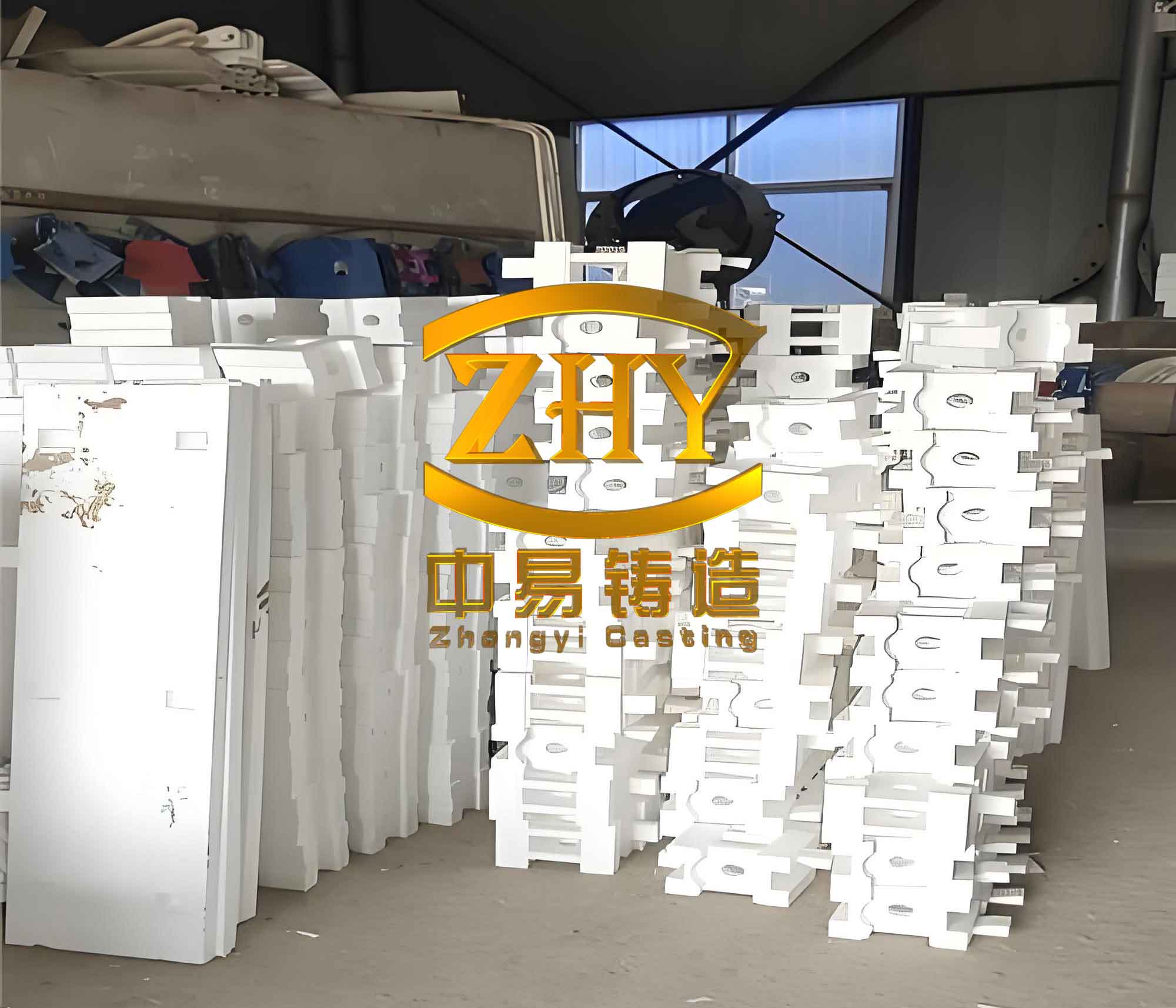
One of the most critical elements in casting components with complex internal features is the ceramic core technology. For parts like engine casings, bearing housings, and integrated guide vanes, which contain enclosed cavities, oil channels, or air passages, ceramic cores are essential to define these internal geometries during precision investment casting. These cores are typically made from silica-based or alumina-based ceramic materials and are inserted into the wax pattern before shell building. For irregularly-shaped components, the cores often take the form of thin-walled, annular structures, which are particularly susceptible to deformation and fracture during processing. The primary challenges include: dimensional instability during core firing, breakage under wax injection pressures, and failure due to thermal shock and metal flow during pouring.
To address these issues, several technical strategies have been developed. First, the formulation of core slurries is optimized by using high-solid-content blends with specialized plasticizers to improve fluidity and mold-filling capability. The slurry rheology must balance viscosity and flow to capture fine details without causing defects. Second, the composition of the ceramic material is tailored to minimize sintering shrinkage and thermal expansion mismatch. For example, adding controlled amounts of zircon or mullite can modify the thermal properties. Third, the firing cycle is carefully designed to gradually remove binders and sinter the ceramic without inducing cracks. This often involves slow heating rates and intermediate holds at critical temperatures. Additionally, strategic reinforcement ribs or “compensation blocks” are often incorporated into the core design to counteract anisotropic shrinkage; these are machined away after firing. The success of the ceramic core directly impacts the internal surface quality and dimensional accuracy of the final casting, making it a cornerstone of advanced precision investment casting.
The manufacture of the wax pattern is another pivotal stage in precision investment casting. For irregularly-shaped components, the traditional approach of splitting the pattern into simpler sub-parts for molding and then manually assembling and welding them introduces variability in dimensional consistency and surface quality. Manual welding can lead to seams, voids, and thermal distortion, which translate into shell imperfections and casting defects. Therefore, the industry is moving towards integral wax pattern technology, where the entire wax pattern is injected as a single piece using high-precision, multi-piece dies. This eliminates assembly errors and improves surface finish. However, integral wax patterns present their own set of challenges: differential shrinkage due to varying section thicknesses can cause warpage, and the die design becomes exceedingly complex with numerous movable cores and slides.
To overcome these hurdles, predictive modeling based on extensive empirical data is used to anticipate shrinkage behavior. The linear shrinkage of wax alloys during cooling can be described by a coefficient of thermal contraction, which varies with temperature and geometry. For a wax pattern with non-uniform thickness, the effective shrinkage in a given direction can be modeled as an integral over the volume:
$$ \Delta L = \int_V \alpha(T, \vec{x}) \cdot \Delta T(\vec{x}) \, dV $$
where $\Delta L$ is the total dimensional change, $\alpha$ is the temperature-dependent coefficient of thermal contraction, $\Delta T$ is the local temperature drop, and the integration is over the volume $V$ of the wax pattern. By simulating this, compensations can be built into the die design. Additionally, water-soluble cores are employed to create undercuts and internal features in the wax pattern, allowing for one-piece ejection and ensuring surface integrity. The use of advanced wax formulations with reduced shrinkage and improved flow characteristics further aids in producing accurate integral patterns. The table below summarizes key considerations in wax pattern manufacturing for precision investment casting.
| Aspect | Traditional Assembly Method | Integral Pattern Technology |
|---|---|---|
| Dimensional Control | Prone to variability due to manual alignment and welding. | High consistency via single injection; compensations applied in die design. |
| Surface Quality | Potential seams, weld lines, and repair marks. | Superior, seamless surface; reduced need for manual finishing. |
| Die Complexity | Simpler dies for sub-parts. | Complex dies with multiple slides and cores; often requires water-soluble cores. |
| Production Efficiency | Labor-intensive assembly and inspection. | Faster cycle times after die fabrication; less manual intervention. |
| Suitability for Irregular Shapes | Workable but may introduce stress concentrations at joints. | Ideal for complex, integrated geometries; minimizes joint-related defects. |
The ceramic shell that surrounds the wax pattern plays a decisive role in determining the surface finish, dimensional accuracy, and metallurgical soundness of the final casting. In precision investment casting, shells are typically built using colloidal silica binders and refractory aggregates like zircon, alumina, or mullite. The shell must possess high hot strength, good thermal shock resistance, low reactivity with the molten metal, and adequate permeability to allow gases to escape. For irregularly-shaped components, achieving a uniform shell thickness is challenging due to geometric shadows and reentrant angles that hinder slurry coverage and stucco application. Moreover, thick sections may not dry or harden completely, leading to weak zones, while thin areas might be prone to cracking. During dewaxing, the expansion of wax upon heating can exert substantial pressure on the shell; complex geometries may impede wax flow, causing shell fracture.
Advanced shell systems address these issues through meticulous control of slurry parameters, stucco粒度 distribution, and drying conditions. The slurry viscosity $\eta$ is critical for coating uniformity and is often adjusted based on the part geometry. A common model relates viscosity to solid loading $\phi$ and binder concentration:
$$ \eta = \eta_0 \exp\left( \frac{k \phi}{1 – \phi / \phi_{\text{max}}} \right) $$
where $\eta_0$ is the viscosity of the binder, $k$ is a constant, and $\phi_{\text{max}}$ is the maximum packing fraction. By optimizing $\phi$ and the particle size distribution, slurries can be tailored to flow evenly over complex surfaces. Multiple coating layers with graded refractories are applied to build strength and insulation properties. The drying process is controlled in environments with precise temperature, humidity, and airflow to ensure complete hydrolysis of the binder without causing cracks. To mitigate dewaxing stresses, specialized techniques such as steam autoclaving or flash firing are used, and the gating design is optimized to provide escape paths for molten wax. The following table outlines key shell properties and their influence on casting quality in precision investment casting.
| Shell Property | Desired Characteristic | Impact on Casting | Control Methods |
|---|---|---|---|
| Hot Strength | High at pouring temperatures | Resists metal static pressure and prevents mold wall movement; reduces dimensional errors. | Use of high-refractoriness aggregates (e.g., fused silica), proper sintering cycle. |
| Thermal Shock Resistance | Ability to withstand rapid temperature changes | Minimizes cracking during dewaxing and metal pouring; crucial for thin-shelled areas. | Incorporation of materials with low thermal expansion (e.g., zircon) and graded layers. |
| Surface Smoothness | Low roughness | Directly translates to casting surface finish; reduces cleaning and machining. | Fine primary slurry coatings, controlled stucco size, and adequate drying. |
| Permeability | Sufficient for gas escape | Prevents gas entrapment and blowholes; especially important for dense alloys. | Optimized stucco粒度 and shell porosity; use of permeable backup layers. |
| Chemical Inertness | Low reactivity with molten alloy | Avoids metal-shell reactions that cause surface defects like slag inclusions. | Selection of stable refractories (e.g., alumina for superalloys) and inert binders. |
Control of grain structure is paramount in precision investment casting of high-performance aero-engine components, as it directly influences mechanical properties such as fatigue resistance, creep strength, and thermal fatigue life. Irregularly-shaped castings often exhibit heterogeneous grain structures due to varying cooling rates: thin edges may develop undesirable columnar grains, while thick sections can become excessively coarse. Three primary methodologies are employed to govern grain evolution: thermal control, chemical inoculation, and dynamic methods.
Thermal control involves manipulating the pouring temperature $T_p$, mold preheat temperature $T_m$, and cooling rate to enhance undercooling and promote fine equiaxed grains. The critical undercooling $\Delta T_c$ required for homogeneous nucleation is given by:
$$ \Delta T_c = \frac{16 \pi \gamma_{SL}^3}{3 \Delta G_v^2} $$
where $\gamma_{SL}$ is the solid-liquid interfacial energy and $\Delta G_v$ is the volume free energy difference. In practice, lower pouring temperatures increase undercooling but may compromise fluidity, leading to misruns in complex shapes. Therefore, thermal control is often combined with centrifugal casting to ensure filling while maintaining rapid solidification.
Chemical inoculation, or grain refinement, involves introducing foreign particles that act as heterogeneous nucleation sites. In precision investment casting, a common technique is coating the shell inner surface with a nucleant such as cobalt aluminate (CoAl$_2$O$_4$). The effectiveness depends on the wetting angle $\theta$ between the nucleant and the melt, with smaller angles promoting nucleation. The number of active nuclei per unit area $N$ can be approximated by:
$$ N = N_0 \exp\left( -\frac{\Delta G^*}{k_B T} \right) $$
where $N_0$ is a pre-exponential factor, $\Delta G^*$ is the activation energy for nucleation, $k_B$ is Boltzmann’s constant, and $T$ is temperature. By optimizing the slurry composition and application, surface grain refinement can achieve ASTM grain sizes of 3-4 in critical regions like blade edges.
Dynamic methods, such as mechanical vibration or electromagnetic stirring, disrupt the growing dendrites and fragment them into new grains. The application of an electromagnetic force during solidification can induce fluid flow, described by the Lorentz force density $\vec{f}$:
$$ \vec{f} = \vec{J} \times \vec{B} $$
where $\vec{J}$ is the current density and $\vec{B}$ is the magnetic flux density. This agitation leads to dendrite arm detachment, increasing the grain density. Such techniques have been used to produce fine, equiaxed grains throughout entire castings, even in thick sections.
The table below compares these grain control methods as applied in precision investment casting.
| Method | Principle | Typical Application | Advantages | Limitations |
|---|---|---|---|---|
| Thermal Control | Increasing undercooling via low pouring/mold temperatures. | Components with uniform thin walls; often combined with centrifugal casting. | Simple, no foreign materials; good for surface quality. | Risk of misruns in complex shapes; limited refinement in thick sections. |
| Chemical Inoculation | Heterogeneous nucleation on added particles. | Surface refinement of blades, vanes, and thin-walled regions. | Targeted refinement; effective for columnar grain suppression. | Potential for inclusion if particles detach; may affect surface chemistry. |
| Dynamic Methods (e.g., electromagnetic) | Dendrite fragmentation via forced convection. | Bulk refinement in complex castings like rotors or casings. | Overall grain refinement; improves homogeneity. | Equipment complexity; may introduce turbulence defects. |
With the increasing complexity of components and the high cost of trial-and-error in precision investment casting, computational simulation has become an indispensable tool for process optimization. Numerical modeling allows us to visualize and analyze the filling, solidification, and stress development stages, predicting potential defects such as shrinkage porosity, hot tears, and mistuns before physical prototyping. The governing equations typically include the Navier-Stokes equations for fluid flow, the heat transfer equation for temperature evolution, and constitutive models for solidification kinetics.
For mold filling, the volume of fluid (VOF) method is often used to track the metal-air interface. The energy equation during solidification accounts for latent heat release:
$$ \rho c_p \frac{\partial T}{\partial t} = \nabla \cdot (k \nabla T) + \rho L \frac{\partial f_s}{\partial t} $$
where $\rho$ is density, $c_p$ is specific heat, $k$ is thermal conductivity, $L$ is latent heat, and $f_s$ is the solid fraction. The solidification path is modeled using microsegregation models like the Scheil equation or more advanced multicomponent approaches. Stress analysis employs thermo-elasto-plastic models to predict residual stresses and distortions:
$$ \sigma_{ij} = C_{ijkl} (\varepsilon_{kl} – \alpha \Delta T \delta_{kl}) $$
where $\sigma_{ij}$ is the stress tensor, $C_{ijkl}$ is the stiffness tensor, $\varepsilon_{kl}$ is the strain tensor, $\alpha$ is the coefficient of thermal expansion, and $\Delta T$ is the temperature change. By integrating these simulations into the design cycle, we can optimize gating and risering systems, adjust process parameters, and reduce development time and cost. For instance, simulation might reveal that a particular hot spot in an irregularly-shaped casing requires an additional feeder, or that the pouring temperature can be lowered to reduce grain size without causing filling defects. The iterative use of simulation in precision investment casting not only enhances yield but also enables the production of more reliable components.
In conclusion, the manufacture of irregularly-shaped structural components for small and medium-sized aero-engines via precision investment casting demands a holistic and advanced technological approach. The integration of complex internal features necessitates robust ceramic core technologies that resist deformation and fracture. The pursuit of dimensional accuracy and surface finish drives the adoption of integral wax pattern manufacturing, supported by predictive shrinkage models and soluble core techniques. High-performance ceramic shell systems, tailored through rigorous control of slurry rheology and drying kinetics, are essential to withstand process stresses and produce sound castings. Grain structure control, whether through thermal, chemical, or dynamic means, ensures that the metallurgical properties meet the stringent requirements of aerospace service. Finally, the pervasive use of computational simulation accelerates process development and mitigates risks by providing insights into fluid flow, solidification, and stress behavior. As aero-engine designs continue to evolve towards greater integration and complexity, ongoing advancements in these core areas of precision investment casting will remain critical to achieving the desired balance of performance, reliability, and manufacturability. The synergy of these technologies underscores the enduring significance of precision investment casting in pushing the boundaries of aerospace component fabrication.
Throughout this exploration, it is evident that precision investment casting is not merely a manufacturing process but a sophisticated engineering discipline that intertwines materials science, fluid dynamics, thermal management, and computational analytics. Each iteration and improvement in the technique contributes to the broader goal of producing lighter, stronger, and more efficient aero-engines. The challenges posed by irregularly-shaped components have catalyzed innovations that benefit the entire field of precision investment casting, from fundamental material formulations to digital twin methodologies. As we look to the future, further integration of real-time process monitoring, artificial intelligence for defect prediction, and novel alloy-shell interactions will likely define the next frontier. In essence, the journey of mastering precision investment casting for these complex parts is a testament to the relentless pursuit of excellence in aerospace manufacturing.