
In the rapidly advancing fields of vehicular, airborne, and spaceborne radar systems, the demand for high-performance, lightweight, and compact components is paramount. As a core component of phased array radar, the Digital Array Module (DAM) enclosure is a critical element, with each radar system incorporating hundreds to thousands of such units. These enclosures directly influence radar performance, overall system mass, cost, and manufacturing timeline. Traditionally, these complex parts have been manufactured via machining, often supplemented by electrical discharge machining (EDM) for internal features like wiring channels and holes. This approach, however, suffers from significant material waste (often over 90% of the billet), low efficiency, extended lead times, and high cost. In my research, I have explored the feasibility of adopting the precision investment casting process as a near-net-shape manufacturing solution to overcome these limitations for a high-volume aluminum alloy DAM enclosure.
The precision investment casting process, also known as the lost-wax process, is a manufacturing technique characterized by minimal or zero material removal. It offers high material utilization, reduced cost, improved production efficiency, excellent dimensional accuracy (on the order of 10⁻¹ millimeters), and superior surface finish (typically Ra ≤ 1.6 μm). This process is exceptionally suited for the batch production of intricate, tightly toleranced parts. This article details my comprehensive investigation into applying the precision investment casting process to fabricate a specific, high-volume aluminum alloy DAM enclosure. I will systematically analyze the part’s geometry and manufacturing challenges, then delve into the overall process route design, material selection, structural optimizations for manufacturability, and the detailed design of the investment casting process itself. The validation through prototype fabrication and testing confirms the viability of this approach, providing a valuable reference for the design and cost-effective manufacturing of similar DAM enclosure components within the radar and broader electronics industry.
My analysis began with a thorough examination of the DAM enclosure’s design. The component is a complex aluminum plate structure with overall dimensions of 271 mm × 236 mm × 23.1 mm and a mass of approximately 0.75 kg. Its complexity arises from eight internal cavities of varying sizes, numerous ribs, stepped assembly surfaces, wiring channels, feedthrough holes, mounting lugs, and screw holes. Externally, it features two protruding thin-walled mounting plates. A primary characteristic is the prevalence of thin-walled sections. While the main frame has walls ranging from 5 to 10 mm in thickness, acting as the primary load-bearing structure, the internal ribs, cavity bottoms, and the external mounting plates are notably thin, measuring only 1 to 1.5 mm. This geometry leads to inherently poor rigidity, making the part highly susceptible to deformation from machining stresses or during the solidification phase of the investment casting process. Furthermore, the enclosure demands high precision, with critical dimensional tolerances within ±0.05 mm, other features within ±0.1 mm, and a flatness requirement of 0.1 mm on the mating surface. For a casting, this translates to requiring a dimensional tolerance grade of CT6 and a surface roughness Ra controlled below 3.2 μm.
The main process challenges identified stem directly from these structural features. The combination of complexity and thin walls raises the risk of incomplete mold filling (misruns) during the investment casting process. Differential cooling and solidification rates between thick and thin sections create internal stresses, which are the primary driver for warping and distortion. The high accuracy and surface finish requirements impose stringent demands on the selection of mold materials and the control of every step within the investment casting process. I concluded that successfully manufacturing this part hinges on three pillars: selecting an appropriate cast alloy, optimizing the part design for the investment casting process, and implementing a rigorously controlled and validated precision investment casting process sequence.
To address these challenges, I formulated a comprehensive implementation strategy. The foundation is a detailed overall process route for the precision investment casting process, which I have summarized in the flowchart below. This route encapsulates every critical stage from pattern creation to final inspection.
| Stage | Key Activities | Objective |
|---|---|---|
| 1. Pattern & Mold Preparation | Wax pattern fabrication, assembly, and shell building. | Create a precise ceramic mold negative of the part. |
| 2. Metal Preparation | Alloy melting, refining, modification, and holding at pour temperature. | Produce high-quality, clean, and grain-refined molten metal. |
| 3. Casting | Shell preheating, vacuum-assisted pouring, solidification. | Fill the mold completely and achieve sound solidification. |
| 4. Post-Casting Processing | Shell removal (knock-out), cut-off, grinding, heat treatment. | Separate the casting, achieve final shape, and enhance properties. |
| 5. Inspection & Validation | Dimensional check, radiographic/fluorescent inspection, mechanical testing. | Ensure the casting meets all design and quality specifications. |
The success of the investment casting process is deeply tied to material science. For the DAM enclosure, the material must satisfy requirements for lightweight construction, high thermal conductivity (to dissipate heat from internal high-power devices), weldability (for defect repair), good corrosion resistance, and most critically, excellent castability to form the thin-walled sections. After evaluating major cast aluminum alloy systems, I selected ZL101A, an Al-Si-Mg series alloy. Its superior castability makes it ideal for complex investment castings. It offers good thermal conductivity (approximately 151 W/(m·°C) at 25°C), excellent corrosion resistance (further improvable via anodizing), and good weldability. Post-casting, it can be heat-treated to relieve stresses and improve mechanical properties. The chemical composition specification for ZL101A is detailed in the following table, which also includes the results from my prototype analysis.
| Element | Specification (ZL101A) | Prototype Analysis | Role/Effect |
|---|---|---|---|
| Si | 6.5 – 7.5 | 6.73 | Primary alloying element; improves fluidity and castability. |
| Mg | 0.25 – 0.45 | 0.33 | Forms Mg₂Si precipitates during aging; increases strength. |
| Al | Balance | Balance | Base metal. |
| Fe (max) | 0.20 | 0.11 | Impurity; can form brittle intermetallics. |
| Cu (max) | 0.10 | 0.08 | Impurity; can reduce corrosion resistance. |
| Zn (max) | 0.10 | 0.06 | Impurity. |
| Ti (max) | 0.20 | 0.14 | Often added as a grain refiner. |
| Mn, Ni, Sn, Pb (max) | 0.10, 0.05, 0.05, 0.05 | Not detected / Below threshold | Trace impurities. |
Initial prototype trials revealed distortion in the thin ribs and side plates after casting. To mitigate this within the investment casting process, I implemented a structural optimization. The primary modification was adding vertical reinforcing ribs, 2 mm in thickness, to the thin side plates. This simple but effective change significantly increased the local rigidity of these sections, suppressing warping during solidification and cooling. This optimization is a critical example of designing for the investment casting process, where managing thermal stresses is as important as achieving geometric form.
The core of my work involved the meticulous design of the precision investment casting process parameters. Each sub-process was optimized to meet the challenges of thin walls and high accuracy.
Wax Pattern Fabrication: The pattern’s accuracy directly dictates the final casting’s dimensions. The DAM enclosure’s geometry, with undercuts from side channels, required a wax injection mold designed for collapsible cores. I selected a low-temperature wax formulation for its excellent flowability and precision. The injection parameters were rigorously optimized. The governing equation for wax flow during injection can be simplified by considering it as a non-Newtonian fluid under pressure, where the fill time relates to the pressure drop, viscosity, and flow path geometry. An empirical relationship for ensuring complete fill while minimizing shrinkage is maintaining a high pressure-time integral. The optimized parameters I established were: Wax temperature: 65°C, Injection pressure: 2 MPa, Injection time: 30 s, Hold pressure: 1.8 MPa, Hold time: 60 s, and Cool time: 2 hours at (22±2)°C. This regime ensured complete cavity fill with minimal pattern distortion.
Ceramic Shell Building: For this application, I employed a gypsum-bonded investment casting process shell system, enhanced with colloidal silica (silica sol). This hybrid approach combines the excellent surface replication and low thermal conductivity of plaster with the improved high-temperature strength of a ceramic system. The shell was built up using multiple layers. The primary (face) coat utilized fine zircon flour (ZrSiO₄) as the refractory for its low thermal expansion and high thermal shock resistance. The backup coats used mullite sand (3Al₂O₃·2SiO₂) for its suitable strength, good permeability, and favorable collapsibility after casting. The shell’s strength development involves the gelling and bonding action of silica sol, which can be described by the growth of silicate polymers. The shell must withstand the thermal shock of molten aluminum, approximately at 720°C. The thermal stress (σ_th) induced can be approximated by:
$$ \sigma_{th} \approx E \cdot \alpha \cdot \Delta T $$
where \( E \) is the shell’s Young’s modulus, \( \alpha \) is its coefficient of thermal expansion, and \( \Delta T \) is the temperature difference between the shell and the metal. Using low-expansion zircon helps minimize this stress.
Alloy Melt Treatment: The quality of the molten metal is paramount. The process involves two key treatments: refining and modification. Refining aims to remove dissolved hydrogen and non-metallic inclusions. I employed the rotating impeller degassing (RID) method, where argon gas is injected into the melt through a rotating graphite impeller. The efficiency of hydrogen removal can be modeled by the rate of bubble-metal surface area generation and the diffusion of hydrogen into the argon bubbles. The process parameters were: Melt temperature: (730±10)°C, Argon pressure: 0.2 MPa, Treatment time: 15 minutes. The rotating impeller creates a fine dispersion of bubbles, maximizing the surface area for hydrogen diffusion according to Sieverts’ law. Modification targets the microstructure. ZL101A’s ~7% Si content tends to form a coarse, plate-like eutectic silicon structure, which is detrimental to mechanical properties. I added 0.15% Sr (as AlSr10 master alloy) and 0.2% Ti+B (as AlTi5B1). Sr poisons the growth sites of silicon, promoting a fine, fibrous eutectic structure. The effect can be related to a reduction in the interfacial energy between the aluminum and silicon phases. The Ti+B addition acts as a grain refiner for the primary α-Al phase, providing heterogeneous nucleation sites.
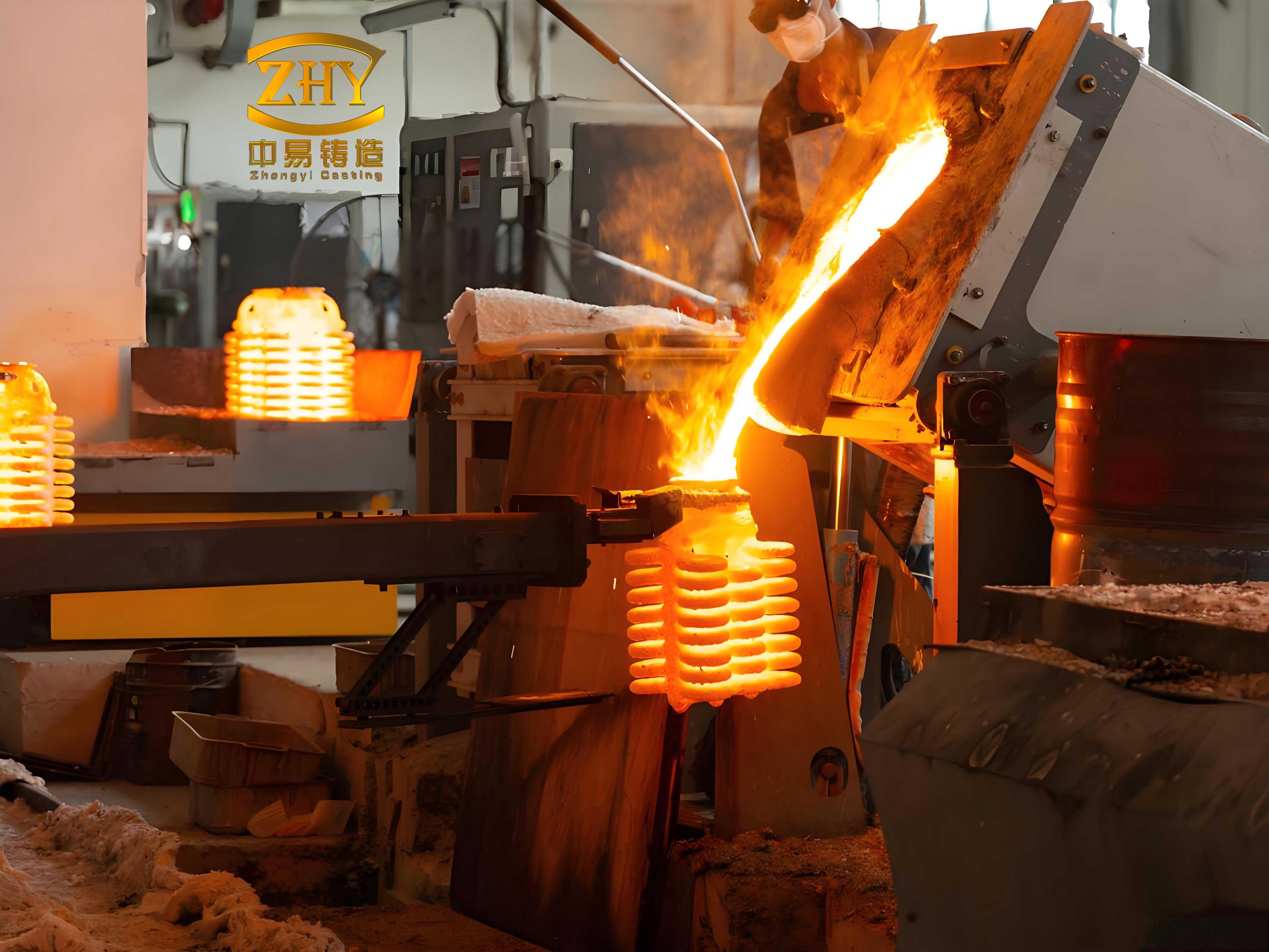
Pouring and Solidification: This is the most critical phase of the investment casting process. I used a vacuum-assisted counter-gravity pouring system with a bottom-gated runner. This allows precise control of the fill velocity and minimizes turbulence and oxide formation. The filling process must overcome the viscous drag in the thin sections. The pressure required to fill a channel of thickness \( h \) and length \( L \) can be estimated using a simplified form of the Hagen-Poiseuille equation for laminar flow:
$$ \Delta P = \frac{12 \mu L V}{h^2} $$
where \( \mu \) is the dynamic viscosity of the molten aluminum and \( V \) is the average fill velocity. To ensure sound casting, directional solidification must be enforced—thinner sections should solidify first, feeding towards the thicker sections and ultimately the risers. I strategically placed chills at the extremities of thin walls to increase their cooling rate and used insulating sleeves around the downsprue to keep it liquid longer as a feeding source. The optimized parameters were: Shell preheat temperature: 490°C (held for >2 hours), Pouring temperature: 720°C, Vacuum level during pour: 0.15 MPa (absolute pressure). The preheat temperature is critical; too low leads to mistuns, too high can cause mold-metal reaction. The thermal gradient (G) and solidification rate (R) govern the microstructure; a high G/R ratio is desirable for columnar or fine equiaxed growth.
| Process Stage | Parameter | Optimized Value / Specification |
|---|---|---|
| Wax Injection | Wax Temperature | 65 °C |
| Injection Pressure / Time | 2 MPa / 30 s | |
| Hold Pressure / Time | 1.8 MPa / 60 s | |
| Cooling | 2 hours at 22°C | |
| Shell Preparation | Face Coat Refractory | Zircon Flour (ZrSiO₄) |
| Binder System | Colloidal Silica + Gypsum | |
| Melt Treatment | Refining (RID) | Argon at 0.2 MPa for 15 min @ 730°C |
| Modification | 0.15% Sr (AlSr10) + 0.2% Ti+B (AlTi5B1) | |
| Target Hydrogen Level | < 0.15 ml/100g Al (industry standard target) | |
| Casting | Shell Preheat | 490 °C for > 2 hours |
| Pouring Temperature | 720 °C | |
| Pouring Pressure (Vacuum Assist) | 0.15 MPa (absolute) | |
| Heat Treatment | Solution Treatment | 535 °C for 12 hours, water quench to ~80°C |
| Aging Treatment | 155 °C for 8 hours, air cool | |
| Objective | Stress relief, precipitation strengthening (Mg₂Si) |
Heat Treatment: After casting and shell removal, the components underwent a T6 heat treatment. The solution treatment at 535°C for 12 hours serves to dissolve soluble alloying elements (like Mg and Si) into the aluminum matrix and homogenize the microstructure. The subsequent rapid water quench (to about 80°C to avoid quench cracking) retains these elements in a supersaturated solid solution. The kinetics of dissolution can be described by Fick’s second law. The final artificial aging at 155°C for 8 hours precipitates fine, coherent Mg₂Si particles, which significantly strengthen the alloy via precipitation hardening. The strengthening increment \( \Delta \sigma \) from such precipitates can be approximated by the Orowan bypass mechanism or related models, depending on precipitate size and spacing.
The final validation of the entire precision investment casting process lies in the inspection of the produced castings. The prototypes were subjected to a battery of tests. Dimensional inspection confirmed that all critical features were within the specified ±0.05 mm tolerance, and the overall casting met CT6 grade. Surface roughness measurements averaged Ra 2.8 μm, well below the 3.2 μm requirement. Mechanical testing on separately cast coupons yielded an average tensile strength (Rm) of 290 MPa, a Brinell hardness (HBS) of 78.8, and an elongation of 5.5%, fully satisfying the performance requirements for the enclosure application. Chemical analysis, as shown in Table 2, confirmed compliance with ZL101A specifications. Most importantly, radiographic and fluorescent penetrant inspection revealed no internal defects such as shrinkage porosity, cracks, or cold shuts. Microstructural examination showed a fine, modified eutectic silicon structure within an α-Al matrix, with no evidence of detrimental intermetallic phases or oxide films, indicating excellent control over the melt treatment and solidification stages of the investment casting process.
The relationship between process parameters and final properties in the investment casting process is complex and interconnected. To illustrate this, we can consider a simplified model for yield strength (\( \sigma_y \)) of the heat-treated casting, which sums various strengthening contributions:
$$ \sigma_y = \sigma_0 + \sigma_{ss} + \sigma_{gb} + \sigma_{ppt} $$
where \( \sigma_0 \) is the intrinsic strength of pure aluminum, \( \sigma_{ss} \) is solid solution strengthening from elements like Mg in solution after quenching, \( \sigma_{gb} \) is grain boundary strengthening (Hall-Petch effect, \( k_y / \sqrt{d} \), where \( d \) is grain size), and \( \sigma_{ppt} \) is precipitation strengthening from Mg₂Si. The investment casting process parameters directly influence \( d \) (via grain refinement) and \( \sigma_{ppt} \) (via solutionizing and aging parameters).
| Property Category | Test Method / Standard | Result / Value | Requirement / Specification | Status |
|---|---|---|---|---|
| Dimensional Accuracy | Coordinate Measuring Machine (CMM) | All critical dims within ±0.048 mm | ±0.05 mm | Pass |
| Surface Roughness | Profilometer (Ra) | 2.6 – 3.0 μm | ≤ 3.2 μm | Pass |
| Tensile Strength (Rm) | ASTM B557 | 290 MPa | ≥ 280 MPa (Typical for ZL101A-T6) | Pass |
| Elongation (A%) | ASTM B557 | 5.5 % | ≥ 3 % (Typical) | Pass |
| Hardness | Brinell (HBS 10/1000) | 78.8 | 70 – 90 (Typical for T6) | Pass |
| Internal Soundness | Fluorescent Penetrant Inspection (FPI) | No relevant indications | No cracks, hot tears, or linear defects | Pass |
| Chemical Composition | Optical Emission Spectrometry | See Table 2 | ZL101A specification | Pass |
In conclusion, my comprehensive investigation demonstrates that the precision investment casting process is not only feasible but highly advantageous for the manufacturing of complex, thin-walled DAM enclosures. The traditional subtractive manufacturing approach is plagued by inefficiency and high cost for such parts. Through a systematic methodology encompassing material science, design for manufacturability (DfM), and meticulous optimization of each stage in the investment casting process—from wax pattern injection and ceramic shell engineering to advanced melt treatment and controlled solidification—I have successfully produced prototype enclosures that meet all stringent dimensional, mechanical, and quality requirements. The investment casting process offers a path to significant cost reduction, shorter lead times, and material savings for high-volume production. This study provides a validated framework and a set of optimized parameters that can be adapted for the design and low-cost manufacturing of a wide range of intricate, lightweight components in the radar, aerospace, and telecommunications industries. Future work could focus on further automating the investment casting process line for these components or exploring the integration of additive manufacturing techniques for even more complex wax patterns or ceramic shell cores.