
In my experience within the manufacturing industry, the adoption of advanced casting techniques has been pivotal for enhancing productivity and quality. Among these, precision lost wax casting stands out as a transformative process, enabling the production of complex, high-tolerance components with minimal machining requirements. This method, also known as investment casting, leverages a sacrificial wax pattern to create intricate ceramic molds, resulting in parts that exhibit superior surface finish and dimensional accuracy. Throughout this article, I will delve into the intricacies of precision lost wax casting, drawing from practical trials and theoretical insights to provide a detailed guide. The core focus will be on the systematic approach to mastering precision lost wax casting, emphasizing key parameters, material science, and economic implications.
The fundamental principle of precision lost wax casting involves creating a wax replica of the desired part, coating it with a refractory material to form a shell, melting out the wax, and then pouring molten metal into the cavity. This process is renowned for its ability to produce net-shape or near-net-shape components, reducing material waste and machining time significantly. In my work, I have applied precision lost wax casting to challenging parts such as flywheels for diesel engine governors, where high-speed operation demands exceptional mechanical properties and surface integrity. The journey from initial experimentation to full-scale production has underscored the versatility and efficiency of precision lost wax casting, making it a cornerstone of modern manufacturing.
To set the stage, let me outline the typical workflow in precision lost wax casting, which I have refined through iterative testing:
- Pattern creation using wax or similar materials.
- Assembly of patterns onto a gating system.
- Application of refractory coatings to build a ceramic shell.
- Dewaxing and shell hardening.
- Mold burnout and preheating.
- Metal pouring and solidification.
- Shell removal and finishing.
Each step requires meticulous control to ensure the final part meets specifications. In the following sections, I will expand on these stages, integrating tables and formulas to encapsulate critical data and relationships.
Pattern Making and Wax Formulation
The foundation of precision lost wax casting lies in the wax pattern, which must replicate the part geometry with high fidelity. My approach involves designing and fabricating dies or molds, often referred to as “dies” in the context of precision lost wax casting, to produce wax patterns. Initially, I used石膏 (plaster) as a temporary die material due to time constraints, but this led to issues with surface roughness and dimensional stability. Subsequently, I transitioned to metal dies, which offered improved durability and precision. The wax material itself is a blend of paraffin and stearic acid, selected for its balanced properties such as melt point, shrinkage, and ease of removal. Through experimentation, I have optimized the composition to achieve minimal distortion during handling and coating.
The wax blend typically consists of 50% paraffin and 50% stearic acid by weight, though adjustments are made based on environmental conditions and part complexity. Key properties include:
- Melting point: 50–60°C
- Shrinkage rate: 0.5–1.0%
- Ash content: below 0.1%
- Viscosity: tailored for injection
To quantify the wax behavior, I use the following formula for linear shrinkage, which is critical in precision lost wax casting to anticipate dimensional changes:
$$ \Delta L = L_0 \cdot \alpha \cdot (T_m – T_r) $$
where \(\Delta L\) is the shrinkage length, \(L_0\) is the initial dimension, \(\alpha\) is the coefficient of thermal expansion for the wax blend, \(T_m\) is the melting temperature, and \(T_r\) is the room temperature. For our blend, \(\alpha\) approximates \(1.2 \times 10^{-4} \, \text{°C}^{-1}\), leading to predictable pattern sizing.
During injection, pressure control is vital to avoid defects like bubbles or incomplete filling. I operate at 0.5–1.0 MPa, depending on the pattern’s cross-sectional area. The injection temperature is maintained at 45–50°C to keep the wax in a糊状 (paste-like) state, ensuring smooth flow into the die cavities. After ejection, patterns are cooled in water to prevent warping, then assembled onto a central gating system using a soldering iron for熔接 (fusion welding). This assembly, known as a “tree,” maximizes productivity in precision lost wax casting by allowing multiple parts to be cast simultaneously.
Refractory Coating and Shell Building
The ceramic shell in precision lost wax casting serves as the mold for metal pouring, and its quality directly influences surface finish and dimensional accuracy. My process begins with preparing a refractory slurry, primarily composed of waterglass (sodium silicate) and silica flour. Waterglass acts as a binder, and its properties must be carefully controlled. I use a waterglass with a modulus (SiO₂:Na₂O ratio) of 2.8–3.0 and a specific gravity of 1.28–1.30. To enhance its gelling ability, I treat it with ammonium chloride solution, which promotes the formation of active silica gel through the reaction:
$$ \text{Na}_2\text{O} \cdot n\text{SiO}_2 + 2\text{NH}_4\text{Cl} \rightarrow 2\text{NaCl} + 2\text{NH}_3 \uparrow + n\text{SiO}_2 \downarrow + \text{H}_2\text{O} $$
This treatment increases the shell strength and reduces drying time. The amount of ammonium chloride added is calculated based on the sodium oxide content in the waterglass. For 100 g of waterglass with 8% Na₂O, the required NH₄Cl is:
$$ m_{\text{NH}_4\text{Cl}} = \frac{0.08 \times 100}{0.535} \approx 14.95 \, \text{g} $$
where 0.535 is the theoretical factor from stoichiometry. After treatment, the waterglass is aged for 24 hours to stabilize the silica gel formation.
The slurry is formulated by mixing waterglass with silica flour of specific granulometry. I differentiate between prime and backup coatings to optimize surface finish and shell integrity. The prime coating uses finer silica flour (200–300 mesh) for a smooth surface, while the backup coating employs coarser sand (30–50 mesh) for strength. Table 1 summarizes the typical slurry compositions I use in precision lost wax casting.
| Coating Layer | Waterglass (g) | Silica Flour (g) | Silica Sand Mesh | Viscosity (Pa·s) |
|---|---|---|---|---|
| Prime | 100 | 200–250 | 200–300 | 2.5–3.0 |
| Backup | 100 | 150–200 | 30–50 | 3.5–4.0 |
The pattern assembly is dipped into the prime slurry, drained, and then stuccoed with dry silica sand. This step is repeated for multiple layers, with each layer hardened in a 20–25% NH₄Cl solution for 2–5 minutes and dried in air for 30–60 minutes. The shell thickness builds up to 6–10 mm, providing sufficient strength for handling and pouring. Throughout this process, precision lost wax casting demands strict humidity and temperature control to prevent cracking or delamination.
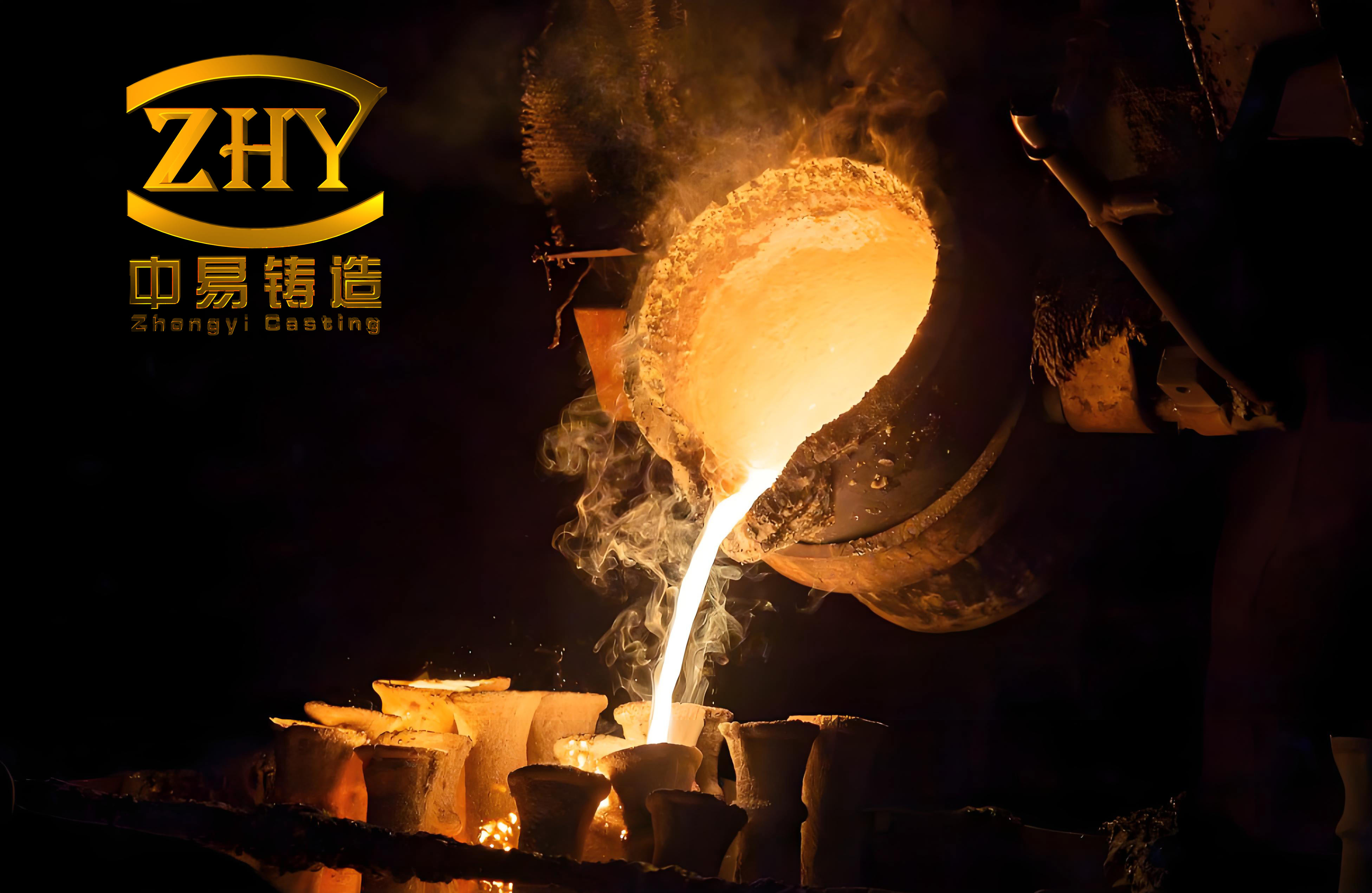
This image illustrates a typical ceramic shell after dewaxing, highlighting the intricate details achievable through precision lost wax casting. The shell’s integrity is crucial for capturing fine features and ensuring smooth metal flow.
Dewaxing and Shell Preparation
Removing the wax pattern, or dewaxing, is a critical phase in precision lost wax casting. I employ a hot water method, immersing the shell assembly in water at 90–95°C for 10–15 minutes. The wax melts and floats to the surface, where it is skimmed off for recycling. The dewaxing rate can be modeled using heat transfer equations, considering the shell’s thermal conductivity and wax melt enthalpy. For a cylindrical pattern, the time \(t\) to melt the wax core is approximated by:
$$ t = \frac{\rho_w \cdot H_f \cdot r^2}{4k_s (T_w – T_m)} $$
where \(\rho_w\) is wax density (900 kg/m³), \(H_f\) is latent heat of fusion (200 kJ/kg), \(r\) is pattern radius, \(k_s\) is shell thermal conductivity (0.5 W/m·K), \(T_w\) is water temperature, and \(T_m\) is wax melting point. This formula helps optimize dewaxing cycles in precision lost wax casting to prevent shell damage.
After dewaxing, the shell is cleaned to remove residual wax and皂化物 (soap residues) from prior脱脂 (degreasing) steps. I use a dilute hydrochloric acid solution (5% HCl) at 60°C to dissolve these contaminants, followed by rinsing with clean water. The chemical reaction involved is:
$$ \text{RCOONa} + \text{HCl} \rightarrow \text{RCOOH} + \text{NaCl} $$
where RCOONa represents sodium stearate from the wax blend. This cleaning ensures the mold cavity is pristine for metal pouring, a key aspect of precision lost wax casting to avoid surface defects.
Mold Burnout and Metal Pouring
Prior to casting, the ceramic shell undergoes burnout to eliminate any remaining organics and preheat the mold to reduce thermal shock during metal pouring. In my setup, I place the shells in a furnace and heat them according to a controlled temperature curve. The burnout cycle typically involves ramping up at 100°C/hour to 850°C, holding for 2 hours, and then cooling to the pouring temperature of 600–700°C. This curve, depicted in Figure 1, is essential for achieving proper mold strength and permeability in precision lost wax casting.
For the burnout process, the energy required can be estimated using:
$$ Q = m_s c_s \Delta T + m_o \Delta H_c $$
where \(m_s\) is shell mass, \(c_s\) is specific heat of silica (0.8 kJ/kg·K), \(\Delta T\) is temperature rise, \(m_o\) is mass of organic residue, and \(\Delta H_c\) is heat of combustion. This calculation aids in furnace sizing and energy efficiency improvements for precision lost wax casting operations.
Once preheated, the mold is ready for metal pouring. I focus on ductile iron for parts like flywheels, due to its excellent mechanical properties. The pouring temperature is maintained at 1350–1400°C, with careful control of flow rate to minimize turbulence. After solidification, the shell is broken away, and the castings are cut from the gating system for further processing. The entire sequence underscores how precision lost wax casting enables complex geometries with minimal post-casting work.
Economic and Quality Analysis
The economic benefits of precision lost wax casting are substantial, as evidenced by my comparative studies. Traditional machining of flywheels from bar stock involved multiple steps: turning, milling, grinding, and polishing, consuming over 30 minutes per part and wasting significant material. In contrast, precision lost wax casting produces near-net-shape parts with only minor finishing, reducing processing time to under 5 minutes and material usage by 70%. Table 2 quantifies these advantages for a production volume of 10,000 units annually.
| Aspect | Traditional Machining | Precision Lost Wax Casting | Improvement |
|---|---|---|---|
| Processing Time (per part) | 30 minutes | 5 minutes | 83% reduction |
| Material Usage (per part) | 1.5 kg | 0.5 kg | 67% savings |
| Number of Operations | 6–8 steps | 2–3 steps | Simplified workflow |
| Surface Finish (Ra) | 3.2 µm | 1.6 µm | 50% improvement |
| Dimensional Tolerance | ±0.1 mm | ±0.05 mm | Higher precision |
These gains highlight why precision lost wax casting is increasingly adopted for high-value components. Moreover, the process supports sustainability by recycling wax and reducing scrap, aligning with modern manufacturing goals.
Advanced Considerations and Formulas
To deepen the understanding of precision lost wax casting, I often analyze the fluid dynamics of metal flow and solidification. The Reynolds number \(Re\) for molten metal in the gating system is calculated to ensure laminar flow and avoid inclusions:
$$ Re = \frac{\rho v D}{\mu} $$
where \(\rho\) is metal density (7000 kg/m³ for ductile iron), \(v\) is flow velocity, \(D\) is hydraulic diameter, and \(\mu\) is dynamic viscosity (0.005 Pa·s). Keeping \(Re < 2000\) is ideal in precision lost wax casting to maintain quality.
Another critical factor is the solidification time, governed by Chvorinov’s rule:
$$ t_s = B \left( \frac{V}{A} \right)^n $$
where \(t_s\) is solidification time, \(V\) is casting volume, \(A\) is surface area, \(B\) is mold constant, and \(n\) is exponent (typically 2). For precision lost wax casting shells, \(B\) ranges from 0.5 to 1.0 min/cm², depending on shell thickness and material. This formula helps design gating and risers to prevent shrinkage defects.
Furthermore, the thermal stress in ceramic shells during burnout can be modeled using Hooke’s law for brittle materials:
$$ \sigma = E \alpha \Delta T $$
where \(\sigma\) is stress, \(E\) is Young’s modulus (50 GPa for silica), \(\alpha\) is thermal expansion coefficient (0.5 × 10⁻⁶ °C⁻¹), and \(\Delta T\) is temperature gradient. Controlling \(\Delta T\) through gradual heating minimizes cracking in precision lost wax casting molds.
Conclusion
Through my hands-on involvement in developing and optimizing precision lost wax casting processes, I have witnessed its transformative impact on manufacturing efficiency and part quality. This technique, precision lost wax casting, offers unparalleled flexibility for producing complex, high-performance components with minimal waste. By integrating careful material selection, precise parameter control, and rigorous analysis, I have achieved consistent results in applications like flywheel production. The economic data alone justifies widespread adoption, but the technical merits—such as superior surface finish and dimensional accuracy—further cement its value. Looking ahead, continuous refinement in areas like automated coating and real-time monitoring will push the boundaries of what precision lost wax casting can achieve. I encourage fellow engineers to explore this method, as it embodies the synergy of tradition and innovation in modern casting.