
In my extensive involvement with advanced metal casting for the chemical and petrochemical sectors, the challenge of producing high-integrity, corrosion-resistant valves from pure nickel became a focal point of technical innovation. The unparalleled resistance of nickel to concentrated, anhydrous caustic alkalis renders it the material of choice for critical components in chlor-alkali processing equipment. However, its notoriously difficult casting characteristics—marked by high gas solubility, significant shrinkage, and substantial cost—had long necessitated complete dependence on imported valve castings. Determined to overcome this technological barrier and achieve import substitution, I embarked on a project to master the precision lost wax casting of pure nickel valve bodies. This narrative details the empirical journey, from alloy specification analysis and melt treatment to rigorous process design, all centered around the adaptable yet demanding precision lost wax casting method, ultimately yielding castings that fully met the stringent requirements of ASTM A494 for CZ-100 alloy.
The initial and crucial step was the selection of an appropriate alloy standard. After evaluating international specifications, the ASTM A494 standard for CZ-100 (UNS N02200) was chosen as the production benchmark due to its global recognition and alignment with the intended service conditions. For comparative analysis, relevant Japanese standards for cast pure nickel were also considered. The key chemical and mechanical property requirements are summarized below.
| Standard / Grade | C (max, %) | Mn (max, %) | Si (max, %) | P (max, %) | S (max, %) | Fe (max, %) | Cu (max, %) | Ni (min, %) |
|---|---|---|---|---|---|---|---|---|
| ASTM A494 CZ-100 | 0.15 | 0.50 | 0.50 | 0.03 | 0.03 | 1.0 | 0.25 | Rem. |
| JIS Nicke 1210 | 0.05 | 0.50 | 0.80 | 0.02 | 0.015 | 1.0 | 0.30 |
| Standard / Grade | Yield Strength (MPa, min) | Tensile Strength (MPa, min) | Elongation (%, min) | Hardness (HB, typical) |
|---|---|---|---|---|
| ASTM A494 CZ-100 | 125 | 340 | 10 | – |
| JIS Nicke 1210 | 103-206 | 343-445 | 16-30 | 90-130 |
The foundational physics of nickel profoundly influenced every subsequent decision. Nickel’s high melting point (approximately 1455°C), significant volumetric shrinkage during solidification (around 6.1%), and, most critically, its exceptional affinity for gases in the molten state were primary concerns. The solubility of hydrogen in liquid nickel is particularly problematic, being substantially higher than in iron. This relationship can be conceptually modeled. The solubility of a diatomic gas like hydrogen in a metal melt often follows a Sieverts’ law relationship:
$$ S_H = k_H \sqrt{P_{H_2}} e^{(-\frac{\Delta H}{RT})} $$
where $S_H$ is the solubility, $k_H$ is the Sieverts’ constant, $P_{H_2}$ is the partial pressure of hydrogen, $\Delta H$ is the heat of solution, $R$ is the universal gas constant, and $T$ is the absolute temperature. For nickel, the value of $\Delta H$ is negative, meaning solubility decreases with increasing temperature in the solid but increases in the liquid, leading to a sharp uptake during melting and release during solidification. Our charge material, electrolytic nickel cathode (Ni-0), inherently contained substantial hydrogen from its production process, exacerbating the issue. Therefore, melt purification and degassing were paramount.
The core of our successful approach lay in a meticulously controlled melting and purification sequence within a medium-frequency coreless induction furnace, as vacuum refining was not available. The principle was to first limit hydrogen intake and then actively remove it. All charge materials, primarily electrolytic nickel plates, were preheated to approximately 300-400°C for several hours to drive off adsorbed moisture and encourage diffusion of pre-existing hydrogen from the metal matrix. Melting was conducted rapidly under what could be considered a mildly oxidizing atmosphere to minimize hydrogen pickup. Immediately after the charge was fully molten, a protective covering flux was added to shield the melt surface from the furnace atmosphere. The key degassing maneuver involved the addition of clean, dry charcoal (carbon) to the melt. The resulting reaction:
$$ C_{(s)} + O_{(in\ Ni)} \rightarrow CO_{(g)} \uparrow $$
serves a dual purpose. The carbon monoxide bubbles form and rise, creating a “boiling” action that mechanically flushes out dissolved hydrogen ($H_{(in\ Ni)}$) by providing nucleation sites and reducing the local partial pressure, allowing hydrogen to diffuse into the bubbles according to the equilibrium $2H_{(in\ Ni)} \rightleftharpoons H_{2(g)}$. Following this vigorous carbon boil, a powerful final deoxidizer, such as a magnesium-nickel or calcium-barium alloy, was added to scavenge any remaining oxygen and sulfur, yielding a clean, sound melt ready for pouring.
Concurrent with melt development was the optimization of the precision lost wax casting process itself. The pattern assembly was constructed using a standard wax blend. The critical variable for dimensional accuracy was the linear contraction allowance, or patternmaker’s shrink rule. Nickel’s coefficient of linear thermal expansion ($\alpha$) is a primary determinant. Data indicates that for pure nickel, $\alpha_{20-100^\circ C} \approx 12.8 – 13.3 \times 10^{-6} \, \text{K}^{-1}$. This can be compared to common steels:
$$ \alpha_{\text{Nickel}} \approx 13.0 \times 10^{-6} \, \text{K}^{-1} $$
$$ \alpha_{\text{Carbon Steel}} \approx 12.0 \times 10^{-6} \, \text{K}^{-1} $$
$$ \alpha_{\text{Austenitic Stainless}} \approx 17.3 \times 10^{-6} \, \text{K}^{-1} $$
Consequently, a shrinkage allowance of 2.1% to 2.3% was selected, slightly larger than that for carbon steel castings but smaller than for austenitic stainless steels, and it proved effective for the valve geometries.
The feeding system design had to reconcile nickel’s substantial volumetric shrinkage with its very narrow freezing range (essentially a pure metal). While risers are necessary to compensate for shrinkage, their efficiency is limited due to the pasty, skin-forming solidification mode. Therefore, the governing philosophy shifted towards achieving directional or, more aptly, balanced solidification by minimizing thermal gradients. This was accomplished through careful gating to distribute heat evenly and, most importantly, through intelligent component design advocating for uniform wall thickness and the elimination of unnecessary hot spots. The relatively high thermal conductivity of nickel, approximately $59.5 \, \text{W m}^{-1} \text{K}^{-1}$ at room temperature, further supports this approach by facilitating rapid heat extraction from thinner sections towards the feeders.
The ceramic shell build-up process, the very essence of precision lost wax casting, was executed with rigorous consistency. The wax patterns were subjected to a series of ceramic dips and stucco coatings. The primary coat employed a colloidal silica binder with fine-grained zircon flour refractory, followed by stuccoing with coarse zircon sand. Subsequent backup coats used a hybrid colloidal silica/aluminosilicate binder system with fused alumina aggregates to build shell strength and permeability. Each layer was thoroughly dried and chemically gelled. This multi-layer architecture is crucial for withstanding the thermal shock of the high-temperature nickel pour while maintaining dimensional fidelity and surface finish. The completed shell molds were then dewaxed in a high-pressure steam autoclave and fired at temperatures exceeding 950°C to develop full ceramic strength and eliminate any residual volatiles.
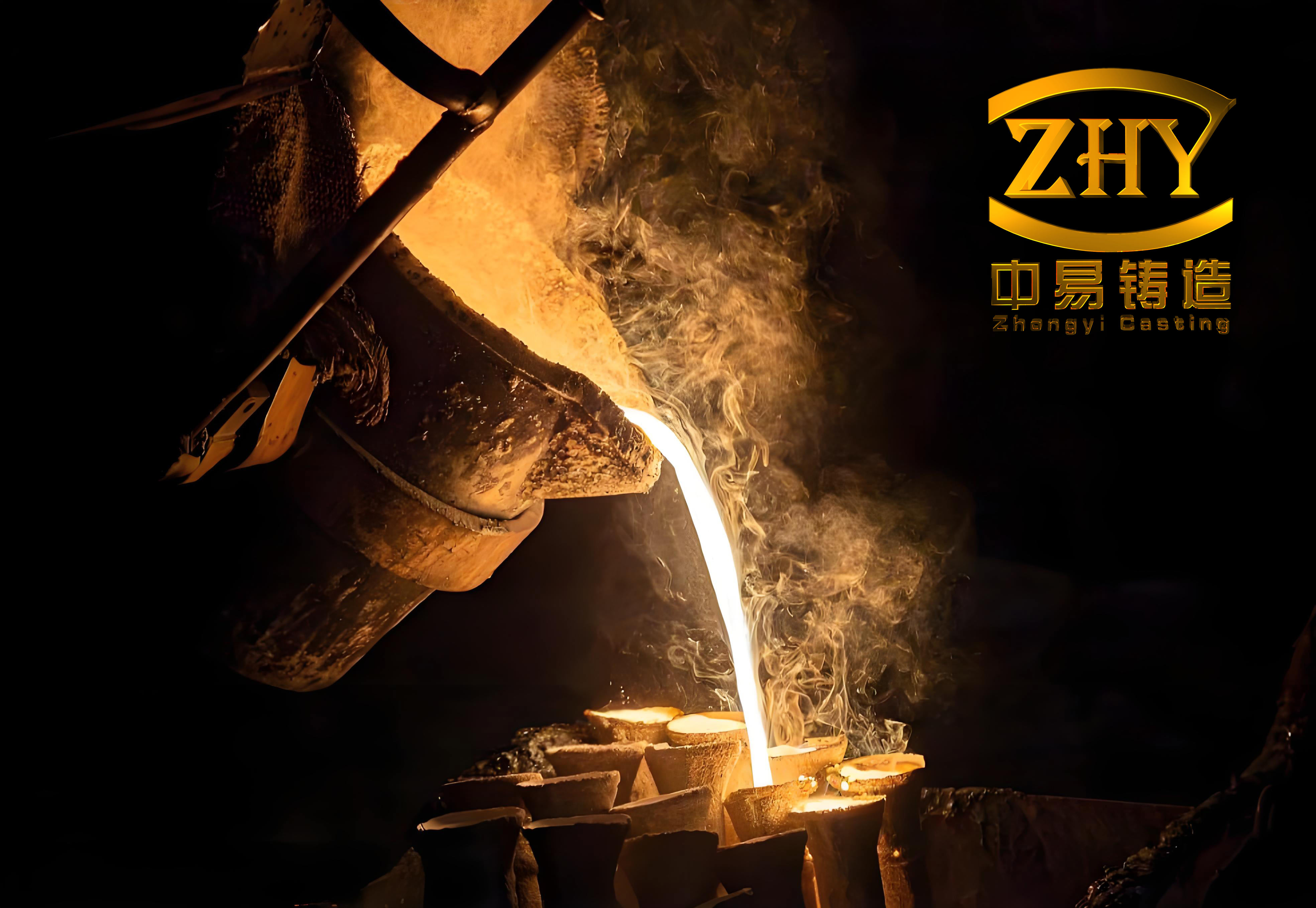
The image above illustrates the intricate detail and surface quality achievable through such a disciplined precision lost wax casting shell system, essential for complex valve bodies.
The culmination of these efforts was the production trial. Several heats of nickel were melted following the prescribed degassing protocol. The liquid metal was poured at a carefully controlled temperature, only slightly above its liquidus, into the preheated ceramic shells. The results from the production melts were highly encouraging. Chemical analysis via optical emission spectrometry confirmed compliance with the CZ-100 specification, as shown in the table below (representative heat data).
| Element | C | Mn | Si | P | S | Fe | Cu | Ni |
|---|---|---|---|---|---|---|---|---|
| Content (%) | 0.08 | 0.18 | 0.45 | 0.012 | 0.009 | 0.69 | 0.09 | 98.45 |
Mechanical properties were evaluated on separately cast keel-block test coupons. The tensile properties not only met but in some cases exceeded the ASTM minimums, demonstrating the efficacy of the melt treatment and solidification control inherent to our precision lost wax casting approach.
| Sample | Yield Strength (MPa) | Tensile Strength (MPa) | Elongation (%) | Reduction of Area (%) |
|---|---|---|---|---|
| 1 | 142 | 382 | 25.5 | 32.0 |
| 2 | 138 | 375 | 24.0 | 30.5 |
| 3 | 145 | 389 | 26.5 | 33.0 |
The cast valve components, including plug valve bodies and ball valve segments, were inspected and machined. The surface finish and dimensional accuracy afforded by the precision lost wax casting process were excellent, with minimal draft allowances and fine detail reproduction. Pressure testing of the finished valves, such as the plug valves for the chlor-alkali plant, showed no leaks or defects, successfully replacing the need for imported units. A metallographic examination of the cast microstructure revealed the expected austenitic matrix. When the melt treatment was optimal, carbon precipitated as fine, discrete spheroidal graphite particles uniformly distributed within the grains and along grain boundaries, a microstructure conducive to good ductility and corrosion resistance. However, variations in solidification cooling rates, inherent to the precision lost wax casting process in complex geometries, could slightly alter the graphite morphology, emphasizing the need for uniform shell heating and controlled pouring.
In reflection, the successful production of ASTM CZ-100 nickel valve castings was a triumph of applied metallurgy and process engineering. It conclusively demonstrated that high-quality nickel castings could be reliably produced using conventional medium-frequency induction melting coupled with a robust precision lost wax casting shell system, without recourse to exotic vacuum melting equipment. The keys were a profound respect for nickel’s physical metallurgy—particularly its gas solubility—and the implementation of an active melt purification practice involving carbon boiling and strong deoxidation. Furthermore, the adoption of a balanced solidification strategy in casting design, facilitated by the dimensional control of precision lost wax casting, was instrumental in mitigating shrinkage porosity. This holistic integration of alloy science, melt practice, and advanced forming technology like precision lost wax casting provides a reproducible blueprint for domestic manufacturing of high-performance corrosion-resistant nickel alloy components, achieving significant technical and economic independence. The entire experience underscored that the challenges of casting reactive and tricky metals like nickel can be systematically overcome through a detailed, first-principles approach to every stage of the precision lost wax casting and foundry process.