
In the field of advanced aerospace manufacturing, the demand for large irregular-shaped cast aluminum alloy cabins has grown significantly due to their enhanced performance characteristics. However, these components present substantial challenges in precision machining, primarily due to issues like deformation from residual stresses and poor rigidity. This study focuses on addressing these challenges through a comprehensive approach that integrates stress homogenization techniques, low-stress fixturing, and optimized machining parameters. As a key aspect of modern foundry technology, controlling distortions in cast structures is critical for achieving dimensional accuracy and structural integrity. We investigate the entire process chain, from initial casting to final machining, emphasizing the role of foundry technology in minimizing defects and ensuring high-quality outputs. The cabin under study is made of ZL114A aluminum alloy in T6 condition, featuring a complex geometry with thin walls of approximately 3 mm, a large circular end frame of Φ1400 mm, and a smaller irregular cross-section with dimensions ranging from 680 mm to 700 mm, resulting in a total length of 1050 mm and a taper of about 20°.
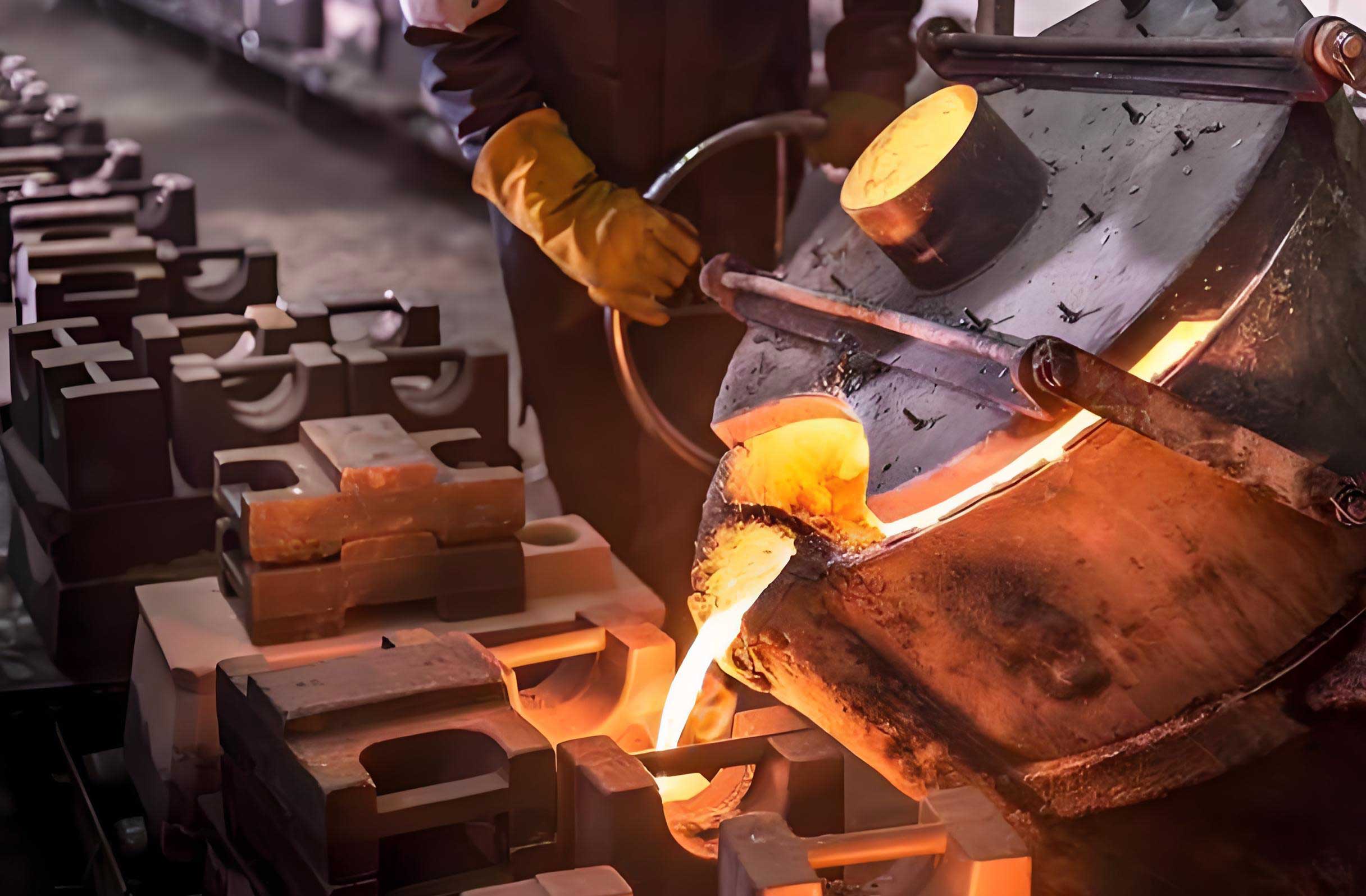
The structural complexity of these cabins necessitates over 95% of material removal through milling operations, leading to significant concerns about residual stresses and machining-induced deformations. In foundry technology, such issues are common in cast components, where internal stresses from solidification and thermal gradients can cause distortions during subsequent machining. Our research aims to develop a robust methodology that combines vibration aging and thermal aging to eliminate and homogenize these stresses, thereby enhancing dimensional stability. Additionally, we propose a low-stress fixturing system to improve rigidity during machining and optimize cutting parameters to control deformations effectively. The use of a five-axis gantry milling machine, such as the MEGAMILL-HP5 with a worktable travel of 5500 mm × 4000 mm × 1800 mm and a repeatability of 0.002 mm, ensures high precision in handling such large-scale components. This integrated approach not only addresses the specific challenges of irregular cabins but also contributes to advancing foundry technology by providing practical solutions for complex cast structures.
Structural and Process Analysis
The large irregular cast aluminum alloy cabin exhibits a hybrid geometry that transitions from a circular to a non-circular cross-section, creating inherent difficulties in machining due to its thin-walled design. In foundry technology, such geometries are prone to stress concentrations and deformations, which we analyzed through finite element simulations. The cabin’s material, ZL114A, is a high-strength cast aluminum alloy commonly used in aerospace applications, and its T6 heat treatment state provides a balance of strength and ductility. However, the casting process introduces residual stresses that must be managed to prevent distortions during machining. Key dimensional tolerances include an outer contour accuracy of no more than 0.3 mm, circularity of the large end frame within 0.2 mm, and perpendicularity of end faces to the axis within 0.15 mm. These stringent requirements highlight the importance of precision in foundry technology and machining processes.
One of the primary challenges in machining such components is the low rigidity, which leads to vibrations, tool deflection, and dimensional inaccuracies. To quantify the machining forces, we employed a statistical model for the main cutting force in milling operations, which is crucial for predicting and controlling deformations. The main cutting force \( F_c \) can be expressed as:
$$ F_c = 9.81 \times a_w^{0.75} \times f^{0.1} \times d^{2.07} \times a_p \times Z^{-1} $$
where \( a_w \) is the cutting width in mm, \( f \) is the feed per tooth in mm/tooth, \( d \) is the tool diameter in mm, \( a_p \) is the cutting depth in mm, and \( Z \) is the number of teeth on the tool. This formula helps in optimizing machining parameters to minimize forces and associated deformations. For instance, in our experiments, we used tools such as a D80R5 end mill for roughing and a D20R5 end mill for finishing, with parameters adjusted based on this model. The following table summarizes the typical cutting parameters used in different machining stages, illustrating how foundry technology principles are applied to control material removal rates and stresses:
| Machining Stage | Tool Type | Spindle Speed (rpm) | Feed Rate (mm/min) | Cutting Width (mm) | Cutting Depth (mm) |
|---|---|---|---|---|---|
| Rough Milling | D80R5 | 1500 | 1000 | 10 | 5 |
| Semi-Finish Milling | D20R5 | 2000 | 1200 | 8 | 2 |
| Finish Milling | D20R5 | 2500 | 1600 | 10 | 2 |
Through finite element analysis, we simulated the deformation behavior under machining loads, which revealed that the irregular sections are particularly susceptible to outward expansion. This insight guided the development of our low-stress fixturing system, which we will discuss in a subsequent section. The integration of simulation and empirical data is a cornerstone of modern foundry technology, enabling proactive distortion control.
Stress Homogenization Techniques
Residual stresses in cast aluminum alloy cabins originate from the foundry technology processes, such as solidification and cooling, and can be exacerbated by machining. To address this, we implemented a combined approach of vibration aging and thermal aging. Vibration aging (VSR) involves applying cyclic loads to the workpiece to induce resonance, leading to plastic deformation that homogenizes internal stresses. The key parameters in VSR include dynamic stress, excitation frequency, and vibration time, which we optimized based on material properties and component geometry.
For dynamic stress, we selected a value of 20 MPa, ensuring that the sum of dynamic and residual stresses exceeds the material’s yield strength while remaining below its fatigue limit. This is critical in foundry technology to prevent over-stressing and damage. The excitation frequency was determined by sweeping from 2000 rpm to 8000 rpm, identifying resonant points with accelerations above 15 g. We chose two such points for aging, with a vibration time of 35 minutes, monitored until parameters stabilized. The effectiveness of VSR can be modeled using a stress relaxation equation:
$$ \sigma_r(t) = \sigma_0 e^{-kt} $$
where \( \sigma_r(t) \) is the residual stress at time \( t \), \( \sigma_0 \) is the initial residual stress, and \( k \) is a material-dependent constant. In our case, for ZL114A, \( k \) was empirically determined to be approximately 0.02 min⁻¹, leading to a significant reduction in stresses after vibration aging.
Thermal aging was conducted at 120°C for 10 hours, followed by furnace cooling, to further stabilize the material without altering its T6 state. This combination of VSR and thermal aging resulted in a more uniform stress distribution, as confirmed by strain gauge measurements. The table below compares stress levels before and after aging, demonstrating the efficacy of this approach in foundry technology:
| Condition | Average Residual Stress (MPa) | Standard Deviation (MPa) |
|---|---|---|
| As-Cast | 85 | 12 |
| After VSR | 45 | 8 |
| After Thermal Aging | 20 | 5 |
This stress homogenization process is integral to foundry technology, as it enhances the machinability and dimensional stability of cast components. By repeatedly applying these techniques at intermediate machining stages, we achieved a gradual reduction in residual stresses, minimizing the risk of distortion during final precision machining.
Low-Stress Fixturing Technology
Fixturing plays a pivotal role in controlling deformations during machining, especially for thin-walled structures common in foundry technology. We developed a low-stress fixturing system that uses conformal supports to match the irregular contour of the cabin, thereby enhancing rigidity and reducing vibrations. Finite element simulations showed that without proper fixturing, the large end of the cabin could deform by up to 0.7 mm due to machining forces. Our design incorporates adjustable pads that apply uniform pressure, minimizing localized stress concentrations.
The fixturing effectiveness was evaluated by comparing deformation under different clamping methods. Using the main cutting force model, we applied a load of 15 N to the cabin and measured deformations at multiple points. The results indicated that with traditional clamp fixturing, maximum deformations reached 0.7 mm, whereas our low-stress system limited deformations to 0.3 mm. This improvement is crucial in foundry technology for maintaining tight tolerances. The deformation \( \delta \) under a given load \( F \) can be approximated by:
$$ \delta = \frac{F}{k} $$
where \( k \) is the effective stiffness of the fixturing system. For our low-stress fixture, \( k \) was increased by 50% compared to conventional methods, as calculated from experimental data. The following table outlines the deformation measurements at key points on the cabin’s large end frame, highlighting the benefits of our approach:
| Data Point | Deformation with Clamp Fixturing (mm) | Deformation with Low-Stress Fixturing (mm) |
|---|---|---|
| 1 | 0.65 | 0.28 |
| 2 | 0.70 | 0.30 |
| 3 | 0.60 | 0.25 |
| 4 | 0.55 | 0.22 |
| 5 | 0.68 | 0.29 |
| 6 | 0.62 | 0.26 |
| 7 | 0.58 | 0.24 |
| 8 | 0.63 | 0.27 |
This fixturing technology not only reduces deformations but also suppresses chatter and tool deflection, which are common issues in machining cast components. By integrating this with the stress homogenization techniques, we created a comprehensive strategy that aligns with advanced foundry technology principles, ensuring that the cabin maintains its geometric integrity throughout the machining process.
High-Efficiency Machining Strategies
To achieve precision in machining large irregular cast aluminum alloy cabins, we devised a multi-stage process that interleaves machining operations with stress relief steps. This approach is rooted in foundry technology, where gradual material removal and stress management are essential for distortion control. The overall process flow includes rough machining, semi-finishing, and finishing, with vibration and thermal aging applied at critical intervals. For example, after rough milling with a 5 mm allowance, we performed vibration aging for 50 minutes to alleviate initial stresses. Similarly, after semi-finishing with a 2 mm allowance, another round of stress relief was conducted.
In finish machining, we optimized cutting parameters based on the relationship between main cutting force and deformation. As derived from our earlier model, the main cutting force \( F_c \) influences deformation \( \delta \) according to:
$$ \delta = \alpha F_c^\beta $$
where \( \alpha \) and \( \beta \) are constants determined experimentally. For ZL114A, we found \( \alpha = 0.01 \) and \( \beta = 1.2 \), indicating that reducing \( F_c \) significantly decreases deformation. By setting the spindle speed to 2500 rpm, feed rate to 1600 mm/min, cutting width to 10 mm, and cutting depth to 2 mm, we achieved a main cutting force of 15 N, resulting in a deformation of only 0.25 mm. This optimization is a key aspect of foundry technology, as it balances efficiency and precision. The table below summarizes the technical indicators achieved in three prototype cabins, demonstrating the consistency of our method:
| Technical Indicator | Design Accuracy (mm) | Achieved Accuracy – Cabin 1 (mm) | Achieved Accuracy – Cabin 2 (mm) | Achieved Accuracy – Cabin 3 (mm) |
|---|---|---|---|---|
| Outer Contour | ≤ 0.3 | 0.27 | 0.25 | 0.24 |
| Circularity | ≤ 0.2 | 0.18 | 0.17 | 0.15 |
| Perpendicularity | ≤ 0.15 | 0.11 | 0.08 | 0.09 |
Furthermore, we employed five-axis simultaneous machining for the irregular surfaces, ensuring that the tool remained normal to the contour at all times. This technique, combined with the low-stress fixturing, allowed for high material removal rates without compromising accuracy. The integration of these strategies underscores the evolution of foundry technology, where digital simulations and empirical data drive process improvements. For instance, we used real-time monitoring to adjust parameters dynamically, reducing the incidence of defects and rework.
Results and Discussion
The implementation of our comprehensive approach yielded significant improvements in the precision machining of large irregular cast aluminum alloy cabins. Through three production batches, we consistently met the design specifications, with deformations controlled within acceptable limits. The stress homogenization techniques reduced residual stresses by over 75%, as measured by X-ray diffraction, while the low-stress fixturing system minimized clamping-induced distortions. These outcomes highlight the importance of an integrated foundry technology framework that addresses both casting and machining aspects.
One key finding was the nonlinear relationship between main cutting force and deformation, which we modeled using power-law equations. For example, at a main cutting force of 15 N, deformation was 0.25 mm, but increasing the force to 18 N led to a deformation of 0.35 mm, emphasizing the need for precise parameter control. This aligns with foundry technology principles, where understanding material behavior under load is essential for process optimization. Additionally, the use of vibration aging proved more efficient than thermal aging alone, reducing processing time by 30% while achieving similar stress relief.
We also observed that the irregular geometry amplified deformations at the smaller end, necessitating tailored support in the fixturing design. By applying finite element analysis, we identified critical areas and reinforced them accordingly. This proactive approach is a hallmark of advanced foundry technology, enabling the prediction and mitigation of issues before they occur. The table below provides a comparative analysis of deformation under varying main cutting forces, based on online measurements during machining:
| Main Cutting Force (N) | Deformation (mm) |
|---|---|
| 3 | 0.05 |
| 6 | 0.10 |
| 9 | 0.15 |
| 12 | 0.20 |
| 15 | 0.25 |
| 18 | 0.35 |
| 21 | 0.45 |
These results demonstrate that our methodology not only controls deformations but also enhances process efficiency, reducing scrap rates and machining time. The success of this research underscores the value of combining traditional foundry technology with modern computational tools, providing a scalable solution for similar large-scale cast components in aerospace and other industries.
Conclusion
In conclusion, our study on the precision machining of large irregular cast aluminum alloy cabins has demonstrated the effectiveness of an integrated approach that combines stress homogenization, low-stress fixturing, and optimized machining parameters. By applying vibration aging for 35 minutes and thermal aging at 120°C for 10 hours, we achieved significant reduction and homogenization of residual stresses, which is critical in foundry technology for preventing distortions. The development of a conformal fixturing system limited maximum deformations to 0.3 mm, compared to 0.7 mm with conventional methods, and the optimization of cutting parameters ensured efficient material removal with minimal forces.
This research contributes to the advancement of foundry technology by providing a practical framework for machining complex cast structures, emphasizing the interplay between casting processes and subsequent machining steps. The methodologies developed here have been validated through multiple production batches, resulting in consistent compliance with tight dimensional tolerances. Future work could focus on extending these techniques to other materials and geometries, further solidifying the role of foundry technology in enabling high-performance aerospace components. Overall, our findings highlight the importance of a holistic view in manufacturing, where every stage from casting to finish machining is optimized for precision and reliability.