
In the production of ductile iron piston rings, the unique solidification behavior of the material presents significant challenges. Characteristically, ductile iron solidifies in a mushy or pasty mode, which drastically increases its susceptibility to various casting defects. These defects, primarily subsurface blowholes, shrinkage porosity, slag inclusions, and inverse chill (or reverse chill), severely impact the mechanical properties, machinability, and overall service life of the final components. This article, drawing from extensive production experience, analyzes the root causes of these prevalent casting defects and proposes comprehensive process countermeasures for their prevention.
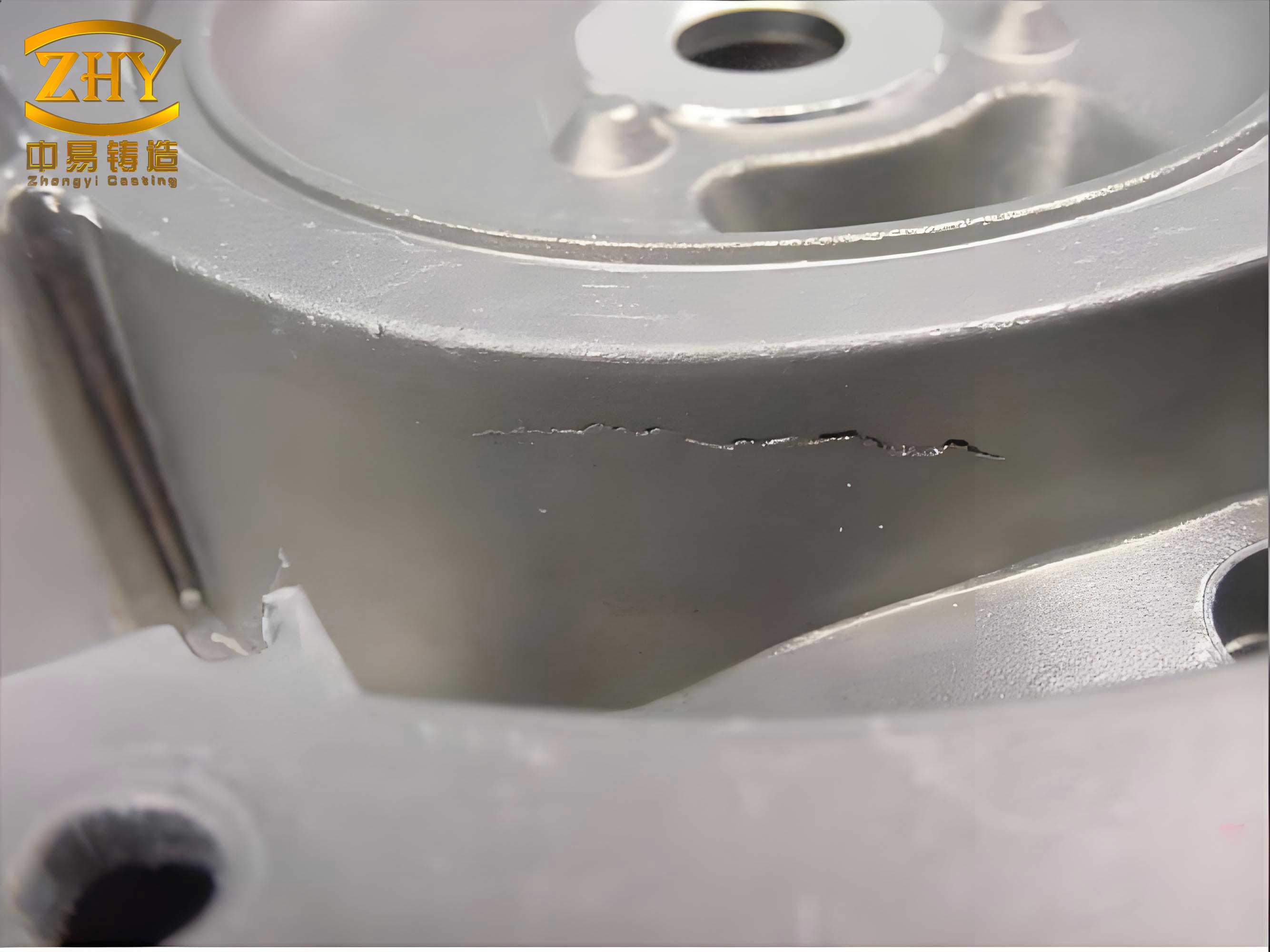
The fundamental reason behind the high propensity for casting defects in ductile iron lies in its solidification mechanism. Unlike gray iron, which solidifies in a more directional manner with a well-defined solid front, ductile iron undergoes eutectic solidification over a much broader temperature range. Following spheroidal graphite nucleation, an austenite shell rapidly encloses each graphite nodule. Carbon diffusion to the growing nodule must then occur through this solid austenite shell, a process significantly slower than diffusion in liquid iron. Consequently, a large number of graphite-austenite eutectic cells nucleate simultaneously throughout the casting cross-section. As solidification progresses, these cells impinge on each other, isolating the remaining liquid pools and creating a mushy, semi-solid state early in the process. This “mushy solidification” prematurely blocks channels for liquid metal feeding, gas escape, and slag flotation, creating the ideal conditions for the formation of internal casting defects.
The difference in solidification behavior is clearly illustrated by comparing cooling curves. Gray iron exhibits a relatively long, flat eutectic plateau with a sharp end, indicating a narrow solidification range and near-directional solidification. In contrast, the ductile iron cooling curve shows a gradual decline at the end of the eutectic reaction, lacking a distinct endpoint, which confirms the wide solidification range and simultaneous solidification pattern that is central to the formation of casting defects.
1. Subsurface Blowholes
Subsurface blowholes are among the most common and troublesome casting defects encountered. They typically appear just beneath the casting surface (0.2-0.5 mm) as spherical, elliptical, or pinhole cavities, becoming visible only after machining.
Causes:
The formation of subsurface porosity is a complex physicochemical process involving both gases evolved from the melt and gases invading from the mold. Hydrogen is the primary gas responsible for these casting defects.
- Internal Hydrogen Sources: Moisture from damp charge materials, rusty scrap, inadequately dried furnace linings, ladles, spheroidizing agents, inoculants, and cover fluxes can decompose during melting and pouring, releasing hydrogen into the molten iron.
- External Hydrogen Invasion: During mold filling, magnesium vapor from the treated iron reacts with moisture in the mold sand. Several reactions contribute to hydrogen generation at the metal-mold interface:
$$ \text{Mg} + \text{H}_2\text{O} \rightarrow \text{MgO} + \text{H}_2 $$
$$ \text{C} + 2\text{H}_2\text{O} \rightarrow \text{CO}_2 + 2\text{H}_2 \quad (\text{Mg as catalyst}) $$
$$ \text{Fe}_3\text{C} + \text{H}_2\text{O} \rightarrow 3\text{Fe} + \text{CO} + \text{H}_2 $$ - Role of the Surface Oxide Film: After spheroidization, magnesium promotes the formation of a thin, viscous oxide film on the iron’s surface at temperatures around 1350°C. This film increases the interfacial pressure at the mold-metal boundary, hindering the escape of gases. Coupled with the early sealing of escape paths due to mushy solidification, gases become trapped beneath the solidified skin, forming the characteristic subsurface casting defects.
Preventive Measures:
Controlling subsurface blowholes requires a multi-faceted approach targeting gas sources, metal chemistry, and process parameters.
| Target Area | Specific Measure | Rationale & Effect |
|---|---|---|
| Mold & Materials | Strictly control green sand moisture (3.0-3.5% for cylinder casting, 3.5-4.0% for double-ring casting). Ensure sand permeability >80. | Minimizes moisture available for interfacial reactions that generate hydrogen gas. |
| Metal Preparation | Pre-heat and thoroughly dry all additives (spheroidizer, inoculant), treatment ladles, and pouring ladles to >800°C. Properly dry furnace linings after relining. | Eliminates sources of hydrogen introduced via moisture on process materials. |
| Minimize residual magnesium content (target <0.04%) and initial sulfur content while ensuring adequate nodularity. | Mg and S raise the temperature at which the obstructive oxide film forms. Lowering them facilitates earlier gas escape. | |
| Process Control | Maintain a high pouring temperature (≥1380°C). Design gating systems for smooth, non-turbulent mold filling (e.g., open gating systems). | High temperature delays film formation and extends the liquid state, aiding gas flotation. Smooth filling minimizes oxide entrainment and promotes Mg vapor escape. |
2. Shrinkage Porosity
Shrinkage porosity manifests as dispersed, interconnected micro-voids, typically found in the thermal centers of castings, such as the core of a cylinder casting or the center of a double-ring casting. These casting defects compromise pressure tightness and mechanical integrity.
Causes:
The tendency towards shrinkage-related casting defects is inherent to ductile iron’s solidification shrinkage pattern and the mechanical response of the mold.
- Volumetric Changes: The total volume change from pouring to solid end involves: (1) Liquid contraction before eutectic solidification, (2) Expansion during the eutectic reaction (graphite precipitation), and (3) Secondary contraction of the remaining liquid in the final stages. Shrinkage porosity results when the secondary contraction is not compensated.
- Mushy Solidification & Mold Wall Movement: During the wide eutectic freezing range, the casting has a weak, thin solid shell. The expansion force generated by graphite formation is exerted partly on the interdendritic liquid but largely on the adjacent eutectic cells and, macroscopically, on the mold walls. If the mold has low rigidity (e.g., low sand hardness), it yields to this pressure, causing the casting to expand outward. This expansion enlarges the gaps between the already impinged eutectic cells. Since feeding channels are blocked by the mushy structure, the expanded gaps cannot be fed by liquid metal, resulting in internal shrinkage porosity casting defects.
Preventive Measures:
Preventing these shrinkage-based casting defects focuses on enhancing mold rigidity and optimizing metallurgical factors to promote effective use of graphite expansion for self-feeding.
| Measure | Application & Target | Mechanism |
|---|---|---|
| Increase Mold Hardness/Rigidity | Machine molding (for double-rings): Sand hardness ≥90 units. Hand molding (for cylinders): Sand hardness ≥85 units; firmly compact sand around the flask after pattern removal. | A rigid mold resists wall movement, allowing the internal graphite expansion pressure to compress the liquid within the mushy zone, compensating for secondary shrinkage and eliminating porosity. |
| Effective Inoculation | Ensure sufficient and effective post-inoculation. | Promotes a high count of graphite nodules, ensuring a uniform and robust expansion phase to counteract contraction. |
| Optimize Metallurgy | Minimize residual Mg and rare earth (RE) content within acceptable nodularity limits. | High Mg/RE can increase shrinkage tendency. Lowering them reduces the risk of these casting defects. |
| Adjust Pouring Temperature | Utilize appropriately high pouring temperatures. | Brings more heat into the mold, allowing more time for graphite to precipitate fully and exert its expansion effect effectively. |
The effectiveness of mold rigidity can be conceptualized by considering the pressure balance. For sound casting, the internal pressure from graphite expansion ($P_{expansion}$) must overcome both the metallostatic pressure ($P_{metal}$) and the pressure required to deform the mold ($P_{mold\ yield}$), compressing the liquid pools. If the mold yields, $P_{mold\ yield}$ is effectively zero, leading to expansion and porosity:
$$ P_{expansion} > P_{metal} + P_{mold\ yield} \quad \text{(For sound casting)} $$
$$ \text{If } P_{mold\ yield} \rightarrow 0,\ \text{casting expands, leading to shrinkage porosity casting defects.} $$
3. Slag Inclusions (Dross)
Slag inclusions are non-metallic compounds entrapped within or just below the casting surface. Their composition is complex, often comprising magnesium silicate, oxides (MgO, SiO₂), sulfides (MgS, CeS), and oxysulfides. These casting defects act as stress raisers and initiation points for failure.
Causes:
The formation of these inclusion-type casting defects is directly linked to the post-treatment chemistry and the behavior of the surface oxide film.
- Reaction Products: The spheroidizing treatment generates primary slag from reactions between Mg/RE and sulfur/oxygen in the melt: $$ \text{Mg} + \text{S} \rightarrow \text{MgS} $$ $$ 2\text{Mg} + \text{O}_2 \rightarrow 2\text{MgO} $$ $$ \text{MgO} + \text{SiO}_2 \rightarrow \text{MgSiO}_3 \text{ (silicate slag)} $$. If not thoroughly removed by skimming, or if the iron temperature is too low for effective flotation, this slag is carried into the mold.
- The Surface Oxide Film & Secondary Slag: Treated ductile iron is prone to forming a viscous, solid-liquid surface oxide film. During transfer, pouring, and turbulent mold filling, this film is broken, folded, and entrapped into the bulk metal. As these film fragments float, they agglomerate and adsorb other suspended sulfides, forming macroscopic slag patches that appear as near-surface casting defects.
Preventive Measures:
Strategies to combat slag-related casting defects aim to minimize slag formation, reduce its stability, and promote its removal.
| Strategy | Action | Principle |
|---|---|---|
| Control Chemistry | Minimize residual Mg and base S content. Ensure an adequate but not excessive level of residual RE. | Mg and S increase the film formation temperature, making slag more stable and persistent. RE can lower the film formation temperature, helping to keep slag fluid for easier removal. |
| Temperature Management | Use high pouring temperatures. | A higher temperature keeps the slag/oxide film more fluid and thin, reducing the tendency for entrainment and improving flotation. |
| Slag Treatment & Handling | Add 0.1-0.15% cryolite (Na₃AlF₆) during treatment and sprinkle 0.1% on the surface after skimming. Avoid excessive turbulence during pouring. | Cryolite fluxes the slag, making it more fluid and easier to separate from the metal. It also forms a protective layer to reduce secondary oxidation. |
4. Inverse Chill (Reverse Chill)
Inverse chill is a microstructure anomaly where a region of fine, undercooled carbides (chill) appears in the thermal center of a casting, surrounded by a matrix that is otherwise free of such phases. This unexpected hardness in the core leads to severe machining difficulties and is a critical casting defect.
Causes:
This defect is primarily linked to specific changes in solute distribution during the final stages of solidification in the mushy zone.
- Microsegregation & Carbide Stabilizers: During the prolonged mushy solidification, elements that promote carbide formation (like Mn, Cr, V) and inhibit graphite growth (like certain rare earths) are rejected into the last remaining liquid pools. This localized enrichment can be sufficient to suppress the final-stage graphitization and instead promote the formation of thermodynamically stable carbides in the center, even though the overall chemistry is balanced for a graphite structure.
- Excessive Undercooling: Insufficient or faded inoculation can lead to a low graphite nodule count in the last-to-freeze areas. The resultant high undercooling can drive the metastable Fe-C system towards the cementite formation, rather than graphite, creating this localized casting defect.
Preventive Measures:
Preventing inverse chill casting defects requires careful control of chemistry and solidification kinetics to ensure graphite forms consistently throughout the entire casting volume.
- Minimize Carbide Promoters: Strictly control the levels of elements like Mn, Cr, V, and Mo.
- Optimize Spheroidizing/Inoculating: Keep residual Mg as low as possible. Avoid excessive rare earth residuals. Implement strong, late inoculation (e.g., mold inoculation) to ensure sufficient nuclei are present in the final liquid pools to promote graphite precipitation instead of carbides.
- High Pouring Temperature: Maintain a high pouring temperature to delay solidification, allowing more time for solute diffusion and reducing the severity of microsegregation that leads to these casting defects.
Summary and Holistic Process Philosophy
Successfully preventing the spectrum of casting defects in ductile iron piston rings is not about applying a single remedy but about implementing a synergistic and严格控制ed process system. The interconnectedness of the defects means that measures beneficial for one often help mitigate others.
The central pillars of this integrated approach are:
- Mastery of Melt Chemistry: Aim for the lowest possible base sulfur and residual magnesium content consistent with reliable nodularity. This single principle reduces the propensity for slag formation, raises the threshold for subcutaneous blowholes, and decreases shrinkage tendency.
- Rigorous Temperature Control: A high pouring temperature (≥1380°C) is a universal ally. It facilitates gas and slag flotation, delays the formation of harmful surface films, improves fluidity for better feeding, and mitigates microsegregation leading to inverse chill.
- Aggressive and Effective Inoculation: A high, active nodule count is essential. It ensures a uniform, expansive eutectic reaction to counter shrinkage, reduces undercooling to prevent chill, and refines the graphite structure for optimal properties.
- Mold System Integrity: High mold hardness and rigidity are non-negotiable for utilizing the graphite expansion pressure to achieve self-feeding and eliminate shrinkage porosity casting defects. Simultaneously, controlled sand moisture is critical to prevent gas-related casting defects.
- Meticulous Process Hygiene: From dry charge materials and preheated ladles to effective slag removal and non-turbulent filling, every step must minimize the introduction and entrapment of gases and oxides.
By viewing the production process through the lens of ductile iron’s unique mushy solidification and systematically addressing its consequences, it is possible to significantly reduce the incidence of these costly casting defects. The goal is to create a stable, predictable process where the inherent properties of ductile iron are harnessed effectively, leading to high-integrity, reliable piston rings capable of meeting the demanding requirements of modern engines.