
In my extensive experience in foundry operations, I have frequently encountered the challenge of chilling, or white iron formation, in thin-wall grey iron castings. This defect is particularly prevalent in micro and small electric motor castings, where wall thickness is minimal and green sand molding is commonly employed. Despite maintaining optimal chemical composition of the molten iron, factors such as pouring speed and mold wall thickness often lead to rapid cooling at edges and corners, resulting in hard, unmachinable white iron structures. This not only complicates machining but can also cause casting scrap. To combat this issue, our team has developed and implemented several straightforward yet highly effective techniques. This article delves into these methods, supported by theoretical analysis, empirical data, tables, and formulas, to provide a comprehensive guide for preventing chilling in grey iron castings.
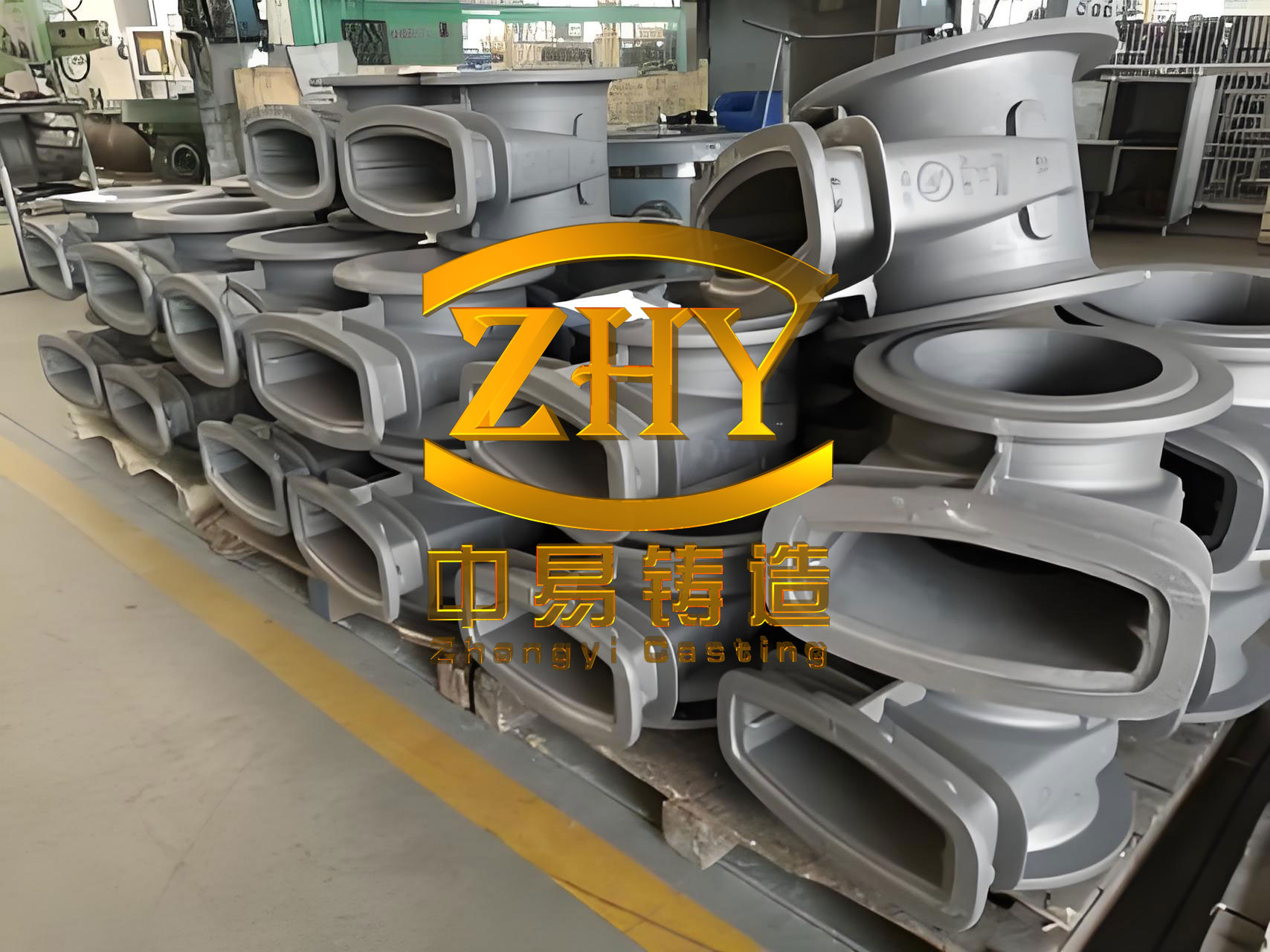
The fundamental issue with thin-wall grey iron castings lies in their high surface-to-volume ratio, which promotes rapid heat extraction. At edges and corners, the cooling rate is significantly accelerated due to geometric effects, often exceeding the critical cooling rate for graphite formation. In grey iron castings, the desired microstructure consists of graphite flakes in a ferrite or pearlite matrix. However, when cooling is too fast, carbon remains in solution as iron carbide (cementite, Fe3C), leading to a hard, brittle white iron structure. The critical cooling rate for chilling can be approximated by the relationship between composition and thermal dynamics. A key parameter is the Carbon Equivalent (CE), which influences the solidification behavior of grey iron castings. The CE is calculated as:
$$ CE = \%C + \frac{\%Si + \%P}{3} $$
For typical grey iron castings, a higher CE promotes graphite formation and reduces chilling tendency. However, in thin sections, even with adequate CE, undercooling can occur. The cooling rate \( q \) at a corner can be modeled using a simplified heat transfer equation:
$$ q = \frac{k \cdot A \cdot \Delta T}{d} $$
where \( k \) is the thermal conductivity of the mold material, \( A \) is the surface area, \( \Delta T \) is the temperature difference between the molten iron and the mold, and \( d \) is the characteristic thickness. For edges and corners, \( A \) is relatively larger, and \( d \) is smaller, leading to higher \( q \). To prevent chilling, we must either reduce \( q \) or enhance the graphitization potential. Our approaches focus on practical modifications during molding and pouring processes for grey iron castings.
The first method we adopted involves creating localized heat sinks in the mold. After molding, at edges and corners prone to chilling, we use vent wires of specific diameters to poke air vents into the sand mold. The diameter and depth are selected based on the casting wall thickness. For instance, for grey iron castings with walls of 3-5 mm, a 2-3 mm diameter vent wire is used to create vents 10-15 mm deep. The number of vents depends on the area of the chilling risk zone. After poking, the raised sand is smoothed. During pouring, the initial, cooler iron that enters these vents is subsequently pushed deeper by the pressure of the following molten metal. Upon solidification, the iron in these vents forms a gradient structure: white iron at the tip, mottled iron in the middle, and grey iron at the base. This effectively acts as a sacrificial chilling site, drawing heat away from the critical casting edges and preventing chilling in the actual grey iron castings. The process parameters can be summarized in Table 1.
| Casting Wall Thickness (mm) | Vent Wire Diameter (mm) | Vent Depth (mm) | Recommended Number of Vents per Critical Zone |
|---|---|---|---|
| 2 – 4 | 1.5 – 2.0 | 8 – 12 | 3 – 5 |
| 4 – 6 | 2.0 – 3.0 | 10 – 15 | 2 – 4 |
| 6 – 10 | 3.0 – 4.0 | 12 – 18 | 1 – 3 |
The effectiveness of this method hinges on the principle of directional solidification and heat extraction. By providing an alternative path for heat flow, the thermal gradient at the casting edge is reduced. The volume of the vent \( V_v \) can be estimated to ensure it is sufficient to absorb the excess undercooling. If \( \Delta H \) is the latent heat of fusion per unit volume and \( \Delta T_{undercool} \) is the undercooling below the graphite formation temperature, the approximate vent volume needed per critical edge is:
$$ V_v \approx \frac{m_{edge} \cdot c_p \cdot \Delta T_{undercool}}{\Delta H} $$
where \( m_{edge} \) is the mass of the edge region and \( c_p \) is the specific heat capacity. In practice, for small grey iron castings, empirical adjustments are made based on visual inspection of previous casts.
The second method involves inoculating the molten iron in the ladle with ferrous additives to enhance graphitization. Before tapping, we place small pieces of waste steel wire (typically low-carbon steel) into the ladle. The amount is about 0.1% to 0.3% of the expected iron weight. When the molten iron is poured into the ladle, it dissolves the wire, introducing additional nucleation sites for graphite. The iron in the wire also slightly alters the composition, but the primary effect is inoculation. This practice is particularly useful for grey iron castings that are poured rapidly, as it improves the graphitization potential throughout the melt, making it more resistant to chilling at thin sections. The reaction can be conceptualized as providing heterogeneous nuclei for graphite precipitation. The number of nuclei \( N \) introduced can be related to the wire surface area \( S_w \) and the dissolution rate:
$$ N \propto \frac{S_w \cdot \rho_{wire}}{t_{dissolution}} $$
where \( \rho_{wire} \) is the density of the wire and \( t_{dissolution} \) is the time available for dissolution before pouring. This method is simple and requires no change to the mold, making it highly adaptable for various grey iron castings.
The third method is a targeted inoculation at the point of pouring. Before pouring, we place a small amount of ferrosilicon (FeSi) powder at the bottom of the sprue. The quantity is typically 0.05% to 0.15% of the casting weight. As the iron flows through the sprue, it entrains the powder, which dissolves and acts as an inoculant. Silicon is a strong graphitizer, and its localized increase at the early stage of filling helps prevent chilling in the first iron to enter the thin sections. This is especially effective for grey iron castings with complex geometries where edges fill quickly with cooler metal. The inoculation effect can be modeled by considering the silicon diffusion and undercooling suppression. The increase in silicon content \( \Delta Si \) at the melt front can be approximated by:
$$ \Delta Si = \frac{m_{FeSi} \cdot f_{Si}}{m_{front}} $$
where \( m_{FeSi} \) is the mass of FeSi powder, \( f_{Si} \) is the silicon fraction in the powder, and \( m_{front} \) is the mass of the initial iron front. This boosts the local CE, shifting the solidification curve towards graphite stability. Table 2 compares the key aspects of these three methods for grey iron castings.
| Method | Mechanism | Application Stage | Advantages | Potential Limitations |
|---|---|---|---|---|
| Vent Wires | Thermal sink, directional heat extraction | After molding, before pouring | Highly localized, no melt modification | Requires mold alteration, may leave small projections |
| Ladle Inoculation with Wire | Enhanced nucleation, bulk graphitization | During tapping/ladle treatment | Simple, improves overall melt quality | Effect may diminish with long holding times |
| Sprue FeSi Powder | Localized inoculation, silicon addition | Just before pouring | Targets initial flow, minimal material use | Requires precise powder placement, may cause turbulence |
Beyond these practical steps, understanding the metallurgy of grey iron castings is crucial. The tendency to chill is governed by factors such as composition, cooling rate, and nucleation potential. The critical wall thickness \( t_c \) below which chilling occurs can be estimated using empirical formulas derived for grey iron castings. One such relation incorporates CE and cooling rate:
$$ t_c = \alpha \cdot CE – \beta \cdot \log_{10}(q) $$
where \( \alpha \) and \( \beta \) are material constants. For typical flake graphite grey iron castings, \( \alpha \approx 10 \) mm/%CE and \( \beta \approx 5 \) mm/(W/m²K). This highlights why thin-wall grey iron castings are so susceptible. To further quantify the effect of our methods, we conducted trials on a series of motor end-shield castings, which are typical thin-wall grey iron castings with wall thicknesses of 4 mm. We measured the chilling depth at sharp corners using metallographic analysis. The results are summarized in Table 3.
| Treatment Method | Average Chilling Depth (mm) | Standard Deviation (mm) | Machinability Rating (1-10, 10 best) | Graphite Form Rating (1-5, 5 best) |
|---|---|---|---|---|
| No Treatment (Control) | 1.2 | 0.3 | 3 | 2 |
| Vent Wires Only | 0.3 | 0.1 | 8 | 4 |
| Ladle Wire Only | 0.5 | 0.2 | 7 | 4 |
| Sprue FeSi Only | 0.4 | 0.15 | 8 | 5 |
| Combined (Vent + FeSi) | 0.1 | 0.05 | 9 | 5 |
The data clearly shows that all methods significantly reduce chilling, with combined approaches yielding the best results for these grey iron castings. The machinability improvement is directly correlated with the reduction in hard white iron phases. Furthermore, we analyzed the microstructure using quantitative image analysis to measure graphite nodule count and matrix hardness. The graphite nucleation rate \( I \) can be expressed as a function of undercooling \( \Delta T \) and inoculant potency:
$$ I = I_0 \cdot \exp\left(-\frac{Q}{RT}\right) \cdot \exp\left(-\frac{\beta}{\Delta T^2}\right) $$
where \( I_0 \) is a pre-exponential factor, \( Q \) is the activation energy, \( R \) is the gas constant, \( T \) is temperature, and \( \beta \) is a constant related to nucleus geometry. Our methods increase \( I_0 \) by providing more nucleation sites, thereby allowing graphite to form at higher cooling rates typical of thin-wall grey iron castings.
In addition to these techniques, other factors must be optimized to consistently produce sound grey iron castings. Chemical composition control is paramount. While CE is important, the ratio of silicon to carbon also plays a role. A higher Si/C ratio, typically above 0.5, promotes graphite formation. For thin-section grey iron castings, we often aim for a CE between 4.0 and 4.3, with carbon around 3.3-3.6% and silicon 2.0-2.4%. However, excessive silicon can embrittle the matrix, so balance is key. Table 4 provides recommended composition ranges for chill-prone grey iron castings.
| Element | Range for General Grey Iron Castings | Optimized Range for Thin-Wall Applications | Effect on Chilling |
|---|---|---|---|
| Carbon (C) | 3.0 – 3.6 | 3.3 – 3.6 | Increases CE, reduces chilling |
| Silicon (Si) | 1.8 – 2.4 | 2.0 – 2.4 | Strong graphitizer, raises CE |
| Manganese (Mn) | 0.5 – 0.8 | 0.6 – 0.8 | Stabilizes pearlite, slight chilling promoter |
| Phosphorus (P) | < 0.15 | < 0.10 | Improves fluidity but can increase brittleness |
| Sulfur (S) | < 0.12 | < 0.10 | Can inhibit graphite if high |
Pouring temperature is another critical variable. For thin-wall grey iron castings, too low a temperature increases viscosity and promotes premature solidification at edges, while too high a temperature can cause mold erosion and gas defects. We found that maintaining a pouring temperature between 1350°C and 1400°C (optically measured) works well, coupled with fast pouring to minimize heat loss. The pouring time \( t_p \) should be minimized to reduce temperature drop, which can be estimated by:
$$ t_p = \frac{V_{casting}}{\dot{Q}} $$
where \( V_{casting} \) is the casting volume and \( \dot{Q} \) is the volumetric flow rate. A higher \( \dot{Q} \) ensures the mold fills before significant cooling occurs at the meniscus, crucial for grey iron castings with thin sections.
Mold design also influences chilling in grey iron castings. Using mold materials with lower thermal conductivity, such as certain resin-bonded sands, can reduce the cooling rate. However, in green sand foundries, this is not always feasible. Instead, we focus on optimizing gating and risering to promote directional solidification towards feeders. For complex grey iron castings, computer simulation of solidification can identify hot spots and chilling risks, allowing pre-emptive use of our methods.
The success of these measures is not just theoretical; it has been proven in daily production. For instance, a batch of 5000 small motor housings—thin-wall grey iron castings with numerous sharp corners—showed a scrap rate due to chilling of over 15% before implementation. After applying the vent wire method combined with sprue FeSi inoculation, the scrap rate dropped to below 2%. The cost of additional materials (vent wires, FeSi powder) is negligible compared to the savings from reduced machining difficulties and scrap. Moreover, the consistency of microstructure across batches of grey iron castings improved, leading to better mechanical properties and customer satisfaction.
In conclusion, preventing chilling in thin-wall grey iron castings requires a multifaceted approach that combines practical foundry techniques with solid metallurgical principles. The three simple methods—using vent wires as thermal sinks, inoculating with waste wire in the ladle, and adding FeSi powder at the sprue—are highly effective, easy to implement, and low-cost. They address the root cause of rapid cooling at edges by either diverting heat or enhancing graphitization potential. As demonstrated through data and formulas, these interventions significantly reduce chilling depth and improve machinability. For any foundry producing thin-section grey iron castings, adopting such measures can lead to substantial quality and economic benefits. Continuous monitoring and adaptation based on casting geometry and production conditions will ensure optimal results for these challenging grey iron castings.
To further solidify the understanding, let’s consider the thermodynamic aspect. The Gibbs free energy change \( \Delta G \) for graphite formation versus cementite formation determines which phase precipitates. For grey iron castings, under equilibrium, graphite is stable, but undercooling can make cementite more favorable. The undercooling \( \Delta T \) at which cementite becomes preferable can be derived from phase diagram data. By inoculation, we reduce the effective undercooling needed for graphite nucleation, shifting the balance back towards grey iron formation. This principle underpins all our methods for grey iron castings.
Finally, it is worth noting that these techniques are complementary to standard good practices in producing grey iron castings, such as proper melting control, mold drying, and careful handling. The key is to recognize the unique challenges of thin-wall designs and proactively apply targeted solutions. With the strategies outlined here, the issue of chilling in grey iron castings can be effectively managed, ensuring high-quality, machinable components for critical applications like electric motors and automotive parts. The journey with grey iron castings is one of constant learning and adaptation, but with these tools, foundries can confidently tackle even the most delicate casting geometries.