
In my many years of experience in foundry operations, I have consistently observed that ZQSn10-1 tin-phosphor bronze castings are particularly susceptible to defects, with porosity in casting being the most prevalent and troublesome issue. This porosity in casting manifests primarily as gas holes and shrinkage porosity, which severely compromise the mechanical integrity and surface quality of the final components. Through extensive practice and analysis, I have identified the root causes and developed a series of effective countermeasures. This article aims to share my comprehensive understanding and practical methods for mitigating porosity in casting, utilizing detailed explanations, tables, and mathematical formulations to encapsulate the key principles. The battle against porosity in casting is a fundamental aspect of high-quality bronze production.
The phenomenon of porosity in casting, especially for tin-phosphor bronze, is deeply rooted in the alloy’s inherent physical and chemical properties. ZQSn10-1 bronze has a pronounced tendency to absorb gases during melting, primarily hydrogen and oxygen. When moisture is introduced from charge materials, tools, or the furnace atmosphere, it dissociates at high temperatures. This reaction can be represented as:
$$2H_2O \rightarrow O_2 + 4H$$
More precisely, the decomposition yields atomic oxygen and hydrogen, which readily dissolve into the molten alloy. Hydrogen, in particular, has high solubility in copper alloys at elevated temperatures. The solubility relationship is often described by Sievert’s law for diatomic gases:
$$C_H = k_H \sqrt{P_{H_2}}$$
Here, $C_H$ is the concentration of dissolved hydrogen, $k_H$ is the solubility constant (which is temperature-dependent), and $P_{H_2}$ is the partial pressure of hydrogen in the atmosphere. Upon cooling and solidification, the solubility drops sharply, leading to the precipitation of hydrogen gas. If this gas cannot escape the solidifying metal, it forms dispersed pinholes, a classic form of porosity in casting. These pinholes are typically 3–5 mm in diameter, spherical, with smooth interiors, and often located just beneath the casting skin or internally, becoming visible only after machining.
The causes of this gas-induced porosity in casting are multifaceted. I have summarized the primary contributing factors in the table below, which serves as a quick reference for foundry personnel.
| Category | Specific Cause | Mechanism Leading to Porosity in Casting |
|---|---|---|
| Raw Materials | Damp, oily, or contaminated charge materials (scrap, returns). | Introduces moisture and hydrocarbons that decompose into H and O, increasing gas content in the melt. |
| Mold & Core Systems | Insufficiently dried or poorly permeable sand molds and cores. | Residual moisture vaporizes upon contact with hot metal, generating steam that becomes trapped, causing subsurface porosity in casting. |
| Melting Practice | Prolonged melting time; incorrect furnace atmosphere (reducing/oxidizing). | Extends exposure time for gas absorption. A reducing atmosphere can increase hydrogen pickup. |
| Alloy Composition | Excessive phosphorus content (above 0.9%). | Phosphorus, while a deoxidizer, can increase the alloy’s susceptibility to hydrogen absorption. |
| Process Parameters | Improper pouring temperature (too high or too low). | High temperature increases gas solubility; low temperature reduces fluidity, hindering gas escape. Both promote porosity in casting. |
| Tooling & Handling | Use of cold or damp ladles, stirrers, and skimmers. | Localized chilling and moisture introduction create gas sources at the metal-tool interface. |
To combat this porosity in casting, a systematic and rigorous approach is essential. My preventive strategy revolves around controlling every stage from mold preparation to pouring. The first line of defense is the mold. For ZQSn10-1 castings, especially thick-sectioned ones, I insist on using dry sand molds. These molds must be thoroughly baked, and I maintain a pre-heat temperature of 60–80°C during pouring to minimize thermal shock and residual moisture. Furthermore, incorporating external chills or, where feasible, using permanent metal molds is highly beneficial. They accelerate solidification, reducing the time window for gas precipitation and thereby mitigating porosity in casting.
Charge material selection and preparation are equally critical. I meticulously sort and clean all furnace charges. Returns must be of identical specification to avoid cross-contamination. For critical castings, at least 50% of the charge should be pure, new materials. I strictly limit the use of contaminated scrap copper. Regarding phosphorus, while it is a crucial element for fluidity and deoxidation, its content must be controlled at the lower end of the specification, around 0.7–0.8%, to minimize its role in promoting hydrogen absorption. All materials added to the crucible are preheated to a red heat to ensure they are completely dry.
The heart of preventing gas-related porosity in casting lies in effective melt treatment and degassing. Oxidation degassing is a proven method. In my practice, I use a mixture of copper oxide (CuO) powder as an active degassing agent. The reaction involved is:
$$CuO + 2H \rightarrow Cu + H_2O$$
This reaction helps remove dissolved hydrogen by forming water vapor, which escapes from the melt. My standard procedure is to preheat the crucible to a dull red heat, then add a blended mixture of 3% (by weight of the melt) of a compound comprising 75% copper oxide (CuO >99%) and 25% dry, clean silica sand. After adding the primary copper and melting it down, I introduce returns and scrap. Once fully molten, I cease the air supply and stir vigorously to ensure intimate contact between the flux and the metal. A holding period of 8–10 minutes follows, after which I completely skim off the dross. A cover flux of crushed glass and dry sand is then applied to protect the melt. A simple test for gas content is to pour a sample and observe its solidification surface; a concave shrinkage of more than 5 mm indicates acceptable low gas levels.
Melting dynamics are crucial. I aim to complete the entire melting cycle—from charging to tap—within two hours for a standard No. 200 crucible. Prolonged melting increases gas pickup. The furnace atmosphere should be slightly oxidizing, characterized by a bright, smokeless flame. All tools that contact the molten metal, including stirrers, skimmers, and sampling spoons, must be preheated to a red glow. Ladles must be thoroughly baked until bright red before receiving the metal. Pouring temperature is meticulously controlled between 1050°C and 1100°C. I judge the readiness by observing the motion of the white oxide film on the melt surface; when its agitation subsides, the metal is ready for pouring. It is vital to pour quickly once the metal is tapped, minimizing holding time in the ladle to prevent re-absorption of gases from the air. The pouring stream should be steady and kept close to the sprue to avoid air entrainment, another potential source of porosity in casting.
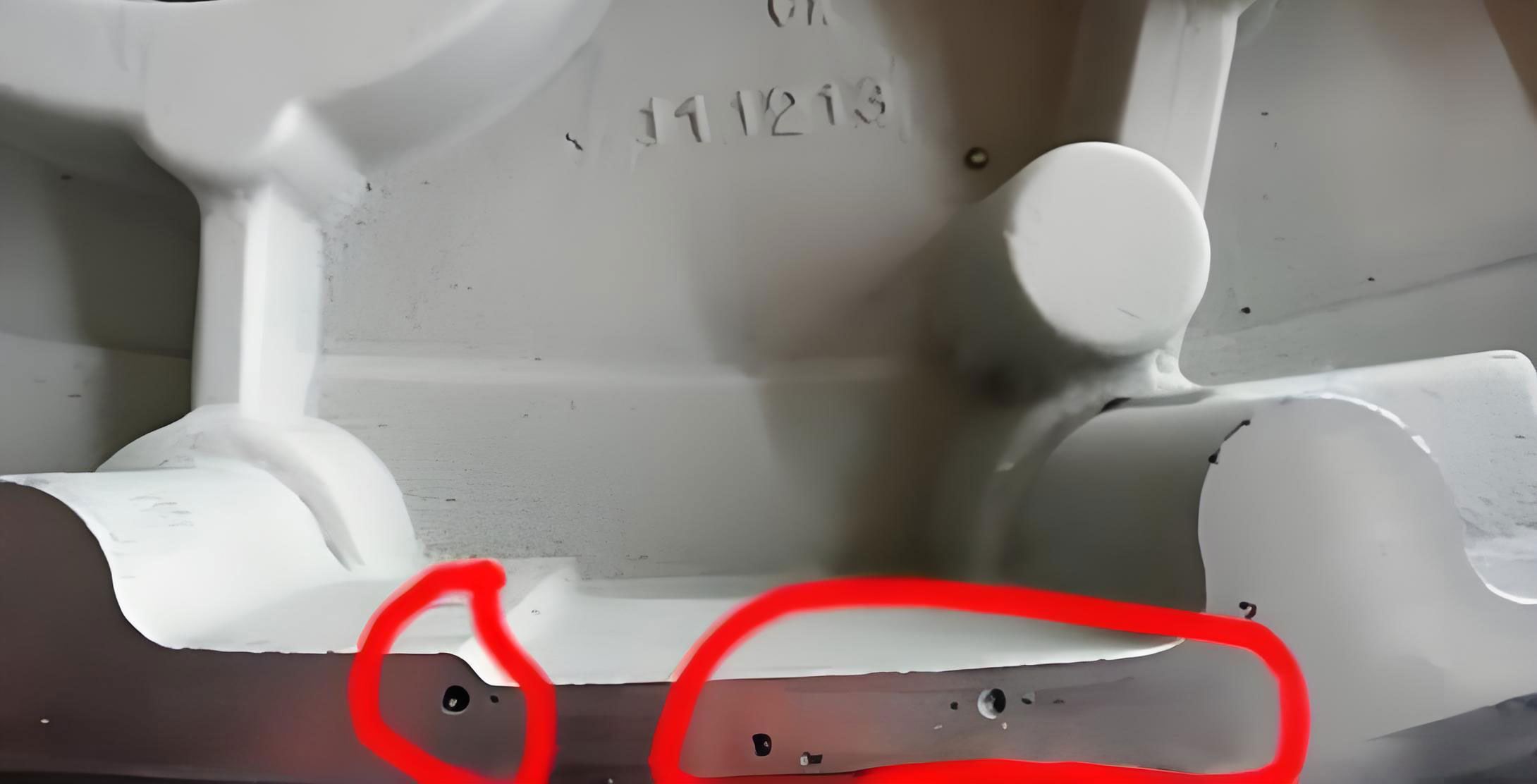
While gas porosity is a major concern, another insidious form of porosity in casting specific to tin-phosphor bronze is shrinkage porosity or micro-shrinkage. This defect arises from the alloy’s solidification characteristics. ZQSn10-1 has a wide freezing range, leading to a pasty, mushy mode of solidification. This results in poor fluidity and interdendritic feeding, causing isolated liquid pockets that eventually shrink and form fine, interconnected cavities. These appear as rough, coarse-grained areas upon machining, often in thick sections and hot spots. Even under risers, one can find such dispersed shrinkage, which is a significant challenge in achieving sound castings.
The fundamental issue relates to the solidification dynamics. The fraction of solid ($f_s$) during solidification influences the permeability for feeding. In a mushy zone, the permeability drops dramatically as the solid network forms, hindering the flow of liquid metal to compensate for solidification shrinkage. The pressure drop $\Delta P$ across the mushy zone can be approximated using the Darcy’s law for flow through a porous medium:
$$\Delta P = \frac{\mu v L}{\kappa}$$
where $\mu$ is the viscosity of the liquid metal, $v$ is the feeding velocity, $L$ is the length of the mushy zone, and $\kappa$ is the permeability, which is a strong function of $f_s$. For dendritic structures, $\kappa$ decreases rapidly as $f_s$ increases, making feeding difficult and promoting shrinkage porosity in casting.
Based on my experience, the key to minimizing this type of porosity in casting is to control the temperature gradient and solidification pattern. The following table outlines the main strategies I employ.
| Strategy | Implementation Method | Effect on Porosity in Casting |
|---|---|---|
| Mold Rigidity | Ensure high mold hardness through vigorous ramming of sand, especially for tall castings. | Prevents mold wall movement (expansion) under metallostatic pressure, which can create voids and worsen shrinkage porosity in casting. |
| Riser Design & Placement | Use risers with caution. Prefer necked or edge-feeding risers. Avoid placing risers directly on hot spots. | Directs feeding to required areas without creating additional thermal masses that exacerbate mushy zones, thus reducing localized porosity in casting. |
| Intensive Chilling | Widespread use of external chills (metal inserts) in molds and cores. Optimally, use permanent metal molds. | Increases cooling rate, promotes directional solidification, reduces the size of the mushy zone, and improves feeding, thereby suppressing shrinkage porosity in casting. |
| Chill Design Rule | Thickness of a chill should be approximately equal to the thickness of the casting section it contacts. | Ensures effective heat extraction without causing premature freezing of feeding paths, optimally controlling solidification to minimize porosity in casting. |
The implementation of chills is perhaps the most powerful tool against shrinkage porosity in casting for this alloy. By placing steel or iron chills adjacent to thick sections, we drastically increase the local heat extraction rate. This action modifies the solidification time, which can be described by Chvorinov’s rule:
$$t_f = B \left( \frac{V}{A} \right)^n$$
where $t_f$ is the solidification time, $V$ is the volume of the casting section, $A$ is its surface area, $B$ is a mold constant, and $n$ is an exponent (typically ~2). A chill effectively increases the local $A$ for that section, reducing $t_f$ and promoting a more planar solidification front, which alleviates the pasty zone and the associated porosity in casting.
In conclusion, mastering the control of porosity in casting for ZQSn10-1 tin-phosphor bronze requires a holistic understanding of metallurgy, thermodynamics, and foundry engineering. The dual threats of gas porosity and shrinkage porosity demand distinct but sometimes overlapping solutions. Success hinges on rigorous process discipline: from selecting and preparing dry, clean charge materials; through executing a fast, controlled melting and degassing cycle; to designing molds with adequate rigidity, strategic chilling, and prudent risering. Every step is an opportunity to either introduce or prevent porosity in casting. The formulas and tables presented here encapsulate the quantitative relationships and qualitative guidelines that I have found indispensable. Ultimately, viewing the entire process as an integrated system aimed at managing gas content and solidification dynamics is the key to producing sound, high-integrity bronze castings free from the detrimental effects of porosity in casting. Continuous monitoring, sample testing, and adaptation based on casting geometry and section size remain the hallmarks of a proficient foundry practice dedicated to eliminating porosity in casting.
Furthermore, it is worth considering the interplay between the two defect types. For instance, a region prone to shrinkage porosity may also act as a nucleation site for gas pore formation if the hydrogen content is high. Therefore, the comprehensive strategy against porosity in casting must address both phenomena simultaneously. Advanced simulation software can now model these coupled phenomena, predicting areas at risk for porosity in casting by solving equations for fluid flow, heat transfer, and species transport (like hydrogen diffusion). The governing equation for hydrogen diffusion during solidification, for example, can be expressed as:
$$\frac{\partial C}{\partial t} = \nabla \cdot (D \nabla C) + S$$
where $C$ is the hydrogen concentration, $D$ is the diffusion coefficient (a function of temperature and phase), $t$ is time, and $S$ represents sources or sinks due to reactions or phase change. Integrating such analysis with practical measures like those described creates a robust defense against porosity in casting.
In my foundry, we have institutionalized these practices through standardized work instructions and regular training. The result has been a marked reduction in rejection rates due to porosity in casting. It is a continuous journey of improvement, as each new casting design presents unique challenges. However, the fundamental principles remain: control gas sources, manage solidification, and maintain process consistency. By relentlessly focusing on these areas, the pervasive issue of porosity in casting can be successfully managed, ensuring the reliable production of high-performance tin-phosphor bronze components.