
In my investigation of foundry processes, the persistent issue of veining defects, also known as finning or rat tails, in sand castings produced with resin-bonded molds and cores stands out as a significant challenge. This defect manifests as thin, raised lines of metal on the casting surface, following the pattern of cracks that develop in the mold or core during pouring. It severely impacts the surface finish of sand castings, increases cleaning and fettling costs, and can lead to scrap. My work has been dedicated to establishing a practical framework for understanding the thermal cracking of resin sand molds and its direct causation of veining, and subsequently, to developing effective, production-ready measures for its mitigation.
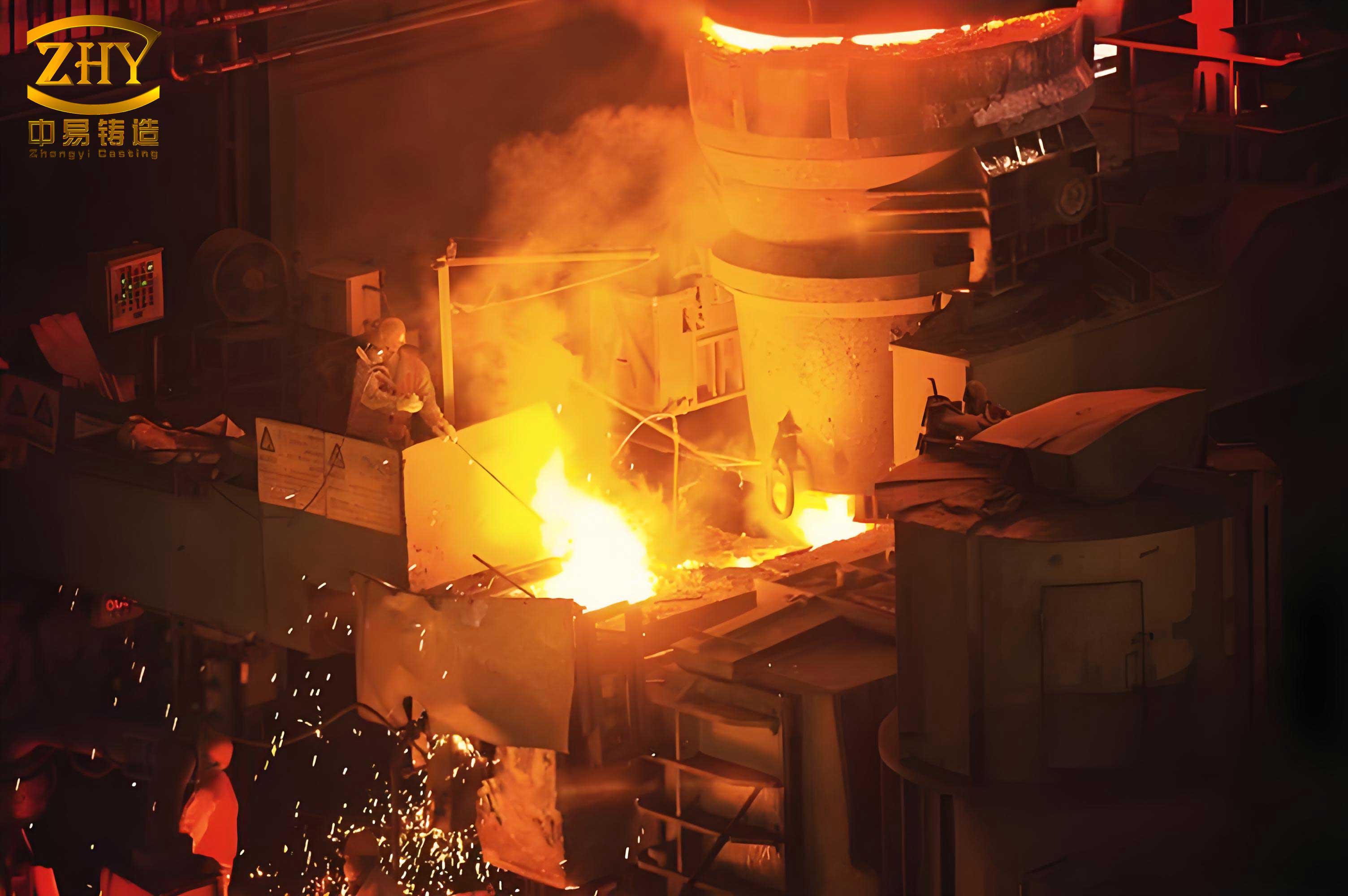
The formation of veining in sand castings is fundamentally a thermo-mechanical phenomenon. When molten metal is poured into a resin sand mold, the surface layer of the mold experiences rapid and intense heating. This causes non-uniform thermal expansion, generating significant compressive stresses. As heating continues, a temperature gradient is established through the mold wall, creating a neutral plane where stress is zero. Beneath this plane, the cooler sand restrains the expansion of the hotter surface layer. Upon cooling or during phase transformations of the silica sand, the stress state in the surface layer can transition from compression to tension. If this thermally induced tensile stress exceeds the high-temperature tensile strength (often referred to as hot strength) of the resin-bonded sand at that specific temperature, a crack will initiate on the mold surface. Molten metal then penetrates this crack, solidifying to form the unwanted vein on the final casting. Therefore, the core of the problem lies in the competition between the developing thermal stress and the diminishing strength of the sand mixture at elevated temperatures.
Building upon previous theoretical criteria, I have synthesized a practical veining tendency factor, V, which serves as a quantitative indicator for the likelihood of thermal cracking in resin sand molds and cores, and consequently, for the formation of defects in the resulting sand castings. This factor is expressed as:
$$
V = \frac{\alpha}{1 – \mu} \cdot \frac{E(T_s) \cdot (T_s – T_0)}{\sigma_t(T_s)}
$$
Where:
$\alpha$ = Coefficient of linear thermal expansion of the resin sand mixture.
$\mu$ = Poisson’s ratio of the sand mixture.
$E(T_s)$ = Elastic modulus at the surface temperature $T_s$.
$T_s$ = Temperature at the heated surface layer of the mold/core.
$T_0$ = Temperature at the neutral stress plane within the mold wall.
$\sigma_t(T_s)$ = Hot tensile strength of the sand at the surface temperature $T_s$.
A value of $V > 1$ indicates that the thermal tensile stress has surpassed the hot strength, leading to a high probability of surface cracking and potential veining defects in the sand castings. The magnitude of V is influenced by every parameter in this equation, making a detailed analysis of these influencing factors crucial for developing effective prevention strategies.
Detailed Analysis of Factors Influencing the Veining Tendency Factor
1. Coefficient of Linear Thermal Expansion (α)
The coefficient $\alpha$ is directly proportional to the veining tendency factor $V$. In practice, $\alpha$ is closely related to the bulk thermal expansion behavior, often measured as the “swelling” or expansion percentage of the sand mixture upon heating. Reducing this expansion is a primary target for preventing defects in sand castings.
| Influencing Factor | Effect on α / Expansion | Underlying Mechanism & Notes for Sand Castings |
|---|---|---|
| Resin Content | Variable effect. For hot-coating phenolic resins, increased resin can slightly reduce expansion. For cold-set resins (e.g., furan), full curing may lead to stable or slightly increased expansion with more resin. | Higher resin in hot-coating can increase the thermoplastic component, allowing some stress relaxation. In cold-set systems, more resin binds fine grains, promoting more uniform macroscopic expansion rather than localized dissipation, which can be detrimental for precise sand castings. |
| Base Sand Grain Fineness | Using finer sand typically reduces the expansion coefficient. | Finer grains increase the number of contact points, distributing expansion forces more evenly and reducing overall macroscopic swelling, a key factor for high-quality surface finish in sand castings. |
| Base Sand Type | Quartz sand has high expansion due to phase transformations. Alternatives like zircon, chromite, or olivine sand drastically reduce α. | The β-to-α quartz phase change at around 573°C is a major contributor to expansion and stress. Non-silica sands eliminate this transformation, making them highly effective for critical sand castings, though cost and availability are constraints. |
| Additives: Iron Oxide (Fe$_2$O$_3$) | Significantly reduces thermal expansion when added in appropriate amounts (e.g., 0.5-2%). | Fe$_2$O$_3$ undergoes endothermic reactions at high temperatures, absorbing heat and reducing the thermal load on the sand matrix, thereby lowering expansion and protecting the mold integrity for sand castings. |
| Additives: Natural Resins (e.g., Rosin) | Reduces expansion due to the creation of a low-melting-point plastic zone. | While lowering expansion, rosin can severely degrade hot strength and promote burn-on, making it a generally unsuitable additive for preventing veining in ferrous sand castings. |
| Storage Humidity & Conditions | High humidity increases expansion, especially after prolonged storage (e.g., 48 hours). Dry storage minimizes it. | Moisture affects resin cure and plasticity. Controlled, dry storage of molds and cores is essential to maintain consistent expansion properties for reliable production of sand castings. |
2. Hot Tensile Strength (σt(Ts))
The hot tensile strength $\sigma_t(T_s)$ is inversely proportional to $V$. Enhancing the strength of the sand mixture at the temperatures experienced during metal pouring is therefore a critical defense against veining in sand castings.
| Influencing Factor | Effect on Hot Strength | Underlying Mechanism & Notes for Sand Castings |
|---|---|---|
| Resin Content | Generally increases hot strength up to a point, as it builds a thicker, more continuous carbonized bond (coke film) at high temperature. | While beneficial, the increase in hot strength with resin content is often less pronounced than the increase in room-temperature strength. Optimizing for high-temperature performance, not just green strength, is vital for sand castings. |
| Base Sand Grain Fineness & Shape | Finer, round-grained sand can improve hot strength. | Finer grains increase bonding area and points. Round grains improve packing and resin film uniformity, leading to a more robust matrix that better resists thermal stress in sand castings. |
| Base Sand Surface Condition | Acid-washed sand or sand treated with silane coupling agents significantly improves hot strength. | These treatments remove impurities and enhance the chemical bonding at the resin-sand interface, creating a stronger bond that persists to higher temperatures, crucial for the integrity of molds for sand castings. |
| Base Sand Type (e.g., Zircon) | Zircon sand typically yields much higher hot strength compared to quartz sand at equivalent resin levels. | The superior thermal stability and stronger adhesion between resin and zircon grains result in a mold material far more resistant to thermal cracking, making it excellent for demanding sand castings. |
| Additives: Iron Oxide (Fe$_2$O$_3$) | Often decreases hot strength as addition levels increase. | Despite its benefit in reducing expansion, Fe$_2$O$_3$ particles can mechanically disrupt the resin-sand bond interface, reducing the load-bearing capacity at high temperature—a trade-off that must be managed. |
| Additives: Natural Resins | Dramatically reduces hot strength. | Their low melting point creates excessive plasticity at high temperature, causing the sand mixture to yield easily under stress, which is highly detrimental for preventing veining in sand castings. |
3. Temperature Parameters (Ts and T0) and Thermal Stress
The thermal stress in the mold surface layer is a complex function of the temperature profile. A simplified expression for the stress at a point is:
$$
\sigma_{thermal} \approx \frac{E}{1 – \mu} (\alpha_s T_s – \alpha_0 T_0)
$$
Where $\alpha_s$ and $\alpha_0$ are expansion coefficients at their respective temperatures. Initially, rising surface temperature $T_s$ increases compressive stress. However, as $E$ decreases with temperature and the stress state may eventually reverse to tension, further increase in $T_s$ can actually reduce the magnitude of tensile stress. The key takeaway is that mitigating the intensity of the thermal shock from the molten metal on the mold surface simultaneously lowers both $T_s$ and $T_0$. This action delays the transition to tensile stress, reduces its maximum value, and gives the sand more time to develop its carbonized strength, thereby suppressing the initiation of cracks that lead to veining on sand castings.
Integrated Measures for Preventing Veining Defects in Production
Based on the systematic analysis of the veining tendency factor and its parameters, I propose the following integrated set of measures for foundry practice. The effectiveness of these measures lies in their combined application, tailored to specific production conditions for sand castings.
I. Optimization of Sand Mixture Composition
1. Resin Selection and Dosage Optimization: Move beyond selecting resin content based solely on room-temperature strength. Utilize high-temperature performance tests (hot distortion, hot strength) to identify the resin type and dosage that offers the best compromise between adequate green strength and superior thermo-mechanical properties (lower α, higher σt(T)) for the specific sand castings being produced.
2. Strategic Use of Base Sand:
- Prioritize the use of fine, round-grained silica sand where applicable, as it favorably influences both expansion and hot strength.
- Implement acid washing or silane coupling agent treatments for critical sand castings to maximize interface bonding and hot strength.
- For high-value, dimensionally sensitive, or complex-core sand castings, invest in non-silica sands like zircon or chromite for vulnerable core sections to virtually eliminate quartz-phase expansion.
- Explore olivine sand as a more readily available alternative to quartz for steel and high-manganese steel sand castings, as it lacks a disruptive phase change.
3. Judicious Use of Additives:
- Iron Oxide (Fe$_2$O$_3$): Incorporate it as a primary additive for preventing veining in iron sand castings. Typical additions range from 0.5% to 2.0% based on sand weight. It acts by reducing thermal expansion through endothermic reactions and may also alter the slag formation at the metal-mold interface.
- Avoid Natural Resins (e.g., Rosin): Despite lowering expansion, their severe degradation of hot strength and tendency to increase burn-on make them counterproductive for veining prevention in most sand castings.
II. Control of Process Parameters
4. Curing Degree Control: Avoid over-curing, especially in shell mold processes. Excessive hexamethylenetetramine (hardener) or excessively high pattern temperatures lead to brittle resin bonds with very poor thermal shock resistance and low hot strength. A state of slight under-curing is often preferable, sacrificing a small amount of room-temperature strength to gain significant thermal toughness, thereby reducing the veining tendency in the final sand castings.
5. Mold/Core Storage Management: Control the storage environment. Store resin-bonded molds and cores in a dry, controlled atmosphere to prevent moisture pick-up, which adversely affects both expansion behavior and strength. For shell molds, a conditioning period of 24-48 hours at room temperature can sometimes relieve internal stresses and reduce veining.
6. Application of Refractory Coatings: Always use a high-quality refractory mold or core wash. A well-applied coating acts as a thermal barrier, reducing the peak temperature ($T_s$) at the sand surface, slowing down the heat transfer, and physically blocking metal penetration into micro-cracks. This is one of the simplest and most effective single measures for improving the surface quality of sand castings.
7. Pouring Temperature Optimization: Use the lowest practical pouring temperature that ensures complete filling and good metallurgical quality. Reducing the superheat of the molten metal directly decreases the thermal shock imposed on the mold, lowering $T_s$ and the associated thermal stresses, which is fundamental to preventing mold cracking and veining defects.
III. Summary of Actionable Guidelines
The following table consolidates the primary measures, their main effect on the veining tendency factor parameters, and the expected outcome for sand castings.
| Preventive Measure | Primary Effect on Veining Factor (V) | Expected Outcome for Sand Castings |
|---|---|---|
| Use finer, round-grain silica sand | Decreases α, may increase σt(T) | Reduced expansion and improved mold strength, leading to fewer veins. |
| Acid wash or silane treat base sand | Increases σt(T) | Enhanced high-temperature bond strength, resisting crack formation. |
| Substitute with Zircon/Chromite sand for cores | Drastically decreases α, increases σt(T) | Near-elimination of veining in complex core-defined regions of sand castings. |
| Add 0.5-2.0% Iron Oxide (Fe$_2$O$_3$) | Decreases α, modulates Ts | Significant reduction in thermal expansion and heat transfer, suppressing vein initiation. |
| Avoid over-curing of resin | Increases σt(T) at high T | Improved thermal toughness of the mold surface, delaying crack propagation. |
| Apply refractory coating | Lowers Ts, blocks penetration | Direct thermal barrier and physical block, major reduction in defect rate for sand castings. |
| Lower pouring temperature | Lowers Ts and T0 | Reduces overall thermal stress and severity of thermal shock to the mold. |
In conclusion, the problem of veining in resin-bonded sand castings is manageable through a scientific understanding of the thermo-mechanical principles involved. By focusing on the fundamental parameters that govern the veining tendency factor—specifically, minimizing the thermal expansion coefficient (α), maximizing the high-temperature strength (σt(T)), and mitigating the thermal shock (reducing Ts)—foundries can implement a targeted and effective combination of material and process controls. The measures outlined here, grounded in the analysis of the practical veining criterion, have been validated to significantly reduce or completely eliminate veining defects, leading to lower finishing costs, reduced scrap rates, and improved surface quality of sand castings. Success hinges on a holistic approach that optimizes the entire system from sand preparation to pouring, rather than relying on any single solution.