
In my experience working with heavy machinery manufacturing, I have frequently encountered the challenge of welding high manganese steel casting components to low alloy steel structures. This issue is particularly critical in applications like mining equipment, where components such as bucket lips undergo severe wear and require the unique properties of high manganese steel casting materials. The combination of high manganese steel casting and low alloy steel presents significant welding difficulties, primarily due to their divergent material properties and welding characteristics. Through extensive practical trials and analysis, I have developed a comprehensive approach to prevent heat cracking in such welds, which I will elaborate on in this article.
The fundamental problem arises from the inherent characteristics of high manganese steel casting materials. These steels, typically exemplified by grades like ZGMn13, are known for their exceptional toughness and work-hardening capabilities under impact. However, their welding behavior is complicated by sensitivity to thermal cycles. When a high manganese steel casting is subjected to welding heat, it can undergo detrimental microstructural changes that lead to cracking. Similarly, the low alloy steel counterpart, often chosen for its high strength, introduces additional complexities due to differences in thermal expansion, phase transformations, and chemical compatibility.
To understand the root causes of welding cracks between high manganese steel casting and low alloy steel, we must first examine their material properties in detail. The table below summarizes the typical chemical composition of these materials:
| Material | C (%) | Mn (%) | Si (%) | S (%) | P (%) | Mo (%) | Cr (%) | V (%) |
|---|---|---|---|---|---|---|---|---|
| High Manganese Steel Casting | 0.7-1.3 | 11.5-14.0 | 0.3-0.8 | <0.05 | <0.07 | 0.9-1.2 | – | – |
| Low Alloy Steel | 0.18 | 1.00 | 0.6 | <0.02 | <0.02 | 0.6 | 1.2 | 0.1 |
The mechanical properties further highlight the disparity between these materials:
| Material | Tensile Strength (MPa) | Elongation (%) | Coefficient of Thermal Expansion (μm/m·K) | Impact Value (J/cm²) |
|---|---|---|---|---|
| High Manganese Steel Casting | ≥735 | ≥35 | 2.6-3.0 | 147 |
| Low Alloy Steel | ≥780 | ≥24 | 20.7 (0-300°C) | 35 |
The significant difference in coefficient of thermal expansion between high manganese steel casting (approximately 2.8 μm/m·K) and low alloy steel (20.7 μm/m·K) creates substantial thermal stresses during welding and cooling. This can be quantified using the thermal stress formula: $$ \sigma = E \cdot \alpha \cdot \Delta T $$ where σ represents thermal stress, E is Young’s modulus, α is the coefficient of thermal expansion, and ΔT is the temperature change. For a high manganese steel casting welded to low alloy steel, the mismatch in α values amplifies the stress concentration at the weld interface.
Another critical aspect of high manganese steel casting behavior is its sensitivity to temperature exposure. These materials typically undergo water quenching treatment at approximately 1050°C to achieve a single-phase austenitic structure. However, when reheated above 250°C during welding, carbide precipitation occurs along grain boundaries, significantly reducing toughness and increasing susceptibility to cracking. The kinetics of carbide precipitation in high manganese steel casting can be described by the Johnson-Mehl-Avrami equation: $$ X = 1 – \exp(-kt^n) $$ where X is the transformed fraction, k is the rate constant, t is time, and n is the Avrami exponent. For high manganese steel casting, the rate constant k increases dramatically above 250°C, leading to rapid embrittlement.
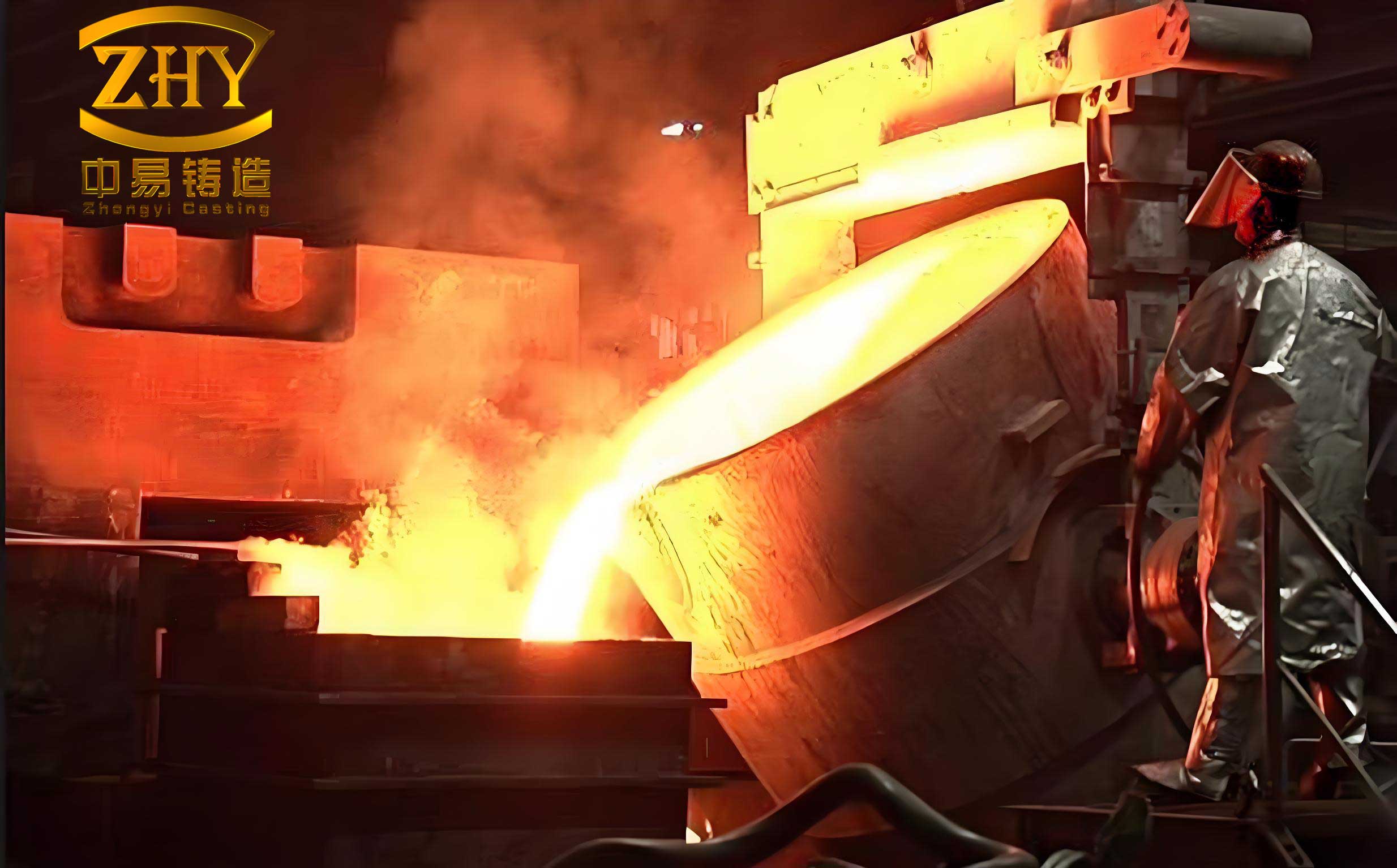
The welding of high manganese steel casting to low alloy steel represents a classic case of dissimilar metal joining with multiple inherent challenges. Carbon migration is a primary concern, where carbon atoms diffuse from the low alloy steel to the high manganese steel casting during welding, creating a decarburized zone in the former and a carburized zone in the latter. This phenomenon follows Fick’s laws of diffusion: $$ J = -D \frac{\partial C}{\partial x} $$ where J is the diffusion flux, D is the diffusion coefficient, and ∂C/∂x is the concentration gradient. The difference in carbon activity between the two materials drives this process, with the high manganese steel casting acting as a carbon sink due to its high manganese content.
Thermal stress development during welding of high manganese steel casting to low alloy steel components deserves particular attention. The substantial difference in thermal expansion coefficients creates complex stress patterns that can be modeled using the following relationship: $$ \epsilon = \alpha \cdot \Delta T + \frac{\sigma}{E} $$ where ε represents total strain. During cooling, the constrained contraction generates tensile stresses that often exceed the yield strength of the heat-affected zone in the high manganese steel casting, particularly when carbide precipitation has already weakened the microstructure.
The formation of low-melting eutectics presents another significant challenge when welding high manganese steel casting to other materials. The complex chemical interactions between elements from both base metals and the filler material can create brittle phases with melting points below the solidus temperature of the base materials. The susceptibility to such formation can be evaluated using the equivalent carbon content formula: $$ C_{eq} = C + \frac{Mn}{6} + \frac{Cr + Mo + V}{5} + \frac{Ni + Cu}{15} $$ For high manganese steel casting, the high manganese content significantly influences this value, increasing the risk of undesirable phase formation during welding.
Through systematic investigation, I have identified that the welding process parameters play a crucial role in determining the integrity of joints between high manganese steel casting and low alloy steel. The initial welding parameters that led to cracking were as follows:
| Parameter | Value |
|---|---|
| Welding Current (A) | 280-300 |
| Welding Voltage (V) | 25-27 |
| Welding Speed (m/min) | 0.32 |
| Wire Diameter (mm) | 1.6 |
| Wire Feed Speed (m/min) | 4.5 |
| Shielding Gas Flow (L/min) | 20 |
These parameters resulted in excessive heat input, particularly problematic for the high manganese steel casting component. The heat input can be calculated using the formula: $$ Q = \frac{60 \cdot V \cdot I}{1000 \cdot S} $$ where Q is heat input (kJ/mm), V is voltage (V), I is current (A), and S is travel speed (mm/min). With the initial parameters, the heat input exceeded acceptable limits for the high manganese steel casting, promoting carbide precipitation and thermal stresses.
To address these challenges, I developed a modified welding procedure specifically designed for joining high manganese steel casting to low alloy steel. The key innovation involves depositing a stainless steel buffer layer on the high manganese steel casting side before making the final joint. This approach serves multiple purposes: it creates a compatible transition zone, minimizes direct interaction between the dissimilar base metals, and reduces the thermal impact on the high manganese steel casting substrate. The buffer layer material selection is critical, with austenitic stainless steel fillers such as E309L proving effective due to their compatibility with both materials.
The implementation of this technique requires precise control of thermal management. I found that immediately water cooling the buffer layer deposition on the high manganese steel casting component is essential to prevent carbide precipitation. The cooling rate must be sufficient to avoid the critical temperature range of 250-800°C where detrimental phase transformations occur in high manganese steel casting. The temperature evolution during cooling can be described by Newton’s law of cooling: $$ \frac{dT}{dt} = -k(T – T_{\text{environment}}) $$ where T is temperature, t is time, and k is the cooling constant. For high manganese steel casting, rapid cooling through the critical temperature range is necessary to preserve the austenitic structure.
After establishing the buffer layer, the joint welding between the surfaced high manganese steel casting and the low alloy steel requires additional precautions. I implemented a strict interpass temperature control regimen, ensuring that the temperature does not exceed 40°C between passes. This low interpass temperature is particularly important for the high manganese steel casting side to prevent cumulative thermal damage. The modified welding parameters are summarized below:
| Parameter | Value |
|---|---|
| Welding Current (A) | 180-200 |
| Welding Voltage (V) | 28-30 |
| Welding Speed (m/min) | 0.45 |
| Wire Diameter (mm) | 1.6 |
| Wire Feed Speed (m/min) | 4.5 |
| Shielding Gas Flow (L/min) | 20 |
These reduced parameters significantly lower the heat input compared to the initial approach. The calculated heat input with the modified parameters is approximately 30% lower, which is crucial for preserving the microstructure of the high manganese steel casting. Additionally, the increased welding speed further reduces the time at elevated temperatures, minimizing the window for detrimental reactions.
Another critical aspect of the successful welding procedure for high manganese steel casting components is the implementation of peening after each pass. This mechanical treatment helps relieve residual stresses that develop during welding. The effectiveness of peening can be understood through its effect on stress redistribution, which follows the relationship: $$ \sigma_r = \sigma_0 – \sigma_p $$ where σ_r is the residual stress after peening, σ_0 is the initial welding stress, and σ_p is the stress relieved by peening. For high manganese steel casting welds, peening is particularly beneficial as it counteracts the tensile stresses that promote cracking.
The welding sequence also requires careful planning when working with high manganese steel casting materials. I adopted a multi-pass technique with specific bead placement to manage heat distribution and stress accumulation. The deposition pattern alternates between the two sides of the joint to balance thermal input and minimize distortion. Each pass is limited in size to control the thermal cycle experienced by the high manganese steel casting base material. The relationship between pass thickness and cooling rate can be expressed as: $$ \frac{dT}{dt} \propto \frac{1}{d^2} $$ where d represents the characteristic thickness of the weld pass. Thinner passes promote faster cooling, which is advantageous for high manganese steel casting preservation.
Shielding gas composition plays a significant role in welding high manganese steel casting to low alloy steel. I found that a mixture of 75% argon and 25% carbon dioxide provides optimal protection while maintaining arc stability and controlling the oxygen potential in the weld metal. The oxygen potential influences the oxidation of manganese, which is critical for maintaining the properties of the high manganese steel casting portion of the joint. The equilibrium between manganese and oxygen can be described by: $$ [Mn] + [O] \rightleftharpoons (MnO) $$ where brackets denote dissolved elements and parentheses denote slag phases. Proper shielding minimizes manganese loss from the high manganese steel casting region, preserving its characteristic properties.
Post-weld heat treatment requires special consideration for assemblies containing high manganese steel casting components. Conventional stress relief heat treatments in the range of 550-650°C are detrimental to high manganese steel casting as they promote extensive carbide precipitation. Therefore, I recommend avoiding post-weld heat treatment altogether for such dissimilar joints. Instead, the stress management is achieved through the combination of controlled welding parameters, peening, and strategic bead sequencing. The resulting residual stress state can be characterized by: $$ \sigma_{res} = \int_0^L E \cdot \alpha \cdot \Delta T(x) \, dx $$ where L is the length of the weldment and ΔT(x) is the temperature distribution. Through proper technique, the residual stresses in joints involving high manganese steel casting can be maintained at acceptable levels without post-weld heat treatment.
Microstructural analysis of successful welds between high manganese steel casting and low alloy steel reveals several important features. The buffer layer effectively prevents carbon migration from the low alloy steel to the high manganese steel casting, preserving the austenitic structure of the latter. The interface between the high manganese steel casting and the buffer layer shows minimal evidence of carbide precipitation when the thermal management protocol is properly followed. The microstructure evolution can be modeled using phase transformation kinetics, with the time-temperature-transformation diagram for high manganese steel casting showing a pronounced “nose” around 600°C where carbide precipitation occurs most rapidly.
The mechanical properties of welds between high manganese steel casting and low alloy steel produced using the optimized procedure demonstrate adequate strength and toughness. Transverse tensile tests typically fail in the low alloy steel base metal or weld metal rather than at the interface with the high manganese steel casting, indicating good joint integrity. Impact tests show acceptable values, though the toughness in the heat-affected zone of the high manganese steel casting is somewhat reduced compared to the base material. This reduction follows the relationship: $$ \Delta CVN = k \cdot \log(t_{800-500}) $$ where ΔCVN is the change in Charpy V-notch impact energy, k is a material constant, and t_{800-500} is the cooling time between 800°C and 500°C. For high manganese steel casting, minimizing this cooling time is essential to preserve toughness.
In practical applications, the welding procedure for high manganese steel casting components must consider the specific service conditions. For mining equipment applications where impact resistance is paramount, the weld must maintain sufficient toughness to withstand operational stresses. The work-hardening capability of the high manganese steel casting must be preserved in the heat-affected zone to ensure compatible deformation behavior with the weld metal and low alloy steel. The work-hardening behavior follows the relationship: $$ \sigma = \sigma_0 + K \cdot \varepsilon^n $$ where σ is flow stress, σ_0 is yield stress, K is the strength coefficient, ε is strain, and n is the work-hardening exponent. For high manganese steel casting, the n value is typically high, contributing to its exceptional wear resistance under impact conditions.
Through systematic implementation of these techniques, I have successfully eliminated heat cracking in welds between high manganese steel casting and low alloy steel components. The comprehensive approach addresses the multiple challenges presented by these dissimilar materials, including thermal expansion mismatch, carbon migration, phase transformation sensitivity, and residual stress development. The procedure has proven robust across various component geometries and thickness ranges, providing a reliable solution for joining high manganese steel casting to other engineering materials.
The knowledge gained from this work extends beyond the specific material combination discussed here. The principles of thermal management, buffer layer application, and stress control can be adapted to other challenging dissimilar metal joints involving high manganese steel casting materials. Continued refinement of these techniques will further enhance the reliability and performance of welded structures incorporating high manganese steel casting components, expanding their application in demanding industrial environments.