
In the production of rock drills, our company manufactures a critical component known as the shank body. This part is a high precision investment casting steel part that experiences severe distortion during the casting process. The defect rate due to distortion was as high as 85.5%, which caused significant difficulties in subsequent machining operations, increased setup and adjustment time, reduced production efficiency, and adversely affected machining accuracy. This paper presents a systematic investigation into the root causes of the distortion and describes a successful process improvement focused on the dewaxing stage. The work emphasizes the importance of the dewaxing procedure in high precision investment casting and demonstrates that a simple modification can drastically reduce distortion without requiring expensive new equipment.
The shank body is a critical component subjected to dynamic loads. The required mechanical properties are: hardness 179 HB, ultimate tensile strength σb ≥ 460 MPa, and impact toughness σk ≥ 88.3 J/cm². The casting must be free from shrinkage cavities, porosity, sand inclusions, and any deformation. The part geometry features a complex shape with cylindrical sections of diameters 38 mm and 27 mm, as well as a flat end face. The maximum allowable dimensional tolerance follows JB/T7162-2004. Any distortion exceeding approximately 2.5 mm leads to rejection or costly rework.
Distortion Characteristics
The distortion manifests as a pronounced convex bulge on the casting surface, with the actual dimensions deviating from the drawing by up to 2.5 mm. The affected areas are primarily the cylindrical surfaces and end faces at the 38 mm and 27 mm diameter sections. The distortion is not uniform; it varies depending on the orientation of the wax pattern during assembly and the dewaxing conditions.
Analysis of Causes for Distortion in High Precision Investment Casting
We employed a conventional investment casting process using a paraffin‑stearic acid wax, water‑glass binder, ammonium chloride hardener, and quartz sand for stucco. To identify the root cause, we examined each step of the high precision investment casting process.
Wax Pattern Die Design: The gating system was placed at a specific location (the only feasible option due to part geometry). This location made coating and stuccoing difficult, potentially leading to uneven shell thickness and reduced shell strength. However, subsequent tests showed that the wax pattern itself contributed only about 0.3 mm of distortion, so it was not the primary factor.
Wax Pattern Production: The wax patterns were produced on a low‑pressure six‑station injection machine with controlled cooling time and holding pressure. Measurements of the patterns indicated a maximum distortion of 0.3 mm, which was within acceptable limits. Therefore, pattern production was not the main cause.
Assembly (Tree Building): We observed a strong correlation between the orientation of the wax pattern on the runner and the degree of distortion. Three assembly angles were tested:
| Orientation | Angle Relative to Runner Axis | Measured Distortion (mm) |
|---|---|---|
| Perpendicular (Fig. 2) | 90° | 2.5 |
| Inclined (Fig. 3) | ~45° | 2.0 |
| Parallel (Fig. 4) | 0° | 1.5 |
These results clearly indicate that the assembly angle significantly influences distortion. The best result (1.5 mm) still exceeded the allowable tolerance, suggesting that other factors must be addressed.
Shell Mould Making: The shells were built using the water‑glass process. The primary layer (1–2 coats) used quartz flour and water‑glass binder with a modulus of 3.1–3.4. The density of the face coat was 1.29 g/cm³, and the backup coats were 1.32 g/cm³. The hardener was NH4Cl at 24.5 g/mL concentration, and the hardening temperature was 20 °C. The third and subsequent layers used bauxite flour and quartz sand stucco. After completing the shell, it was air‑dried for 24 hours at 18–28 °C. The original dewaxing process involved immersing the assembled tree vertically in hot water at 98 °C for 35 minutes (for a batch of 10 trees). After dewaxing, we observed that most shells exhibited non‑penetrating cracks on the external surface, with crack widths of 2–3 mm. These cracks led to shell deformation, which was then transferred to the casting. Investigation revealed that the shells had adequate green and dry strength; the main problem was the dewaxing procedure. During conventional vertical dewaxing, the wax in the runner system melted more slowly than the wax in the thin‑section patterns. The expanding wax could not escape quickly, generating internal pressure that deformed the shell. This was confirmed by the fact that increasing the water temperature or extending the dewaxing time worsened the problem.
Shell Firing and Pouring: The shells were fired at the usual temperature and successfully poured without any leakage, indicating that the shell strength after firing was sufficient. Therefore, the pouring operation was not a cause of distortion.
Original Dewaxing Process vs. Improved Dewaxing Process
The original dewaxing process was as follows:
| Parameter | Value |
|---|---|
| Water temperature | 98 °C |
| NH4Cl concentration in water | 5.7 g/mL |
| Dewaxing time (per batch of 10 trees) | 35 minutes |
| Tree orientation | Vertical (runner up) |
With this process, 3 out of 10 shells showed minor cracks, and 7 showed non‑penetrating cracks. The theoretical mechanism is illustrated conceptually: when the tree is immersed vertically, the wax in the thick runner melts slowly, trapping expanding wax from the thin patterns. This causes shell distortion.
We designed an improved dewaxing process: first, the tree is placed horizontally in a lifting basket with the pouring cup (runner) at the bottom and the patterns on top. The basket is lowered into the hot water until only the runner system is submerged (to the level of the ingate). After 7 minutes, the aluminum core of the runner (which is removable) is extracted. Then the tree is turned vertically and immersed again in the normal vertical position for an additional 12 minutes. The total dewaxing time is thus reduced from 35 to 19 minutes, and the wax removal becomes more efficient because the runner is melted first, creating an open path for the wax from the patterns to escape.
| Step | Description | Time (min) |
|---|---|---|
| 1 | Place tree horizontally, submerge runner only (up to ingate) | 7 |
| 2 | Remove aluminum runner core | – |
| 3 | Turn tree vertically, immerse fully | 12 |
In the first trial of 10 trees using the improved process, we measured the distortion at the critical 38 mm and 27 mm cylindrical sections relative to the reference face. The maximum deviation was only 0.34 mm, which is well within the JB/T7162-2004 tolerance. No cracks were observed on the shells.
Large‑Scale Production Trial
We then conducted a large‑scale trial with 54 trees using the improved dewaxing procedure. All 54 shells were of excellent quality with no deformation. The castings produced from these shells had dimensions within specification and required no extra setup time for machining. The defect rate due to distortion dropped from 85.5% to essentially zero. The only remaining defects were occasional sand inclusions (about 3% scrap), which were unrelated to the distortion issue.
Comparative Quality Results
The following table compares the quality before and after the process improvement in high precision investment casting:
| Parameter | Original Process | Improved Process |
|---|---|---|
| Number of castings produced | 302 | 11,000 |
| Castings within tolerance (no setup adjustment) | 44 (14.5%) | 10,670 (97%) |
| Castings requiring extra setup time (1 h each) | 138 (54%) | 0 |
| Scrap due to distortion | 120 (31.5%) | 0 |
| Sand inclusion scrap | – | 330 (3%) |
Note that the original process also had a fraction of castings that were rejected outright due to distortion; the combination of rejected and rework castings totalled 85.5% defective. After the improvement, the distortion‑related defects were eliminated entirely.
The economic impact has been substantial. With 11,000 castings produced under the improved process, we eliminated 11,000 hours of extra machining setup time (1 hour per casting that previously needed adjustment). This translates to significant cost savings and increased production throughput.
Mathematical Model of Distortion Reduction
We can define the distortion factor D as the maximum dimensional deviation from the nominal:
$$ D = \max_{i} \left| x_i – x_i^{\text{nom}} \right| $$
where xi is the measured dimension and xinom is the nominal dimension. For the original vertical dewaxing process, Doriginal ≈ 2.5 mm. For the improved process, Dimproved ≈ 0.34 mm. The relative reduction in distortion is:
$$ \frac{D_{\text{original}} – D_{\text{improved}}}{D_{\text{original}}} \times 100\% = \frac{2.5 – 0.34}{2.5} \times 100\% \approx 86.4\% $$
This remarkable reduction is directly attributed to the modified dewaxing procedure that prevents wax‑expansion‑induced shell deformation.
Conclusion
This study demonstrates that in high precision investment casting, the dewaxing stage is often the most critical factor controlling dimensional accuracy. For the shank body steel casting, the primary cause of distortion was the traditional vertical dewaxing method, which trapped expanding wax and caused shell deformation. By simply first melting the runner horizontally to create an open passage, then completing the dewaxing vertically, we eliminated shell cracking and reduced casting distortion from 2.5 mm to 0.34 mm. The improved dewaxing procedure is easy to implement, requires no capital investment, and has yielded a dramatic improvement in casting quality. The defect rate fell from 85.5% to nearly zero, and the process has been successfully scaled to produce over 11,000 castings. This work underscores the importance of careful process analysis in high precision investment casting and provides a practical solution for controlling distortion in complex steel parts.
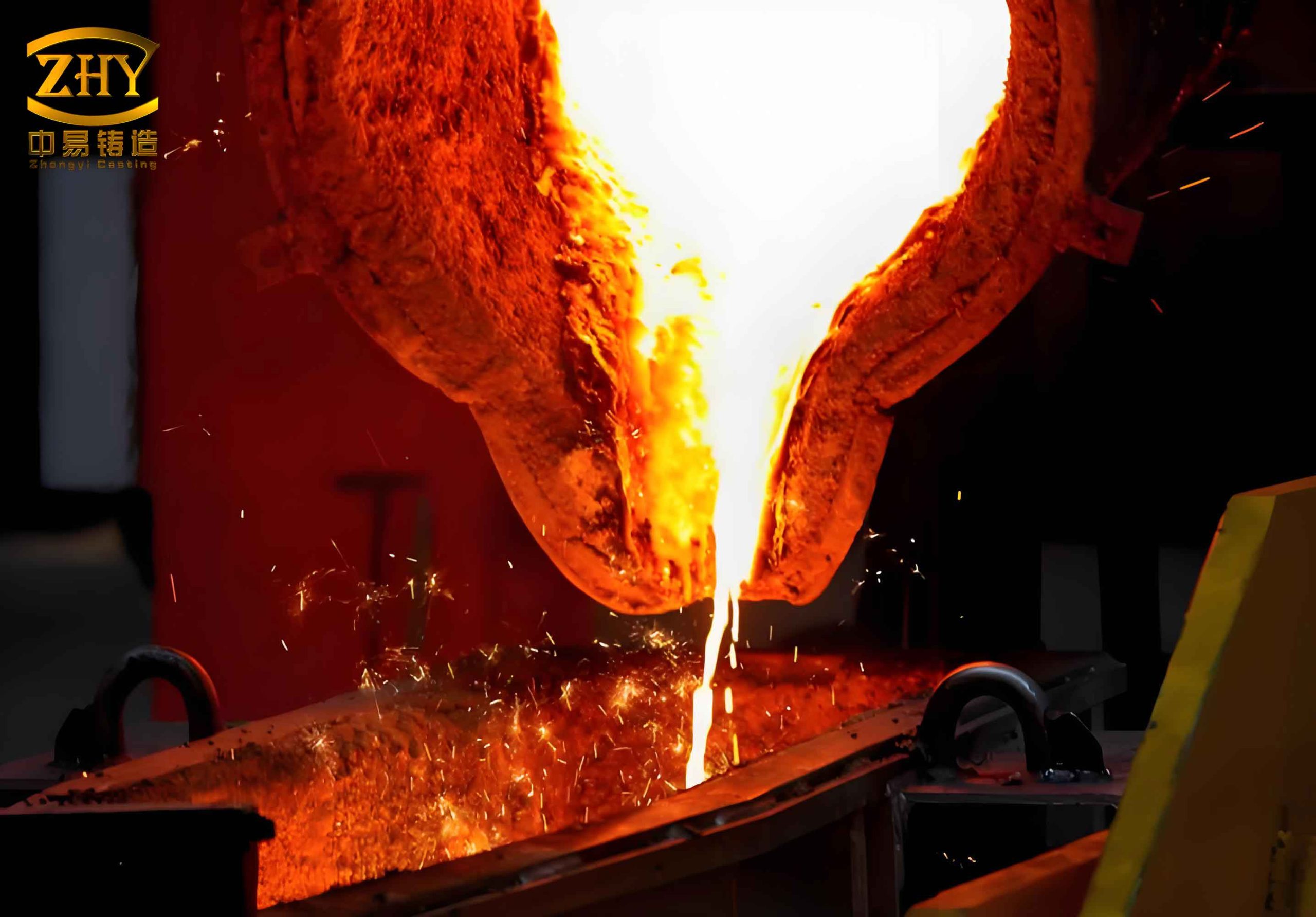
The high precision investment casting process, when properly controlled, can produce near‑net‑shape components with excellent mechanical properties. The lessons learned from this case study can be applied to other investment castings with similar geometry‑induced distortion issues. Future work will focus on optimizing the assembly angle in combination with the improved dewaxing to further reduce any residual dimensional variation.