
The manufacture of thin-walled, complex internal cavity components for aerospace applications, particularly from superalloys, presents significant challenges. Traditional machining and forging methods often fall short due to the geometric intricacy and the material’s inherent high strength at elevated temperatures. Therefore, the investment casting process emerges as the primary manufacturing route. This technique, characterized by its ability to produce net-shape or near-net-shape parts with excellent dimensional accuracy, low surface roughness, and precise elemental control, is ideally suited for such demanding applications. It enhances material utilization, reduces costly machining, and ultimately yields components with superior high-temperature performance. In the realms of aero-engine and gas turbine manufacturing, the widespread adoption of integrally cast, large-scale, complex thin-walled structures has led to dramatic reductions in machining, significant cost savings, and marked improvements in service performance and overhaul intervals, thereby enabling more advanced component design.
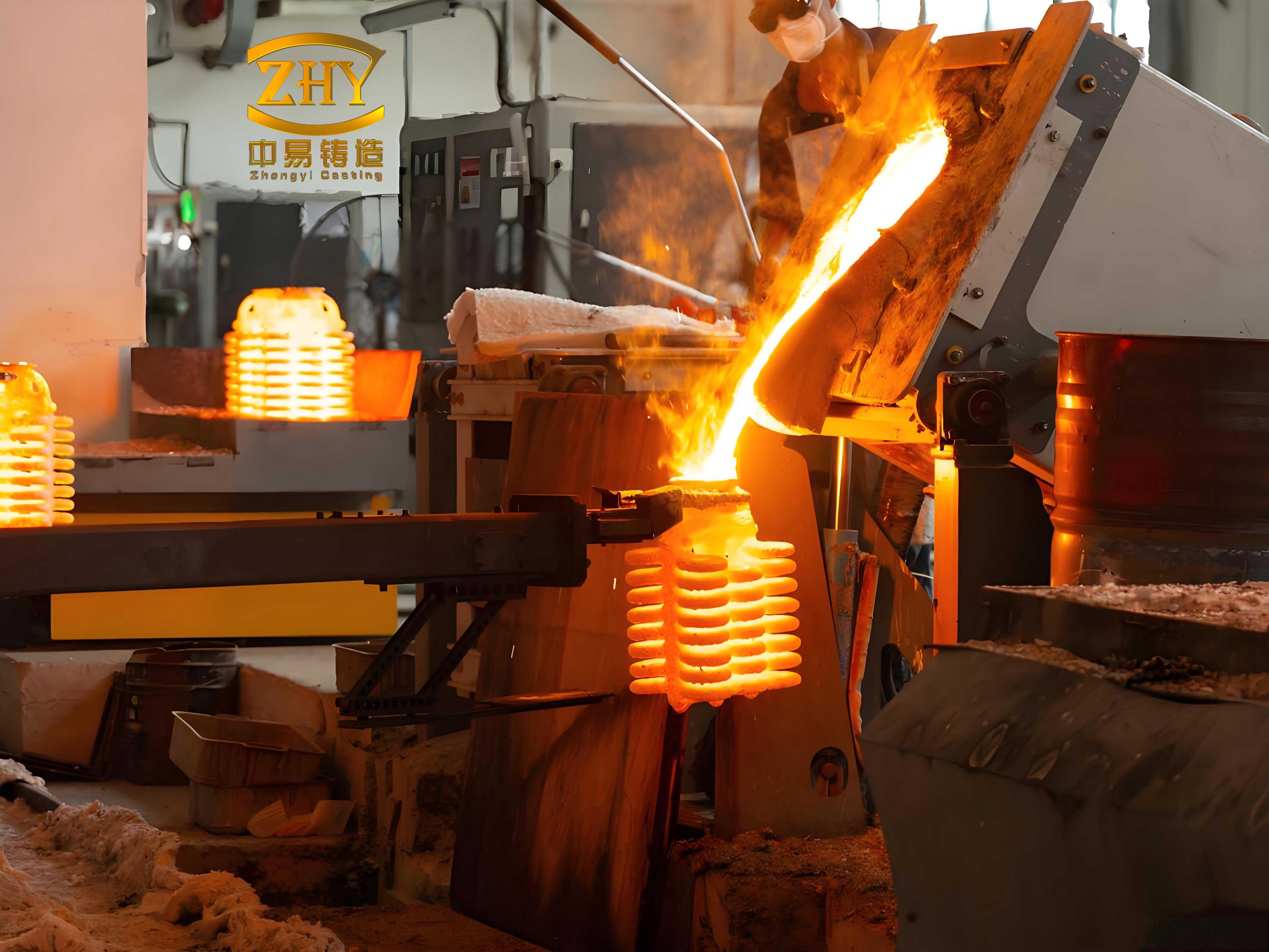
Numerical simulation has become an indispensable tool for designing and validating casting processes. With advancements in computational power, simulations that once took months can now be completed in a week or less, facilitating their widespread adoption in the investment casting process and other industrial fields. This study focuses on the K4169 superalloy, a precipitation-strengthened Fe-Ni-base alloy with excellent comprehensive properties up to 650°C, comparable to the Inconel 718C alloy. Its primary strengthening phase is the body-centered tetragonal γ” phase, supplemented by the face-centered cubic γ’ phase. Its widespread use in critical components like integral engine casings necessitates stringent quality control, demanding castings free from shrinkage porosity, hot tears, and other defects. However, achieving this in complex thin-walled geometries is non-trivial. This work employs a systematic approach combining finite element simulation and the Taguchi experimental design method to optimize key investment casting process parameters—pouring temperature, mold preheat temperature, and pouring time—with the explicit goal of minimizing shrinkage cavity and porosity volume in a representative aerospace disk-type casting.
Material, Methodology, and Numerical Framework
The subject of this investigation is a disk-shaped aerospace component manufactured via the investment casting process from K4169 superalloy. The nominal chemical composition of the alloy is provided in Table 1.
| C | Co | Ni | Mo | Nb | Cr | Al | Ti | Fe |
|---|---|---|---|---|---|---|---|---|
| 0.04 | 0.01 | 52.0 | 3.05 | 5.3 | 18.4 | 0.50 | 0.95 | Bal. |
The casting features a complex geometry with an outer diameter of approximately 215.8 mm, an inner diameter of 98.3 mm, and a maximum height of 39.8 mm. Its structure includes numerous regularly spaced small holes and significant variations in wall thickness, particularly with a constricted upper section. These features make it prone to filling-related defects like mistruns and gas entrapment, as well as solidification defects like shrinkage porosity, especially at thermal centers and isolated liquid zones. Initial trials with a conventional bottom-gating system (Scheme L) revealed substantial shrinkage porosity at the top surface of the casting, attributed to insufficient liquid metal feeding during the final stages of solidification. To address this, an improved gating system (Scheme M) was designed, incorporating additional and larger ingates as well as strategically placed feeding risers to ensure adequate directional solidification and liquid metal supply to the critical upper regions of the casting.
The numerical simulation of the entire investment casting process, including mold filling, heat transfer, and solidification, was conducted using a commercial finite element software (ProCAST). The 3D model of the casting and the improved gating system (Scheme M) was discretized using tetrahedral elements with a global size of 2 mm, resulting in a high-quality mesh suitable for accurate thermal and fluid flow analysis. The boundary conditions and material properties were defined to reflect the physical process accurately. The ceramic shell mold was assigned material properties corresponding to a chemically bonded system. The interfacial heat transfer coefficient (HTC) between the metal and the mold was set to a standard value of 500 W/(m²·K). The external surfaces of the mold were subjected to natural air cooling with a convection coefficient of 10 W/(m²·K) at an ambient temperature of 20°C. The thermophysical properties of the K4169 alloy, such as thermal conductivity and specific heat, which are critical for accurate solidification modeling, were defined as temperature-dependent functions based on literature data.
The core of the defect prediction in the investment casting process lies in modeling the solidification phenomenon. The governing equation for heat transfer, encompassing conduction within the casting/mold and convection at boundaries, is given by the Fourier-Kirchhoff equation:
$$
\rho c_p \frac{\partial T}{\partial t} = \nabla \cdot (k \nabla T) + \dot{Q}
$$
where $\rho$ is density, $c_p$ is specific heat, $T$ is temperature, $t$ is time, $k$ is thermal conductivity, and $\dot{Q}$ is a source term accounting for the latent heat of fusion released during phase change. The prediction of shrinkage porosity is often linked to the local thermal conditions during the final stages of solidification. A widely used criterion is the Niyama criterion, which relates porosity formation to the local thermal gradient $G$ and cooling rate $\dot{T}$:
$$
N_y = \frac{G}{\sqrt{\dot{T}}}
$$
Regions where the calculated $N_y$ value falls below a critical threshold are predicted to be susceptible to microporosity formation. For macro-shrinkage cavities, the software identifies isolated liquid pools that cannot be fed by the remaining liquid in the system.
Taguchi Experimental Design for Process Optimization
To systematically optimize the investment casting process parameters, the Taguchi design of experiments (DoE) method was employed. This method uses orthogonal arrays to study the effect of multiple control factors with a minimal number of experimental runs, making it highly efficient for simulation-based studies. The response variable or quality characteristic selected for optimization was the total volume of shrinkage porosity and cavity within the casting body (excluding the gating system and risers). The objective was to minimize this volume (“smaller-is-better” quality characteristic).
Three key process parameters, known to significantly influence fluidity, heat transfer, and solidification mode in the investment casting process, were chosen as control factors:
- Factor A: Pouring Temperature ($T_p$) – Affects metal fluidity, mold-metal interaction, and the thermal gradient. A range of 1400°C to 1500°C was selected, which is typically 100-150°C above the alloy’s liquidus temperature.
- Factor B: Mold Preheat Temperature ($T_m$) – Influences the cooling rate and thermal shock. A range of 950°C to 1050°C was chosen to maintain a reasonable temperature difference with the molten metal.
- Factor C: Pouring Time ($t_p$) – Controls the filling dynamics and turbulence. For this relatively small casting volume, a range of 4 to 8 seconds was deemed appropriate.
Each factor was studied at three levels, as detailed in Table 2.
| Control Factor | Symbol | Level 1 | Level 2 | Level 3 |
|---|---|---|---|---|
| Pouring Temperature | A | 1400 °C | 1450 °C | 1500 °C |
| Mold Preheat Temperature | B | 950 °C | 1000 °C | 1050 °C |
| Pouring Time | C | 4 s | 6 s | 8 s |
An L9 orthogonal array, which can accommodate three factors at three levels, was selected. This array defines nine distinct simulation runs, each with a specific combination of factor levels. The experimental layout is presented in Table 3.
| Run No. | Pouring Temp. (A) / °C | Mold Temp. (B) / °C | Pouring Time (C) / s |
|---|---|---|---|
| 1 | 1400 | 950 | 4 |
| 2 | 1400 | 1000 | 6 |
| 3 | 1400 | 1050 | 8 |
| 4 | 1450 | 950 | 6 |
| 5 | 1450 | 1000 | 8 |
| 6 | 1450 | 1050 | 4 |
| 7 | 1500 | 950 | 8 |
| 8 | 1500 | 1000 | 4 |
| 9 | 1500 | 1050 | 6 |
Analysis of Simulation Results and Parameter Effects
Each of the nine experimental runs defined by the Taguchi array was simulated using the finite element model with the improved gating scheme (Scheme M). The primary output of interest from each simulation was the predicted volume of shrinkage defects (cavities and porosity) within the casting body itself. The results are summarized in Table 4, which includes the calculated Signal-to-Noise (S/N) ratio. For the “smaller-is-better” characteristic, the S/N ratio is computed as:
$$
S/N = -10 \log_{10}\left(\frac{1}{n} \sum_{i=1}^{n} y_i^2 \right)
$$
where $y_i$ is the measured response (shrinkage volume) for a given experimental run, and $n$ is the number of repetitions (here, n=1 per run). A higher S/N ratio indicates greater robustness and a lower, more consistent response value.
| Run No. | Shrinkage Volume (Y) / mm³ | S/N Ratio (η) / dB |
|---|---|---|
| 1 | 29.73 | -29.47 |
| 2 | 113.51 | -41.10 |
| 3 | 130.53 | -42.31 |
| 4 | 34.42 | -30.74 |
| 5 | 48.11 | -33.64 |
| 6 | 8.35 | -18.43 |
| 7 | 13.13 | -22.37 |
| 8 | 3.50 | -10.87 |
| 9 | 10.66 | -20.56 |
A direct observation from Table 4 reveals that Run 8 (A3B2C1: 1500°C, 1000°C, 4s) yields the smallest shrinkage volume (3.50 mm³) and the highest S/N ratio (-10.87 dB), suggesting it is the optimal parameter combination among those tested. To quantify the individual effect and relative significance of each investment casting process parameter, analysis of means (ANOM) and analysis of variance (ANOVA) were performed on the S/N ratio data.
The mean S/N ratio for each factor at each level is calculated. For example, the mean S/N for Pouring Temperature (Factor A) at Level 1 (1400°C) is the average of the S/N ratios from runs 1, 2, and 3: $\eta_{A1} = (-29.47 -41.10 -42.31)/3 = -37.63$ dB. The results of this mean response analysis are compiled in Table 5. The difference between the maximum and minimum mean S/N value for a factor is its “delta” or effect. A larger delta indicates a factor with a stronger influence on the response.
| Level | Pouring Temp. (A) | Mold Temp. (B) | Pouring Time (C) |
|---|---|---|---|
| 1 | -37.63 | -27.52 | -19.59 |
| 2 | -27.60 | -28.54 | -30.80 |
| 3 | -17.93 | -27.10 | -32.78 |
| Delta (Max-Min) | 19.70 | 1.44 | 13.19 |
| Rank | 1 | 3 | 2 |
The ranking in Table 5 clearly shows that within the studied ranges and for this specific casting geometry and gating system, Pouring Temperature (A) has the most dominant effect on shrinkage volume, followed by Pouring Time (C), while Mold Preheat Temperature (B) has the least significant effect. The optimal level for each factor is the one corresponding to the highest mean S/N ratio: A3 (1500°C), B3 (1050°C), and C1 (4s). It is noteworthy that the optimal level for Mold Temperature from the ANOM (B3, 1050°C) slightly differs from the best run (Run 8 used B2, 1000°C). However, given the very small delta for Factor B (1.44 dB), its effect is marginal, and the combination A3B2C1 (from Run 8) is validated as practically optimal. A simplified ANOVA, focusing on the factor contributions, confirms this finding, showing that Factor A contributes overwhelmingly to the variation in the response.
To gain deeper physical insight, the individual effects of the parameters were investigated through additional single-factor simulation studies, holding other parameters at their optimal values.
Effect of Pouring Temperature: With mold temperature at 1000°C and pouring time at 4s, the pouring temperature was varied from 1400°C to 1525°C. The shrinkage volume showed a distinct “U-shaped” curve, reaching a minimum at 1500°C. At lower temperatures, reduced fluidity can lead to incomplete filling and premature freezing in thin sections, disrupting proper feeding paths and increasing shrinkage. At excessively high temperatures, although fluidity improves, the total heat content increases significantly. This can lead to a wider mushy zone, difficulty in establishing strong directional solidification towards the risers, and increased metal-mold reaction, all promoting shrinkage porosity. The optimal temperature balances sufficient fluidity with controlled heat content.
Effect of Mold Preheat Temperature: With pouring temperature at 1500°C and pouring time at 4s, the mold temperature was varied from 800°C to 1050°C. The shrinkage volume varied within a relatively narrow band, confirming its lesser influence. The trend showed a minimum around 1000°C. A very low mold temperature (e.g., 800°C) creates a steep initial thermal gradient, causing rapid chilling of the metal surface. This can lead to a solidified skin that isolates interior liquid pools prematurely, hindering feeding and potentially creating shrinkage. An excessively high mold temperature reduces the overall cooling rate and thermal gradient, slowing solidification and potentially promoting a more equiaxed structure but also extending the time during which feeding must occur, which can be detrimental if the feeding system is not perfectly efficient.
Effect of Pouring Time: With pouring temperature at 1500°C and mold temperature at 1000°C, the pouring time was varied. A clear trend emerged: shorter pouring times (4s) resulted in markedly lower shrinkage. A longer pouring time implies a slower fill rate. This can allow the metal entering first to cool significantly before the mold is completely filled, again creating isolated liquid regions and reducing the thermal gradient necessary for directional solidification. A faster, controlled fill (4s) helps maintain a more uniform temperature field and a clearer thermal gradient from the casting to the riser.
Validation and Discussion of the Optimized Investment Casting Process
The final validation was performed by simulating the complete investment casting process with the optimized parameters: Gating Scheme M, Pouring Temperature = 1500°C, Mold Preheat Temperature = 1000°C, and Pouring Time = 4s. The simulation results demonstrated a flawless process. The filling sequence was smooth and progressive, with no visible turbulence or air entrapment. More importantly, the solidification analysis showed perfect directional solidification. The casting sections solidified first, followed progressively by the feeding gates, and finally the risers. The temperature gradient was consistently oriented from the casting towards the riser. As a result, any shrinkage formation was successfully displaced entirely into the riser volumes, leaving the casting body completely free from predicted shrinkage cavities or porosity. This confirms the critical importance of a synergistic approach: an effective gating and feeding design (Scheme M) creates the necessary physical conditions for sound solidification, while the optimized process parameters (A3B2C1) allow this design to function at its highest efficiency within the context of the investment casting process.
The physics behind this optimization can be further elucidated. The goal is to achieve conditions that satisfy the feeding requirements during solidification. The pressure drop $\Delta P$ required to feed a mushy zone of length $L$ is related to the permeability $K$ of the dendritic network, the viscosity $\mu$ of the interdendritic liquid, and the volumetric solidification shrinkage $\beta$:
$$
\Delta P \approx \frac{\mu \beta L^2}{K t_f}
$$
where $t_f$ is the local solidification time. A higher pouring temperature can increase $t_f$, which would seem to reduce $\Delta P$. However, it also decreases $K$ by coarsening the dendrite arm spacing and may increase $L$, complicating the relationship. The optimal temperature likely maximizes permeability while maintaining an adequate thermal gradient $G$. The thermal gradient is crucial, as it relates to the Niyama criterion. The optimized parameters of higher pouring temperature (for better fluidity and controlled gradient) and faster pour (to maintain thermal uniformity) synergistically act to maximize $G/\sqrt{\dot{T}}$ in the casting body, moving it above the critical porosity threshold, while the risers, designed to solidify last, have values below the threshold, attracting the defects.
Conclusion
This study successfully demonstrates a systematic methodology for optimizing the investment casting process for complex K4169 superalloy components. By integrating numerical simulation with the Taguchi experimental design method, key process parameters were efficiently evaluated and optimized to minimize shrinkage defects. The following conclusions are drawn:
- The design of the gating and feeding system is paramount. The initial system (Scheme L) led to significant top-surface shrinkage, while the redesigned system (Scheme M) with adequate feeding risers enabled directional solidification, creating the necessary condition for defect control.
- Among the studied investment casting process parameters, pouring temperature has the most significant influence on the shrinkage volume in the casting, followed by pouring time, while mold preheat temperature has a comparatively minor effect within the studied range for this specific case.
- The optimal combination of process parameters, validated by simulation, is: Pouring Temperature = 1500°C, Mold Preheat Temperature = 1000°C, and Pouring Time = 4s. This combination, when used with the effective gating Scheme M, results in a sound casting free from shrinkage porosity.
- The single-factor effect studies provide physical insight: pouring temperature exhibits an optimal value balancing fluidity and heat content; pouring time should be sufficiently short to maintain a favorable thermal gradient; and mold temperature has a moderate optimum that avoids excessive chilling while maintaining a reasonable solidification rate.
This combined numerical and statistical approach provides a robust, efficient, and cost-effective framework for designing and optimizing the investment casting process for high-performance superalloy components, reducing reliance on costly and time-consuming trial-and-error methods in foundry practice.