
In the realm of precision manufacturing, the demand for high-performance machine tool castings is paramount. These components form the structural backbone of advanced machining centers, grinding machines, and other critical equipment. The foundational requirement for producing such castings is a supply of molten iron that exhibits an exceptional combination of high strength, superior rigidity, minimal residual stress, and excellent machinability. For decades, my foundry has relied on cupola melting as the primary method for producing iron for a wide range of precision castings, including those for high-end applications. This account details the specific practices and controls we have implemented to consistently achieve the stringent material specifications required for modern, high-duty machine tool castings.
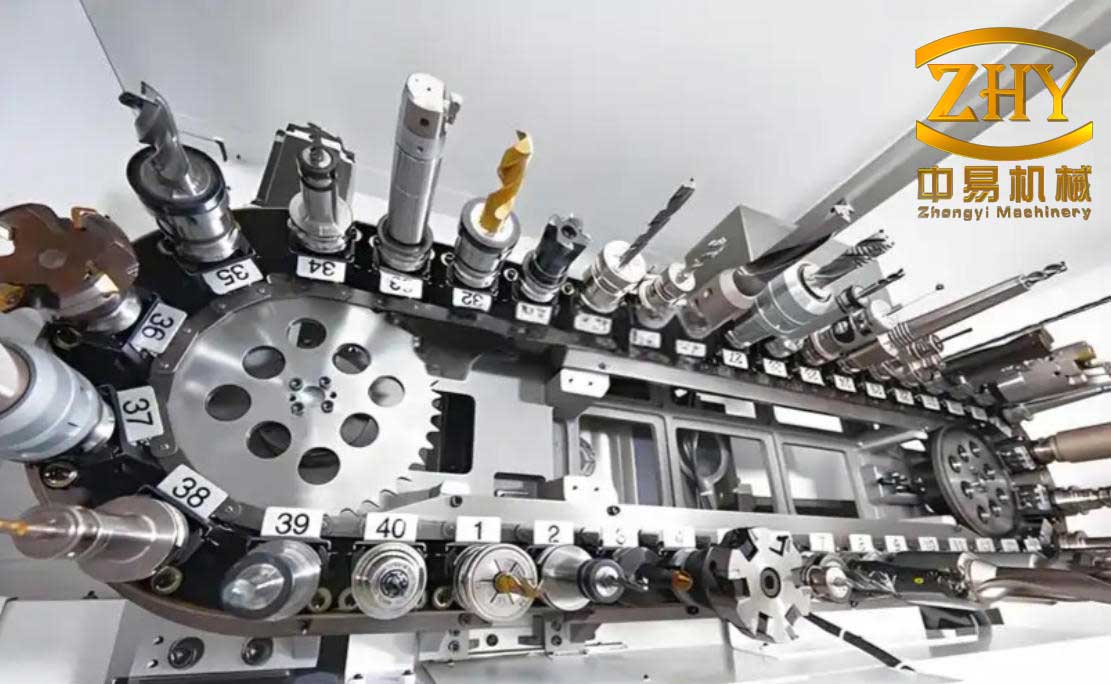
The performance of machine tool castings is directly dictated by their material properties. Grades such as HT300, HT350, and their international equivalents (e.g., FC300, FC350) are typically specified. The metallurgical targets are precise: a primarily pearlitic matrix with type-A graphite distribution, minimal ferrite or phosphide eutectic, and controlled hardness values that often vary with casting section size. For instance, hardness (HBS) for critical guideway surfaces on large beds may be specified between 165-241 HBS, with strict limits on hardness variation across the length. Beyond tensile strength and hardness, key attributes like high modulus of elasticity (stiffness), low inherent casting stress, and a high “quality coefficient” are non-negotiable for ensuring the dimensional stability and vibration damping capacity of the finished machine tool castings. Achieving this requires a molten iron with a high Carbon Equivalent (CE), typically above 3.8%, paired with a high scrap steel charge ratio and precise alloying and inoculation.
The Cupola System: Design and Environmental Control
The core of our melting operation is a hot-blast cupola specifically designed for stability and high superheat. The key structural parameters are summarized below:
| Parameter | Value |
|---|---|
| Melting Zone Diameter | 1100-1150 mm |
| Well/Tuyere Zone Diameter | 900 mm |
| Distance Between Tuyere Rows | 800 mm |
| Lower Tuyeres (Number x Diameter) | 8 x 45 mm |
| Upper Tuyeres (Number x Diameter) | 8 x 50 mm |
| Effective Height | 7400 mm |
| Hot Blast System | Dense-ribbed Blast Heating Tank |
The large distance between the upper and lower tuyere rows promotes a longer, more stable combustion zone and higher metal temperatures. A critical, non-negotiable aspect of modern cupola operation is environmental compliance. Our system is equipped with a water-cooling stage followed by a bag-house filter. This system has been verified to meet stringent national emission standards, with recorded dust concentrations below 50 mg/m³ and SO₂ below 200 mg/m³, proving that high-quality iron for machine tool castings can be produced with responsible environmental stewardship.
Melting Practice: The Foundation of Quality
The consistency of the final machine tool castings begins with rigorous control of all inputs and melting parameters.
Charge Materials Selection and Preparation
We enforce strict standards on all charge materials to minimize variability and the introduction of impurities:
- Pig Iron: We use a high-quality foundry grade. Key requirements include low trace element content (especially Ti), consistent chemistry, and a clean, rust-free surface without sand adherence. Different batches are stored separately.
- Scrap Steel: Only clean, low-alloy carbon steel is used. It must be free of rust, oil, and sand. Chemistry is controlled, and mixing of different batches is prohibited to maintain charge consistency.
- Returns (Riser/Runner): Carefully sorted by iron grade and thoroughly cleaned to remove all sand.
- Coke: A high-grade foundry coke is essential. We use a premium coke with low ash (<10%), low sulfur (<0.8%), and high mechanical strength (M40 >81%, M10 <6%). The coke size is graded, with 60-120 mm for layer coke and 100-150 mm for the bed coke.
Charge Composition and Alloying
The charge is designed to achieve the target chemistry and microstructural goals for different grades of machine tool castings. A high scrap ratio is employed to refine the matrix and increase strength. The table below outlines our standard practices:
| Internal Grade | Approx. Scrap % | Target Chemistry Range (wt.%) | Typical Alloy Additions |
|---|---|---|---|
| I (HT250) | 53 | C: 3.1-3.4, Si: 2.0-1.7, Mn: 0.6-1.0, P<0.15, S<0.10 | None |
| M (HT300) | 60 | C: 3.0-3.3, Si: 1.9-1.6, Mn: 0.8-1.1, P<0.15, S<0.10 | None |
| T (HT300) | 60 | C: 3.0-3.3, Si: 1.9-1.6, Mn: 0.8-1.1, P<0.15, S<0.10 | Cu: 0.5-0.6, Sn: 0.02-0.03 |
| T1 (HT300) | 60 | C: 3.0-3.3, Si: 1.9-1.6, Mn: 0.8-1.1, P<0.15, S<0.10 | Cu: 0.5-0.6, Cr: 0.15-0.25 |
| G (HT350) | 60 | C: 2.9-3.2, Si: 1.8-1.6, Mn: 1.0-1.2, P<0.15, S<0.10 | Cu: 0.5-0.6, Cr: 0.25-0.35 |
The Carbon Equivalent (CE) is a critical parameter, calculated using the standard formula for gray iron:
$$ CE = \%C + \frac{1}{3}(\%Si + \%P) $$
We aim for a CE between 3.6% and 4.0% to ensure good castability and graphitization potential while maintaining high strength through a refined matrix from the high scrap charge and potential alloying.
Coke and Wind Control
The bed coke height is maintained at approximately 1.8 meters. The layer coke charge is 10% of the 1000 kg metal charge. “Hearth coke” additions are made periodically (every 8-10 charges) based on observed tap temperature trends to maintain a stable thermal regime. Wind is supplied by a Roots blower under automatic computer control. The optimal blast intensity is calculated and adjusted in real-time as the furnace lining erodes during the campaign.
| Parameter | Value (Example Campaign) |
|---|---|
| Average Tap Temperature | 1515-1520 °C |
| Melting Rate | ~10 tons/hour |
| Coke Consumption (Total) | 11-12% of metal charged |
| Carbon Pick-up | +58 to +65% (relative to charge) |
| Silicon Loss | -18 to -20% (relative to charge) |
| Manganese Loss | -21 to -24% (relative to charge) |
Process Control and Inoculation
Process stability is monitored continuously. Tuyeres are kept clear and bright. Charge level is maintained consistently to ensure stable descent and preheating. The most critical real-time control is performed at the spout. Every ladle of base iron is analyzed using a fast thermal analysis cup to determine its CE, carbon, and silicon content immediately after tapping. This data is used to calculate the precise amount of inoculant needed to achieve the target undercooling and graphite structure.
Inoculation is a decisive step for achieving the required A-type graphite in machine tool castings. We primarily use a FeSi-based inoculant, though for critical castings, a SiBa inoculant is employed for its longer-lasting effect. The success of inoculation is instantly checked via a wedge chill test (chill width). The target chill width is tailored to the casting section and hardness requirement, typically 3-5 mm. Final verification is done by pouring tensile test bars and spectroscopic samples from the inoculated iron.
Material Performance and Casting Quality
The effectiveness of this controlled cupola melting process is unequivocally demonstrated in the properties of the resulting iron and the final machine tool castings.
Mechanical Properties and Quality Coefficients
The data from separately cast test bars reveals the capability of the process. A key metric we use is the “Quality Coefficient” (Q), which relates the actual tensile strength to the strength expected from its hardness and CE. It is a measure of the efficiency of the matrix and graphite structure. A higher Q (>1) indicates superior metallurgical quality.
$$ R_G = \frac{Tensile\ Strength\ (MPa)}{100 \times Hardness\ (HBS)} $$
$$ R_H = 100 \times \frac{Hardness\ (HBS)}{CE\ (\%) – 2.6} $$
$$ Q = \frac{R_G}{R_H} $$
The relationship between tensile strength and CE for different grades, all produced for machine tool castings, is shown in the data below. Notably, at a given CE, the higher-scrap M grade shows significantly higher strength than the I grade. The alloyed T and T1 grades provide a further strength boost, allowing high strength to be maintained at even higher CE values, which benefits castability and reduces shrinkage tendency.
| Grade | Avg. CE (%) | Avg. Tensile (MPa) | Avg. Hardness (HBS) | Avg. Quality Coefficient (Q) |
|---|---|---|---|---|
| I (HT250) | 3.75 | 306 | 210 | 1.10-1.14 |
| M (HT300) | 3.75 | 334 | 216 | 1.14-1.16 |
| T (HT300+Cu/Sn) | 3.75 | 352 | 226 | 1.14-1.18 |
| T1 (HT300+Cu/Cr) | 3.75 | 370 | 228 | 1.16-1.26 |
Stiffness and Residual Stress
For machine tool castings, stiffness (modulus of elasticity, E) is as critical as strength. Measurements on samples from our production melts consistently show high values. For example, at a CE of 3.8-3.85%, the measured modulus of elasticity ranges from 135.6 to 137.5 GPa, indicating a very rigid material. Furthermore, residual stress measurements conducted by an independent institute on a large bed casting revealed that the as-cast stresses, while significant, were effectively reduced to very low levels (from a peak of -159.5 MPa down to 21.1 MPa) after a standard thermal stress relief cycle. This confirms the good inherent stress state and the effectiveness of post-casting treatments.
Hardness and Machinability
The required hardness profiles on actual machine tool castings are consistently met. Guideway hardness on large beds falls within specified bands (e.g., 190-220 HBS). Crucially, the hardness in thinner sections and on general machining faces is typically kept below 220 HBS, ensuring excellent machinability without excessive tool wear. This balance between hard wear surfaces and softer, machinable bodies is a direct result of controlled chemistry, effective inoculation, and proper cooling.
Gating and Pouring Principles
To preserve the high-quality molten iron produced by the cupola, the gating and pouring systems for machine tool castings are designed with care. We employ systems based on the theory of large-choke gating to ensure rapid, tranquil filling. For castings over 2 tons, a bottom-gating system is standard, often with a stepped or multiple-level ingate design to balance fill times and temperature distribution. For very large beds, a bottom “rain” gating system is used. A key feature is the use of a pour cup with a dam to prevent primary slag from entering the mold. Pouring temperatures are maintained high, typically between 1380-1420°C, to ensure fluidity for the thin sections common in machine tool castings and to promote favorable solidification patterns.
Conclusion
The production of high-integrity machine tool castings demands a holistic approach to melting, metallurgy, and process control. Our experience demonstrates that a well-designed and meticulously operated hot-blast cupola is not only capable of meeting these demands but excels at producing molten iron with a superior combination of properties. The process delivers high Carbon Equivalent iron simultaneously possessing high tensile strength, high stiffness (modulus of elasticity), and low propensity for residual stress, as quantified by favorable quality coefficients. This is achieved through the synergy of a high scrap steel charge, precise wind and coke control, stringent charge material management, and effective inoculation. Furthermore, when equipped with modern emission control technology like bag filters, the cupola process can operate in full compliance with contemporary environmental standards. Therefore, for foundries specializing in high-duty, precision machine tool castings, the cupola remains a robust, reliable, and technically advanced melting solution.