
Manufacturing ZGCr5Mo valve body castings for extreme service conditions demands precision control across metallurgical and processing parameters. When our facility was contracted to produce 20 sets of 65J61Y64I valves for power plant applications—subjected to 540°C steam at 64MPa pressure—we implemented targeted solutions for crack prevention, gas defects, and dimensional stability. Below I detail the comprehensive methodology developed through this project.
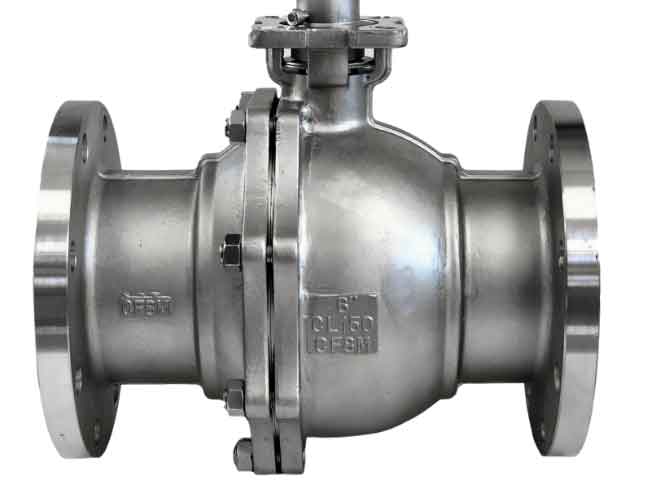
1. Advanced Foundry Techniques
To counteract the high crack susceptibility of low-alloy steels, we redesigned the feeding system and mold materials. Key modifications included:
- Strategic placement of risers on the valve body’s mid-flange and belly sections
- Implementation of 10mm vent holes at both ends of the valve body casting
- Core baking protocols with 3.0-5.0% wood flour additives in facing sand (>15mm thickness)
The thermal management during pouring was governed by:
$$T_{mold} \geq 40^\circ C \quad \text{at pouring}$$
$$T_{pour} = 1550^\circ C \to 1580^\circ C$$
Critical geometric considerations included maximum feasible radii at gate-riser junctions, quantified through solidification modeling:
$$R_{min} = 0.2 \times T_{section} \quad (T_{section} = \text{wall thickness})$$
| Process Parameter | Control Value |
|---|---|
| Zirconia Coating Layers | 2 (alcohol-based) |
| Mold Sealing Material | Specialized pastes |
| Vent Hole Diameter | 10 mm |
| Wood Flour Addition | 3.0-5.0 wt% |
2. Precision Melting and Alloy Control
The oxidation-reduction refining sequence was critical for achieving target chemistry in the valve body casting:
- Charge Materials: Premium scrap steel + FeMo (added mid-melting)
- Oxidation: Oxygen blowing for ≥0.3% decarburization
- Reduction: Slag formation using Al chips, Si-Fe, and Si-Ca powders
- Final Treatment: 0.06-0.08% Al addition + rare earth alloy ladle treatment
The target vs. achieved compositions for the valve body casting demonstrate process capability:
| Element | Specification (wt%) | Achieved (wt%) |
|---|---|---|
| C | ≤0.15 | 0.14 |
| Si | ≤0.50 | 0.50 |
| Mn | ≤1.00 | 0.73 |
| Cr | 4.00-6.00 | 5.90 |
| Mo | 0.40-0.65 | 0.52 |
| RE | 0.30-0.50 | 0.40 |
The deoxidation kinetics followed:
$$[O]_{final} = [O]_{initial} \times e^{-k t} \quad (k = \text{reaction constant})$$
3. Thermal Processing Protocol
Stress management dictated our stepwise thermal approach for the valve body casting:
- Pre-Weld Annealing: 650°C × 4 hours (stress relief before cutting)
- Welding: DC reverse polarity with preheat ≥200°C for large repairs
- Final Heat Treatment: Critical phase transformation control
The austenitizing and tempering parameters were calculated based on section thickness:
$$t_{hold} = (2.5 \to 4.0) \frac{\text{min}}{\text{mm}} \times T_{wall}$$
Complete thermal cycle for valve body casting:
| Stage | Temperature | Duration Calculation |
|---|---|---|
| Austenitization | 950 ± 10°C | thold = 3.25 min/mm × Tmax |
| Quenching | Oil, 60°C | Agitation until 300°C |
| Tempering | 730 ± 10°C | thold = 4.0 min/mm × Tmax |
4. Performance Validation
The resultant mechanical properties of the valve body casting exceeded specification requirements:
| Property | Specification | Achieved |
|---|---|---|
| Tensile Strength (MPa) | ≥600 | 660 |
| Yield Strength (MPa) | ≥400 | 400 |
| Elongation (%) | ≥18 | 18 |
| Reduction of Area (%) | ≥35 | 68 |
| Impact Energy (J/cm²) | ≥4 | 5.9 |
| Hardness (HB) | 192-240 | 223 |
The Charpy impact toughness relates to microstructure refinement:
$$\alpha_K = \frac{K_{IC}^2 (1 – \nu^2)}{E} \quad (\nu = \text{Poisson’s ratio}, E = \text{elastic modulus})$$
These results demonstrate that through integrated control of metallurgical and processing variables, ZGCr5Mo valve body castings can reliably serve in ultra-critical high-temperature, high-pressure applications while maintaining structural integrity under thermal cycling conditions.