
In my experience within the foundry industry, gray cast iron has long been recognized as an exceptional engineering material, prized for its good wear resistance, damping capacity, machinability, and excellent castability. These properties have cemented its use in critical components like internal combustion engines and, most notably for our focus, various parts of machine tools. The evolution of manufacturing technology, however, has pushed the performance envelope. Traditional grades of gray iron often fall short of meeting the stringent demands of modern, high-precision machine tools. There is now a compelling and growing market for gray iron characterized by high strength, low internal stress, high rigidity, and a high modulus of elasticity. This article delves into the precise production controls and metallurgical strategies I have employed and refined to consistently manufacture high-strength synthetic gray iron castings that meet these elevated standards for advanced machine tool applications.
The performance of a high-end machine tool is fundamentally linked to the quality of its structural castings. These machine tool castings must ensure exceptional dimensional stability, minimal distortion under load, and consistent behavior over time to guarantee high machining accuracy, efficiency, and long-term reliability. The specific machine tool casting discussed here, a bed component for a high-precision system, exemplifies these requirements. It has approximate dimensions of 1400 mm in length, 850 mm in width, and 350 mm in height, with a weight around 1000 kg.
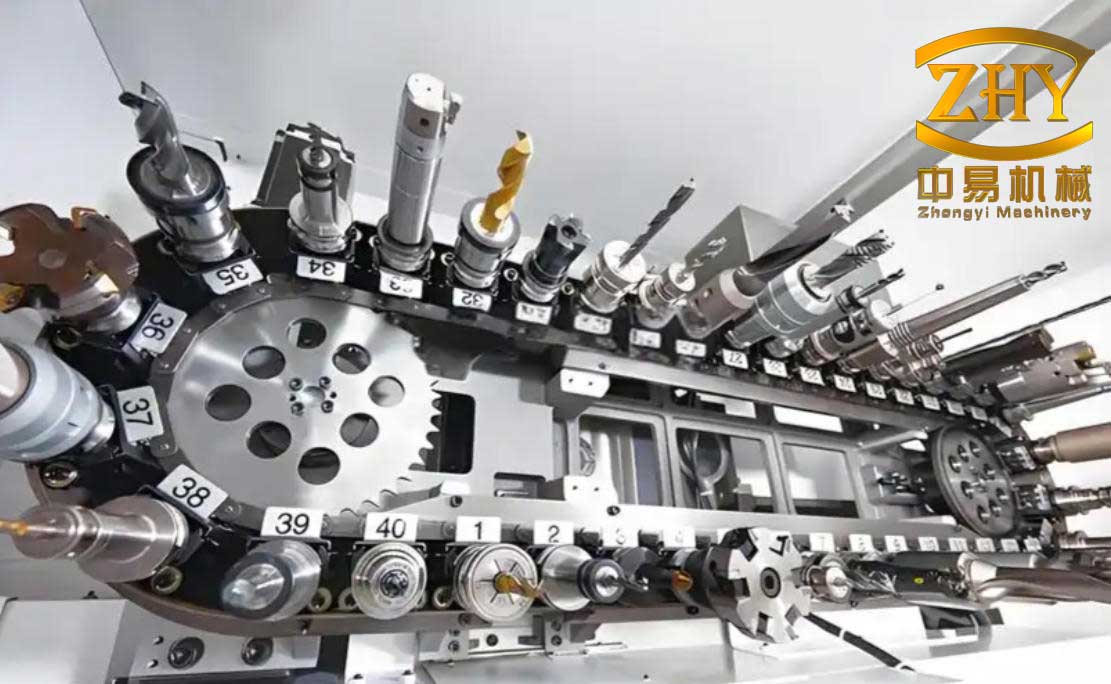
The technical specifications for such premium machine tool castings are exacting. The graphite structure must consist of randomly oriented Type A graphite, with a flake length corresponding to a standardized scale of 3 to 6. The matrix microstructure is required to be predominantly pearlite, with a content of 98% or higher. Mechanically, the tensile strength must meet or exceed 300 MPa. The bulk hardness should range between 190 to 210 HB, with a Shore hardness (HS) between 32 and 38. A particular challenge is presented by guideways that undergo flame or induction hardening; the base iron’s composition and uniformity are critical to achieving consistent and uniform hardened case depth and microstructure. To produce these high-integrity machine tool castings reliably, my production philosophy centers on controlling four pivotal areas: (1) selection and tight control of molten iron chemistry, (2) meticulous charge material selection and melting practice, (3) active management of gas content, particularly nitrogen and oxygen, and (4) optimized inoculation practices.
Control of Production Process for Machine Tool Castings
1. Selection and Control of Molten Iron Chemical Composition
The chemical composition is the primary determinant of the final microstructure and properties of gray iron. The carbon equivalent (CE) plays a paramount role. A higher CE promotes better fluidity, reduced shrinkage tendency, improved damping capacity, and increased graphite content. However, it generally leads to lower tensile strength and hardness. Therefore, achieving high strength with a relatively high CE necessitates a balanced approach using low-alloy additions. For machine tool castings requiring localized hardening, the choice of alloying elements is crucial for ensuring hardenability and uniformity. In my practice, copper (Cu) and tin (Sn) are the preferred alloying elements for this purpose, with strict adherence to the rule that the combined effect satisfies: $$Cu + 10 \times Sn \leq 0.8\%$$ This constraint prevents excessive hardenability that could lead to brittleness. Antimony (Sb) is explicitly avoided due to its tendency to promote undercooled graphite (Type D) and associated brittleness.
Consistency is non-negotiable. The allowable fluctuation for key elements is held within very narrow bands: $\pm0.05\%$ for carbon (C), silicon (Si), and manganese (Mn). Based on extensive production experience with high-performance machine tool castings, the following composition range has been established:
| Element | Target Range (wt.%) | Critical Function | |
|---|---|---|---|
| C | 3.1 – 3.3 | Governs graphite formation, fluidity, and CE. | |
| Si | 1.6 – 1.9 | Strong graphitiser, influences CE and matrix ferrite/pearlite balance. | |
| Mn | 0.8 – 1.0 | Combines with S to form MnS, stabilizes pearlite. | |
| S | 0.06 – 0.10 | Necessary for inoculation efficacy; forms MnS inclusions. | |
| P | < 0.05 | Kept low to avoid phosphide eutectic and associated brittleness. | |
| Cu | 0.5 – 0.6 | Refines pearlite, increases strength and hardness, improves uniformity. | |
| Sn | 0.02 – 0.03 | Powerful pearlite stabilizer, significantly hardens matrix. |
The carbon equivalent for this composition can be calculated using the standard formula: $$CE = C + \frac{Si + P}{3}$$ Substituting the mid-range values: $$CE = 3.2 + \frac{1.75 + 0.03}{3} \approx 3.2 + 0.59 = 3.79$$ This represents a high CE iron, where the strength is bolstered by the alloying elements Cu and Sn.
2. Charge Materials and Melting Practice Control
The melting process is conducted in a medium-frequency coreless induction furnace with a capacity of 2 metric tons. I employ a synthetic iron practice, which avoids or minimizes the use of pig iron. The charge makeup is as follows:
| Charge Material | Percentage | Specification & Purpose |
|---|---|---|
| Steel Scrap | 55% – 65% | High-quality, low-residual carbon steel plate cuttings. Provides a clean, low-trace element base. |
| Returns | 25% – 30% | In-house returns of the same grade. Aids in chemistry control and yield. |
| Recarburizer | 1.0% – 1.3% | Semi-graphitized petroleum coke-based, low nitrogen (≤500 ppm). Primary carbon source. |
| Silicon Carbide (SiC) | 0.6% – 1.2% | Granular (2-9 mm). Acts as a potent inoculant and source of Si and C. Provides heterogeneous nuclei. |
The synthetic approach offers significant advantages for producing high-grade machine tool castings. By minimizing pig iron, we drastically reduce the inheritance of detrimental trace elements like titanium (Ti) and lead (Pb), keeping them at levels such as Ti ≤ 0.05% and Pb ≤ 0.004%. This practice weakens the “genetic” effects often associated with pig iron, promoting the formation of fine, well-branched Type A graphite that is uniformly distributed. The dissolution of carbon from the recarburizer and silicon carbide increases the number of graphite nucleation sites in the melt, compensating for the lower innate nucleation potential of induction-melted iron and ensuring a more complete graphitization process.
The tap temperature is strictly controlled between 1500°C and 1520°C. Following final chemistry adjustment, the iron is held at this high temperature for 3 to 5 minutes. The vigorous electromagnetic stirring inherent to induction furnaces facilitates the flotation and removal of non-metallic inclusions and dissolved gases, thereby enhancing the overall metallurgical quality and cleanliness of the iron—a critical factor for the soundness of large, complex machine tool castings.
3. Control of Gas Content
Management of gas content, specifically nitrogen (N) and oxygen (O), is a often underestimated but critical aspect of producing high-integrity machine tool castings. Nitrogen acts as a potent micro-alloying element. At optimal levels, it refines the eutectic cell structure, promotes a fully pearlitic matrix, increases the microhardness of both pearlite and ferrite, and helps blunt the tips of graphite flakes, thereby improving mechanical properties. However, exceeding a critical threshold—typically around 120 ppm—predisposes the casting to nitrogen porosity defects. The primary sources of nitrogen are the steel scrap and, more significantly, the recarburizer. Therefore, sourcing a low-nitrogen recarburizer is paramount. We specify and verify that all recarburizer has an N content ≤ 500 ppm.
Oxygen content also influences graphite morphology, though its role is complex and less quantified. Through extensive in-process monitoring using dedicated oxygen/nitrogen analyzers, I have established that maintaining oxygen within a specific band is beneficial for achieving the desired graphite structure. The target ranges for these gases in the final iron are:
| Gas Element | Target Range (ppm) | Rationale & Control Method |
|---|---|---|
| Oxygen (O) | 10 – 40 | Influences graphite nucleation and growth. Controlled by melting atmosphere, temperature, and inoculant type. |
| Nitrogen (N) | 50 – 100 | Micro-alloying effect for strength and structure refinement. Controlled by charge materials (low-N recarburizer). |
The relationship between nitrogen content and tensile strength can be empirically modeled. For our grade of synthetic iron, an approximation can be given by: $$\sigma_{TS}(N) \approx \sigma_{TS,base} + k_N \cdot (N – N_{min})$$ where $\sigma_{TS,base}$ is the base strength without nitrogen effects, $k_N$ is a strengthening coefficient (approximately 0.5 to 1.0 MPa/ppm for N in this range), and $N_{min}$ is the lower threshold of effective nitrogen (around 30-40 ppm). Maintaining N within the 50-100 ppm window reliably contributes 10-50 MPa of additional tensile strength.
4. Selection of Inoculation Practice
Inoculation is the deliberate addition of materials to the molten iron to enhance graphite nucleation, control graphite morphology, and minimize chilling tendency. For these high-demand machine tool castings, a dual-stage inoculation process is indispensable.
Primary Inoculation: Performed during tapping from the furnace. A silicon-calcium-barium (Si-Ca-Ba) containing inoculant is used, added at a rate of 0.4% to 0.6% of the iron weight. The barium (Ba) component is particularly effective as it provides strong, long-lasting nucleation sites that resist fading, ensuring a uniform A-type graphite distribution throughout the casting section, which is vital for the stability of large machine tool castings.
Secondary (Stream) Inoculation: Performed during the pouring of molds. A fine-grade ferrosilicon (75% Si) powder, with a particle size of 0.2 to 0.7 mm, is added directly into the metal stream at a rate of 0.05% to 0.1%. This “late” inoculation introduces fresh, active nucleation sites just before solidification, counteracting any potential fading of the primary inoculant and guaranteeing a high nodule count and fine graphite structure in the final casting. The efficiency of stream inoculation $\eta_{stream}$ can be related to addition rate $A$ and superheat $\Delta T$: $$\eta_{stream} \propto \frac{A}{\sqrt{\Delta T}}$$ where a moderate superheat and precise addition rate are key.
Product Trials and Result Analysis
The production methodology was validated through a series of five controlled furnace melts. The castings were produced using a no-bake resin sand molding process. After chemistry adjustment and alloy additions (Cu and Sn added to the ladle), the iron was tapped at 1500-1520°C, treated with primary Si-Ca-Ba inoculant, skimmed clean, and poured at 1360-1390°C with simultaneous stream inoculation. A bottom-gating system with side runners was employed to ensure smooth, non-turbulent filling crucial for the integrity of these machine tool castings.
1. Chemical Composition and Gas Content Analysis
Samples from each of the five melts were analyzed using optical emission spectrometry and an oxygen/nitrogen analyzer. The results, presented below, confirm the tight control achieved.
| Melt No. | Chemical Composition (wt.%) | Gas Content (ppm) | |||||||
|---|---|---|---|---|---|---|---|---|---|
| C | Si | Mn | P | S | Cu | Sn | O | N | |
| 1 | 3.14 | 1.72 | 0.857 | 0.028 | 0.071 | 0.65 | 0.022 | 15 | 63 |
| 2 | 3.12 | 1.69 | 0.887 | 0.015 | 0.077 | 0.60 | 0.025 | 13 | 57 |
| 3 | 3.17 | 1.64 | 0.840 | 0.021 | 0.061 | 0.61 | 0.023 | 17 | 67 |
| 4 | 3.15 | 1.70 | 0.861 | 0.020 | 0.080 | 0.64 | 0.021 | 24 | 61 |
| 5 | 3.13 | 1.69 | 0.878 | 0.018 | 0.078 | 0.61 | 0.022 | 23 | 53 |
All compositions are within the specified narrow limits. The combined alloy factor $Cu + 10Sn$ is also well-controlled, with a maximum value of $0.60 + 10 \times 0.025 = 0.85\%$, just at the allowable limit for Melt 2. The oxygen and nitrogen contents are consistently within the targeted 10-40 ppm and 50-100 ppm ranges, respectively, validating the effectiveness of the charge material and process controls for these machine tool castings.
2. Mechanical Properties and Microstructural Analysis
Separately cast keel blocks (for tensile testing) and samples from the actual casting body (for hardness and metallography) were evaluated. The results are summarized below.
| Melt No. | Separately Cast Test Bar | Casting Body Sample | |||||
|---|---|---|---|---|---|---|---|
| Tensile Strength (MPa) | Hardness (HB) | Graphite Type & Size | Pearlite (%) | Hardness (HS) | Graphite Type & Size | Pearlite (%) | |
| 1 | 395 | 230 | A, Size 4 | 99.5 | 34 | A, Size 4 | 98 |
| 2 | 370 | 230 | A, Size 4 | 99.6 | 35 | A, Size 4 | 98 |
| 3 | 390 | 229 | A, Size 4 | 99.4 | 35 | A, Size 4 | 98 |
| 4 | 365 | 226 | A, Size 4 | 98.7 | 36 | A, Size 4 | 98 |
| 5 | 375 | 229 | A, Size 4 | 99.0 | 35 | A, Size 4 | 98 |
The data demonstrates exceptional consistency and compliance with specifications. All tensile strengths significantly exceed the 300 MPa requirement, with values ranging from 365 to 395 MPa. The hardness of both test bars and casting bodies falls within or very close to the specified windows (190-210 HB corresponds approximately to 32-38 HS). The microstructure is uniformly excellent across all melts: 100% Type A graphite, size 4 (according to standard charts), and a pearlite content consistently at or above 98%. This level of uniformity is precisely what is demanded for high-performance machine tool castings to ensure predictable behavior during machining and in service, especially for components like beds and columns that form the foundational structure of the machine tool.
The relationship between tensile strength and hardness for this specific grade can be expressed by a linear approximation: $$\sigma_{TS} (MPa) \approx 1.8 \times HB – 30$$ For example, a hardness of 230 HB predicts a tensile strength of $1.8 \times 230 – 30 = 384$ MPa, which aligns closely with the measured values. Furthermore, the effect of the alloying elements on strength can be estimated using a multiplicative model common for gray iron: $$\sigma_{TS} = K \cdot (1 – 0.015 \cdot CE^2) \cdot (1 + \alpha_{Cu} \cdot Cu + \alpha_{Sn} \cdot Sn)$$ where $K$ is a base constant, and $\alpha_{Cu}$ and $\alpha_{Sn}$ are strengthening coefficients for copper and tin, respectively.
Conclusions
Based on the systematic investigation and successful production runs detailed here, several key conclusions can be drawn for the manufacture of high-strength synthetic gray iron machine tool castings.
1. Microalloying with Cu and Sn: The controlled addition of copper and tin is an effective strategy for enhancing the properties of high-carbon equivalent synthetic gray iron. These elements refine the pearlite matrix, increase hardness and strength uniformly, and improve the stability and consistency of the microstructure. This is essential for meeting the rigorous demands of modern machine tool castings, particularly those requiring post-casting hardening operations. Adherence to the empirical rule $Cu + 10Sn \leq 0.8\%$ is crucial to balance hardenability with toughness.
2. Criticality of Gas Content Management: Active control of dissolved gases, specifically oxygen and nitrogen, is not merely a defect avoidance measure but a legitimate metallurgical tool. Maintaining nitrogen in the range of 50-100 ppm leverages its micro-alloying benefits for strength and structure refinement without risking porosity. Controlling oxygen between 10-40 ppm contributes to achieving a desirable, uniform Type A graphite morphology. These parameters must be monitored and controlled through careful selection of raw materials, particularly low-nitrogen recarburizers, and optimized melting practices.
3. Holistic Process Integration: Success is not due to any single factor but the integration of multiple controlled steps: the synthetic melting practice using steel scrap and silicon carbide to create a clean, consistent base iron; tight compositional tolerances; dual-stage inoculation with a long-lasting primary and a late-stream secondary inoculant; and controlled pouring temperatures with non-turbulent filling systems. This integrated approach ensures the reproducibility of high-quality machine tool castings.
4. Production Viability: The process outlined has proven to be robust and scalable in foundry production. The machine tool castings produced via this methodology, including complex bed components, have demonstrated consistent compliance with stringent international specifications, leading to successful qualification and sustained supply for high-end applications.
In summary, the journey to produce premium machine tool castings from high-strength synthetic gray iron is one of precision control across the entire manufacturing chain. By mastering the interplay between chemistry, charge materials, melting dynamics, gas content, and solidification control through inoculation, it is entirely feasible to achieve the high strength, dimensional stability, and microstructural uniformity required by the most demanding machine tool builders. The principles discussed here, while based on specific production experience, provide a foundational framework that can be adapted and refined to suit varying local conditions and specific grade requirements for different types of machine tool castings.