
As someone deeply involved in the foundry industry, I recently conducted a comprehensive survey to assess the current state of machine tool castings in China. This analysis is based on data collected from 11 enterprises that produce machine tool castings, focusing on key aspects such as strength, rigidity, dimensional stability, and machinability. The goal is to highlight the gaps between domestic production and international advanced levels, and to outline a path forward for improving the quality of machine tool castings. In this article, I will share my insights and findings, emphasizing the critical role of metallurgical quality and processing techniques in enhancing the performance of machine tool castings.
The demand for high-precision machine tools has surged with advancements in numerical control, high-speed cutting, and heavy-duty machining. Consequently, machine tool castings must meet increasingly stringent requirements. Despite China’s leading position in global machine tool production, the high volume of imports for数控机床 indicates persistent quality disparities. My survey, conducted over several months, reveals that while basic mechanical properties are often met, underlying issues in metallurgical quality and stress relief processes hinder overall performance. This analysis aims to shed light on these challenges and propose actionable solutions for the industry.
Machine tool castings are the backbone of precision machinery, providing the structural integrity needed for accurate and stable operations. From my perspective, the evolution of machine tool castings can be summarized through several key trends: high strength, high stiffness, thin-wall design, dimensional stability, vibration damping, and excellent machinability. Each of these aspects interplays with metallurgical factors, and my survey data underscores the importance of a holistic approach to production. For instance, achieving high strength without compromising other properties remains a significant hurdle for many manufacturers of machine tool castings.
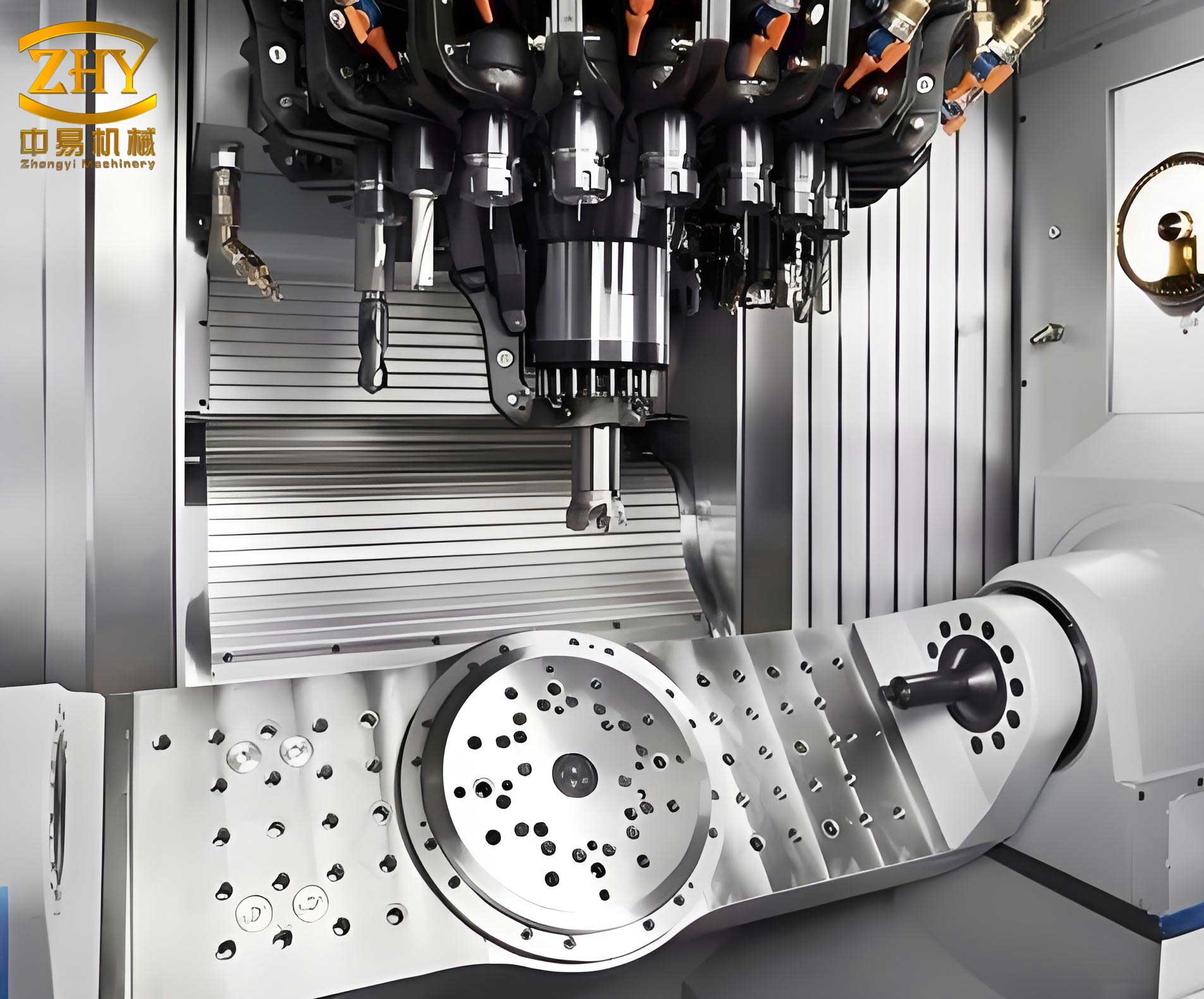
One of the most critical findings from my survey relates to the strength of machine tool castings. Internationally, gray iron grades such as HT300 and HT350 are commonly used, whereas domestic production often relies on HT250 and HT300. However, my data shows that domestic manufacturers tend to achieve high strength by significantly reducing the carbon equivalent (CE), which leads to drawbacks like increased shrinkage, higher casting stress, and poor machinability. In contrast, advanced international practices maintain higher carbon equivalents at similar strength levels, promoting better overall performance. The carbon equivalent is calculated as: $$CE = C + \frac{Si + P}{4}$$ where C, Si, and P are the weight percentages of carbon, silicon, and phosphorus, respectively. This formula is essential for understanding the balance between strength and castability in machine tool castings.
To illustrate the disparity, I have compiled data from the surveyed enterprises comparing carbon equivalents for different grades. The table below summarizes the average carbon equivalents for HT250, HT300, and HT350 grades in domestic production versus international benchmarks:
| Grade | Domestic Average CE (%) | International Advanced CE (%) | Difference (%) |
|---|---|---|---|
| HT250 | 3.75 | 3.95 | -0.20 |
| HT300 | 3.60 | 3.82 | -0.22 |
| HT350 | 3.48 | 3.76 | -0.28 |
This table clearly indicates that domestic machine tool castings operate at lower carbon equivalents, which compromises properties like casting fluidity and stress resistance. High-carbon-equivalent, high-strength gray iron is the ideal direction for machine tool castings, as it harmonizes mechanical performance with manufacturing ease. Achieving this requires a suite of technologies, including high-temperature melting, precise charge composition, alloying, and effective inoculation. From my analysis, the maturity factor (RG) and hardening factor (HG) are useful metrics for evaluating metallurgical quality. The maturity factor is defined as: $$RG = \frac{R_m}{R_{m,ref}}$$ where \(R_m\) is the actual tensile strength and \(R_{m,ref}\) is a reference strength based on carbon content. Similarly, the hardening factor is: $$HG = \frac{HB}{HB_{ref}}$$ where HB is the Brinell hardness and \(HB_{ref}\) is a reference hardness. These indices help assess whether machine tool castings are optimally processed.
Another trend is the push for high stiffness and thin-wall designs in machine tool castings. Modern machine tools require components that resist deformation under heavy loads, and elastic modulus is a key indicator. Unfortunately, my survey reveals that most domestic enterprises do not measure elastic modulus, whereas international standards emphasize it. For example, the elastic modulus for gray iron grades varies significantly:
| Grade | International Elastic Modulus (GPa) | Domestic Recommended (GPa) |
|---|---|---|
| HT250 | 120 | 100-110 |
| HT300 | 135 | 115-125 |
| HT350 | 145 | 125-135 |
This gap underscores the need for incorporating stiffness metrics into quality control for machine tool castings. Thin-wall design, often seen in advanced machine tool castings with walls as thin as 8-12 mm, relies on high carbon equivalent to maintain strength without brittleness. In my survey, 72% of enterprises identified thin-wall design as a growing requirement, yet the prevalent low-carbon-equivalent approach poses a barrier. Enhancing stiffness involves not only material optimization but also structural innovations like double-layered or multi-walled geometries in machine tool castings.
Dimensional stability is paramount for machine tool castings, especially in high-precision applications. Casting stress, which increases with strength, can lead to distortion over time. My data indicates that higher carbon equivalent reduces casting stress, as shown in the relationship: $$\sigma_s = f(CE)$$ where \(\sigma_s\) is the casting stress and CE is the carbon equivalent. Graphically, casting stress decreases as CE increases, highlighting the advantage of high-carbon-equivalent practices. For instance, at a CE of 3.8%, casting stress may be around 45 MPa, whereas at 3.4%, it can exceed 55 MPa. This explains why domestic machine tool castings, with lower CE, often exhibit poorer dimensional stability. To mitigate this, proper stress-relief treatments are essential, but my survey finds widespread misconceptions in heat aging and natural aging processes.
Vibration damping is another critical property for machine tool castings, as it affects machining accuracy. Gray iron inherently has good damping capacity, but it diminishes with increasing strength (or decreasing CE). The specific damping capacity (\(\psi\)) can be expressed as: $$\psi = \frac{A_d}{A_e} \times 100\%$$ where \(A_d\) is the energy dissipated per cycle and \(A_e\) is the elastic energy. For machine tool castings, maintaining a balance between strength and damping is vital, and higher CE contributes to better vibration absorption. My analysis suggests that emphasizing carbon equivalent in production can enhance the damping performance of machine tool castings without sacrificing strength.
Machinability is a practical concern for machine tool castings, as it influences manufacturing efficiency and tool life. The hardness and tensile strength-to-hardness ratio (m value) are common indicators. The m value is defined as: $$m = \frac{R_m}{HB}$$ where \(R_m\) is tensile strength in MPa and HB is Brinell hardness. Optimal ranges for machinability vary by grade; for example, for HT300, an m value of 1.15-1.50 is desirable. My survey data shows that many enterprises struggle with hardness uniformity, often due to inadequate inoculation or oxidation control. The FeO content in slag, which reflects melt oxidation, directly impacts machinability. Lower FeO content (e.g., below 3%) correlates with better cutting performance. The relationship can be modeled as: $$\text{Tool Life} \propto \frac{1}{[FeO]}$$ where [FeO] is the FeO concentration in slag. This underscores the importance of melt quality for machine tool castings.
To delve deeper into metallurgical quality, I analyzed factors such as melt temperature, scrap steel ratio, and inoculation methods. The table below summarizes key parameters from the surveyed enterprises:
| Enterprise | Melt Temperature (°C) | Scrap Steel Ratio (%) | FeO in Slag (%) | Inoculation Method |
|---|---|---|---|---|
| #1 | 1450 | 40 | 5-6 | Trough |
| #2 | 1480 | 55 | 4 | Ladle |
| #3 | 1512 | 63 | 2.5-3.5 | Stream |
| #4 | 1480 | 30 | <5 | Ladle |
| #5 | 1410 | 75 | – | Ladle |
| #6 | 1500 | 41 | – | Trough |
| #7 | 1450 | 40 | 20-25 | Ladle |
| #8 | 1510 | 45 | – | Stream |
| #9 | 1450 | 20 | 15 | Trough |
| #10 | 1450 | 30 | 15 | Trough |
| #11 | 1510 | 20 | 5-6 | Floating Silicon |
From this data, I observe that melt temperatures above 1500°C are associated with better metallurgical quality. For instance, enterprises with temperatures around 1510°C exhibit higher carbon equivalents and superior maturity factors. The scrap steel ratio also plays a role; higher ratios (e.g., 55-75%) tend to improve strength but require careful control to avoid excessive hardness. The FeO content, where reported, often exceeds the ideal <3%, indicating oxidation issues that degrade the machinability of machine tool castings. Inoculation methods vary, with delayed inoculation techniques like stream or floating silicon offering advantages over traditional trough methods by reducing fade.
Alloying is another aspect where domestic production of machine tool castings can improve. International standards often include elements like copper (0.4-0.6%) and chromium (0.2-0.4%) to enhance strength and hardness without lowering CE. My survey notes that alloying is not consistently documented, suggesting a gap in standardized practices. Incorporating alloys can be expressed through a strengthening coefficient: $$\Delta R_m = k \cdot [Alloy]$$ where \(\Delta R_m\) is the increase in tensile strength, k is a material constant, and [Alloy] is the alloy content. This approach can help tailor machine tool castings for specific applications.
Stress relief through aging treatments is crucial for dimensional stability in machine tool castings. My survey finds that 70% of enterprises use heat aging, but common errors include rapid heating, insufficient temperatures, and improper cooling. The effectiveness of heat aging depends on temperature and time, as shown in the equation: $$\sigma_r = \sigma_0 \cdot e^{-kt}$$ where \(\sigma_r\) is the residual stress, \(\sigma_0\) is the initial stress, k is a rate constant dependent on temperature, and t is time. For gray iron, temperatures of 500-600°C are recommended, with holding times based on section thickness. For example, a wall thickness of 75 mm requires at least 3 hours. Cooling rates should be controlled below 30°C/h to prevent stress reintroduction. Natural aging, used by 10% of enterprises, requires outdoor exposure for 9-12 months to achieve 95% stress relaxation. The process follows a logarithmic decay: $$\sigma_r = \sigma_0 – \alpha \ln(t+1)$$ where \(\alpha\) is a constant. My analysis emphasizes that aging should follow rough machining to address both casting and machining stresses in machine tool castings.
Large-scale machine tool castings pose additional challenges due to slow cooling and section sensitivity. My survey highlights instances where castings weigh up to 140 tons, requiring ductile iron for higher strength. The properties of such castings can be modeled using the cooling rate effect: $$R_m = R_{m0} – \beta \cdot \log(\dot{T})$$ where \(R_m\) is tensile strength, \(R_{m0}\) is a baseline strength, \(\beta\) is a coefficient, and \(\dot{T}\) is the cooling rate. Inoculation fade and shrinkage are common issues, necessitating advanced techniques like late inoculation and controlled feeding. The table below shows examples of large machine tool castings in gray and ductile iron:
| Component | Material | Weight (t) | Tensile Strength (MPa) | Hardness (HB) |
|---|---|---|---|---|
| Vertical Lathe Table | HT250 | 42 | 358 | 242 |
| Upright Post | HT300 | 58 | 342 | 248 |
| Crossbeam | QT600-3 | 123 | 780 | 270 |
These examples demonstrate the versatility needed in producing machine tool castings for heavy-duty applications. Ensuring consistency across thick and thin sections requires precise control over composition and cooling.
Wear resistance in guideways is another facet of machine tool castings. While hardness is a common metric, alloying or surface treatments like chilling are often necessary. My survey notes diverse approaches, including alloyed iron, hardened guides, and embedded steel rails. The wear rate can be approximated by Archard’s equation: $$W = k \cdot \frac{F \cdot s}{H}$$ where W is wear volume, k is a wear coefficient, F is load, s is sliding distance, and H is hardness. This highlights the need for integrated design in machine tool castings to balance wear resistance with machinability.
Based on my analysis, I recommend several focus areas for improving machine tool castings. First, adopt high-carbon-equivalent practices to achieve a balance of strength, castability, and stability. This involves optimizing charge materials with higher scrap steel ratios (e.g., 50-70%) and using alloys like copper and chromium. Second, enhance melt quality by maintaining temperatures above 1500°C and reducing slag FeO content below 3%. Third, implement effective inoculation through delayed methods to minimize fade and improve graphite morphology. Fourth, standardize stress-relief processes with proper heat aging protocols or extended natural aging. Finally, incorporate comprehensive testing, including elastic modulus, maturity factor, and m value, into quality assurance for machine tool castings.
In conclusion, the survey data reveals significant progress in domestic production of machine tool castings, but gaps remain in metallurgical quality and processing techniques. By embracing advanced practices and focusing on holistic property optimization, manufacturers can elevate the performance of machine tool castings to international standards. The journey involves continuous improvement in melt control, alloy design, and stress management, ensuring that machine tool castings meet the demands of modern precision machinery. As I reflect on this analysis, it is clear that collaboration across the industry and adherence to scientific principles will drive the future development of machine tool castings.
To further illustrate the relationships discussed, consider the following formula for overall quality index (Q) of machine tool castings: $$Q = \frac{RG \cdot HG \cdot \psi}{m}$$ where RG is maturity factor, HG is hardening factor, \(\psi\) is damping capacity, and m is the tensile-to-hardness ratio. Maximizing Q requires a synergistic approach, and my survey data provides a foundation for such optimization. As the industry evolves, ongoing research and data sharing will be key to advancing machine tool castings worldwide.