
In my extensive experience within the aerospace manufacturing sector, the production of hydraulic pumps for aircraft systems presents a unique set of challenges and precision requirements. These pumps, acting as the heart of the hydraulic system, perform critical energy conversion. Their defining characteristics—compact size, light weight, and intricate geometry—place immense importance on the foundational quality of their components. Key parts such as housings, mounting bases, port plates, rotors, swash plates, and drive shafts are predominantly machined from forged or cast blanks. Consequently, rigorous quality control over these aerospace castings and forgings from the very beginning is not merely a step in the process; it is the fundamental pillar ensuring the reliable operation, proper assembly, and extended service life of the entire hydraulic pump. This article details a comprehensive, systematic approach to controlling the quality of these essential precursors.
Material Selection and Standardization
The journey towards a reliable component begins with the selection of the correct raw material. Different metals offer a spectrum of mechanical, physical, and chemical properties. For aerospace castings and forgings, the chosen material must exhibit a synergistic combination of high strength-to-weight ratio, excellent machinability, and robust corrosion resistance to withstand the harsh operational environment of an aircraft. The selection is driven by the specific function and loading conditions of each part within the pump assembly.
| Component | Function & Service Condition | Blank Type | Recommended Materials | Key Property Rationale |
|---|---|---|---|---|
| Swash Plate | Variable displacement mechanism; subject to friction and wear. | Forging | 40CrNiMoA, 38CrMoAlA (Alloy Steel); TC4, TC6 (Titanium Alloy) | High surface hardness, wear resistance, and fatigue strength. |
| Port Plate / Valve Plate | Controls fluid flow direction; subject to friction and pressure. | Forging | 40CrNiMoA, 38CrMoAlA; 2A50, 2A70 (Aluminum Alloy); TC4, TC6 | Dimensional stability under heat, wear resistance, and compatibility with mating surfaces. |
| Drive Shaft | Primary drive element; transmits high torque. | Forging | 40CrNiMoA, 38CrMoAlA | High torsional and fatigue strength, good core toughness. |
| Pump Housing | Main pressure vessel; contains high-pressure fluid. | Casting | HZL-105, A356, A357 (Al-Si-Mg based alloys) | Excellent castability, pressure tightness, good strength, and corrosion resistance. |
| Mounting Base | Provides structural support and sealing interfaces. | Casting | HZL-105, A356 | Good stiffness, machinability, and corrosion resistance. |
The selection process can be guided by a weighted performance index. For a given application, we can evaluate a material candidate using a formula that consolidates key properties:
$$ P_{mat} = \alpha \cdot \sigma_y + \beta \cdot \delta + \gamma \cdot \Psi – \kappa \cdot \rho $$
Where:
– $P_{mat}$ is the overall performance score.
– $\sigma_y$ is the yield strength (normalized).
– $\delta$ is the elongation (ductility, normalized).
– $\Psi$ is the fatigue endurance limit (normalized).
– $\rho$ is the density (normalized, lower is better).
– $\alpha, \beta, \gamma, \kappa$ are weighting coefficients specific to the component’s duty (e.g., $\alpha$ and $\gamma$ are high for a shaft, while $\kappa$ is high for a housing where weight is critical).
Selecting the right material is futile without guaranteeing its inherent quality. Therefore, adherence to stringent material standards is non-negotiable. Our principle mandates that all raw materials for aerospace castings and forgings must conform to recognized national military standards (GJB), aviation industry standards (HB), or equivalent national standards (GB) that meet aviation requirements. Internally developed specifications are only permissible if they meet or exceed the baseline set by these higher-level standards.
| Material Category | Typical Product Form | Primary Governing Standard | Key Controlled Parameters |
|---|---|---|---|
| High-Strength Alloy Steels (e.g., 40CrNiMoA) | Bar, Billet | GJB 1951 (or equivalent AMS, MIL specs) | Chemical composition (ladle and check), grain flow, hardenability, cleanliness (inclusion rating). |
| Aluminum Alloys (Wrought, e.g., 2A50) | Bar, Plate | GB/T 3191, AMS 4117 | Composition, temper condition, ultrasonic inspectability. |
| Aluminum Alloys (Cast, e.g., HZL-105/A356) | Ingot | HB 962, AMS 4216 | Chemical composition, gas content (H₂), impurity element limits (Fe, etc.). |
| Titanium Alloys (e.g., TC4/Ti-6Al-4V) | Bar, Billet | GJB 2965, AMS 4928 | Composition, interstitial elements (O, N, H), microstructure (alpha-beta phase). |
Implementation of these standards follows strict protocols: 1) Procurement from approved, qualified suppliers with a certified chain of custody. 2) Mandatory incoming inspection, including review of material test certificates and often supplementary chemical or physical verification. 3) Meticulous warehouse management where materials are stored and identified by heat/lot number to prevent any mix-up, a critical failure mode in aerospace manufacturing.
Foundational Requirements: Environment, Equipment, and Tooling
Quality is not born solely on paper; it is manufactured in a controlled environment. The production facility for aerospace castings must itself be a tool for quality. Workshops are maintained with disciplined cleanliness, clear and unobstructed aisles to prevent accidents and contamination, and fully functional ventilation systems. Specific environmental parameters are actively monitored and controlled:
| Parameter | Target Range / Limit | Rationale |
|---|---|---|
| Ambient Temperature | 18°C – 26°C (for precision gaging areas) | Ensures dimensional measurement stability; prevents thermal distortion of workpieces. |
| Relative Humidity | < 60% (for aluminum & titanium processing) | Minimizes hydrogen pick-up in melts and surface oxidation (hydration) of titanium. |
| Illumination | > 500 Lux (at inspection stations) | Enables visual detection of fine surface defects like cracks or porosity. |
| Noise Level | < 85 dB(A) (time-weighted average) | Protects operator health and focus, reducing error probability. |
The machinery and instruments that transform raw material into a precision blank are subject to an equally rigorous regime. Every piece of capital equipment—furnaces, presses, molding machines—and every measuring instrument—thermocouples, pyrometers, CMMs, ultrasonic flaw detectors—undergoes a strict regime of Initial Process Validation (IPV) and periodic re-calibration. The frequency of calibration ($f_{cal}$) for a critical instrument can be a function of its usage rate ($U$) and stability history ($S_h$):
$$ f_{cal} = \frac{k}{U \cdot S_h} $$
Where $k$ is a constant based on instrument type, and a higher $S_h$ score indicates more stable performance, allowing for extended intervals. All equipment must have clear documentation: operational manuals for commercial units, and detailed blueprints for any custom-built or modified tooling. Furthermore, responsibility for maintenance, repair, and preservation is explicitly assigned to designated personnel, creating clear accountability.
The Core: Process Control Through Phased Validation
The manufacturing process for aerospace castings and forgings is governed by a phased validation approach, designed to de-risk production and ensure consistency before full-scale commitment.
Pilot Production & First-Article Validation
For any new component design, a pilot production run is mandatory. This phase is not about volume but about proving the capability of the process to meet all design and quality intent. For forged components, the process chain is scrutinized: cutting → heating → pre-forming → die forging → heat treatment → cleaning. The resultant pilot blanks are subjected to 100% inspection against key criteria: dimensional conformance to the forging drawing, surface integrity (free from laps, cracks, excessive scale), and internal soundness. Internal quality is assessed through macro-etch tests to evaluate grain flow and detect unacceptable discontinuities like seams or internal bursts.
For aerospace castings, the pilot phase focuses on the foundry process: charge calculation → melting → mold/die filling → solidification → shakeout → heat treatment. The initial castings are rigorously inspected. Surface defects like cold shuts, hot tears, and gross porosity are cause for rejection. Internal soundness is verified through non-destructive testing (NDT), typically radiography (X-ray) for aluminum castings. Acceptability is not based on perfection but on conformity to defined standards—for instance, porosity may be acceptable if its size, distribution, and location fall within the limits of an accepted grading system (e.g., ASTM E155 reference radiographs).
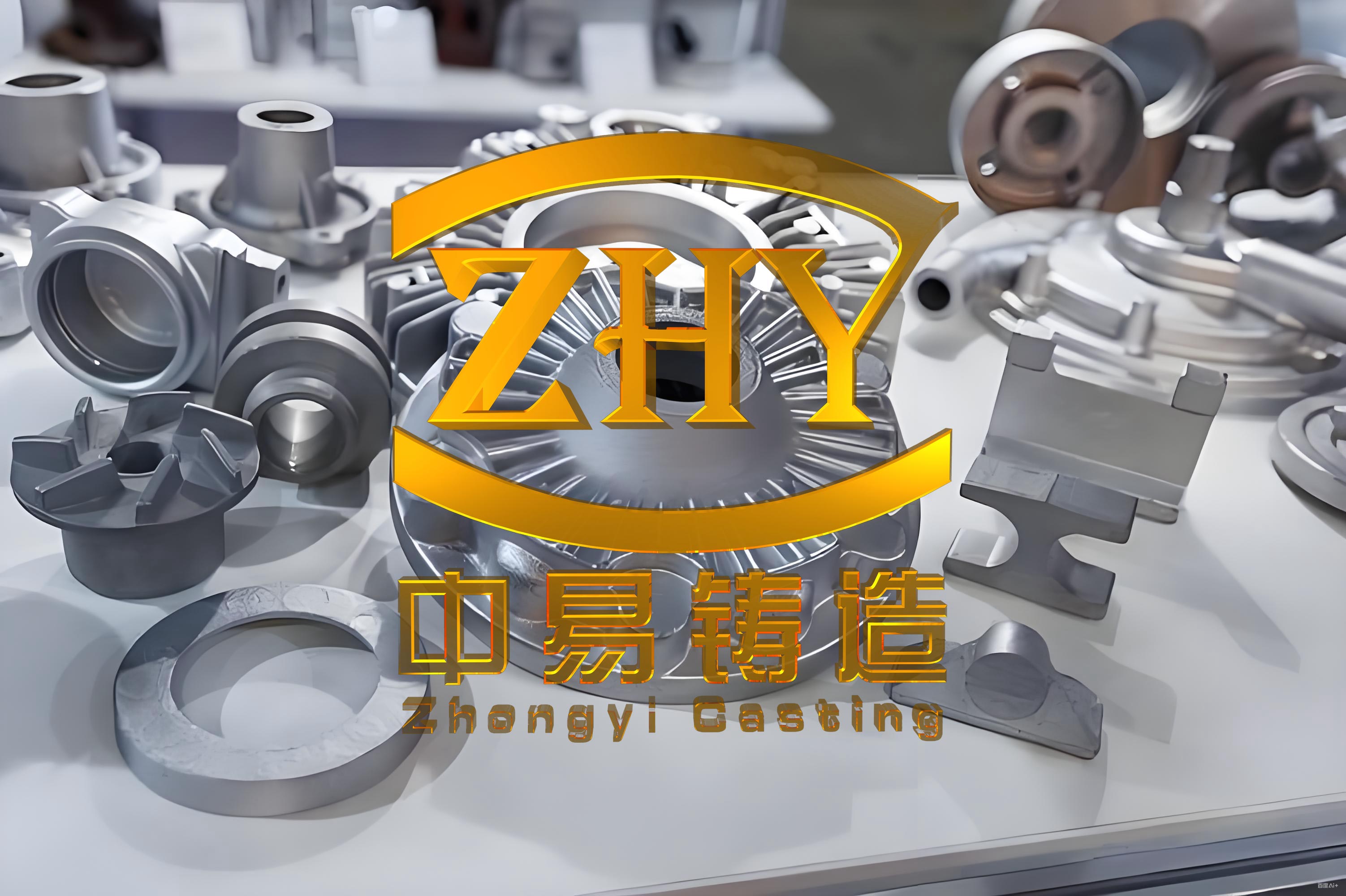
The pilot phase establishes the baseline control plan, which is formally documented. Key process parameters (KPPs) are identified for continuous monitoring.
| Process Stage | Key Parameter (KPP) | Control Limit / Target | Monitoring Method |
|---|---|---|---|
| Melting & Degassing | Melt Temperature | 720°C ± 15°C | Calibrated immersion thermocouple |
| Melting & Degassing | Hydrogen Content | ≤ 0.15 ml/100g Al | Reduced Pressure Test (RPT) |
| Mold Pre-heat | Mold Temperature | 950°C ± 25°C | Infrared pyrometer |
| Pouring | Pouring Time | < 8 seconds (per mold) | Digital timer |
| Solidification | Cooling Rate in Critical Section | > 1.5°C/s (derived) | Thermocouples in mold, data logger |
Formal Qualification: The Three-Pillar Approval
Once the pilot run demonstrates feasibility, the component must pass a formal qualification gate before release to production. This qualification rests on three interdependent pillars:
1. Manufacturing (Machining) Qualification: A batch of pilot blanks is sent to the machine shop. The objective is to validate that the blank’s geometry—its stock allowances, datum features, and overall integrity—is suitable for efficient and precise machining. Success is measured by the ability to machine the part to finished print dimensions without resorting to non-standard methods or encountering unexpected, reject-worthy defects.
2. Functional (Assembly & Test) Qualification: The machined parts from the first batch are assembled into functional hydraulic pump units. These units undergo rigorous performance and endurance testing. This phase validates that the material properties and the structural soundness of the aerospace castings and forgings translate into the required in-service performance—handling pressure cycles, withstanding wear, and achieving the design life.
3. Metallurgical/Process Qualification: This is a holistic review of the blank-making process itself. It involves a detailed audit of process documentation, control charts for KPPs, statistical analysis of defect rates from the pilot runs, and a review of the consistency in mechanical property test coupons. The process is deemed qualified only when it demonstrates statistical control and predictable, repeatable output that meets all drawing and specification requirements.
The overall confidence score ($C_{qual}$) for releasing a component can be conceptualized as a product of the success indices from these three pillars:
$$ C_{qual} = I_{mfg} \cdot I_{func} \cdot I_{met} $$
Where $I_{mfg}$, $I_{func}$, and $I_{met}$ are indices from 0 to 1 representing the success level (1 = full compliance) in each qualification area. A release threshold, e.g., $C_{qual} > 0.95$, may be established.
Batch Production Validation
Even after full qualification, prudence dictates a final step: a controlled batch production run. This run, larger than the pilot but smaller than full rate, serves as the final validation of all systems—people, procedures, equipment, and supply chain—working in concert. Only after this batch is successfully completed, with all quality metrics met, is the component cleared for ongoing serial production.
The Human Factor: Competence and Certification
Advanced processes and precise equipment are ultimately directed by human expertise. The quality of aerospace castings is inextricably linked to the competence of the team. Our approach mandates a structured human development program. Engineers and managers involved in process design and quality planning must possess a strong theoretical foundation coupled with practical shop-floor experience. For operators, furnace attendants, NDT inspectors, and quality control technicians, theoretical training followed by hands-on competency assessment under supervision is compulsory. They must earn a formal “operator permit” for their specific task before working independently. This certification is not permanent; it requires periodic renewal based on performance and recertification training. We model workforce competency ($W_{comp}$) as a function of training ($T$), experience ($E$), and certification status ($C_s$):
$$ W_{comp}(t) = \int_{0}^{t} [\alpha_T T(\tau) + \alpha_E E(\tau)] d\tau \cdot C_s(t) $$
Where $C_s(t)$ is a binary function (1 if certified/current, 0 if not), emphasizing that certification is the enabling gate for applying accumulated training and experience.
Conclusion and Demonstrated Efficacy
Implementing this multi-faceted, defense-in-depth strategy for controlling aerospace castings and forging blanks has proven its value repeatedly in production. It transforms quality from a post-mortem inspection activity into a built-in characteristic of the manufacturing process. This proactive system allows for the early detection and correction of process deviations, long before they can manifest as component failures. The result is a tangible enhancement in the reliability and safety of the final hydraulic pumps, directly contributing to predictable and extended service life in the field. Ultimately, this rigorous foundation in blank quality control provides the essential confidence and material integrity required to support the relentless demands of advancing aerospace technology, ensuring that every pump performs its vital role with unwavering dependability.