
In my extensive experience within the valve manufacturing industry, particularly focusing on water supply applications, I have consistently emphasized the critical importance of quality control for nodular cast iron components. The performance, durability, and safety of water supply valves hinge directly on the integrity of their cast parts. Nodular cast iron, also known as ductile iron, is favored for its exceptional combination of strength, ductility, and corrosion resistance. However, achieving these superior properties consistently is not automatic; it demands a rigorous, science-based quality control regime. This article, drawn from years of hands-on practice and data analysis, details the comprehensive quality control techniques I employ to ensure that every nodular cast iron valve component meets the highest standards.
The operational environment for water supply valves is deceptively demanding. While often classified as low-pressure systems (typically ≤4.0 MPa, with many at 1.6 MPa or lower) handling media like water at temperatures below 100°C, the required service life spans 60 to 80 years. This long-term reliability under cyclic stresses and potential corrosive elements makes the inherent quality of the nodular cast iron paramount. The core challenge lies in the casting process itself; without precise control over metallurgy and solidification, the desired spherical graphite structure can degenerate, leading to catastrophic failures like reduced impact resistance, unstable structures, and diminished mechanical performance. Therefore, my approach to quality control is holistic, targeting every stage from melt chemistry to final inspection.
Nodular cast iron derives its name from the spherical graphite nodules embedded within its metallic matrix, a structure achieved through inoculation with elements like magnesium or cerium. This morphology is the key to its advantages over gray cast iron or steel. The spheroidal graphite particles minimize stress concentration points that would otherwise be caused by the sharp edges of flake graphite. Consequently, nodular cast iron exhibits a remarkable synergy of properties: high tensile and yield strength, excellent toughness and elongation, good wear resistance, and superior fatigue endurance. Its castability and relatively low production cost further solidify its position as the material of choice for pressure-containing and non-pressure-containing parts in valves. The matrix can be tailored through heat treatment or alloying to be predominantly ferritic for enhanced ductility or pearlitic for increased hardness and wear resistance, allowing for property optimization based on specific valve duty.
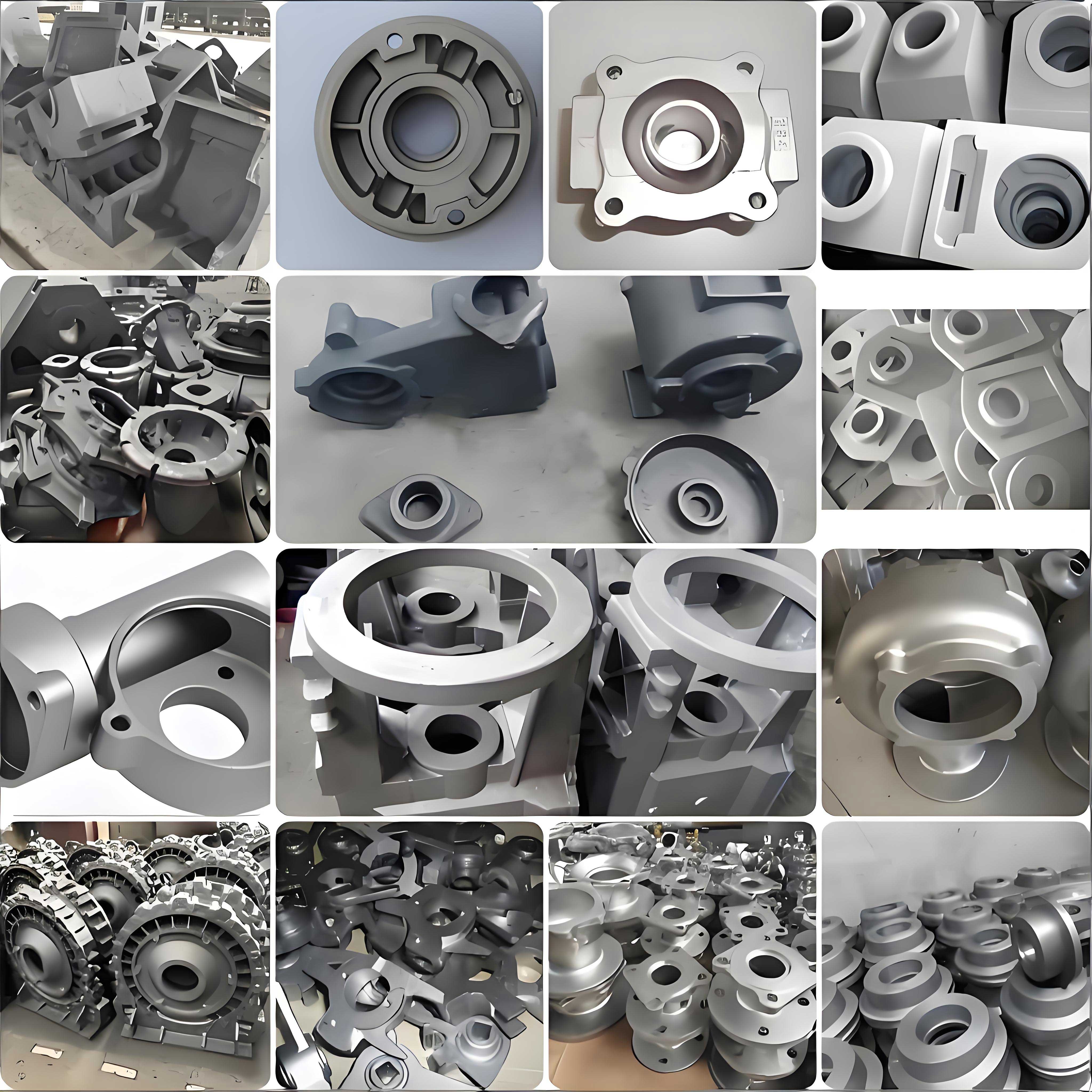
The technical difficulties in manufacturing valve components from nodular cast iron primarily revolve around process control. For low-pressure water supply valves, the specifications might seem less stringent, but the consequences of failure are significant. The primary hurdles include ensuring consistent nodularization (graphite spheroidization) throughout the casting section, preventing defects like shrinkage porosity or slag inclusions, and achieving the target matrix microstructure (ferrite/pearlite ratio). Variations in cooling rates, especially in thick and thin sections of a complex valve body, can lead to inconsistent graphite nodule count, size, and shape, or undesirable carbide formation. Furthermore, chemical composition must be held within narrow limits. For instance, excessive residual magnesium can promote carbides, while insufficient levels lead to poor nodularity. Controlling these variables is the essence of my quality control methodology.
My quality control protocol for nodular cast iron valve components is built on five interconnected pillars: Mechanical Performance Testing, Metallographic Examination, Hardness Testing, Chemical Composition Analysis, and Supplementary Geometrical & Defect Inspection. Each pillar provides unique but corroborative data about the material’s health.
Mechanical Performance Testing
This is the foremost and definitive test, providing direct evidence of the component’s fitness for service. The key parameters are Tensile Strength (Rm), Yield Strength (Rp0.2), and Elongation (A). These are determined by destructive testing on specimens that are representative of the cast component. The representativeness is crucial; I always ensure test coupons (either separately cast or attached to the casting itself) are designed to solidify under conditions similar to the critical sections of the valve body, considering factors like thermal modulus and cooling rate.
The testing procedure is meticulous. First, the test bar is machined according to the dimensional specifications of standards like ASTM E8 or ISO 6892-1 (equivalent to GB/T 228.1). The gauge length is marked precisely. The specimen is then loaded into a servo-hydraulic universal testing machine. As the crosshead moves, the load and extension are recorded until fracture. The broken pieces are carefully fitted together to measure the final gauge length. The tensile strength is calculated from the maximum load, yield strength via the 0.2% offset method, and elongation from the permanent extension.
The results are judged against material standards such as ASTM A536 or ISO 1083 (equivalent to GB/T 1348). For water supply valves, common grades are akin to EN-GJS-400-15, EN-GJS-450-10, or EN-GJS-500-7. I maintain extensive databases of test results, which allow for statistical process control. For example, the relationship between tensile strength and elongation often follows an inverse correlation, which can be modeled. A fundamental formula governing stress during the test is:
$$ \sigma = \frac{F}{A_0} $$
where $\sigma$ is the engineering stress, $F$ is the instantaneous force, and $A_0$ is the original cross-sectional area. Monitoring the full stress-strain curve provides insights into the material’s ductility and toughness beyond the basic three values.
To consolidate data from various heats and castings, I frequently use summary tables like the one below, which expands on typical specifications for valve-grade nodular cast iron:
| Common Designation | Tensile Strength, Rm (MPa) | Yield Strength, Rp0.2 (MPa) | Elongation, A (%) | Typical Hardness (HBW) | Primary Matrix |
|---|---|---|---|---|---|
| Grade 400-18 (Ferritic) | ≥ 400 | ≥ 250 | ≥ 18 | 130 – 180 | Ferrite |
| Grade 450-10 | ≥ 450 | ≥ 310 | ≥ 10 | 160 – 210 | Ferrite + Pearlite |
| Grade 500-7 | ≥ 500 | ≥ 320 | ≥ 7 | 170 – 230 | Pearlite + Ferrite |
| Grade 600-3 | ≥ 600 | ≥ 370 | ≥ 3 | 190 – 270 | Pearlitic |
Consistently meeting these mechanical property windows is the first checkpoint for releasing a batch of nodular cast iron components.
Metallographic Examination
While mechanical tests tell “what” the properties are, metallography reveals the “why” by examining the microstructure. This is arguably the most insightful quality control tool for nodular cast iron. The spherical graphite morphology and the surrounding matrix determine all macroscopic properties. My procedure involves sectioning a sample from a representative area of the casting (often from a sacrificed prototype or a dedicated test lug), mounting it, and preparing it through a series of grinding, polishing, and etching steps. A 2-4% nital etch is commonly used to reveal the metallic matrix.
Examination is performed using an optical microscope connected to image analysis software. At 100x magnification, I assess three critical microstructural features:
- Graphite Nodularity and Nodule Count: This is the heart of nodular cast iron quality. The shape of graphite is classified as VI (spheroidal), V (imperfect spheroidal), IV (compacted/vermicular), III (aggregated flake), etc., according to standards like ASTM A247. I quantify the percentage of graphite in spheroidal form (nodularity). A minimum of 80-85% nodularity is typically targeted for pressure-containing parts. The number of nodules per unit area (nodule count) is also vital, as a finer, more uniform dispersion strengthens the matrix. The relationship between nodularity and tensile strength can be approximated by empirical equations derived from my data, such as:
$$ R_m \approx R_{m,base} + k \cdot (N – N_{crit}) $$
where $R_m$ is tensile strength, $R_{m,base}$ is a baseline strength, $k$ is a constant, $N$ is the nodularity percentage, and $N_{crit}$ is a critical threshold. - Graphite Size: Typically rated from 1 (large) to 8 (small). A uniform, small graphite size (e.g., size 6-7) is generally desirable.
- Matrix Structure: After etching, the proportions of ferrite and pearlite are determined. For a Grade 450-10 nodular cast iron, I might target a microstructure of 70-80% ferrite with the balance pearlite. The presence of undesirable phases like carbides (cementite) or phosphide eutectic is also scrutinized, as even small amounts can severely embrittle the casting.
Based on thousands of analyses, I’ve established clear correlations. Nodularity above 90% (Grade II) yields optimal and consistent mechanical properties. Between 80-90% (Grade III), properties are still excellent. When nodularity drops to 70-80% (Grade IV), a more significant decline in ductility and impact energy is observed due to an increasing population of irregularly shaped graphite (vermicular/compacted forms) that act as stress risers. Nodularity below 70% often leads to mechanical property failure. Defects like graphite flotation (clusters of exploded graphite at the cope surface) or excessive chunky graphite in heavy sections are immediate rejection criteria. The metallographic examination thus provides a predictive quality assessment even before mechanical testing is complete.
Hardness Testing
Hardness offers a quick, non-destructive (on test samples) or semi-destructive (on the casting itself) measure of the material’s resistance to plastic deformation and is closely related to strength and wear resistance. For nodular cast iron, Brinell hardness (HBW) is the preferred scale due to the material’s heterogeneous microstructure; the large indenter averages out variations from graphite nodules. I use a calibrated Brinell hardness tester with a 10 mm diameter tungsten carbide ball and a 3000 kgf load (HBW 10/3000) for most valve castings, as per ASTM E10.
The sample surface must be properly prepared—ground flat and smooth. The indentation diameter is measured using a portable microscope, and the Brinell hardness number is calculated or read from a conversion table. The formula governing the Brinell hardness test is:
$$ HBW = \frac{2F}{\pi D \left( D – \sqrt{D^2 – d^2} \right)} $$
where $F$ is the applied load in kgf, $D$ is the ball diameter in mm, and $d$ is the average indentation diameter in mm.
Hardness serves as an excellent process control check. It correlates reasonably well with tensile strength for a given matrix structure. For predominantly ferritic nodular cast iron, a typical correlation is $R_m \approx 3.4 \times HBW$ (in MPa). It also helps identify anomalies like soft spots due to excessive ferritization or hard spots from localized carbide formation. I often create hardness maps across critical casting sections to ensure uniformity. The specified hardness range for a given grade (see table above) must be consistently met; deviations often signal microstructural issues requiring further metallographic investigation.
Chemical Composition Analysis
The foundation of all subsequent properties is the chemical composition of the melt. Even with perfect process control, an off-specification chemistry will not yield the desired nodular cast iron. I employ optical emission spectrometry (OES) for rapid and accurate analysis of drillings taken from test coupons or, occasionally, from the casting itself. The key elements and their control limits are stringent:
| Element | Role in Nodular Cast Iron | Typical Target Range for Water Valve Grades (%) | Effect of Deviation |
|---|---|---|---|
| Carbon (C) | Primary graphite former; promotes graphitization, fluidity. | 3.5 – 3.9 | Too low: poor castability, carbides. Too high: graphite flotation. |
| Silicon (Si) | Strong graphitiser; promotes ferrite, increases strength. | 2.3 – 2.8 | Too low: pearlite stabilization, chill. Too high: embrittlement at low temps. | Manganese (Mn) | Strengthens matrix, stabilizes pearlite. | < 0.5 (for ferritic grades) | Too high: segregates, promotes pearlite/carbides, reduces toughness. |
| Phosphorus (P) | Impurity; forms hard, brittle phosphide eutectic. | < 0.05 (max) | High P severely reduces ductility and impact strength. |
| Sulfur (S) | Impurity; consumes nodularizing agents (Mg). | < 0.02 (max) | High S leads to poor nodularization, dross defects. |
| Magnesium (Mg) | Nodularizing element; promotes spherical graphite. | 0.03 – 0.06 (residual) | Critical window. Too low: poor nodularity. Too high: carbides, shrinkage. |
| Copper / Tin | Pearlite promoters (optional for higher strength grades). | < 0.8 (if used) | Used to control pearlite content in the matrix. |
I constantly monitor the Carbon Equivalent (CE) value, a calculated parameter predicting the graphitization potential and shrinkage tendency. For nodular cast iron, it is defined as:
$$ CE = \%C + \frac{\%Si + \%P}{3} $$
For typical compositions, CE values between 4.3 and 4.7 are common. Maintaining chemistry within these narrow bands is non-negotiable for producing high-integrity nodular cast iron valve components.
Other Essential Control Methods
The four techniques above form the core material qualification suite. However, full quality assurance requires additional inspections focused on the casting’s geometry and integrity. These methods, which I integrate into the final release procedure, include:
- Dimensional and Geometrical Tolerance Verification: Using coordinate measuring machines (CMM), laser scanners, and custom gauges, I verify that every critical dimension of the valve body or bonnet conforms to the machining drawing. This ensures proper assembly and function in the pipeline.
- Surface Quality Inspection: Visual and tactile inspection for surface defects like cold shuts, sand inclusions, excessive roughness, or cracks. This is often supplemented with dye penetrant testing (PT) on sealing surfaces and pressure boundaries to reveal surface-breaking discontinuities.
- Pressure Testing (on the Finished Valve): While not a test on the raw nodular cast iron, the final hydrostatic shell test of the assembled valve provides the ultimate proof of the casting’s soundness. Any leakage under test pressure often traces back to a hidden casting defect like shrinkage porosity or a micro-shrinkage cluster that evaded earlier inspections.
- Ultrasonic Testing (UT) or Radiographic Testing (RT): For highly critical valve applications, I employ non-destructive evaluation techniques to probe the internal quality of thick-walled sections. UT can detect internal shrinkage, inclusions, or changes in microstructure density, while RT provides a visual image of internal integrity.
The synergy of all these methods creates a robust quality control web. For instance, a slight drop in hardness in a specific area might prompt a UT scan of that region, followed by a metallographic sectioning if an anomaly is found. This data-driven, multi-layered approach has been instrumental in achieving near-zero defect rates in my work with nodular cast iron for valves.
Conclusion
Mastering the quality control of nodular cast iron is fundamental to manufacturing reliable, long-lasting water supply valves. There is no single silver bullet; rather, it requires the disciplined application of interconnected techniques. Mechanical testing validates performance, metallography diagnoses the microstructure, hardness checks uniformity, chemical analysis controls the recipe, and supplementary inspections guarantee geometric and internal soundness. Each batch of nodular cast iron presents a unique challenge, but by adhering to this comprehensive framework and leveraging historical data for continuous improvement, I ensure that the exceptional inherent properties of nodular cast iron—its strength, ductility, and corrosion resistance—are fully realized in every component. This rigorous commitment to quality is what ultimately safeguards the integrity of our water infrastructure for decades of service.