
In the rapidly evolving automotive industry, high-pressure die casting has become a cornerstone for producing complex components with stringent performance requirements. Among these, automotive air conditioning compressor housings, particularly the lower shell castings, are critical due to their role in maintaining system integrity and preventing refrigerant leakage. These shell castings must endure high-pressure sealing tests, often up to 3 MPa for 2 minutes, without failure. Even minor defects can lead to significant leakage, compromising cooling efficiency and disrupting production schedules. This article details my firsthand experience in addressing quality issues in such shell castings, focusing on defects like pressure leakage and severe gate sticking, through a comprehensive analysis of die-casting processes, mold design, alloy properties, and equipment. By applying p-Q² diagram principles and implementing targeted modifications, we achieved substantial improvements in product quality and production stability.
The shell castings in question, used in a 100-type automotive air conditioning compressor, presented significant challenges during initial production trials. Despite the mold being previously used to produce over 10,000 units elsewhere with acceptable quality, our trials revealed persistent gate sticking and internal porosity after machining, leading to a leakage rate exceeding 30% after impregnation. The casting, with a projected area of 151 cm² and an average wall thickness of 5.8 mm, was produced on a DCC400 die-casting machine. The defects not only increased scrap rates but also caused production delays due to extended cycle times from excessive cooling and spraying aimed at mitigating gate sticking. This scenario underscored the need for a systematic approach to quality improvement for these critical shell castings.
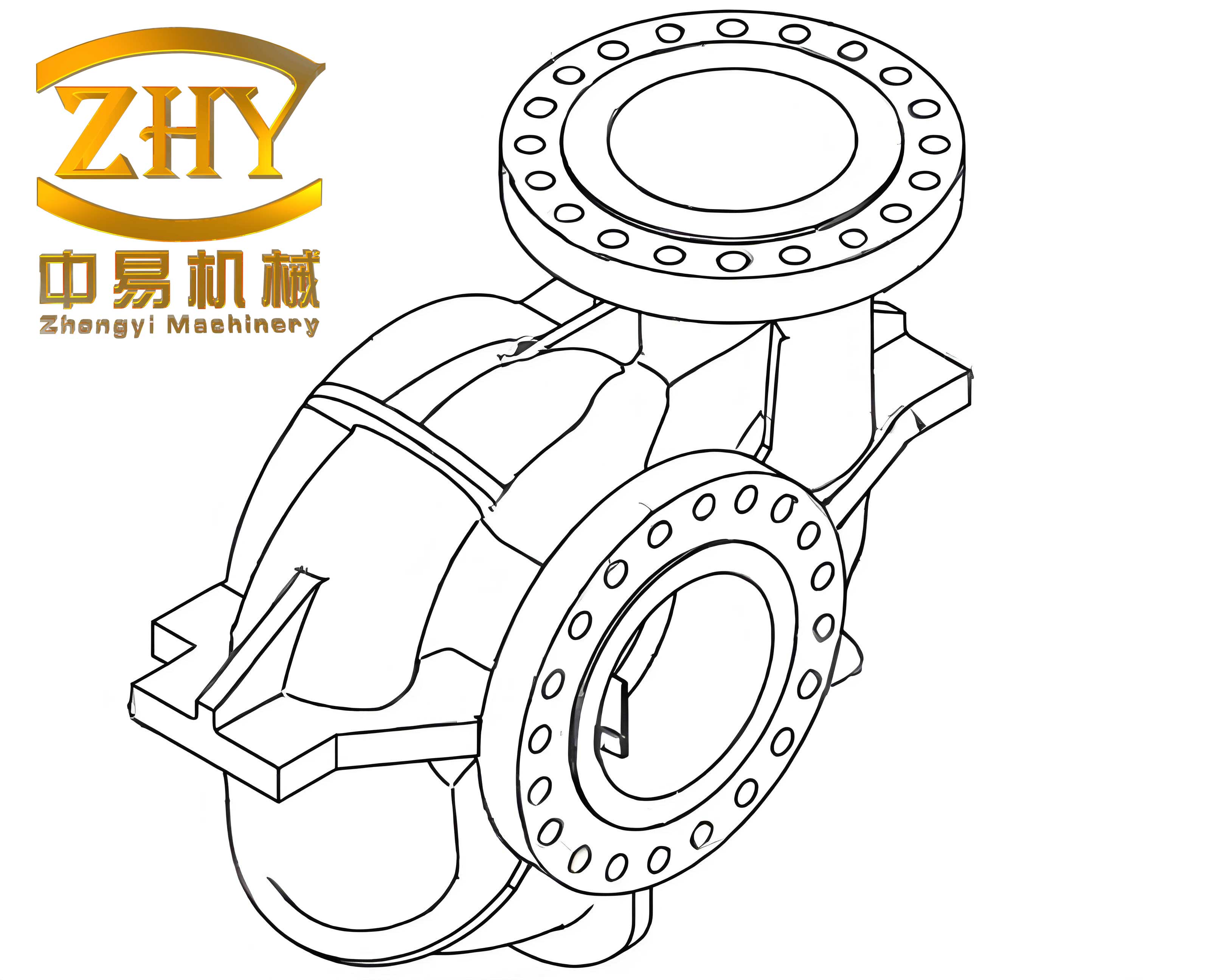
Initial analysis pointed to inadequate feeding and solidification issues as the root cause of porosity and leakage in the shell castings. However, the immediate problem was severe gate sticking, where aluminum alloy adhered to the mold surface around the gate area, causing damage and requiring frequent cleaning. This sticking was exacerbated by suboptimal process parameters adopted to reduce adhesion, such as lowered injection speeds and pressures, which in turn hindered effective cavity filling and feeding. To resolve this, we investigated multiple potential causes for gate sticking in shell castings:
- Excessive metal or mold temperatures.
- Inadequate or ineffective mold lubrication.
- High secondary injection speeds causing turbulent flow.
- Poor mold surface finish or presence of cracks.
- Accumulation of metal oxides on the mold.
- Improper gating design leading to direct impingement on cores or walls.
- Unsuitable alloy composition, particularly low iron content.
We systematically addressed these factors, beginning with surface enhancements. The mold gate area was meticulously polished to reduce surface roughness, minimizing adhesion sites. Additionally, a high-performance release agent was applied after preheating to form a protective layer. Process parameters were adjusted: the alloy (ADC12) pouring temperature was maintained at 610–630°C, and mold temperature was controlled between 150–200°C through optimized cooling and spraying cycles. Injection parameters were fine-tuned based on empirical calculations, with a boost pressure of 26–28 MPa and an initial gate velocity target of 40 m/s to balance filling and minimize sticking. Alloy composition was verified, confirming an iron content of 1.08%, within the optimal 0.85–1.1% range to reduce reactivity with the mold steel. While these steps alleviated gate sticking to some extent, product quality remained inconsistent, with defects like cold shuts and shrinkage porosity persisting, indicating underlying systemic mismatches in the die-casting system.
To delve deeper, we employed the p-Q² diagram methodology to evaluate the compatibility between the mold and the DCC400 machine. This tool is essential for optimizing the die-casting process, as it relates pressure (p) and flow rate (Q) to identify operational windows. The key parameters for the shell castings were as follows:
| Parameter | Value |
|---|---|
| Casting net weight | 1190 g |
| Overflow weight | 114 g |
| Gate thickness | 3.5 mm |
| Gate area (original) | 168 mm² |
| Shot sleeve diameter | 80 mm |
| Machine max. empty shot speed | 6 m/s |
| Fast shot hydraulic pressure | 12.5 MPa |
| Injection cylinder diameter | 120 mm |
The p-Q² diagram is derived from fundamental hydraulic and flow principles. The machine characteristic line is given by:
$$ p = p_{\text{hyd}} \times \left( \frac{A_{\text{cylinder}}}{A_{\text{sleeve}}} \right) – k \times Q^2 $$
where \( p_{\text{hyd}} \) is the hydraulic pressure, \( A_{\text{cylinder}} \) is the injection cylinder area, \( A_{\text{sleeve}} \) is the shot sleeve area, \( k \) is a system loss coefficient, and \( Q \) is the flow rate. The mold characteristic line is expressed as:
$$ p = \frac{\rho \times v^2}{2} \times \left( \frac{A_{\text{sleeve}}}{A_{\text{gate}}} \right)^2 $$
where \( \rho \) is the metal density, \( v \) is the gate velocity, and \( A_{\text{gate}} \) is the gate area. For shell castings, achieving a gate velocity that ensures proper filling without erosion is critical. The original setup yielded a narrow operational window on the p-Q² diagram, indicating poor system “flexibility.” This explained the sensitivity to process variations: higher speeds caused sticking, while lower speeds led to prolonged fill times and inadequate feeding, resulting in porosity in the shell castings.
Based on this analysis, we proposed modifications to shift the mold line into a broader optimal zone. Two key changes were identified: increasing the gate area from 168 mm² to 260 mm² to reduce gate velocity and decrease turbulence, and reducing the shot sleeve diameter from 80 mm to 70 mm to alter the machine line for better pressure delivery. The theoretical impact is summarized in the table below:
| Modification | Original Value | Revised Value | Expected Effect |
|---|---|---|---|
| Gate area | 168 mm² | 260 mm² | Lower gate velocity, reduced sticking risk |
| Shot sleeve diameter | 80 mm | 70 mm | Increased pressure efficiency, shorter fill time |
| Gate velocity (estimated) | ~40 m/s | ~26 m/s | Improved flow stability |
| Fill time (estimated) | >30 ms | <20 ms | Enhanced feeding and solidification |
The gate area increase was achieved by adding two auxiliary gates on cylindrical surfaces of the shell castings, expanding the width while maintaining the thickness. To prevent direct metal impingement on the internal cores, which could cause erosion and sticking, the cores were shortened by 3 mm to create a buffer zone. This design change facilitated smoother metal flow and protected the mold, extending its lifespan for producing shell castings.
After implementing these modifications, the p-Q² diagram showed a significant improvement, with the mold line now spanning a larger portion of the optimal process window. This translated to practical benefits: gate sticking was virtually eliminated, reducing the need for prolonged spraying and cooling cycles. The fill time decreased substantially, allowing effective intensification pressure to act during solidification, thereby minimizing shrinkage porosity in the shell castings. The revised process parameters stabilized production, with gate velocity controlled around 26 m/s and boost pressure maintained at 26–28 MPa. Quality metrics improved dramatically, as shown below:
| Quality Metric | Before Improvement | After Improvement |
|---|---|---|
| Leakage rate (after impregnation) | >30% | <3% |
| Gate sticking occurrence | Severe, every few cycles | Rare, negligible |
| Cycle time | Extended due to cooling | Optimized to standard |
| Overall yield | ~70% | >97% |
The success of this quality improvement initiative highlights the importance of a holistic approach in die-casting shell castings. By integrating empirical adjustments with analytical tools like the p-Q² diagram, we resolved interconnected issues of sticking and porosity. The modifications not only enhanced product reliability but also boosted production efficiency, reducing costs and strengthening competitiveness in the automotive supply chain. This experience underscores that for critical components like compressor shell castings, continuous optimization of process and design is key to meeting stringent automotive standards.
In conclusion, addressing defects in automotive air conditioning compressor shell castings requires a multifaceted strategy. The application of p-Q² analysis proved invaluable in diagnosing system mismatches and guiding effective mold revisions. By expanding the gate area and adjusting machine parameters, we achieved a robust process that minimized sticking and ensured sound feeding, resulting in high-integrity shell castings. These improvements have led to sustainable production with yields exceeding 97%, demonstrating how technical insights can drive quality excellence in manufacturing shell castings for demanding automotive applications.