
In this study, I explore the integration of 3D printing technology into the traditional lost wax investment casting process to produce aluminum alloy parts with complex geometries, short lead times, and low production volumes. The lost wax investment casting method is renowned for its ability to create high-precision components with excellent surface finish, but it often involves lengthy procedures and high costs due to模具 design and wax pattern creation. By leveraging fused deposition modeling (FDM) 3D printing with polylactic acid (PLA) materials, I aim to streamline the lost wax investment casting process, reduce overall production time, and maintain dimensional accuracy. This approach combines the flexibility of additive manufacturing with the reliability of lost wax investment casting, offering a practical solution for rapid prototyping and small-batch manufacturing. Throughout this article, I will detail the工艺流程, key parameters, and experimental results, emphasizing how this hybrid method enhances efficiency in lost wax investment casting.
The lost wax investment casting process typically involves multiple steps, including pattern making, shell building, dewaxing, and metal pouring. Traditional methods rely on wax patterns that require intricate模具, which can be time-consuming and expensive. In contrast, 3D printing allows for direct digital fabrication of patterns, eliminating the need for physical模具. For this research, I focused on an aluminum alloy housing component with features like thin fins and ventilation holes, which are challenging to produce using conventional methods. The overall workflow begins with CAD modeling, followed by 3D printing of the pattern, shell formation through dipping and stuccoing, dewaxing and PLA removal, aluminum pouring, and final post-processing. This streamlined lost wax investment casting approach reduces the number of steps and minimizes human error, making it ideal for applications demanding quick turnaround.
To create the digital model, I used UG NX software to design the aluminum housing based on specified dimensions. The part consisted of a square flange with holes and a cylindrical body with散热片 and通气孔, requiring careful attention to detail to ensure铸造 integrity. Since lost wax investment casting involves material shrinkage during solidification and processing, I applied a scaling factor to the 3D model to compensate for dimensional changes. The total shrinkage in lost wax investment casting arises from the aluminum alloy contraction, PLA pattern shrinkage, and shell expansion. Based on empirical data and material properties, I calculated the net shrinkage factor using the formula:
$$ S = 1 + (\delta_{al} + \delta_{pla} – \epsilon_{shell}) $$
where δ_al is the linear shrinkage rate of A356 aluminum (0.00668), δ_pla is the shrinkage rate of PLA (0.005), and ε_shell represents the shell expansion coefficient, which was negligible in this case. Thus, the scaling factor S was set to 1.015. This adjustment ensured that the final cast part would meet dimensional tolerances after accounting for all contractions in the lost wax investment casting process.
For the 3D printing phase, I selected a Creality CT-300 industrial FDM printer and PLA filament due to its low cost, biodegradability, and suitability for lost wax investment casting. The PLA material properties are summarized in Table 1, which highlights key parameters like diameter, melting point, and tensile strength. These characteristics make PLA an excellent substitute for traditional wax in lost wax investment casting, as it can be easily removed without leaving significant residues.
| Parameter | Value |
|---|---|
| Diameter (mm) | 1.75 |
| Shrinkage Rate (%) | 0.5 |
| Melting Point (°C) | 190 |
| Tensile Strength (MPa) | 45-65 |
| Ash Content (%) | 0.028 |
The printing parameters were optimized through preliminary tests to achieve high surface quality and dimensional accuracy for the lost wax investment casting patterns. I set the printer to a layer height of 0.1 mm, print speed of 75 mm/s, and nozzle temperature between 200°C and 210°C, with a 50% infill density to balance strength and material usage. The heated bed was maintained at 60°C to prevent warping. After printing, the PLA pattern underwent polishing to remove any surface imperfections like stringing, which could affect the shell quality in lost wax investment casting. The entire printing process took approximately 8 hours, resulting in a precise pattern ready for shell building.
In lost wax investment casting, the shell formation is critical for achieving a smooth cast surface. I used a GRJ-30 silica sol binder system with a multi-layer dipping process to create a robust ceramic shell. The shell-building parameters for lost wax investment casting are detailed in Table 2, including slurry viscosity, specific gravity, and drying conditions for each layer. This table provides a comprehensive overview of the steps involved in ensuring shell integrity during lost wax investment casting.
| Layer | Stucco Material | Slurry Viscosity (s) | Specific Gravity (g/cm³) | Drying Temperature (°C) | Drying Time (h) |
|---|---|---|---|---|---|
| Face Layer | 110-mesh Quartz Sand | 50-60 | 1.9-2.2 | 55-65 | 4-6 |
| Transition Layer | 50-mesh Coal Gangue Sand | 20-25 | 1.6-1.9 | 50-65 | 6-8 |
| Reinforcement Layer | 20-mesh Coal Gangue Sand | 25-30 | 1.8-2.1 | 40-55 | ≥6 |
| Solidification Layer | — | 25-30 | 1.7-1.9 | 40-55 | ≥8 |
The gating system for lost wax investment casting was constructed using expanded polystyrene (EPS) foam for the sprue and pouring cup, which was attached to the PLA pattern with hot glue. EPS is advantageous in lost wax investment casting because it vaporizes quickly during dewaxing, minimizing residues. The assembly was then dipped into the silica sol slurry and stuccoed with the appropriate sands according to Table 2. Each layer was dried thoroughly to prevent cracks, ensuring a strong shell capable of withstanding the thermal stresses of lost wax investment casting.
Dewaxing and PLA removal are essential steps in lost wax investment casting to create the cavity for metal pouring. I employed a steam dewaxing method in an electric dewaxing autoclave at 150°C and 0.75 MPa for 6-8 minutes to melt and remove the wax components. Subsequently, the PLA pattern was eliminated through a controlled heating process to avoid shell damage. The temperature profile for PLA removal in lost wax investment casting followed a step-wise curve, as shown in Figure 4, with holds at 250°C, 400°C, 600°C, and 800°C to allow gradual softening and collapse of the PLA. This careful thermal management in lost wax investment casting prevented shell cracking and ensured a clean mold cavity. After cooling, compressed air was used to blow out any remaining ashes, resulting in a smooth surface ready for casting.
The heating curve for PLA decomposition in lost wax investment casting can be described by a piecewise function to illustrate the temperature ramps and holds:
$$ T(t) = \begin{cases}
250 & \text{for } 0 \leq t \leq 1 \\
400 & \text{for } 1 < t \leq 2 \\
600 & \text{for } 2 < t \leq 3 \\
800 & \text{for } 3 < t \leq 4
\end{cases} $$
where T is temperature in °C and t is time in hours. This profile ensures complete removal of PLA without compromising the shell in lost wax investment casting.
Prior to pouring, the shell was preheated in a muffle furnace at 400°C for one hour to reduce thermal shock and then embedded in dry sand for support. For the aluminum melt, I used an intermediate frequency furnace to heat A356 aluminum to 750°C for refining, followed by pouring at 720°C to minimize oxidation and defects. The lost wax investment casting process involved carefully pouring the molten aluminum into the preheated shell, allowing it to solidify under controlled conditions. After cooling, the shell was broken away, and the casting underwent post-processing such as sandblasting, polishing, and machining for the holes and fine features.
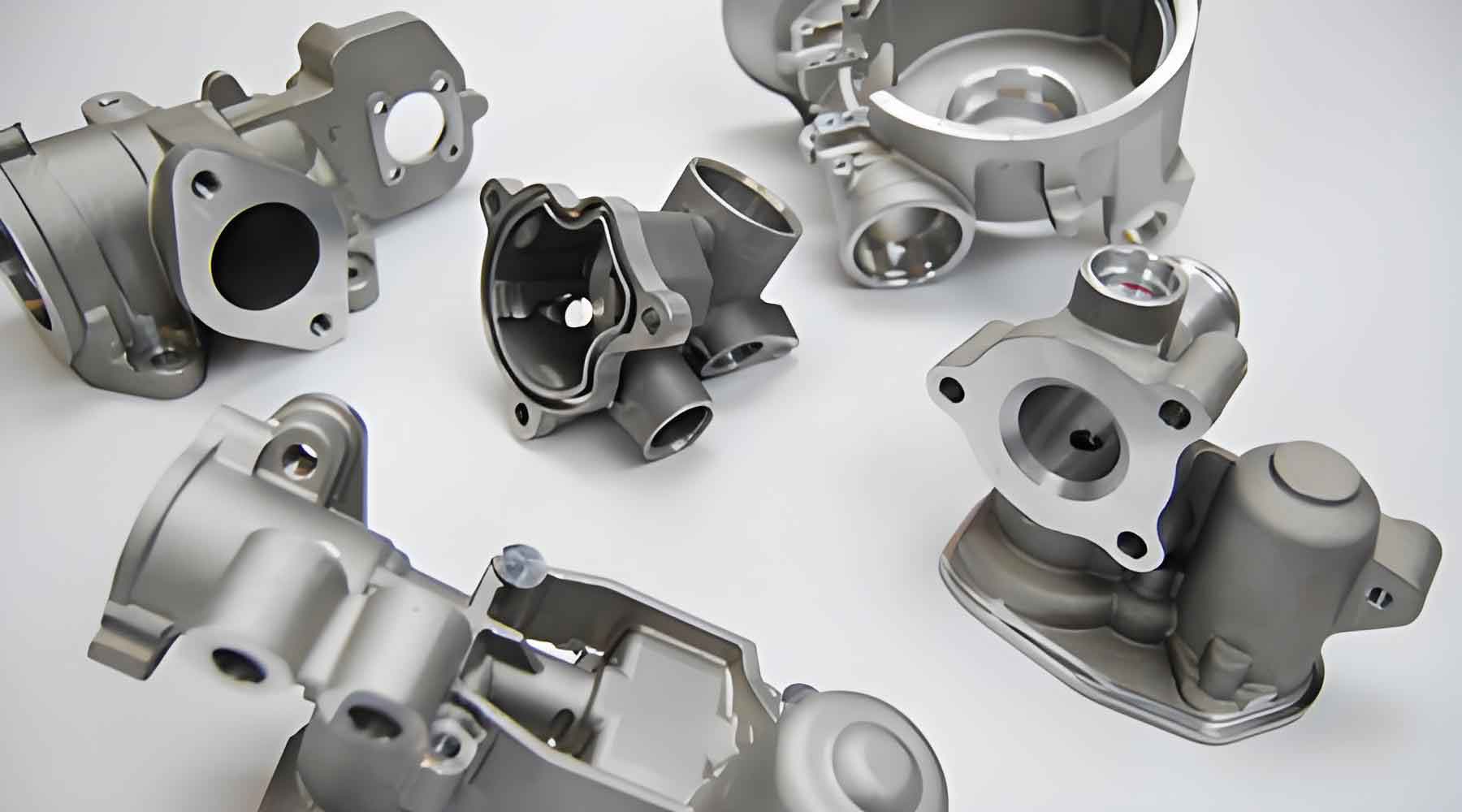
The final aluminum part exhibited good surface quality with clear contours and no significant defects like cracks or shrinkage porosity, demonstrating the effectiveness of this lost wax investment casting approach. To evaluate dimensional accuracy, I measured key features of the cast part and compared them to the design specifications, as summarized in Table 3. The results show that most dimensions were within acceptable tolerances, though the散热片 height was slightly undersized due to insufficient feeding during solidification in lost wax investment casting. This highlights an area for improvement in gating design for future lost wax investment casting applications.
| Feature | Design Dimension (mm) | As-Cast Dimension (mm) |
|---|---|---|
| Main Body Diameter | 75.00 | 74.95 |
| Main Body Height | 24.00 | 24.07 |
| Vent Hole Outer Diameter | 14.00 | 14.06 |
| Heat Fin Height | 4.00 | 3.82 |
The success of this lost wax investment casting process can be attributed to the precise control of parameters and the integration of 3D printing. The overall production time from design to finished casting was only 106 hours, significantly shorter than traditional lost wax investment casting methods. This rapid lost wax investment casting technique reduces costs by eliminating模具 fabrication and minimizing material waste. Moreover, the use of PLA in lost wax investment casting offers environmental benefits due to its biodegradability, aligning with sustainable manufacturing trends.
In conclusion, this study demonstrates that combining 3D printing with lost wax investment casting enables efficient production of complex aluminum parts with reduced lead times and costs. The lost wax investment casting process benefits from the scalability and flexibility of additive manufacturing, while maintaining the high quality associated with traditional methods. Future work could focus on optimizing the gating system and exploring other printable materials to further enhance lost wax investment casting for industrial applications. Overall, this hybrid lost wax investment casting approach represents a significant advancement in rapid manufacturing, offering practical value for sectors requiring customized, low-volume components.
Throughout the experimentation, I observed that the lost wax investment casting process with 3D printed patterns consistently yielded reproducible results, underscoring its reliability. The mathematical modeling of shrinkage and thermal profiles played a crucial role in achieving dimensional precision in lost wax investment casting. For instance, the scaling factor formula ensured that the printed patterns accounted for all contractual effects, as expressed by:
$$ \Delta L = L_0 \times (\delta_{al} + \delta_{pla}) $$
where ΔL is the total length change and L_0 is the original dimension. By integrating such calculations, lost wax investment casting becomes more predictable and efficient. Additionally, the shell-building parameters in Table 2 provided a repeatable framework for high-quality mold creation in lost wax investment casting, reducing the incidence of defects like shell cracking or metal penetration.
In summary, the adoption of 3D printing in lost wax investment casting not only streamlines production but also opens up new possibilities for designing intricate parts that were previously challenging to cast. This lost wax investment casting method proves particularly advantageous for prototyping and small batches, where traditional tooling would be prohibitively expensive. As 3D printing technology continues to evolve, its synergy with lost wax investment casting will likely lead to further innovations, making lost wax investment casting an even more versatile and accessible manufacturing solution.