
In recent years, the global pandemic has fundamentally disrupted traditional educational paradigms, particularly in hands-on engineering training. As an instructor involved in practical courses, I witnessed firsthand the sudden shift to online learning, which necessitated rapid innovation in teaching methods. This experience prompted a deep exploration into blended learning models that combine online and offline elements, specifically for the investment casting process. The investment casting process, a precise manufacturing technique, requires both theoretical knowledge and practical skills, making it an ideal candidate for hybrid pedagogical approaches. In this article, I will share insights from reforming a practical course on investment casting, focusing on curriculum design, implementation strategies, and outcomes, while emphasizing the repeated integration of the investment casting process throughout the learning journey.
The transition to online teaching was initially challenging, as the investment casting process relies heavily on physical interaction with materials like wax, plaster, and molten metal. However, this crisis spurred creativity, leading to a blended model that leverages digital tools while preserving essential hands-on experiences. The core objective was to maintain educational quality and student engagement by fusing virtual simulations, software-based design, and remote practical activities with traditional classroom instruction. This reform not only addresses immediate disruptions but also shapes a sustainable future for engineering education, where the investment casting process serves as a microcosm for broader industrial training.
To structure this discussion, I will delve into the pedagogical framework, detailing the preparatory phases, interactive methodologies, and assessment techniques. Tables and formulas will be used to summarize key concepts, enhancing clarity and retention. For instance, the investment casting process involves multiple stages—from pattern creation to finishing—each amenable to digital augmentation. By iteratively refining this blend, we aim to optimize learning outcomes, ensuring that students grasp both the principles and applications of the investment casting process. Below, I present a comprehensive analysis, starting with curriculum redesign and moving through implementation to feedback and future prospects.
Curriculum Design and Content Preparation
The foundation of any educational reform lies in meticulous content preparation. For the investment casting practice course, we re-evaluated the syllabus to balance online theoretical components with offline practical tasks. The investment casting process was broken down into modules, each targeting specific competencies. Table 1 outlines the revamped curriculum, which spans seven lectures integrating digital and physical elements.
| Lecture | Online Components | Offline Components | Key Learning Objectives |
|---|---|---|---|
| 1. Overview of Casting | 3D animation of investment casting principles, video lectures on applications | In-person discussion on historical context | Understand fundamentals of the investment casting process |
| 2. Software Design | 3D One software tutorial, case studies on jewelry design | Hands-on sketching and brainstorming sessions | Design digital patterns for the investment casting process |
| 3. Manual Pattern Carving | ZOOM直播演示 of wax carving techniques | Mailed toolkit for home-based wax雕刻, completion of physical wax patterns | Develop manual skills in pattern making for investment casting |
| 4. Virtual Simulation | Castingsimulation software for fluid flow analysis | Group analysis of simulation results | Visualize metal flow and solidification in the investment casting process |
| 5. 3D Printing Integration | Online guidance on 3D wax printing parameters | Lab access for printing wax patterns (post-pandemic) | Incorporate additive manufacturing into the investment casting process |
| 6. Mold Assembly and Firing | Video tutorials on tree assembly and plaster investing | Kit for home experimentation with safe materials | Execute mold preparation steps of the investment casting process |
| 7. Pouring and Finishing | Recorded demonstrations of vacuum浇注 and polishing | Supervised foundry sessions for final casting | Complete the investment casting process with post-processing techniques |
This structured approach ensures that each phase of the investment casting process is addressed through complementary modalities. For example, Lecture 3 combines online demonstrations with offline practice, allowing students to engage with the tactile aspects of wax pattern creation while receiving virtual guidance. The investment casting process, being iterative, benefits from such duality, as students can revisit digital resources like simulation software to reinforce concepts. To quantify learning efficiency, we can model it using an educational formula: $$ L = \alpha \cdot O + \beta \cdot F + \gamma \cdot I $$ where \( L \) represents learning gain, \( \alpha \) is the weight for online components (\( O \)), \( \beta \) for offline hands-on activities (\( F \)), and \( \gamma \) for interactive elements (\( I \)). By tuning these parameters through feedback, we optimize the blend for the investment casting process.
Furthermore, the investment casting process involves complex physical phenomena, such as heat transfer and fluid dynamics, which can be elucidated through mathematical models. For instance, the solidification time in investment casting can be estimated using Chvorinov’s rule: $$ t = C \left( \frac{V}{A} \right)^n $$ where \( t \) is solidification time, \( V \) is volume of the casting, \( A \) is surface area, \( C \) is a constant dependent on mold material, and \( n \) is an exponent (typically around 2 for many casting processes). Introducing such formulas in online modules helps students appreciate the science behind the investment casting process, while offline labs allow them to observe these principles in action.
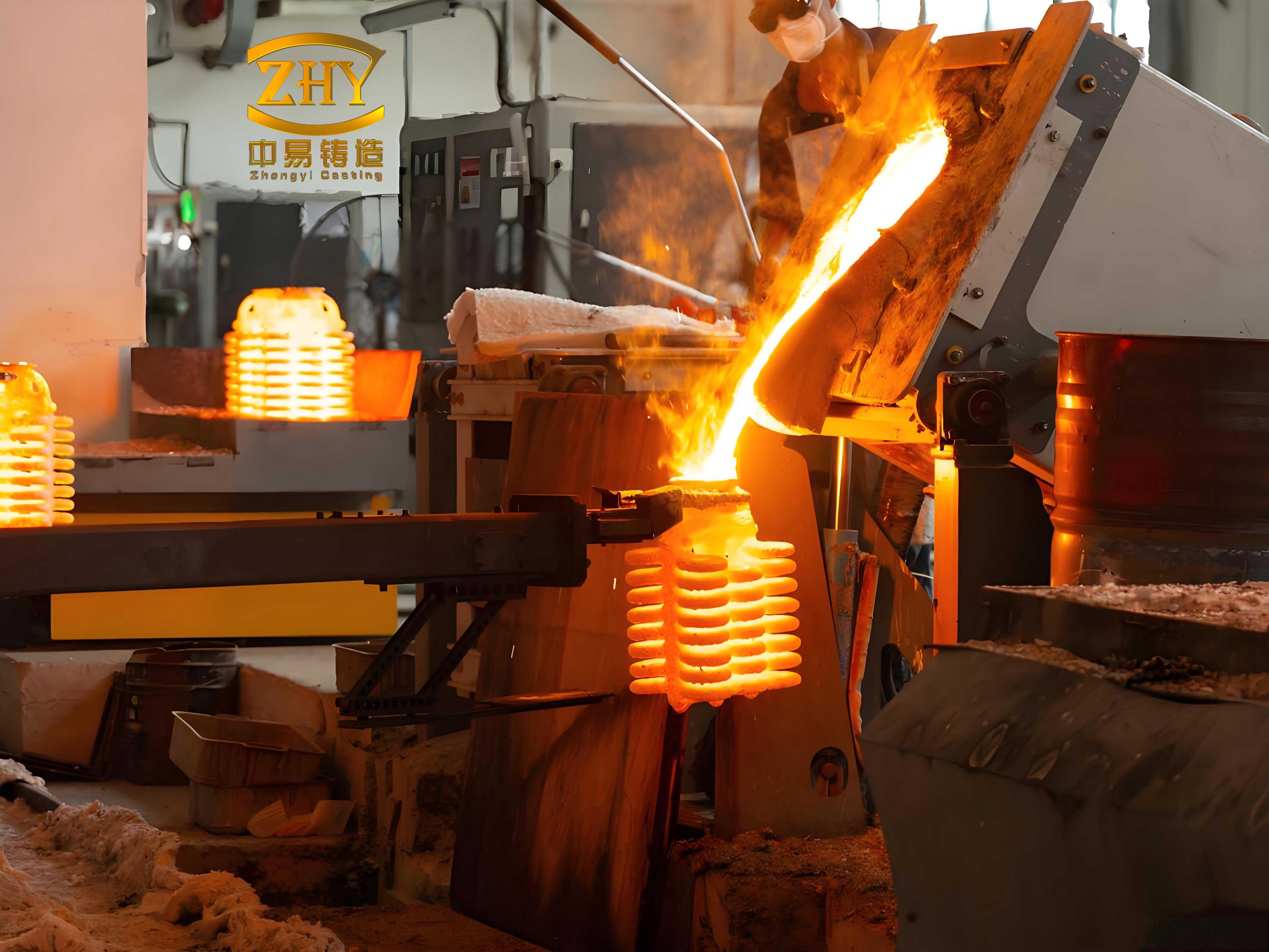
Interactive Teaching Methodologies
Engagement is critical in blended learning, especially for a hands-on subject like the investment casting process. To foster active participation, we employed diverse interactive strategies across online and offline settings. The online segments utilized platforms like Zoom and learning management systems to facilitate real-time interactions. For example, during virtual lectures on the investment casting process, we incorporated polls, quizzes, and breakout rooms for group discussions. These tools mimic the interactivity of physical classrooms, ensuring that students remain attentive and collaborative.
In the offline components, we emphasized experiential learning by providing students with physical kits for wax carving and mold making. This approach bridges the digital divide, allowing learners to tactilely engage with materials central to the investment casting process. A key innovation was the “dual-path” system: one path focused on traditional manual skills (e.g., hand-carving wax patterns), and the other on digital fabrication (e.g., 3D printing wax patterns). This dichotomy enriches the understanding of the investment casting process, as students compare analog and digital methods. Table 2 contrasts these pathways, highlighting their respective advantages.
| Aspect | Manual Pathway (Traditional) | Digital Pathway (Innovative) |
|---|---|---|
| Pattern Creation | Hand-carving using knives and砂纸; emphasizes artistry and dexterity | 3D software design followed by wax printing; focuses on precision and complexity |
| Learning Outcomes | Develops fine motor skills and intuitive understanding of the investment casting process | Enhances digital literacy and ability to simulate the investment casting process virtually |
| Time Efficiency | Slower, but offers deep engagement with materials | Faster for intricate designs, but requires software proficiency |
| Integration with Investment Casting Process | Directly aligns with historical techniques, reinforcing foundational steps | Introduces modern advancements, such as simulation-driven optimization |
To further enhance interaction, we introduced gamified elements like role-playing scenarios where students act as foundry engineers optimizing the investment casting process for given specifications. This not only makes learning fun but also applies theoretical knowledge to practical problems. Additionally, we used spaced repetition techniques, where key concepts of the investment casting process are revisited across modules through online flashcards and offline quizzes. The effectiveness of such methods can be approximated by the forgetting curve model: $$ R = e^{-\frac{t}{S}} $$ where \( R \) is memory retention, \( t \) is time, and \( S \) is the strength of the memory trace, which can be bolstered by blended interventions.
Implementation of New Initiatives
The practical implementation of blended learning for the investment casting process involved several innovative initiatives. First, to address the lack of physical access during lockdowns, we mailed雕刻 toolkits to students, enabling them to practice wax carving at home. This ensured continuity in learning the initial stages of the investment casting process. Accompanying video tutorials, recorded via Zoom and edited into bite-sized clips, provided step-by-step guidance. Students then submitted photos of their wax patterns for feedback, creating a feedback loop that mimics in-person instruction.
Second, we leveraged virtual simulation software to demystify the investment casting process. For instance, students used casting simulation tools to analyze molten metal flow and solidification defects. This digital twin approach allows for experimentation without material costs or safety risks. The simulation outputs, such as temperature gradients and stress distributions, were discussed in online forums, fostering collaborative problem-solving. We quantified simulation accuracy using a correlation formula: $$ \eta = 1 – \frac{|P_s – P_e|}{P_e} $$ where \( \eta \) is the simulation efficacy, \( P_s \) is simulated parameter (e.g., porosity), and \( P_e \) is experimental value. This teaches students to critically evaluate digital tools in the investment casting process.
Third, we integrated 3D printing technology into the curriculum, allowing students to convert digital designs into physical wax patterns. This bridges the gap between virtual design and physical realization in the investment casting process. Students learned to set printing parameters like layer thickness and support structures, which directly affect the quality of the final casting. The entire workflow—from software design to printed pattern to cast part—was documented in e-portfolios, encouraging reflection on the investment casting process as a holistic system.
Feedback and Assessment of Learning Outcomes
Gathering and acting on feedback is essential for refining the blended learning model. We employed multiple channels to assess student satisfaction and learning gains related to the investment casting process. Post-lecture surveys and focus group discussions provided qualitative insights, while pre- and post-tests measured knowledge acquisition. Table 3 summarizes feedback from a cohort of 50 students, highlighting areas of success and improvement.
| Feedback Category | Positive Responses (%) | Suggestions for Enhancement |
|---|---|---|
| Online Lecture Clarity | 85 | Include more visual aids for complex steps of the investment casting process |
| Offline Practical Engagement | 90 | Provide additional safety guidelines for home-based activities |
| Interactive Elements (e.g., quizzes, discussions) | 88 | Increase frequency of real-time Q&A sessions on the investment casting process |
| Digital Tools Usability (simulation, software) | 82 | Offer beginner-friendly tutorials for casting simulation software |
| Overall Satisfaction with Blended Approach | 87 | Integrate more cross-over assignments linking online and offline tasks |
The data indicates high satisfaction, particularly with hands-on components, underscoring the value of tactile experiences in mastering the investment casting process. However, students requested enhanced visualizations for abstract concepts, such as fluid dynamics in mold filling. In response, we developed augmented reality (AR) modules that overlay digital information onto physical objects, like showing metal flow paths on a wax pattern via smartphone apps. This innovation further enriches the blended learning environment for the investment casting process.
To quantitatively assess learning outcomes, we used a normalized gain score: $$ G = \frac{\text{Post-test score} – \text{Pre-test score}}{100 – \text{Pre-test score}} $$ which ranged from 0.6 to 0.8 across cohorts, indicating substantial improvement in understanding the investment casting process. Additionally, we evaluated practical skills through rubric-based assessments of final castings, considering criteria like dimensional accuracy and surface finish. The correlation between online engagement metrics (e.g., time spent on simulations) and practical performance was analyzed using a linear regression model: $$ P = \beta_0 + \beta_1 E + \epsilon $$ where \( P \) is practical score, \( E \) is online engagement index, and \( \epsilon \) is error term. Results showed a positive slope (\( \beta_1 > 0 \)), suggesting that digital engagement complements hands-on proficiency in the investment casting process.
Summary of Achievements and Student Works
The blended learning reform yielded tangible outcomes, both in terms of student creations and pedagogical insights. Over the course of a semester, students produced over 100 unique designs for investment casting, ranging from jewelry to engineering components. These works demonstrated a deep grasp of the investment casting process, as learners successfully navigated from concept to finished product. The dual-path approach resulted in diverse artifacts: hand-carwed wax patterns showcased artistic flair, while 3D-printed ones highlighted geometric complexity. This diversity enriches the learning ecosystem, showing that the investment casting process can accommodate various creative and technical expressions.
Moreover, the course generated a digital repository of design files and simulation cases, which serves as an open educational resource for future iterations. Students reported increased confidence in applying the investment casting process to real-world projects, such as prototyping for startups or academic research. The blended model also fostered soft skills like teamwork and digital communication, as students collaborated online to troubleshoot casting defects or share design tips. These ancillary benefits underscore the holistic impact of reforming education around the investment casting process.
Future Directions for Blended Learning in Engineering Practice
Looking ahead, the lessons from this reform inform broader trends in engineering education. The investment casting process, as a case study, reveals that blended learning is not merely a pandemic stopgap but a sustainable paradigm. Future enhancements could involve artificial intelligence (AI) to personalize learning paths based on student performance data. For instance, an AI tutor could recommend specific modules on the investment casting process tailored to individual weaknesses, such as gating design or thermal analysis.
Additionally, we plan to expand virtual reality (VR) integrations, allowing students to immerse themselves in a digital foundry where they can manipulate virtual equipment and observe the investment casting process in real-time. This could be coupled with haptic feedback devices to simulate tactile sensations, further blurring the line between online and offline. The economic efficiency of blended learning can be modeled using a cost-benefit formula: $$ \text{Net Benefit} = \sum (L_i \cdot V_i) – (C_o + C_f) $$ where \( L_i \) is learning outcome i, \( V_i \) its value, \( C_o \) online costs, and \( C_f \) offline costs. Optimizing this balance will drive scalability.
Furthermore, we aim to strengthen industry-academia partnerships by incorporating live sessions with professionals who use the investment casting process in manufacturing. This contextualizes learning and bridges theory with practice. Continuous feedback loops, powered by learning analytics, will enable iterative refinement of the curriculum, ensuring that the investment casting process remains taught with cutting-edge methodologies.
Concluding Remarks
In conclusion, the reform of blended learning for the investment casting practice course has proven transformative. By synergizing online and offline elements, we have created a resilient educational model that enhances student engagement, knowledge retention, and practical skill development. The investment casting process, with its multifaceted nature, serves as an excellent vehicle for such pedagogical innovation, requiring both digital fluency and hands-on dexterity. Through careful design, interactive methodologies, and responsive feedback mechanisms, we have demonstrated that blended learning can achieve outcomes superior to traditional or purely online approaches.
As education evolves post-pandemic, these insights will guide the adoption of hybrid models across engineering disciplines. The investment casting process exemplifies how timeless techniques can be revitalized through modern technology, preparing students for the factories of tomorrow. By embracing flexibility and creativity, educators can turn challenges into opportunities, ensuring that practical skills like those in the investment casting process remain vibrant and accessible in an increasingly digital world.