
As a practitioner deeply involved in the manufacturing of critical components for heavy-duty machine tools, I have long focused on a fundamental challenge: the premature loss of precision in high-end CNC equipment. The structural integrity and long-term stability of machine tool castings are paramount. Components such as beds, columns, crossrails, tables, and saddles, predominantly made from cast iron, form the skeleton of the machine. While domestic production often utilizes grades like HT250 and HT300, international benchmarks for precision machinery frequently demand higher grades like HT350 or even ductile iron grades such as QT450-600. A single bed machine tool casting can constitute 70-80% of the machine’s total mass, weighing from several to dozens of tons. Its performance is a decisive factor for the machine’s machining capability, accuracy, and, crucially, its accuracy retention over time.
The primary enemies of precision are wear on working surfaces and distortion or cracking induced by internal residual stresses within the machine tool casting. Therefore, the quality of a machine tool is directly governed by the structural design, mechanical properties, internal stress state, and dimensional accuracy of its cast components. This article synthesizes my research and applied experience in optimizing casting design, melting practice, and heat treatment to reliably produce machine tool castings that simultaneously exhibit high strength, high stiffness, and exceptionally low initial stress, thereby mitigating deformation and cracking.
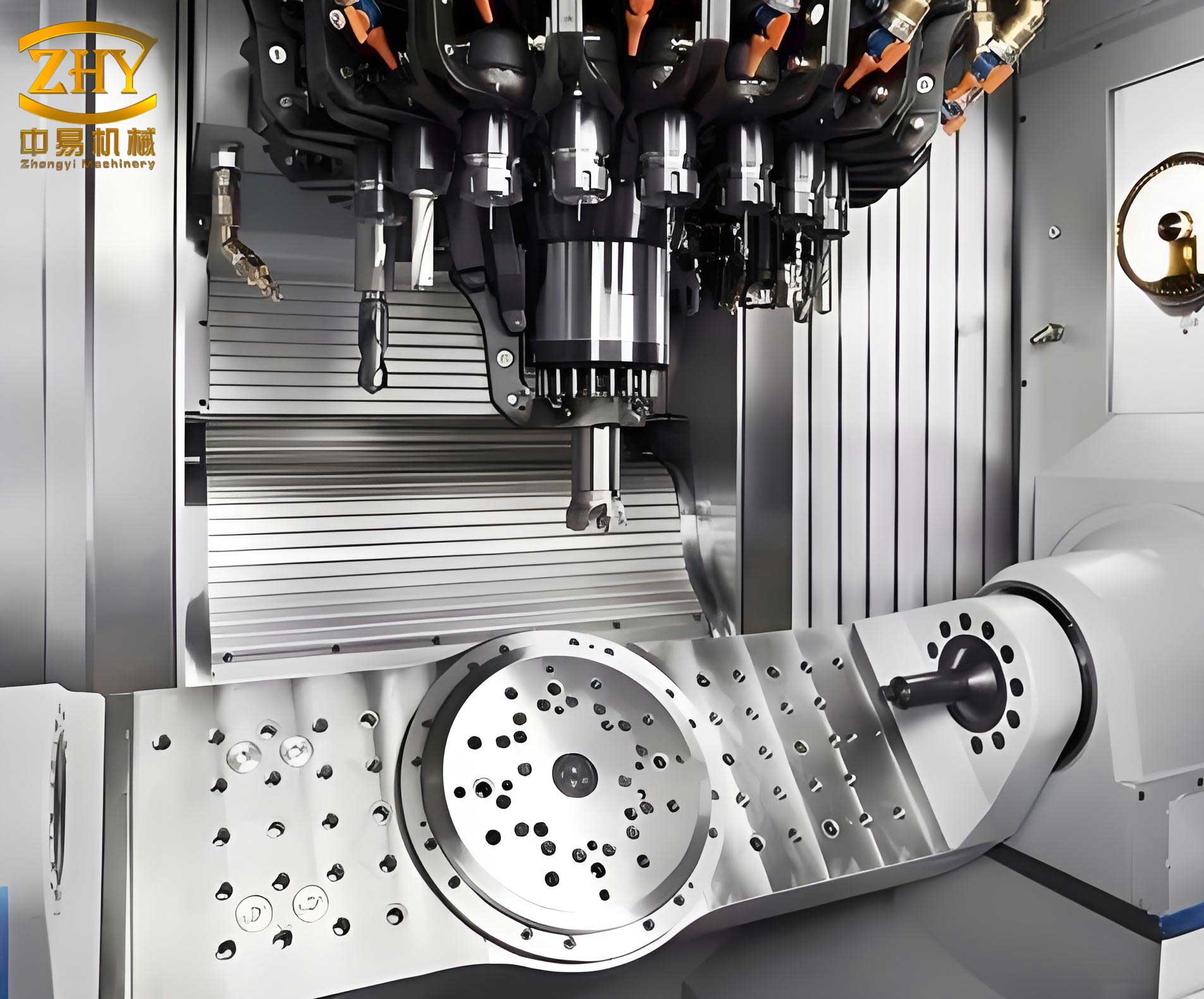
The core technical philosophy can be distilled into two critical pillars for machine tool casting stability: structural stiffness and material stiffness. Structural stiffness refers to the design’s inherent resistance to deformation under load and vibration, achieved through uniform wall thickness transitions, generous radii, and strategically placed reinforcing ribs. Material stiffness pertains to the physical properties imparted by the metallurgy, including tensile strength, hardness, and Elastic Modulus. Our findings confirm that a high Carbon Equivalent (CE) is the foundational requirement for achieving low-stress cast iron, which must then be coupled with targeted alloying (using elements like Cu, Cr, Sn, Sb) to attain the necessary high strength without sacrificing this low-stress condition.
1. Failure Analysis of Machine Tool Castings: Learning from Deficiencies
Several failure cases from production underscore the multifaceted nature of the problem and highlight common pitfalls in manufacturing high-duty machine tool castings:
- Case 1 (Structural): A large HT300 column failed due to cracking originating from a thick section that lacked proper fillet radii and transition, creating a severe stress concentration point purely from the design.
- Case 2 (Metallurgical): An HT300 crossrail developed extensive cracks in its ribbing. The root cause was an inappropriate composition that pursued high strength and hardness by drastically lowering the Carbon Equivalent, resulting in excessively high casting stresses.
- Case 3 (Process Control): A large HT300 ring casting cracked during cooling. The issue was insufficient insulation time and a lack of real-time temperature monitoring. One half of the casting cooled rapidly in ambient air while the other half remained in hot sand, creating a destructive thermal gradient.
- Case 4 (Heat Treatment): An HT250 table developed multiple cracks in its internal ribs during the stress-relief annealing (aging) process. The cooling rate from the soaking temperature was too rapid, causing uneven stress distribution and relaxation.
These cases vividly illustrate that failures can originate from any stage: design, metallurgy, foundry practice, or post-casting heat treatment.
2. Research on Structural Optimization through Simulation
The design of a large machine tool casting must consider not only its functional geometry and load cases but also its castability and inherent stress development. We employ casting simulation software as a critical tool for virtual prototyping and optimization.
Case Study: An Ultra-Long Bed Casting
A prime example is a bed machine tool casting with dimensions of 16m x 1.9m, an average wall thickness of 100mm, and a weight of 68 tons. The initial design, intended for HT300 material, was analyzed. The simulation of solidification and cooling revealed areas of high residual tensile stress, particularly at the junctions of internal ribs and at the roots of feeder heads. The software’s output includes a Mises coefficient, which is a ratio of the developed stress to the material’s tensile strength. In several locations, this coefficient exceeded 0.8, indicating a high risk of hot tearing or cold cracking during production.
The initial simulation clearly identified stress concentration zones at thin rib junctions. The optimized design added small transverse stiffeners at these critical junctions without significantly increasing the overall weight. A follow-up simulation of the optimized geometry showed a dramatic improvement: the maximum Mises coefficient was reduced to below 0.5, effectively mitigating the cracking risk. This process exemplifies how simulation enables a proactive, scientific approach to machine tool casting design, moving from corrective actions to preventive optimization.
3. Metallurgical Process for High-Strength, Low-Stress Cast Iron
Analysis of production data from previous years revealed significant fluctuations in composition and, consequently, in mechanical properties like Elastic Modulus. Our goal was to achieve consistent, high-performance material.
3.1 Benchmarking and Process Philosophy
A comparison with international standards highlights a performance gap. For equivalent grades, industrial counterparts often employ higher Carbon Equivalents and achieve superior and more consistent Elastic Modulus values.
| Parameter | Industrial Benchmark | Typical Domestic Practice (Historical) |
|---|---|---|
| Composition Control | ω(C) ≤ ±0.05%; ω(Si) ≤ ±0.1% | ω(C) ≤ ±0.15%; ω(Si) ≤ ±0.2% |
| Mechanical Properties at CE | HT300 at CE ≈ 3.82% | HT300 requires CE ≈ 3.60% |
| Elastic Modulus (GPa) for HT300 | ~135 | 115 – 125 |
Our optimized melting practice is built on several key principles:
- Synthetic Iron Practice: Utilizing a high percentage of steel scrap (50-60%) with high-quality graphitizing recarburizers, minimizing the use of pig iron to reduce the genetic inheritance of coarse graphite structures.
- High-Temperature Superheating: Holding the molten iron at 1500-1550°C for 5-10 minutes to improve liquid metal purity and dissolution of nuclei.
- Composition Strategy – High CE with Alloying: Deliberately raising the Carbon Equivalent for gray iron (e.g., to 3.60-3.80% for HT300) and for ductile iron (to ~4.40-4.50%, just below graphite flotation limit). Strength is then achieved not by reducing CE, but by adjusting the Si/C ratio and adding composite, low-percentage alloys (Cu, Cr, Sn) to promote a fine, fully pearlitic matrix.
- Precision Control & Inoculation: Using spectroscopy and thermal analysis for precise, real-time composition control. Implementing multi-stage inoculation (ladle, stream, and late mold inoculation) to enhance graphite nucleation and maximize the solid solution strengthening effect of silicon.
3.2 Gray Iron (HT300) Experimental Results
Experiments were conducted to isolate the effects of composition. A series of ϕ30mm test bars were poured. The key finding was that within a given alloying framework, the tensile strength of gray iron shows a positive correlation with an increasing Si/C ratio, while hardness remains relatively stable. This indicates that strength can be managed by silicon content and inoculation efficiency more than by carbon reduction.
Several key metallurgical quality indices can be calculated to assess the iron’s potential. The Carbon Equivalent (CE) for gray iron is typically calculated as:
$$ CE = C + 0.3(Si + P) $$
The maturity ratio (RG) and quality factor (Qi) are also useful indicators:
$$ RG = \frac{R_m}{100 – 1.3 \times S_c \times 100} $$
$$ Qi = \frac{RG}{HG} $$
Where $R_m$ is the measured tensile strength (MPa) and $S_c$ is the saturation degree. A higher RG and Qi indicate better utilization of the iron’s metallurgical potential.
| Series Description | Avg. Elastic Modulus (GPa) | Avg. Tensile (MPa) | Avg. Hardness (HBW) | Avg. CE (%) | Avg. Si/C | Avg. RG | Avg. Qi |
|---|---|---|---|---|---|---|---|
| Low Mn Base | 122 | 356 | 212 | 3.67 | 0.56 | 1.02 | 1.56 |
| High Mn Base | 119 | 390 | 224 | 3.62 | 0.58 | 1.06 | 1.62 |
| + Cu Alloyed | 127 | 397 | 230 | 3.71 | 0.61 | 1.06 | 1.60 |
| Cu+Cr+Sn Alloyed | 127 | 369 | 235 | 3.64 | 0.59 | 1.05 | 1.42 |
3.3 Ductile Iron (QT600-3) Process Enhancement
For ductile iron machine tool castings, a key focus is on achieving a high, uniform nodule count and small nodule size to enhance mechanical properties and consistency. Experiments compared standard practice with a process involving a furnace preconditioning step before spheroidization. This preconditioning involved adding a proprietary inoculant wrap to the furnace. The treated iron showed a significant increase in nodule count (e.g., from an average of 107 nodules/mm² to 135 nodules/mm² in the center of a test block) and a measurable increase in ultrasonic testing velocity (from 5454 m/s to 5671 m/s), indicating a denser, more uniform microstructure.
Furthermore, the impact of alloying on the Elastic Modulus of QT600-3 was statistically evaluated. The results clearly demonstrate that composite alloying significantly improves the consistency and value of the Elastic Modulus.
| Alloying Scheme | % of Samples with E < 160 GPa | % of Samples with E ≥ 160 GPa |
|---|---|---|
| Unalloyed | 54.4% | 45.6% |
| + Copper (Cu) | 22.8% | 77.2% |
| + Antimony (Sb) | 17.4% | 82.6% |
| + Cu + Sn / Cu + Sb | 0% | 100% |
4. Research on Cooling and Stress-Relief Aging Processes
The journey to a low-stress machine tool casting does not end at shakeout. Controlled cooling in the mold and subsequent stress-relief treatments are equally critical.
4.1 Controlled Cooling and Shakeout
Monitoring the cooling curves of various bed castings revealed important guidelines. For castings under 3 tons, the average cooling rate in the mold is about 25°C/hour. For castings over 8 tons, it slows to about 13°C/hour. A universal rule established is to perform shakeout only when the casting temperature has fallen below 300°C. At this temperature, the casting has gained sufficient strength, and the differential cooling stresses are locked in at a lower magnitude, minimizing distortion during handling.
4.2 Stress-Relief (Aging) Methodology Comparison
Three primary methods exist for reducing residual stresses in machine tool castings: natural aging, thermal aging, and vibratory stress relief. Each has its advantages and drawbacks.
| Method | Stress Reduction Efficacy | Dimensional Stability During Process | Process Cycle Time | Energy Consumption |
|---|---|---|---|---|
| Natural Aging | Low (< 20%) | Excellent | Months to Years | None |
| Thermal Aging (Furnace) | High (50-70%) | Risk of distortion during heating/cooling | 10s of Hours | Very High |
| Vibratory Stress Relief | Moderate (30-50%) | Excellent | 10s of Minutes | Low |
For high-precision machine tool castings requiring the lowest possible stress state, a combined approach is most effective. A thermal aging cycle is first used to eliminate the bulk of the stress (50-70%). This is sometimes followed by a vibratory treatment to further homogenize and reduce stresses, potentially raising the total reduction to over 70%. Finally, a period of natural aging in the machine shop environment allows for further stabilization before final machining.
5. Measurement and Validation of Residual Stresses
Residual stress in a machine tool casting arises from three main sources: thermal stress due to uneven cooling, transformation stress from phase changes, and mechanical stress from mold/core restraint. Our measurements on castings produced with conventional methods often showed high and uneven residual stresses, with maximum tensile stresses reaching 175 MPa in the as-cast state and 80 MPa even after thermal aging.
After implementing the optimized structural, metallurgical, and thermal processing routes, residual stress measurements were taken on five different castings (tables and beds). The results confirmed a profound improvement. The stress state was predominantly compressive, and the tensile stresses that remained were at very low levels. This shift towards a benign compressive stress state is highly desirable for dimensional stability under service loads.
| Casting Identity | Material | Representative Residual Stress Measurement (MPa) | Stress State Characteristic |
|---|---|---|---|
| Table 01# | HT300 | -121.0, -23.0 (Compressive) | Predominantly compressive, low tensile values. |
| Bed 02# | HT300 | +95.3 (Tensile), -114.3 (Compressive) | Mixed, but tensile values significantly lower than pre-optimization. |
| Bed 03# | HT300 | -64.0 (Compressive), -24.5 (Compressive) | Predominantly compressive. |
6. Achieved Material Stiffness in Production Castings
The ultimate validation of the complete process lies in the testing of actual production machine tool castings. Components including gearboxes, rotary tables, slides, columns, and beds were produced using the high-CE, composite-alloyed, and rigorously aged methodology. Mechanical testing confirmed that all properties met or exceeded specifications. Crucially, the Elastic Modulus measurements showed high and consistent values: QT600-3 castings achieved a minimum of 160 GPa, and HT300 castings consistently exceeded 110 GPa. This demonstrates that the goal of high material stiffness (high Elastic Modulus) combined with a low-stress condition has been successfully realized in production.
7. Conclusion
The production of a high-performance, dimensionally stable machine tool casting is a systems engineering challenge that integrates design, metallurgy, and thermal management. The following conclusions are drawn from this comprehensive research and application:
- Proactive Design: Casting simulation is an indispensable tool for optimizing the geometry and feeding system of a machine tool casting, allowing for the pre-emptive elimination of stress concentrations and solidification defects.
- Metallurgical Foundation: A high Carbon Equivalent (CE) is essential as the basis for low inherent casting stress. High strength is then achieved not by reducing CE, but through precise control of the Si/C ratio and the use of carefully balanced composite alloying elements (e.g., Cu, Cr, Sn) to refine and strengthen the matrix. This “High-CE + Alloying” strategy is key to achieving high Elastic Modulus and strength simultaneously.
- Process Refinement: Techniques such as synthetic iron melting, high-temperature superheating, multi-stage inoculation, and furnace preconditioning for ductile iron are critical for achieving a pure, homogeneous, and well-nucleated melt with consistent properties.
- Stress Management Cycle: Controlled cooling to a low shakeout temperature (<300°C) followed by a combination of thermal aging and possibly vibratory stress relief is necessary to actively reduce and homogenize residual stresses to very low levels, often characterized by a beneficial compressive state.
By rigorously applying this integrated approach—from virtual simulation to controlled aging—it is possible to reliably manufacture machine tool castings that provide the high structural integrity, stiffness, and long-term dimensional stability required by the world’s most precise and demanding machine tools.