
In this study, I aim to enhance the production efficiency and precision of aluminum alloy casings, focusing on the integrated application of investment casting and machining technologies. Utilizing A356 aluminum alloy, high-density blanks are obtained through the silica sol investment casting process, and the machining workflow is optimized with CNC operations. The experimental results demonstrate that the investment casting plus machining approach significantly improves the surface quality and dimensional accuracy of the casing, with notable enhancements in hardness and wear resistance. Future research will further optimize casting and surface treatment processes to elevate overall manufacturing standards and product performance. This work is driven by the growing demands of the defense industry, where casings, as core components of engines, critically influence reliability and precision. Aluminum alloys are widely used due to their excellent specific strength and stiffness, but their machining complexity and low efficiency necessitate advanced工艺 integration. Here, I systematically investigate the investment casting and machining of aluminum alloy casings, providing theoretical and technical support for high-quality delivery.
The investment casting process is central to this research, as it enables the production of complex, near-net-shape components with minimal material waste. Throughout this article, I will repeatedly emphasize the importance of the investment casting process in achieving superior mechanical properties and dimensional stability. By refining parameters such as alloy composition, mold design, and solidification control, the investment casting process can yield blanks that require less subsequent machining, thereby reducing costs and time. In the following sections, I will delve into the material characteristics, foundational theories, and practical applications of the investment casting process, supported by tables and formulas to summarize key findings.
Aluminum Alloy Materials and Their Application in Casings
Aluminum alloys are favored in casing manufacturing due to their outstanding comprehensive properties. Representative wrought alloys like 6061-T6 and 7075-T6 exhibit densities of approximately 2.7 g/cm³, about one-third that of steel, yet offer tensile strengths up to 310 MPa and 572 MPa, comparable to ordinary steels. Their thermal conductivity is remarkably high, around 167 W/(m·K), which is over four times that of steel, facilitating rapid heat dissipation during engine operation. Additionally, extruded alloys such as 6005A-T6 possess good damping characteristics, effectively reducing startup vibrations. However, aluminum alloys have a high linear expansion coefficient, reaching 23.6 × 10⁻⁶/K in the temperature range of 223.15 to 373.15 K, which can affect precision stability. While casting alloys like A356 allow for intricate blank geometries through the investment casting process, their as-cast structures tend to be porous, necessitating improvements in strength and toughness. Therefore, in casing manufacturing, it is essential to holistically consider the composition, microstructure, and properties of aluminum alloys, optimize casting and heat treatment parameters, and employ advanced equipment like multi-axis CNC machining centers to meet high-precision shaping and performance requirements.
The selection of aluminum alloy for casings involves balancing various factors. Table 1 summarizes key properties of common aluminum alloys used in casing applications, highlighting their relevance to the investment casting process.
| Alloy Type | Density (g/cm³) | Tensile Strength (MPa) | Thermal Conductivity (W/(m·K)) | Linear Expansion Coefficient (10⁻⁶/K) | Suitability for Investment Casting |
|---|---|---|---|---|---|
| 6061-T6 | 2.7 | 310 | 167 | 23.6 | Moderate |
| 7075-T6 | 2.8 | 572 | 130 | 23.4 | Low |
| A356 | 2.68 | 350 (after T6) | 151 | 21.5 | High |
| 6005A-T6 | 2.7 | 280 | 180 | 23.2 | Moderate |
From the table, A356 shows excellent suitability for the investment casting process due to its balanced properties and responsiveness to heat treatment. The investment casting process for A356 typically involves precise control of silicon and magnesium content to enhance fluidity and mechanical performance. In my research, I focus on A356 due to its widespread use in aerospace castings and its compatibility with the investment casting process.
Fundamental Theory of Investment Casting Technology
The investment casting process is a critical technique in aluminum alloy casing manufacturing, grounded in materials science, heat and mass transfer, and fluid dynamics. In the investment casting process, the first step is to optimize the composition of the casting alloy based on the casing’s structural and performance requirements. For Al-Si-Mg ternary alloys, silicon content is usually controlled between 6% and 8% to achieve good castability and mechanical properties. Simultaneously, rapid solidification techniques are employed, with solidification rates reaching 10² to 10³ K/s, significantly refining grain size and improving casting density. In mold-making, the silica sol investment casting process is commonly used, where a primary shell of 0.1 to 0.5 mm thickness is coated with refractory slurry, undergoing 6 to 8 coating and drying cycles to form a secondary ceramic shell of 5 to 10 mm thickness, meeting the precision requirements of the casing’s internal cavity.
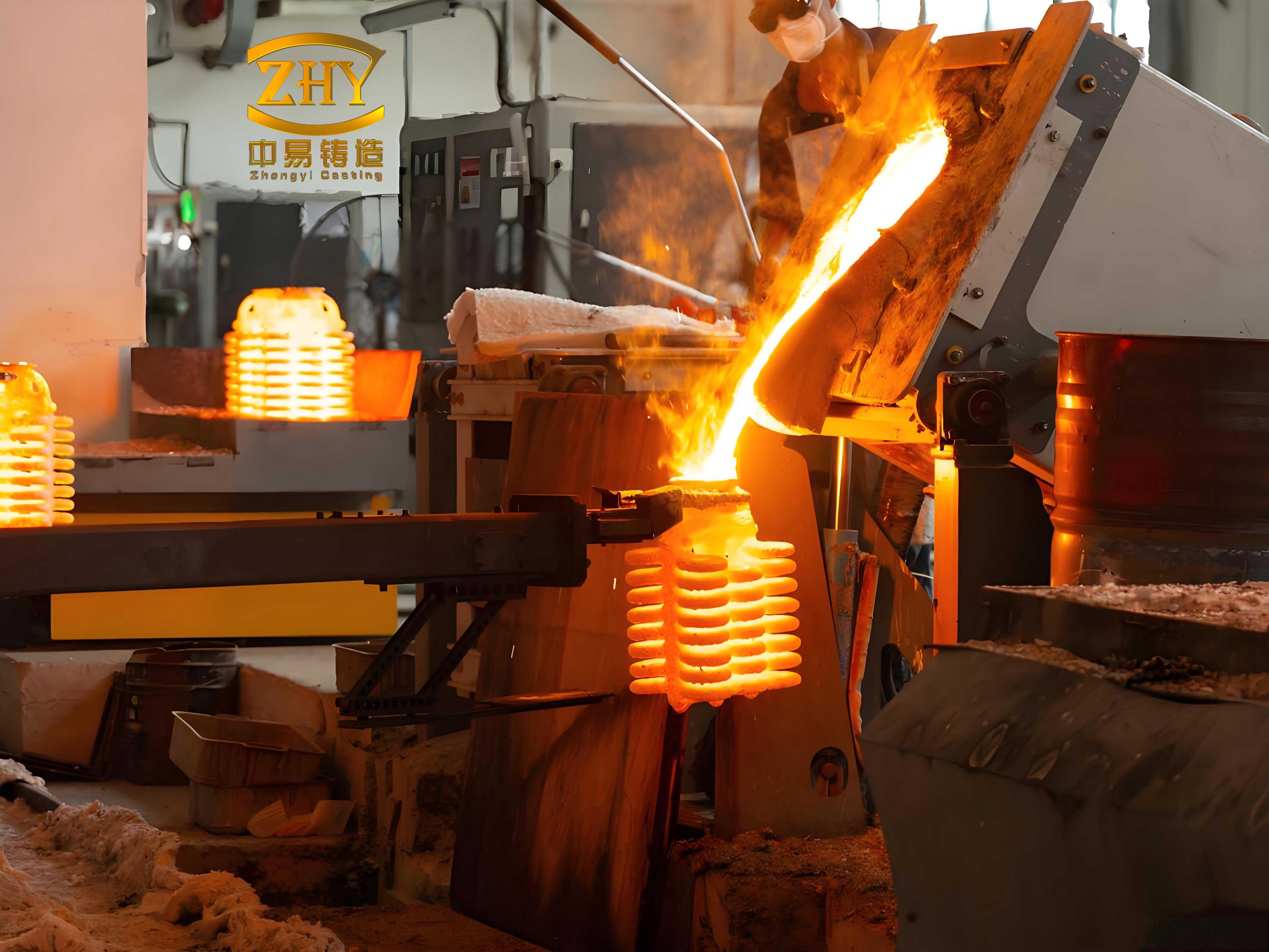
To control defects such as solidification segregation and shrinkage porosity,浇注 system design parameters are optimized based on solidification theory and numerical simulation. For instance, the cross-sectional area ratio of the sprue to runners is controlled between 1:2 and 1:4 to reduce turbulence and oxide inclusions; meanwhile, top or side risers are used with a pressure gradient typically ranging from 4 to 6 kPa/mm to compensate for volumetric shrinkage during solidification. The investment casting process thus relies on meticulous parameter tuning. The defect sensitivity function F, introduced to evaluate casting quality, is defined as:
$$ F = \frac{1}{V} \int_V f(x,y,z) dV $$
where V is the volume of the casting, and f(x,y,z) is the defect distribution function within the casting, ranging from 0 to 1. A lower F value indicates fewer defects and higher quality. Through optimization of the investment casting process parameters, F can be controlled below 0.05, yielding high-quality casing blanks for subsequent precision machining. The mathematical modeling of solidification in the investment casting process can be expressed using the Fourier heat conduction equation:
$$ \frac{\partial T}{\partial t} = \alpha \nabla^2 T $$
where T is temperature, t is time, and α is thermal diffusivity. By solving this equation with boundary conditions specific to the investment casting process, we can predict temperature fields and optimize cooling rates.
Research on Machining Process for Aluminum Alloy Casing
The integrated process for aluminum alloy casing manufacturing consists of four main stages, as illustrated in the workflow diagram. The specific steps are as follows: First, using A356 aluminum alloy, high-density, low-defect casting blanks are prepared by optimizing investment casting process parameters, such as silica sol investment casting and rapid solidification. Then, rough machining is performed on CNC machining centers, where large-diameter solid carbide end mills rapidly remove excess material, and ball-nose end mills conduct semi-finishing of internal cavities. Next, precision machining is carried out on数控镗床, grinders, and special machining equipment, with key features like mounting seats, transmission holes, and定位 structures undergoing processes like fine boring, thread rolling, wire cutting, ultrasonic vibration drilling, and precision grinding to achieve high-precision, low-roughness casing products. Finally, composite strengthening treatments such as plasma nitriding and diamond-like carbon (DLC) coating are applied, significantly enhancing surface hardness, wear resistance, and corrosion resistance. Through integrated optimization of this process route, the performance and lifespan of aluminum alloy casings can be substantially improved.
Blank Preparation
The first step in manufacturing investment-cast aluminum alloy casings is blank preparation. Blank quality directly impacts subsequent machining efficiency and accuracy, necessitating strict control over investment casting process parameters. Initially, the composition of the casting alloy is optimized. In the Al-Si-Mg ternary system, silicon content is controlled around 7%, and magnesium content between 0.3% and 0.7% to achieve good mechanical properties and castability. Then, the silica sol investment casting process is employed to prepare ceramic shells. The primary shell thickness is controlled at approximately 0.3 mm, and the secondary shell thickness at 6–8 mm, ensuring shell strength while meeting internal cavity dimensional精度 requirements. During pouring, computer numerical simulation optimizes the浇注 system. The cross-sectional area ratio of sprue to runners is controlled around 1:3 to minimize turbulence and oxide inclusions. Simultaneously, top risers are used with a feeding pressure gradient of 5 kPa/mm to compensate for solidification shrinkage. Heat treatment follows the T6 process: solution treatment at 540°C for 4 hours followed by water quenching, then aging at 180°C for 6 hours. Post-treatment castings achieve hardness above HB150 and tensile strength over 350 MPa, meeting casing mechanical property needs. The defect sensitivity function F, as defined earlier, is used to assess quality. By optimizing the investment casting process parameters, F can be reduced below 0.05, yielding high-quality blanks for后续精密 machining. The relationship between process parameters and F can be modeled as:
$$ F = k_1 \cdot \exp\left(-\frac{T_{\text{solid}}}{\tau}\right) + k_2 \cdot \left(\frac{V_{\text{pour}}}{A_{\text{gate}}}\right) $$
where \( T_{\text{solid}} \) is solidification time, \( \tau \) is a time constant, \( V_{\text{pour}} \) is pouring velocity, \( A_{\text{gate}} \) is gate area, and \( k_1 \), \( k_2 \) are empirical coefficients. Minimizing F requires balancing these parameters in the investment casting process.
Rough Machining
After investment casting, aluminum alloy casing blanks possess basic contours but exhibit high surface roughness and dimensional errors. Rough machining removes excess material, preparing for后续 precision machining. This second step primarily employs CNC milling machines. First, blanks are clamped on fixtures in horizontal machining centers, with the casing’s transmission hole axis as a datum for rough milling in X, Y, and Z directions. Rough milling uses φ20 mm solid carbide end mills, with spindle speed controlled at 800–1200 rpm, feed per tooth at 0.2–0.3 mm/z, depth of cut at 1–2 mm, and machining allowance controlled within 1–2 mm. After rough milling, φ10 mm ball-nose end mills perform semi-finishing on internal cavities and groove surfaces for subsequent boring and threading. Ball-nose mills operate at higher spindle speeds of 2000–3000 rpm, lower feed per tooth of 0.1–0.2 mm/z, and machining allowance around 0.5 mm. Through 3–5循环切削 cycles, surface roughness reduces below Ra 6.3 μm, and dimensional errors are within ±0.2 mm. To enhance tool life and efficiency, minimum quantity lubrication (MQL) is applied during rough milling, mixing vegetable oil with compressed air at 20–50 mL/h to spray lubricate tools and workpieces, reducing cutting temperature and avoiding environmental contamination from切削 fluids. Additionally, a milling parameter optimization model is established, with cutting force as a constraint and milling efficiency as the objective, yielding the following formula:
$$ Q = \frac{\pi a_p v_f f_z d}{1000} $$
where Q is milling efficiency (cm³/min), \( a_p \) is axial depth of cut (mm), \( v_f \) is feed speed (mm/min), \( f_z \) is feed per tooth (mm/z), and d is mill diameter (mm). Solving this model provides optimal parameter combinations, maximizing rough machining efficiency while ensuring quality, thereby shortening manufacturing cycles. The investment casting process directly influences rough machining by providing blanks with consistent material properties and minimal defects, reducing tool wear and machining time.
Precision Machining
Following rough machining, casings are shaped but require precision machining to meet engine performance standards. This third and most critical step focuses on key mating surfaces and high-precision features like mounting seats, transmission holes, and定位 structures, using数控镗床 and grinders. First, rough-machined casings are clamped on数控镗床, with the transmission hole axis as a datum for fine boring of mounting seats. Bore diameter tolerance is controlled at +0.01/0 mm, roundness tolerance within 0.005 mm, and surface roughness below Ra 0.4 μm. Boring employs CBN tools, with spindle speed at 800–1000 rpm, feed speed at 100–150 mm/min, and cutting depth at 0.2–0.3 mm. To ensure bore coaxiality, dynamic probe tracking monitors tool position in real-time, compensating for errors. After boring, thread rolling is introduced for mounting seat threads, where rolling machines press equidistant threads onto shot-peened inner孔 surfaces. Rolling force is controlled at 20–30 kN, feed speed at 20–30 mm/min, achieving surface hardness above HRC 55 and thread profile roughness below Ra 0.2 μm. For groove features like sealing slots,数控 wire cutting is used with pulse width below 2 μs and peak current over 400 A, obtaining slot surfaces with dimensional accuracy ±0.01 mm and roughness below Ra 0.8 μm. Round holes such as定位 holes are machined via ultrasonic vibration drilling, with frequency at 20–30 kHz, amplitude at 5–10 μm, and feed speed at 0.5–1 mm/s, yielding hole diameter errors below 0.01 mm and roughness below Ra 0.2 μm. Finally, casing surfaces are ground on数控 grinders, with wheel speed at 30–50 m/s, workpiece speed at 50–100 rpm, and feed speed at 500–800 mm/min, achieving homogeneous surfaces below Ra 0.4 μm. Post-machining dimensional accuracy is evaluated using:
$$ P = \left( \frac{L}{l} + \frac{Ra}{20} \right) \times 100\% $$
where P is the comprehensive加工精度 indicator, L is the deviation between actual and drawing dimensions (mm), l is the drawing dimension (mm), and Ra is the arithmetic mean surface roughness (μm). A lower P indicates higher accuracy. The investment casting process contributes to precision machining by providing blanks with tight tolerances, reducing the need for excessive material removal.
Surface Treatment
After precision machining, casings exhibit excellent dimensional accuracy and surface quality, but wear and corrosion during long-term engine use can affect lifespan. Thus, surface treatment is the final manufacturing step. Casing surface treatment primarily uses plasma nitriding technology, where a vacuum chamber ionizes nitrogen and hydrogen via plasma generators, forming high-energy particle beams that bombard the workpiece surface, allowing nitrogen atoms to diffuse into the aluminum alloy substrate to form a surface nitride layer. Key parameters include gas flow rates, plasma power, nitriding temperature, and time. The volume flow ratio of nitrogen to hydrogen is controlled around 1:3, plasma power density at 1.0–1.5 W/cm², nitriding temperature at 450–550°C, and nitriding time at 10–20 hours. After plasma nitriding, a 20–30 μm thick composite nitride layer of AlN and AlN-FeN forms on the casing surface, with hardness exceeding HV 1000—over three times the substrate hardness—and strong adhesion to resist spalling. The nitride layer offers exceptional wear and corrosion resistance; after 1000 hours in humid conditions, surface roughness increase is below 0.2 μm, and corrosion pit depth below 2 μm. Furthermore, to reduce surface friction coefficient, a 1–2 μm thick DLC film is deposited on the nitride layer via magnetically filtered cathode vacuum arc deposition, with bias voltage controlled at -100 to -200 V, arc current at 50–100 A, and deposition time at 60–120 minutes. Adhesion between the DLC film and nitride layer is evaluated via scratch testing, with critical load Lc given by:
$$ L_c = R \left( \frac{3 \pi E_f h_f^2}{2 k (1 – v_f^2)} \right)^{1/3} $$
where R is indenter radius (μm), \( E_f \) is film elastic modulus (GPa), \( h_f \) is film thickness (μm), k is interfacial strength factor dependent on film and substrate materials, and \( v_f \) is film Poisson’s ratio. The investment casting process sets the foundation for effective surface treatment by ensuring a homogeneous substrate free of defects that could compromise coating integrity.
Process Performance Study
Experimental Scheme
To validate the feasibility of the integrated investment casting and machining process for aluminum alloy casings, I conducted experiments using A356 aluminum alloy. Blanks were prepared via the silica sol investment casting process, and rough and precision machining trials were performed on a VMC850E CNC machining center. In the investment casting process, a φ20 mm sprue was used with a gate height of 200 mm and pressure gradient controlled at 5 kPa/mm. Rough machining employed a φ32 mm solid carbide end mill with spindle speed S = 1000 rpm, axial depth of cut \( a_p \) = 1.5 mm, radial depth of cut \( a_e \) = 20 mm, and feed speed \( v_f \) = 800 mm/min. Precision machining used φ10 mm solid carbide end mills and φ8 mm tungsten carbide ball-nose end mills for outer轮廓 and internal cavity grooves, respectively. Outer contour machining parameters: S = 4000 rpm, \( f_z \) = 0.08 mm/z, \( a_p \) = 0.5 mm, \( a_e \) = 0.4 mm. Internal cavity ball-nose milling: S = 6000 rpm, \( f_z \) = 0.03 mm/z, \( a_p \) = 0.3 mm, \( a_e \) = 0.2 mm. To assess process performance, I focused on these indicators: casting defect sensitivity function F, inner and outer surface roughness Ra, precision machining dimensional accuracy P,成品 hardness HV, wear resistance (1000-hour wear amount ΔRa), and corrosion resistance (1000-hour corrosion depth h). These metrics collectively evaluate the effectiveness of the investment casting process and subsequent machining.
Results Discussion and Analysis
Table 2 presents performance comparisons of aluminum alloy casings produced via three different process routes: traditional machining, traditional casting plus machining, and investment casting plus machining. The data show that the integrated investment casting and machining process I designed significantly enhances casing comprehensive performance. Firstly, blanks from the investment casting process exhibit a defect sensitivity function F of only 0.032, far lower than the 0.086 of traditional casting, indicating fewer internal defects and denser microstructure. Secondly, after rough and precision machining, key surface roughness reaches Ra 0.25–0.45 μm, dimensional accuracy P better than 0.01%, and overall hardness HV up to 186.4, all markedly superior to other processes. Moreover, after plasma nitriding and DLC coating composite strengthening, wear and corrosion resistance improve substantially, with 1000-hour wear ΔRa reduced to 0.12 μm and corrosion depth h to 1.35 μm, about one-third to one-half of traditional processes. This stems from nitriding forming a high-hardness AlN/AlN-FeN composite nitride layer (HV 1035) on the casing surface, effectively supporting the DLC film with strong adhesion (critical load Lc = 45 N), resisting delamination, and collectively构建 excellent wear and corrosion resistance. In summary, the integrated investment casting and machining process I designed offers clear advantages over traditional routes in refining as-cast grains,提高 casting density, improving machining accuracy and surface quality, and enhancing surface performance, thereby boosting casing service life.
| Process Route | Casting Defect F | Outer Surface Roughness Ra (μm) | Inner Surface Roughness Ra (μm) | Precision Machining Accuracy P (%) | Hardness HV | 1000h Wear ΔRa (μm) | 1000h Corrosion Depth h (μm) |
|---|---|---|---|---|---|---|---|
| Traditional Machining | — | 0.85 | 1.12 | 0.032 | 135.8 | 0.42 | 4.28 |
| Traditional Casting + Machining | 0.086 | 0.64 | 0.82 | 0.018 | 152.3 | 0.35 | 3.13 |
| Investment Casting + Machining | 0.032 | 0.25 | 0.45 | 0.008 | 186.4 | 0.12 | 1.35 |
The superior performance of the investment casting process-based route can be attributed to multiple factors. For instance, the investment casting process enables precise control over solidification, reducing porosity and inclusions. The relationship between hardness and wear resistance can be modeled as:
$$ \Delta Ra = c_1 \cdot \exp(-c_2 \cdot HV) $$
where \( c_1 \) and \( c_2 \) are material constants. The data from Table 2 align with such exponential decay, indicating that higher hardness from the investment casting and surface treatment reduces wear. Similarly, corrosion depth correlates with nitride layer thickness \( h_{\text{nitride}} \):
$$ h = h_0 \cdot \exp\left(-\frac{h_{\text{nitride}}}{\lambda}\right) $$
where \( h_0 \) is base corrosion depth and \( \lambda \) is a characteristic length. These models underscore the importance of the investment casting process in achieving consistent substrate properties for subsequent enhancements.
Conclusion
Through systematic analysis and experimental validation of the investment casting and machining processes for aluminum alloy casings, I have proposed an integrated process route. In the investment casting process, precise control over alloy composition, casting parameters, and heat treatment successfully produced high-quality blanks, while CNC machining techniques greatly improved dimensional accuracy and surface quality. Additionally, surface nitriding and DLC coating强化 processes significantly enhanced wear and corrosion resistance. Experimental results confirm that the investment casting plus machining integrated approach outperforms traditional methods. Future work will continue optimizing process parameters, exploring advanced materials and surface treatments to further improve casing manufacturing quality and efficiency,推动 defense industry progress. The investment casting process remains a cornerstone of this advancement, and ongoing research will focus on refining its parameters—such as shell thickness, pouring temperature, and cooling rates—to achieve even better mechanical properties. Moreover, integrating artificial intelligence for real-time monitoring of the investment casting process could enable adaptive control, reducing defects and variability. Ultimately, the synergy between the investment casting process and precision machining paves the way for next-generation lightweight, high-performance aerospace components, contributing to sustainable manufacturing through material efficiency and extended product lifespans.
In summary, this study highlights the transformative potential of combining the investment casting process with advanced machining. By leveraging the investment casting process for near-net-shape fabrication and subsequent precision operations, we can achieve casings that meet stringent aerospace standards. The investment casting process, with its ability to produce complex geometries and excellent surface finishes, reduces the need for extensive machining, thereby lowering costs and environmental impact. As industries evolve towards higher efficiency and sustainability, the investment casting process will undoubtedly play a pivotal role in manufacturing critical components like aluminum alloy casings. I anticipate that further innovations in the investment casting process, such as hybrid additive manufacturing or novel refractory materials, will unlock new possibilities, making it an indispensable technology for future engineering challenges.