
With the rapid development of the defense industry, higher demands have been placed on the manufacturing of casings. As a core component of engines, the casing not only affects the reliability and precision of the engine but also represents the strength of defense manufacturing capabilities. Aluminum alloys are widely used in casing manufacturing due to their excellent specific strength and stiffness. However, the mechanical processing of aluminum alloys is complex and inefficient due to their material characteristics. To enhance the manufacturing level of casings, it is imperative to conduct research on the prototype investment casting and machining processes of aluminum alloy casings. This study aims to systematically investigate the machining technology of aluminum alloy casings based on prototype investment casting, providing theoretical and technical support for the high-quality delivery of related components.
Aluminum alloys are extensively applied in casing manufacturing due to their superior comprehensive properties. Representative wrought aluminum alloys such as 6061-T6 and 7075-T6 have a density of only 2.7 g/cm³, approximately one-third that of steel, but their tensile strengths can reach 310 MPa and 572 MPa, respectively, comparable to ordinary steel. Additionally, the thermal conductivity of aluminum alloys is as high as 167 W/(m·K), more than four times that of steel, which facilitates rapid heat dissipation during engine operation. Furthermore, extruded aluminum alloys like 6005A-T6 exhibit good damping properties, effectively reducing startup vibrations. However, aluminum alloys have a high linear expansion coefficient, reaching up to 23.6 × 10⁻⁶/K in the temperature range of 223.15–373.15 K, significantly affecting precision stability. Although casting aluminum alloys such as A356 can obtain complex near-net-shape blanks through prototype investment casting, the as-cast structure is often porous, requiring further improvement in strength and toughness. Therefore, in casing manufacturing, it is necessary to comprehensively consider the composition, microstructure, and properties of aluminum alloys, optimize casting and heat treatment parameters, and employ advanced equipment such as multi-axis CNC machining centers to achieve high-precision shaping and high-performance requirements for casings.
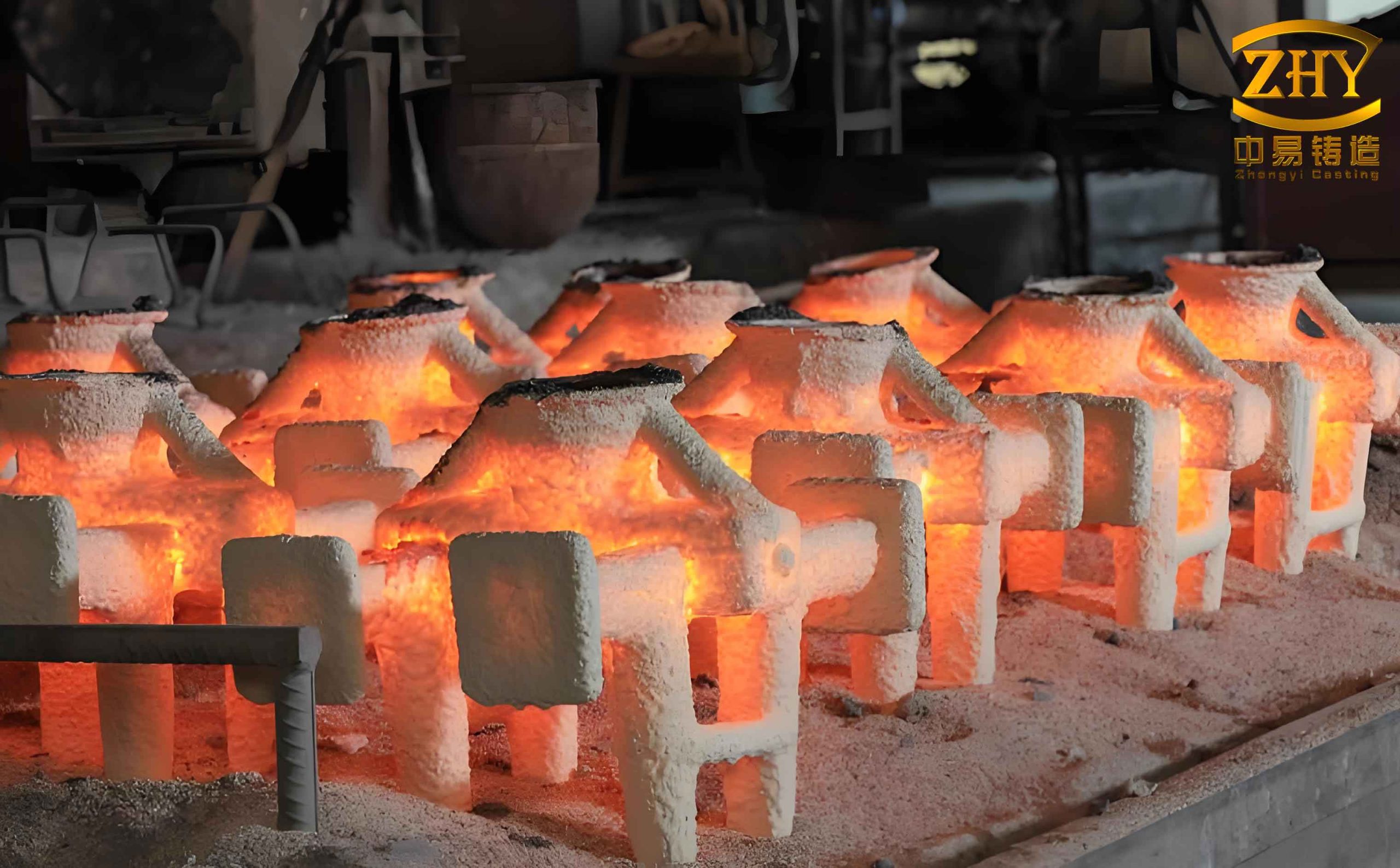
The foundation of prototype investment casting involves multiple disciplines such as materials science, heat and mass transfer, and fluid dynamics. In the prototype investment casting process, the first step is to optimize the composition of the casting aluminum alloy based on the structural characteristics and performance requirements of the casing. For instance, in Al-Si-Mg ternary system alloys, the Si content is typically controlled between 6% and 8% to achieve good casting performance and mechanical properties. Simultaneously, rapid solidification technology is employed, with solidification rates reaching 10² to 10³ K/s, which significantly refines the grain structure and improves casting density. In mold making, the silica sol prototype investment casting process is commonly used. This involves applying a refractory slurry onto a primary shell with a thickness of 0.1–0.5 mm, followed by 6–8 coating and baking cycles to form a secondary ceramic shell with a thickness of 5–10 mm, meeting the precision requirements of the casing’s internal cavity. Moreover, to control defects such as solidification segregation, shrinkage porosity, and micro-shrinkage, it is essential to optimize the design parameters of the gating system based on solidification theory and numerical simulation. For example, the cross-sectional area ratio of the sprue to the runner is controlled between 1:2 and 1:4 to reduce turbulence and oxide inclusions. Additionally, top or side risers are used, with a pressure gradient typically ranging from 4 to 6 kPa/mm, to compensate for volumetric shrinkage during solidification.
The machining process for aluminum alloy casings is divided into four stages, as outlined in the workflow design. The specific process flow is as follows: First, A356 aluminum alloy is used to prepare high-density, low-defect casting blanks by optimizing prototype investment casting parameters, such as silica sol prototype investment casting and rapid solidification. Then, rough machining is performed on the blanks using a CNC machining center, where large-diameter solid carbide end mills are employed to rapidly remove excess material, and ball-nose end mills are used for semi-finishing of the internal cavity. Next, precision machining is carried out on CNC boring mills, grinding machines, and special machining equipment. Key features such as mounting seats, transmission holes, and positioning structures are processed through precision boring, thread rolling, wire electrical discharge machining, ultrasonic vibration drilling, and fine grinding to obtain casing products with high precision and low surface roughness. Finally, composite strengthening treatments, including plasma nitriding and diamond-like carbon (DLC) coating deposition, are applied to significantly enhance the surface hardness, wear resistance, and corrosion resistance of the casing. Through the integrated optimization of this process route, the performance and lifespan of aluminum alloy casing products can be substantially improved.
Blank Preparation
The first step in manufacturing aluminum alloy casings via prototype investment casting is blank preparation. The quality of the blank directly affects the efficiency and precision of subsequent machining, so casting process parameters must be strictly controlled. Initially, the composition of the casting aluminum alloy is optimized. In the Al-Si-Mg ternary system, the Si content is controlled around 7%, and the Mg content is maintained between 0.3% and 0.7% to achieve good mechanical and casting properties. Then, the silica sol prototype investment casting process is used to prepare the ceramic shell. The primary shell thickness is controlled at approximately 0.3 mm, and the secondary shell thickness is between 6 and 8 mm, ensuring shell strength while meeting the dimensional accuracy requirements of the casing’s internal cavity. During pouring, computer numerical simulation technology is employed to optimize the gating system. The cross-sectional area ratio of the sprue to the runner is controlled around 1:3 to minimize turbulence and oxide inclusions. Additionally, top risers are used with a feeding pressure gradient of 5 kPa/mm to compensate for solidification shrinkage. Heat treatment of the casting follows the T6 process: solution treatment at 540°C for 4 hours followed by water quenching, then aging at 180°C for 6 hours. After heat treatment, the casting hardness can exceed HB150, and the tensile strength can reach over 350 MPa, meeting the mechanical performance requirements of the casing. To evaluate casting quality, a defect sensitivity function F is introduced, defined as:
$$F = \frac{1}{V} \int_V f(x,y,z) \, dV$$
where V is the volume of the casting, and f(x,y,z) is the defect distribution function within the casting, ranging from 0 to 1. A lower F value indicates fewer defects and higher quality. By optimizing prototype investment casting parameters, the F value can be controlled below 0.05, resulting in high-quality casing blanks that lay the foundation for subsequent precision machining.
Rough Machining
After prototype investment casting, the aluminum alloy casing blank has a basic contour but exhibits high surface roughness and significant dimensional errors. Rough machining is necessary to remove excess material and prepare for precision machining. This second step primarily utilizes CNC milling machines. First, the blank is clamped onto the fixture of a horizontal machining center, with the transmission hole axis as the reference. Rough milling is performed on the surfaces in the X, Y, and Z directions using a φ20 mm solid carbide end mill. The spindle speed is controlled between 800 and 1200 r/min, feed per tooth between 0.2 and 0.3 mm/z, depth of cut between 1 and 2 mm, and machining allowance between 1 and 2 mm. After rough milling, a φ10 mm ball-nose end mill is used for semi-finishing of the internal cavity and groove surfaces to facilitate subsequent boring and threading. The spindle speed for the ball-nose end mill is increased to 2000–3000 r/min, feed per tooth is reduced to 0.1–0.2 mm/z, and machining allowance is controlled around 0.5 mm. After 3–5 cycles of cutting, the surface roughness of the casing can be reduced to below Ra 6.3 μm, and dimensional errors can be controlled within ±0.2 mm. To enhance tool life and machining efficiency, minimum quantity lubrication (MQL) technology is applied during rough milling. A mixture of vegetable oil and compressed air is sprayed onto the tool and workpiece at a flow rate of 20–50 mL/h, effectively reducing cutting temperature while avoiding environmental contamination from cutting fluids. Furthermore, a milling parameter optimization model is established with cutting force as a constraint and milling efficiency as the objective, expressed as:
$$Q = \frac{\pi \cdot a_p \cdot v_f \cdot f_z \cdot d}{1000}$$
where Q is the milling efficiency (cm³/min), a_p is the axial depth of cut (mm), v_f is the feed speed (mm/min), f_z is the feed per tooth (mm/z), and d is the mill diameter (mm). By solving this model, the optimal combination of parameters can be obtained, maximizing rough machining efficiency while ensuring quality, thereby shortening the manufacturing cycle.
Precision Machining
After rough machining, the casing has taken shape but must undergo precision machining to meet engine performance requirements. This third and most critical step focuses on key mating surfaces and high-precision features such as mounting seats, transmission holes, and positioning structures, using CNC boring mills and CNC grinding machines. First, the rough-machined casing is clamped on a CNC boring mill, with the transmission hole axis as the reference. Precision boring is performed on the mounting seats, with bore diameter tolerance controlled at +0.01/0 mm, roundness tolerance within 0.005 mm, and surface roughness below Ra 0.4 μm. CBN tools are used during boring, with spindle speed controlled between 800 and 1000 r/min, feed speed between 100 and 150 mm/min, and cutting depth between 0.2 and 0.3 mm. To ensure bore coaxiality, dynamic probe tracking technology is employed to monitor tool position in real time and compensate for errors. After boring, thread rolling technology is introduced for mounting seat threading. A thread rolling machine is used to press equidistant threads onto the shot-peened inner hole surface, with rolling force controlled between 20 and 30 kN and feed speed between 20 and 30 mm/min. This results in internal threads with surface hardness above HRC 55 and thread profile surface roughness less than Ra 0.2 μm. For groove features such as sealing slots, CNC wire electrical discharge machining is applied, with pulse width controlled below 2 μs and peak current above 400 A, achieving groove surfaces with dimensional accuracy of ±0.01 mm and surface roughness below Ra 0.8 μm. Round holes like positioning holes are machined using ultrasonic vibration drilling, with frequency controlled between 20 and 30 kHz, amplitude between 5 and 10 μm, and feed speed between 0.5 and 1 mm/s, producing micro-holes with diameter error less than 0.01 mm and surface roughness below Ra 0.2 μm. Finally, the casing surface is ground on a CNC grinding machine, with wheel speed controlled between 30 and 50 m/s, workpiece speed between 50 and 100 r/min, and feed speed between 500 and 800 mm/min, achieving a homogeneous surface with roughness below Ra 0.4 μm. The dimensional accuracy after precision machining can be expressed as:
$$P = \left( \frac{L}{l} + \frac{Ra}{20} \right) \times 100\%$$
where P is the comprehensive evaluation index of machining accuracy, L is the deviation between the actual machining dimension and the drawing dimension (mm), l is the drawing dimension (mm), and Ra is the arithmetic average surface roughness (μm). A lower P value indicates higher machining accuracy.
Surface Treatment
After precision machining, the casing exhibits excellent dimensional accuracy and surface quality, but wear and corrosion inevitably occur during long-term engine operation, affecting its service life. Therefore, surface treatment is essential as the final step in the manufacturing process. Plasma nitriding is primarily used for casing surface treatment. In a vacuum chamber, a plasma generator ionizes nitrogen and hydrogen gases to form a high-energy particle beam that bombards the workpiece surface, causing nitrogen atoms to diffuse into the aluminum alloy substrate and form a surface nitride layer. Key parameters in the nitriding process include gas flow rate, plasma power, nitriding temperature, and time. The volume flow ratio of nitrogen to hydrogen is controlled around 1:3, plasma power density between 1.0 and 1.5 W/cm², nitriding temperature between 450 and 550°C, and nitriding time between 10 and 20 hours. After plasma nitriding, a 20–30 μm thick composite nitride layer of AlN and AlN-FeN forms on the casing surface, with hardness exceeding HV 1000—more than three times the substrate hardness—and strong adhesion to the substrate, preventing spalling. The nitride layer exhibits excellent wear and corrosion resistance; after continuous operation for 1000 hours in a humid environment, the surface roughness increase does not exceed 0.2 μm, and corrosion pit depth does not exceed 2 μm. Additionally, to further reduce the surface friction coefficient, a 1–2 μm thick DLC film can be deposited on the nitride layer. The DLC film is prepared using filtered cathodic vacuum arc deposition, with bias voltage controlled between -100 and -200 V, arc current between 50 and 100 A, and deposition time between 60 and 120 minutes. The adhesion between the DLC film and nitride layer can be evaluated by scratch testing, with critical load L_c expressed as:
$$L_c = \pi R \left( \frac{2 E_f h_f}{3 (1 – \nu_f^2) k^2} \right)^{1/3}$$
where R is the indenter radius (μm), E_f is the film elastic modulus (GPa), h_f is the film thickness (μm), k is the interface strength factor depending on the film and substrate materials, and ν_f is the film Poisson’s ratio.
Process Performance Study
Experimental Plan
To verify the feasibility of the integrated prototype investment casting and machining process for aluminum alloy casings, this study uses A356 aluminum alloy as the raw material. Blanks are prepared via silica sol prototype investment casting, and rough and precision machining trials are conducted on a VMC850E CNC machining center. During prototype investment casting, a φ20 mm sprue is used with a gate height of 200 mm and a pressure gradient of 5 kPa/mm. Rough machining employs a φ32 mm solid carbide end mill with spindle speed S = 1000 r/min, axial depth of cut a_p = 1.5 mm, radial depth of cut a_e = 20 mm, and feed speed v_f = 800 mm/min. Precision machining uses a φ10 mm solid carbide end mill and a φ8 mm tungsten carbide ball-nose end mill to machine the outer contour and internal cavity groove surfaces, respectively. For outer contour machining, spindle speed S = 4000 r/min, feed per tooth f_z = 0.08 mm/z, axial depth of cut a_p = 0.5 mm, and radial depth of cut a_e = 0.4 mm. For internal cavity groove surfaces with the ball-nose end mill, spindle speed S = 6000 r/min, feed per tooth f_z = 0.03 mm/z, axial depth of cut a_p = 0.3 mm, and radial depth of cut a_e = 0.2 mm. To evaluate process performance, the following indicators are emphasized: casting defect sensitivity function F, internal and external surface roughness Ra, precision machining dimensional accuracy P, product hardness HV, wear resistance (1000-hour wear amount ΔRa), and corrosion resistance (1000-hour corrosion depth h).
Results Discussion and Analysis
Table 1 presents the performance comparison of aluminum alloy casings prepared using three different process routes: traditional machining, traditional casting plus machining, and prototype investment casting plus machining. The data show that the integrated prototype investment casting and machining process designed in this study significantly improves the comprehensive performance of casings. First, the defect sensitivity function F for blanks obtained via prototype investment casting is only 0.032, much lower than the 0.086 for traditional casting, indicating fewer internal defects and denser microstructure. Second, after rough and precision machining, the key surface roughness of the casing reaches Ra 0.25–0.45 μm, dimensional accuracy P is better than 0.01%, and overall hardness HV is 186.4, all notably superior to other processes. Moreover, after composite strengthening via plasma nitriding and DLC coating, the casing’s wear and corrosion resistance are greatly enhanced, with a 1000-hour wear amount ΔRa reduced to 0.12 μm and corrosion depth h decreased to 1.35 μm, one-third to one-half of traditional processes. This is primarily because nitriding forms a hard AlN/AlN-FeN composite nitride layer on the casing surface with hardness exceeding HV 1035, effectively supporting the surface DLC film. The adhesion between them is strong, with a critical load L_c of 45 N, preventing spalling and collectively providing excellent wear and corrosion resistance.
| Process Route | Casting Defect F | External Surface Roughness Ra (μm) | Internal Surface Roughness Ra (μm) | Precision Machining Dimensional Accuracy P (%) | Hardness HV | 1000-hour Wear Amount ΔRa (μm) | 1000-hour Corrosion Depth h (μm) |
|---|---|---|---|---|---|---|---|
| Traditional Machining | — | 0.85 | 1.12 | 0.032 | 135.8 | 0.42 | 4.28 |
| Traditional Casting + Machining | 0.086 | 0.64 | 0.82 | 0.018 | 152.3 | 0.35 | 3.13 |
| Prototype Investment Casting + Machining | 0.032 | 0.25 | 0.45 | 0.008 | 186.4 | 0.12 | 1.35 |
In summary, the integrated prototype investment casting and machining process designed here demonstrates clear advantages over traditional routes in refining as-cast grains, improving casting density, enhancing machining accuracy and surface quality, and strengthening surface performance, significantly boosting casing service performance and lifespan.
Conclusion
This study systematically analyzes and experimentally validates the prototype investment casting and mechanical machining processes for aluminum alloy casings, proposing an integrated process route. During prototype investment casting, the composition, casting parameters, and heat treatment of aluminum alloys are precisely controlled, successfully producing high-quality casting blanks. CNC machining technology substantially improves dimensional accuracy and surface quality of casings. Simultaneously, surface nitriding and DLC coating strengthening processes markedly enhance wear and corrosion resistance. Experimental results indicate that the integrated prototype investment casting and machining process offers distinct performance advantages over traditional methods. Future work will continue to optimize process parameters and explore more advanced materials and surface treatment technologies to further improve the quality and efficiency of casing manufacturing, promoting the development of the defense industry.