
As a researcher deeply involved in the field of metallurgy and heat treatment, I have always been fascinated by the intricate processes that govern the properties of steel castings. Heat treatment stands as a pivotal special process in the production of steel castings, significantly influencing their mechanical performance and structural integrity. However, it is also a major energy consumer, posing long-standing challenges in energy conservation. For decades, the quest to optimize heat treatment processes for steel castings has been a persistent难题. The concept of “zero holding time” during quenching, initially proposed by Japanese scholars in the 1970s, sparked considerable interest and research globally. This idea suggested that for certain steels, the保温 time during quenching could be reduced to zero, potentially revolutionizing energy efficiency in heat treatment for steel castings. Subsequent studies on structural steels demonstrated that zero-holding quenching could yield fine austenite grains and refined microstructures, with mechanical properties comparable to traditional methods. This background motivates my investigation into applying similar principles to normalizing processes for large steel castings, which present unique challenges due to their coarse as-cast structures, severe segregation, and complex geometries.
In the context of steel castings, particularly large ones, the heat treatment regimen must be meticulously designed to address inherent issues like dendritic growth and microstructural heterogeneity. Normalizing is often preferred for steel castings to refine grains, eliminate Widmanstätten structures, and enhance综合 mechanical properties. Traditionally,保温 times for normalizing steel castings are calculated based on壁厚, using coefficients such as 1 hour per inch or similar metrics. However, this approach may lead to excessive energy consumption and prolonged production cycles. My research focuses on exploring whether shortening or even eliminating the holding time during normalizing can be feasible for large steel castings, without compromising their性能. This inquiry is crucial for advancing sustainable manufacturing practices in the steel casting industry.
To contextualize this study, it is essential to review prior work on zero-holding heat treatments. Earlier research primarily targeted structural components made of specific steels, such as 60SiMn, 45/45Mn2, and 27SiMn. These studies indicated that zero-holding quenching resulted in fine martensitic or ferritic-pearlitic structures, attributed to austenite grain refinement and inhomogeneous carbon distribution. For instance, investigations on 60SiMn steel showed that zero-holding quenching produced fine austenite grains and comparable mechanical properties to conventional methods. Similarly, studies on carbon and low-alloy structural steels like 45/45Mn2 confirmed the viability of zero-holding or short-time heating for quenching and normalizing. However, these findings are not directly applicable to large steel castings, which exhibit distinct characteristics: coarse as-cast grains, pronounced compositional and microstructural segregation, and intricate shapes. Consequently, heat treatment parameters for steel castings must be tailored accordingly, especially for massive components where thermal gradients and stress management are critical. Despite the abundance of research on structural steels, investigations into zero-holding normalizing for large steel castings remain scarce, highlighting a gap this study aims to fill.
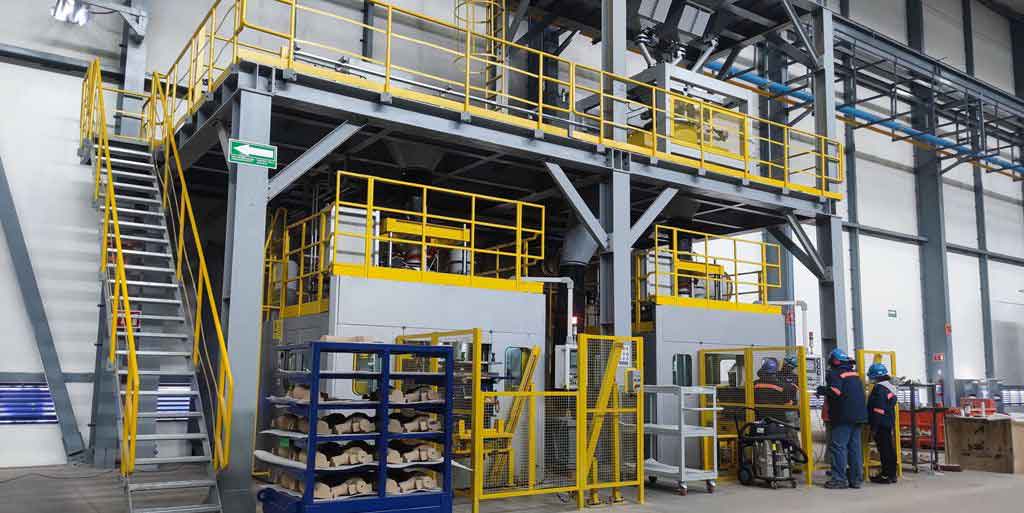
The production of steel castings involves complex foundry processes, where molten steel is poured into molds to form near-net-shape components. For large steel castings, weighing between 10 to 40 tons with壁厚 ranging from 125 mm to 300 mm, the solidification process leads to significant microstructural challenges. As-cast steel castings typically display coarse grains and Widmanstätten structures, which result in high strength but poor塑性 and toughness. Therefore, heat treatment like normalizing is indispensable to transform these microstructures into finer, more homogeneous ones. The normalizing process for steel castings involves heating to austenitizing temperatures above Ac3, holding for a specified time to ensure complete phase transformation, and then cooling in air or controlled environments. The holding time is traditionally determined by壁厚-based formulas, but this may not account for the rapid austenitization kinetics at elevated temperatures. My hypothesis is that for carbon steel castings, the austenitization during normalizing occurs swiftly, allowing for reduced holding times without detrimental effects on mechanical properties. This approach could yield energy savings and productivity gains in the manufacturing of steel castings.
In this study, I designed an experimental program to evaluate the impact of normalizing holding time on the mechanical properties and microstructure of large carbon steel castings. The focus is on a common碳钢 composition used in steel castings, with chemical requirements as outlined in Table 1. The steel casting material is characterized by low to moderate carbon and alloy content, making it representative of many industrial applications for steel castings.
| Element | C | Si | Mn | Cr | Ni | Mo | P | S |
|---|---|---|---|---|---|---|---|---|
| Standard | ≤0.26 | ≤0.80 | ≤1.2 | ≤0.50 | ≤0.20 | ≤0.20 | ≤0.035 | ≤0.025 |
The mechanical performance standards for the steel castings are specified in Table 2, encompassing tensile strength, yield strength, elongation, reduction of area, and impact toughness. These metrics are critical for ensuring the reliability of steel castings in service conditions.
| Property | Symbol | Standard |
|---|---|---|
| Tensile Strength | Rm | ≥485 MPa |
| Yield Strength | Rp0.2 | ≥275 MPa |
| Elongation | A | ≥23% |
| Reduction of Area | Z | ≥30% |
| Charpy Impact Energy | AKV | ≥27 J |
For the experiment, I used four attached test blocks cast alongside a large steel casting component. These blocks, with dimensions of 300 mm × 100 mm × 120 mm, simulate the thermal mass and microstructural characteristics of the actual steel castings. The normalizing temperature was set at 900°C, a typical austenitizing temperature for carbon steel castings. Four holding time schemes were employed, as detailed in Table 3, to investigate the effects of progressively shorter保温 periods, including zero holding.
| Scheme | Normalizing Temperature (°C) | Holding Time (hours) |
|---|---|---|
| Scheme 1 | 900 | 12 |
| Scheme 2 | 900 | 9 |
| Scheme 3 | 900 | 3 |
| Scheme 4 | 900 | 0 |
The test blocks were heated together in a resistance furnace with temperature uniformity within ±5°C. Upon reaching 900°C, the Scheme 4 block was immediately removed to simulate zero holding, while the others were held for their respective times before cooling. All blocks were cooled similarly to mimic the cooling rate of attached blocks on actual steel castings. After normalizing, mechanical testing and metallographic analysis were conducted to assess properties and microstructures.
The mechanical property results for the steel casting test blocks are summarized in Table 4. These data reveal intriguing trends associated with holding time variations in the normalizing of steel castings.
| Scheme | Rm (MPa) | Rp0.2 (MPa) | A (%) | Z (%) | Hardness (HB) | AKV (J) |
|---|---|---|---|---|---|---|
| Scheme 1 | 589 | 356 | 28 | 57 | 174 | 70 |
| Scheme 2 | 577 | 344 | 27 | 41 | 169 | 72 |
| Scheme 3 | 569 | 361 | 34 | 65 | 170 | 52 |
| Scheme 4 | 576 | 374 | 33 | 60 | 172 | 67 |
From Table 4, it is evident that for steel castings, shortening the normalizing holding time leads to nuanced changes. Tensile strength (Rm) shows a slight decreasing trend, but all values remain well above the standard requirement of 485 MPa. In contrast, yield strength (Rp0.2) exhibits a noticeable increase, particularly for Scheme 4 with zero holding. Plasticity indicators, elongation (A) and reduction of area (Z), also demonstrate significant improvement with reduced holding times, suggesting enhanced ductility in the steel castings. Impact toughness (AKV) varies without a clear trend, but all values exceed the 27 J threshold, indicating adequate toughness for steel castings. These results imply that for carbon steel castings, reduced holding times during normalizing can maintain or even enhance certain mechanical properties, aligning with material standards.
To understand these trends, metallographic analysis was performed on the steel casting samples. The microstructures, primarily consisting of ferrite and pearlite, revealed that grain refinement occurs as holding time decreases. Specifically, grain size grades improved from 6-7 for Scheme 1 to 10 for Scheme 4, indicating finer grains with shorter保温. This microstructural evolution is crucial for explaining the mechanical behavior of steel castings. According to the Hall-Petch relationship, yield strength is inversely related to grain diameter, as expressed by the formula:
$$ \sigma_s = \sigma_i + K \times d^{-1/2} $$
where \(\sigma_s\) is the yield strength, \(\sigma_i\) is the friction stress, \(K\) is a material constant, and \(d\) is the grain diameter. For steel castings, finer grains (smaller \(d\)) result in higher yield strength, consistent with the observed increase in Rp0.2 for Schemes 3 and 4. Moreover, fine-grained microstructures in steel castings contribute to better塑性 and toughness by dispersing deformation across more grains and impeding crack propagation through increased grain boundary area.
The kinetics of austenitization during normalizing for steel castings further support the feasibility of reduced holding times. At elevated temperatures like 900°C, the transformation to austenite occurs rapidly. For instance, research indicates that at 800°C, half of the austenite transformation can complete within one second. For steel castings with壁厚 up to 300 mm, the through-heating time—the period for the core to reach the set temperature—may be relevant, but once the surface attains the austenitizing temperature, the phase change proceeds swiftly. Factors influencing保温 time include carbon and alloy content, which affect thermal conductivity and transformation rates. For carbon steel castings with low alloying, as in this study, the required保温 can be minimal. Studies on components like 45 steel have shown that for dimensions under 100 mm, through-heating times are negligible in air furnaces, implying that for larger steel castings, after accounting for through-heating, additional保温 might be unnecessary. This principle underpins the zero-holding approach for steel castings.
Expanding on the theoretical aspects, the normalizing process for steel castings involves diffusion-controlled phenomena. The austenite grain growth during保温 can be modeled using the Beck equation:
$$ D = k \times t^n $$
where \(D\) is the grain size, \(k\) is a constant, \(t\) is time, and \(n\) is an exponent. For steel castings, minimizing \(t\) (holding time) limits grain growth, preserving fine grains. Additionally, the Avrami equation describes the kinetics of phase transformation in steel castings:
$$ f = 1 – \exp(-b t^m) $$
where \(f\) is the fraction transformed, \(b\) and \(m\) are constants. At high temperatures, \(b\) increases, allowing for rapid completion of transformation in steel castings. These mathematical models justify shortening holding times for steel castings without compromising microstructural homogeneity.
In practice, the energy savings from reduced holding times in normalizing steel castings are substantial. Traditional保温 times based on壁厚 coefficients, such as 12 hours for a 300 mm壁厚 steel casting, consume significant electrical or fuel energy. By shortening to 3 hours or zero, energy consumption can be reduced by 75% or more, respectively. For large-scale production of steel castings, this translates to lower operational costs and reduced carbon footprint. Furthermore, shorter cycle times enhance productivity, allowing more steel castings to be processed within the same timeframe. This aligns with sustainable manufacturing goals in the steel casting industry.
It is also important to consider the role of cooling rates after normalizing for steel castings. While this study focused on holding time, the cooling method—air cooling in this case—affects the final microstructure. For steel castings, controlled cooling can prevent excessive thermal stresses and distortion, especially in complex geometries. Future research could integrate optimized cooling strategies with shortened holding times to further improve the performance of steel castings.
The findings of this study have broad implications for the heat treatment of steel castings. By demonstrating that carbon steel castings can achieve satisfactory mechanical properties with reduced normalizing holding times, this research challenges conventional practices. For alloy steel castings with higher carbon or alloy content, adjustments may be needed due to slower transformation kinetics, but the principle of optimizing保温 remains relevant. In industrial settings, implementing zero-holding or short-time normalizing for steel castings requires careful monitoring of furnace temperatures and component dimensions. Advanced simulation tools, such as finite element analysis, can predict thermal profiles and transformation progress in steel castings, aiding in process optimization.
In conclusion, my investigation into normalizing holding times for large steel castings reveals that shortening or eliminating保温 can yield beneficial outcomes. For carbon steel castings, mechanical properties such as yield strength and plasticity improve with reduced holding times, while tensile strength and toughness remain within standard limits. Microstructurally, finer grains are achieved, enhancing综合 performance through mechanisms described by the Hall-Petch relationship. This approach not only meets the material requirements for steel castings but also promotes energy efficiency and productivity. As the steel casting industry evolves towards greener practices, adopting optimized heat treatment parameters like zero-holding normalizing will be crucial. Further studies could explore applications to other grades of steel castings or combine with advanced techniques like controlled atmosphere heating to maximize benefits. Ultimately, this research contributes to the ongoing effort to refine manufacturing processes for steel castings, ensuring they meet the demands of modern engineering applications while conserving resources.
To encapsulate the key points, I have compiled a summary table comparing the effects of holding time on various aspects of steel castings (Table 5). This highlights the trade-offs and advantages associated with different normalizing strategies for steel castings.
| Aspect | Long Holding (e.g., 12h) | Short Holding (e.g., 3h) | Zero Holding |
|---|---|---|---|
| Grain Size | Coarser (6-7 grade) | Finer (8-9 grade) | Finest (10 grade) |
| Yield Strength | Moderate | Higher | Highest |
| Plasticity | Good | Better | Excellent |
| Energy Consumption | High | Reduced | Minimal |
| Production Cycle | Long | Shorter | Shortest |
This research underscores the potential for innovation in heat treatment practices for steel castings. By re-evaluating traditional parameters like holding time, manufacturers of steel castings can achieve significant operational improvements. As I continue to explore this field, I aim to develop comprehensive guidelines for optimizing normalizing processes across diverse steel casting applications, contributing to the advancement of metallurgical science and industrial sustainability.