
In the field of advanced manufacturing, titanium alloys, particularly Ti-6Al-4V, have emerged as critical materials due to their exceptional strength-to-weight ratio, corrosion resistance, and biocompatibility. Often termed the “third metal,” their application spans aerospace, marine, and biomedical industries. Among various fabrication techniques, precision investment casting stands out for producing complex, near-net-shape components with high dimensional accuracy and excellent surface finish, significantly reducing material waste and machining costs. This study delves into the intricacies of the precision investment casting process for manufacturing large, thin-wall, and structurally intricate Ti-6Al-4V alloy castings. The work is driven by the industry’s need to overcome challenges associated with such components, including mold-making, filling integrity, and defect control, for which established process guidelines are scarce.
The specific component under investigation is a slide rail casting intended for aerospace application. Its geometry presents significant hurdles for conventional foundry practices. The casting features a substantial envelope size of approximately 700 mm in length, 190 mm in width, and 80 mm in height, with a minimal wall thickness of only 6 mm. The internal cavity is narrow and elongated, while the external profile is curved. This combination of large size, thin sections, and complex geometry complicates every stage of the precision investment casting process, from pattern assembly and shell building to metal pouring and solidification. Ensuring complete mold filling without cold shuts or misruns, maintaining dimensional stability of the ceramic shell, and achieving sound internal metallurgy are the primary objectives.
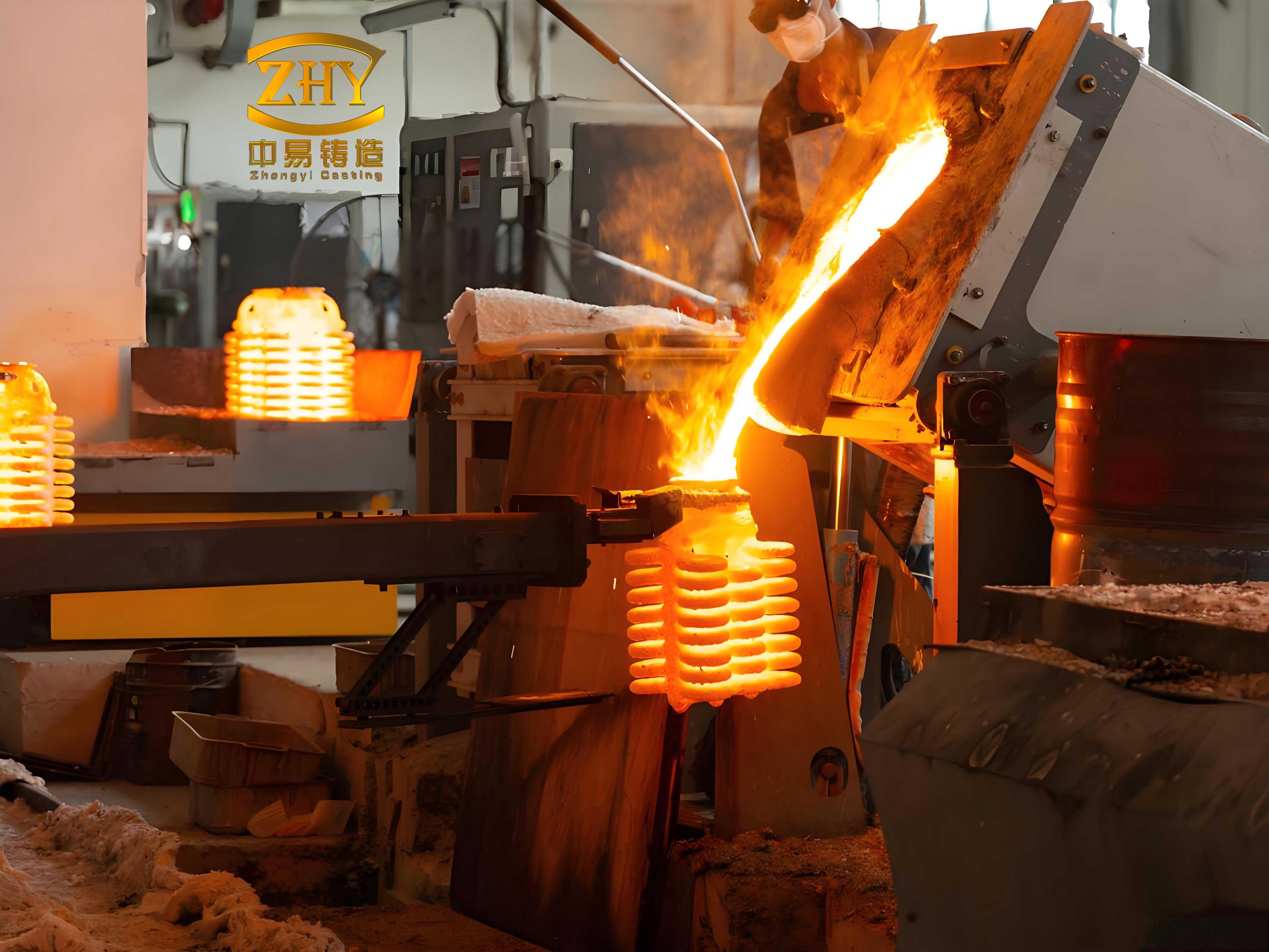
The core of this research lies in the systematic design and optimization of three fundamental aspects of the precision investment casting process: the fabrication of the ceramic mold shell, the melting and pouring of the Ti-6Al-4V alloy, and the post-casting densification via hot isostatic pressing. Each of these stages was investigated in detail to establish a reliable manufacturing route.
Mold Shell Design and Manufacturing for Precision Investment Casting
The extreme reactivity of molten titanium with most materials at high temperatures necessitates the use of highly stable, refractory mold materials. For precision investment casting of large thin-wall parts, oxide ceramic shell systems are preferred due to their high temperature strength, dimensional stability, and ability to produce smooth casting surfaces. In this study, the shell was constructed with distinct face coat and backup coat layers. The face coat, crucial for minimizing metal-mold reaction, utilized yttria (Y2O3) flour as the refractory and zirconium acetate as the binder. This formulation was chosen for its excellent slurry wettability, coating adherence, and overall processability suitable for manual dipping. The slurry parameters were carefully controlled: the coarse powder content was maintained between 20% to 30%, and the powder-to-liquid ratio for the face coat slurry was set between 2:1 and 4:1. Yttria-based face coats are known for their low thermal conductivity and high strength, leading to a very thin alpha-case contamination layer of only 0.02–0.05 mm on the final casting.
The backup coats employed a conventional system of silica sol binder and calcined alumina aggregate. The shell building sequence involved applying the first two layers as the face coat, followed by backup coats from layers 3 to 5. Each layer was dried for approximately 8 hours. Given the thin walls of the casting and the high rotational speeds required for subsequent centrifugal pouring, additional shell strength was imperative. Therefore, before applying the 6th layer, the shell was reinforced externally with a lattice of 3 mm diameter steel wires. Backup coating continued from layers 6 to 13 (layer 13 being a silica sol seal coat), with each layer dried for 8 hours, resulting in a final shell thickness of about 20 mm.
The wax pattern was removed using trichloroethylene vapor dewaxing at 200°C. The shell was subjected to a controlled firing cycle in a vacuum furnace. A low-temperature bake at 180–290°C for 12–15 hours was followed by a high-temperature sintering stage. The temperature was ramped to 950–1020°C with intermediate holds at 350°C, 500°C, and 700°C (each for 2 hours) to facilitate binder removal and degassing, culminating in a 2–3 hour soak at the peak temperature to achieve full sintering. Key parameters for the shell manufacturing in this precision investment casting study are summarized in the table below.
| Process Stage | Material/Component | Key Parameter | Value/Range |
|---|---|---|---|
| Face Coat | Refractory | Yttria (Y2O3) Flour | – |
| Binder | Zirconium Acetate | – | |
| Slurry | Powder/Liquid Ratio | 2 – 4 : 1 | |
| Backup Coat | Refractory/Binder | Alumina / Silica Sol | – |
| Drying | Time per Layer | ~8 hours | – |
| Dewaxing | Medium/Temperature | Trichloroethylene Vapor | 200°C |
| Shell Firing | Low-Temperature Bake | Temperature/Time | 180-290°C / 12-15 h |
| High-Temperature Sinter | Peak Temperature | 950-1020°C | |
| Intermediate Holds | Temperatures/Time | 350, 500, 700°C / 2 h each | |
| Soak at Peak | Time | 2-3 hours | |
| Final Shell | Thickness | Approximate | 20 mm |
Alloy Melting and Pouring Dynamics in Precision Investment Casting
The melting and pouring stages are critical in precision investment casting of titanium, as the molten metal must be protected from atmospheric contamination and delivered into the mold with sufficient fluidity to fill thin sections. A vacuum skull melting furnace was employed for this study. This furnace type operates on the principle of a consumable electrode arc melted into a water-cooled copper crucible. A solid “skull” of titanium forms on the crucible walls, acting as a contaminant-free liner for the molten pool. This method is highly economical and effective for reactive alloys like Ti-6Al-4V.
To address the challenges of filling large, thin-walled geometries, centrifugal casting was adopted. The rapid solidification of titanium in a cold mold and potential gas generation from metal-mold interactions can lead to mistuns and porosity. Centrifugal pouring enhances filling by increasing the metal pressure within the mold cavity and improving directional solidification. The linear velocity of the metal in the mold should exceed 0.8 m/s, and the internal metal pressure should be greater than 0.12 MPa to ensure complete filling. These conditions are met through centrifugal action. The rotational speed of the centrifugal table is a paramount parameter in this precision investment casting operation. It can be derived from the following fundamental relationship:
$$ n = 299 \sqrt{\frac{G}{R_0}} $$
where \( n \) is the rotational speed in revolutions per minute (rpm), \( G \) is the gravitational factor (G-number), and \( R_0 \) is the distance in centimeters from the axis of rotation to the farthest point of the casting. Based on empirical trials within this research, a rotational speed range of 200 to 300 rpm was identified as optimal. This speed provided adequate centrifugal force to ensure complete mold filling and promote densification without exceeding the mechanical strength limits of the reinforced ceramic shell. The parameters for melting and pouring are consolidated below.
| Process Stage | Equipment/Technique | Key Parameter | Value/Range |
|---|---|---|---|
| Melting | Vacuum Skull Melting Furnace | Atmosphere | High Vacuum / Inert Gas |
| Pouring | Centrifugal Casting | Method | Centrifugal |
| – | Required Linear Velocity | > 0.8 m/s | |
| – | Required Metal Pressure | > 0.12 MPa | |
| Centrifugal Speed | Calculated/Empirical | Rotational Speed (n) | 200 – 300 rpm |
Post-Casting Enhancement via Hot Isostatic Pressing
Despite optimal casting parameters, titanium investment castings can contain internal discontinuities such as microporosity and shrinkage cavities. To elevate the casting’s integrity and mechanical properties to levels comparable with forgings, hot isostatic pressing (HIP) was integrated into the precision investment casting process chain. HIP subjects the casting to simultaneously high temperature and isostatic gas pressure, which plastically deforms and densifies internal voids through creep and diffusion mechanisms.
For the Ti-6Al-4V castings produced in this study, the HIP cycle was conducted under an argon atmosphere. The temperature was maintained at \( 920 \pm 10 \)°C, which is below the beta transus temperature to avoid excessive grain growth. The applied pressure was set between 110 and 140 MPa, held for a duration of 2 to 2.5 hours. This treatment effectively heals internal defects, and the localized deformation and recrystallization can lead to partial spheroidization of the lamellar alpha phase in the healed regions, further enhancing mechanical properties. The HIP parameters are summarized as follows:
| Process Parameter | Value/Range |
|---|---|
| Atmosphere | Argon |
| Temperature | 920 ± 10 °C |
| Pressure | 110 – 140 MPa |
| Hold Time | 2 – 2.5 hours |
Experimental Outcomes and Process Validation
Implementing the developed precision investment casting methodology—encompassing the yttria-based shell, skull melting with centrifugal pouring at 200-300 rpm, and post-HIP treatment—resulted in the successful production of the complex thin-wall Ti-6Al-4V slide rail castings. The castings exhibited complete fill, good surface quality, and dimensional conformance. Non-destructive and destructive evaluation confirmed a significant reduction in internal defects. A key metric of process success was the achieved casting yield, with a qualification rate of approximately 75% for first-run components meeting all dimensional and quality specifications. This outcome demonstrates the efficacy of the integrated approach and fills a technological gap in the domestic manufacturing capability for such demanding precision investment castings.
Conclusions and Implications for Precision Investment Casting
This comprehensive investigation into the precision investment casting of large thin-wall Ti-6Al-4V components has yielded a validated and optimized process framework. The following conclusions are drawn:
- Mold Shell System: The use of a yttria face coat with zirconium acetate binder in the precision investment casting shell system provides excellent coating characteristics and minimal reactivity, producing castings with an ultra-thin alpha case. Reinforcement with steel wires is essential for withstanding the stresses of centrifugal pouring for large shells.
- Melting and Pouring: The combination of vacuum skull melting and centrifugal pouring is indispensable for this application. The skull furnace ensures pure molten metal, while centrifugal forces, calculated via $$ n = 299 \sqrt{G / R_0} $$ and empirically optimized to 200-300 rpm, guarantee complete filling of thin sections and improve casting density.
- Post-Processing: Hot isostatic pressing at \( 920 \pm 10 \)°C and 110-140 MPa for 2-2.5 hours is a critical final step. It effectively eliminates residual microporosity and shrinkage, enhancing the structural integrity and fatigue performance of precision investment cast titanium components, making them suitable for high-reliability applications.
- Integrated Process: The synergy of these optimized steps—shell making, controlled melting/pouring, and HIP—constitutes a robust precision investment casting process for large, complex, thin-wall Ti-6Al-4V castings. The demonstrated 75% qualification rate underscores the process’s reliability and practicality.
The established parameters and methodology provide a valuable reference for advancing the precision investment casting of titanium alloys, particularly for aerospace components where weight, performance, and complexity are paramount. Future work may focus on further refining shell compositions for cost reduction, optimizing centrifugal speed profiles dynamically, and exploring the effects of HIP parameters on specific mechanical properties like fatigue and fracture toughness.