
In my extensive research within the field of metallurgy and materials engineering, I have dedicated significant effort to developing advanced nodular cast iron materials that exhibit exceptional mechanical properties under extreme conditions. The demand for high-strength, high-toughness nodular cast iron capable of performing reliably at ultra-low temperatures, such as those encountered in rail transportation applications where temperatures can plummet below -40°C, has driven my investigative work. Traditional grades like QT500-7A, as per standards such as GB/T 1348-2009, often fall short in meeting the stringent requirements for both strength and low-temperature impact toughness, particularly as outlined in specifications like TJ/JW 065-2015 for gearbox components in electric locomotives. This standard mandates not only tensile strength above 500 MPa but also elongation over 8% and -40°C Charpy impact energy with an average ≥4 J and individual values ≥3 J. Consequently, my research aimed to engineer new variants, which I refer to as QT500-7LT and QT600-7LT, by optimizing alloy compositions and processing techniques to achieve a balance of high strength, high toughness, and superior ultra-low temperature performance in nodular cast iron.
The fundamental challenge lies in the inherent trade-offs between strength and toughness in cast irons, especially at sub-zero temperatures where brittleness can increase. Nodular cast iron, characterized by its spherical graphite nodules embedded in a metallic matrix, derives its properties from the matrix structure—whether ferritic, pearlitic, or a combination thereof. My approach involved systematic experimentation with alloying elements, impurity control, and inoculation practices to refine the microstructure and enhance low-temperature resilience. In this article, I will detail my methodologies, present empirical data through tables and formulas, and discuss the implications of my findings for industrial applications. Throughout, the term “nodular cast iron” will be emphasized to underscore the material’s unique graphite morphology, which is central to its performance.
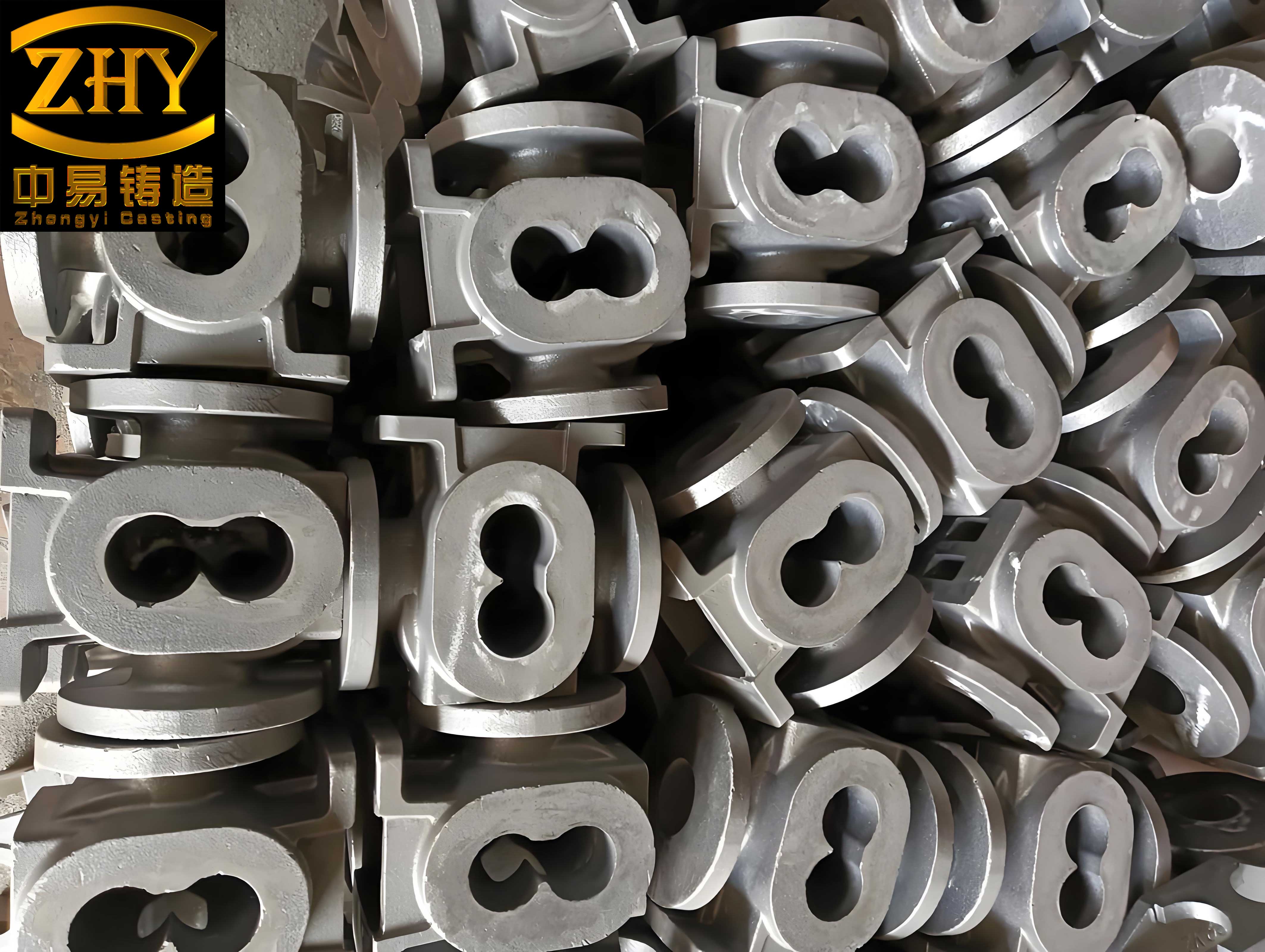
To begin, I established a rigorous experimental framework. The base materials included Q10 pig iron, high-purity pig iron, steel scrap, and various ferroalloys, with their chemical compositions summarized in Table 1. These raw materials were selected to control key elements like carbon, silicon, manganese, phosphorus, and sulfur, which critically influence the behavior of nodular cast iron. For instance, sulfur content is a pivotal factor in nodularization efficiency, as it can react with magnesium during treatment, forming sulfides that impair graphite spheroidization. Thus, maintaining low sulfur levels was a priority in my trials. The nodulizer and inoculant compositions used are listed in Table 2; these agents, rich in magnesium and rare earth elements, facilitate the formation of spherical graphite and refine the matrix through inoculation effects.
| Material | C | Si | Mn | P | S | V | Ti |
|---|---|---|---|---|---|---|---|
| Q10 Pig Iron | 4.39 | 0.54 | 0.06 | 0.022 | 0.013 | 0.01 | 0.03 |
| High-Purity Pig Iron | 4.21 | 0.09 | 0.04 | 0.031 | 0.005 | 0.01 | 0.01 |
| Steel Scrap | 0.16 | 0.17 | 0.61 | 0.015 | 0.009 | – | – |
| Agent | Si | Mg | RE | Ca | Ba | Al | MgO |
|---|---|---|---|---|---|---|---|
| Nodulizer | 44-47 | 4.5-5.5 | 0.6-1.0 | 0.8-1.2 | – | 1.0 | 0.4 |
| Inoculant | 65-75 | – | – | 1-1.2 | 1.8-2.5 | 0.6-1.0 | – |
Melting was conducted in a 100 kg medium-frequency induction furnace, with charges added in the sequence of pig iron, steel scrap, and alloys. The temperature was carefully controlled: melting at 1500-1550°C, tapping at 1500-1520°C, and pouring at 1380-1420°C. Nodularization was achieved via the sandwich method, where the nodulizer is placed at the bottom of the ladle and covered with steel scrap, followed by pouring the molten iron to initiate reaction. Inoculation involved both bottom coverage and a secondary addition when about 80% of the iron had been tapped, coupled with stream inoculation during casting using a custom feeder with a 4 mm orifice. Y-block specimens, as per standard dimensions, were cast for mechanical testing; these specimens provide a representative assessment of the nodular cast iron’s properties in section sizes relevant to industrial castings.
For characterization, I employed optical microscopy according to ISO 945 to evaluate graphite morphology and matrix structure. Mechanical tests included Brinell hardness measurements using an HB-3000 tester and Charpy impact tests at -40°C with a JNB-300B pendulum impact machine. The impact specimens were V-notched to simulate stress concentration conditions, aligning with railway standards. Data analysis focused on correlations between composition, microstructure, and performance, with particular attention to ultra-low temperature toughness—a critical metric for nodular cast iron in cryogenic environments.
My investigation into alloying effects commenced with three distinct strategies: singular nickel addition, nickel-molybdenum combined addition, and nickel-copper combined addition. Each approach was evaluated for its impact on the mechanical properties of QT500-7 grade nodular cast iron, with the goal of achieving tensile strength above 500 MPa, elongation over 7%, and -40°C impact energy meeting specified thresholds. The rationale behind nickel lies in its ability to enhance both strength and toughness; nickel dissolves in ferrite, providing solid solution strengthening without significantly increasing brittleness, and it widens the temperature gap between stable and metastable eutectic reactions, promoting graphite formation and refining the structure. This can be expressed through a simplified relationship for strength contribution:
$$ \sigma_{Ni} = k_{Ni} \cdot C_{Ni} $$
where $\sigma_{Ni}$ is the strength increment due to nickel, $k_{Ni}$ is a material constant, and $C_{Ni}$ is the nickel concentration. For nodular cast iron, nickel also lowers the ductile-to-brittle transition temperature, which is crucial for low-temperature applications.
In the first series, I varied nickel content from 0.9% to 1.9% while keeping other elements constant. The results, summarized in Table 3, show that as nickel increased, tensile strength gradually rose, but only at 1.9% nickel did it exceed 500 MPa. However, elongation remained above 12% across all levels, and -40°C impact energy averaged between 6.7 J and 7.7 J, well above the required 4 J. This confirms that nickel alone can impart excellent low-temperature toughness to nodular cast iron, but achieving higher strengths necessitates substantial nickel additions, which may be cost-prohibitive. The microstructure evolution, as observed, shifted from ferritic with less than 10% pearlite to ferritic with 25-35% pearlite at higher nickel, indicating nickel’s role as a mild pearlite promoter.
| Ni Content (wt.%) | Tensile Strength (MPa) | Elongation (%) | -40°C Impact Energy (J) Avg. | Graphite Morphology (ISO 945) | Matrix Structure |
|---|---|---|---|---|---|
| 0.9 | 480 | 13.5 | 6.7 | 85% VI5/6 + 15% V5/6 | Ferrite + <10% Pearlite |
| 1.3 | 490 | 13.0 | 7.0 | 85% VI5/6 + 15% V5/6 | Ferrite + 10-20% Pearlite |
| 1.6 | 495 | 12.8 | 7.3 | 85% VI5/6 + 15% V5/6 | Ferrite + 15-25% Pearlite |
| 1.9 | 510 | 12.2 | 7.7 | 85% VI5/6 + 15% V5/6 | Ferrite + 25-35% Pearlite |
Next, I explored nickel-molybdenum synergy, fixing molybdenum at 0.17% and varying nickel from 0.6% to 1.0%. Molybdenum is known to refine pearlite and enhance strength, but it can also improve low-temperature toughness in low-manganese nodular cast iron by reducing embrittlement. The data in Table 4 reveal that with 0.17% Mo, tensile strengths were below 500 MPa even at 1.0% nickel, though elongation and impact energy were satisfactory. For instance, at 0.8% nickel, the average impact energy was 5.3 J, but strength was only 485 MPa. This suggests that while molybdenum contributes to toughness, its effect on strength is limited at low concentrations. Increasing molybdenum content could boost strength but at the expense of ductility and impact resistance, and given its high cost, this approach was deemed less viable for producing cost-effective nodular cast iron.
| Ni Content (wt.%) | Tensile Strength (MPa) | Elongation (%) | -40°C Impact Energy (J) Avg. | Graphite Morphology (ISO 945) | Matrix Structure |
|---|---|---|---|---|---|
| 0.6 | 470 | 14.0 | 5.0 | 85% VI5/6 + 15% V5/6 | Ferrite + 5-10% Pearlite |
| 0.7 | 475 | 13.5 | 4.8 | 85% VI5/6 + 15% V5/6 | Ferrite + 10-20% Pearlite |
| 0.8 | 485 | 13.0 | 5.3 | 80% VI5/6 + 20% V5/6 | Ferrite + 15-25% Pearlite |
| 0.9 | 490 | 12.5 | 4.7 | 80% VI5/6 + 20% V5/6 | Ferrite + 25-35% Pearlite |
| 1.0 | 495 | 12.0 | 4.3 | 80% VI5/6 + 20% V5/6 | Ferrite + 25-35% Pearlite |
The most promising results emerged from the nickel-copper combination. Copper, like nickel, is a graphite-friendly element that strengthens the matrix through solid solution and promotes pearlite formation, but it is more economical. I conducted experiments for both QT500-7LT and QT600-7LT grades, varying nickel and copper contents independently. For QT500-7LT nodular cast iron, as shown in Table 5, when nickel was maintained around 1.0-1.5% and copper ranged from 0.12% to 0.22%, tensile strength consistently exceeded 500 MPa, with values up to 550 MPa, while elongation stayed above 12% and -40°C impact energy averaged above 5 J. The microstructure comprised ferrite with 5-40% pearlite, depending on copper level, indicating a fine balance. Similarly, for QT600-7LT nodular cast iron, higher strength targets required nickel between 1.0% and 2.0% and copper between 0.2% and 0.5%, yielding tensile strengths over 600 MPa, yield strengths above 370 MPa, elongation ≥7%, and impact energy meeting the 4 J threshold. This synergy can be modeled using a composite strengthening equation for nodular cast iron:
$$ \sigma_{total} = \sigma_{base} + \alpha_{Ni}C_{Ni} + \alpha_{Cu}C_{Cu} + \beta\sqrt{\frac{1}{d}} $$
where $\sigma_{base}$ is the base strength of ferritic-pearlitic nodular cast iron, $\alpha_{Ni}$ and $\alpha_{Cu}$ are strengthening coefficients for nickel and copper, $C_{Ni}$ and $C_{Cu}$ are their concentrations, and $\beta\sqrt{1/d}$ represents grain refinement contribution with $d$ as the graphite nodule diameter. Copper’s role in enhancing hardenability also aids in achieving a mixed matrix without excessive brittleness.
| Cu Content (wt.%) | Ni Content (wt.%) | Tensile Strength (MPa) | Elongation (%) | -40°C Impact Energy (J) Avg. | Graphite Morphology (ISO 945) | Matrix Structure |
|---|---|---|---|---|---|---|
| 0.12 | 0.8 | 510 | 13.8 | 6.0 | 80% VI6/7 + 20% V6 | Ferrite + 5-15% Pearlite |
| 1.0 | 525 | 13.2 | 6.3 | 85% VI6/7 + 15% V6 | Ferrite + 10-20% Pearlite | |
| 1.2 | 540 | 12.9 | 6.5 | 85% VI6/7 + 15% V6 | Ferrite + 15-25% Pearlite | |
| 1.5 | 550 | 12.5 | 6.8 | 80% VI6/7 + 20% V6 | Ferrite + 20-30% Pearlite | |
| 0.18 | 0.8 | 520 | 13.5 | 5.9 | 85% VI6/7 + 15% V6 | Ferrite + 15-25% Pearlite |
| 1.0 | 535 | 13.0 | 6.1 | 85% VI6/7 + 15% V6 | Ferrite + 20-30% Pearlite | |
| 1.2 | 545 | 12.7 | 6.4 | 80% VI6/7 + 20% V6 | Ferrite + 25-35% Pearlite | |
| 1.5 | 560 | 12.3 | 6.6 | 85% VI6/7 + 15% V6/7 | Ferrite + 30-40% Pearlite |
Beyond alloying, I investigated the influence of sulfur content on the performance of nodular cast iron. Sulfur is a detrimental element that consumes magnesium during nodularization, leading to irregular graphite and reduced mechanical properties. To quantify this, I compared melts using high-purity pig iron (low sulfur, ≤0.008%) versus Q10 pig iron (higher sulfur, ≥0.012%), with identical nickel and copper additions. The results, plotted in Figure 6 (represented here as Table 6 for clarity), demonstrate that low sulfur levels (0.004-0.008%) consistently yielded higher tensile strengths (>550 MPa) and better impact energy, whereas higher sulfur resulted in strengths below 500 MPa and greater variability. This underscores the importance of tight sulfur control in producing high-quality nodular cast iron for ultra-low temperature applications. The relationship can be expressed as:
$$ \eta_{Mg} = \frac{Mg_{added} – k_S \cdot S}{Mg_{required}} $$
where $\eta_{Mg}$ is the efficiency of magnesium utilization for nodularization, $k_S$ is a constant representing sulfur’s affinity for magnesium, and $S$ is the sulfur content. Lower sulfur increases $\eta_{Mg}$, leading to more effective graphite spheroidization and improved properties in nodular cast iron.
| Sulfur Content (wt.%) | Tensile Strength (MPa) | Elongation (%) | -40°C Impact Energy (J) Avg. | Graphite Morphology |
|---|---|---|---|---|
| 0.004-0.008 | 560-580 | 12-14 | 6.5-7.0 | Spheroidal, Uniform |
| 0.012-0.015 | 480-500 | 10-12 | 5.0-5.5 | Irregular, Less Spheroidal |
Another critical aspect is the inoculation and nodularization practice. I compared conventional inoculation with a compound inoculation process that involved multiple stages of inoculant addition, including stream inoculation and late ladle additions. For QT600-7LT nodular cast iron, as summarized in Table 7, the compound method significantly improved graphite nodule count and roundness, achieving 85% VI6/7 morphology versus 80% with conventional methods. This refinement translated to higher ferrite content (10-35% vs. 5-30%) and enhanced low-temperature impact energy, with averages increasing by 9.3% to 25%, from around 4.3 J to 5 J. The mechanism here relates to increased nucleation sites for graphite, which can be described by:
$$ N = N_0 \exp\left(-\frac{\Delta G^*}{kT}\right) $$
where $N$ is the number of graphite nodules, $N_0$ is a pre-exponential factor, $\Delta G^*$ is the activation energy for nucleation, $k$ is Boltzmann’s constant, and $T$ is temperature. Compound inoculation reduces $\Delta G^*$, boosting nodule count and refining the matrix, thereby improving toughness in nodular cast iron.
| Inoculation Method | Graphite Morphology (ISO 945) | Matrix Structure | -40°C Impact Energy (J) | Improvement vs. Conventional |
|---|---|---|---|---|
| Conventional | 80% VI6/7 + 20% V6 | Pearlite + 5-30% Ferrite | 4.3 (avg) | Baseline |
| Compound | 85% VI6/7 + 15% V6 | Pearlite + 10-35% Ferrite | 5.0 (avg) | +16.3% |
Throughout my research, I have also considered the thermodynamic aspects of nodular cast iron formation. The equilibrium between graphite and cementite in iron-carbon-silicon systems can be influenced by alloying elements. For instance, nickel and copper increase the activity of carbon, favoring graphite precipitation, which is beneficial for nodular cast iron. This can be represented by the carbon equivalent (CE) formula, adjusted for alloy effects:
$$ CE = C + \frac{Si + P}{3} + \frac{Ni}{20} – \frac{Cu}{15} $$
where CE is used to predict microstructure; higher CE tends toward graphite formation, but excessive values can lead to coarse structures. In my optimized compositions for nodular cast iron, CE was maintained around 4.3-4.5 to ensure fine graphite nodules and a balanced matrix.
In summary, my findings conclusively demonstrate that through careful alloy design and process control, it is possible to produce high-strength, high-toughness nodular cast iron with exceptional ultra-low temperature performance. The nickel-copper combination, with nickel at 0.8-2.0% and copper at 0.1-0.5%, depending on the grade, provides an optimal balance for both QT500-7LT and QT600-7LT nodular cast iron. Sulfur must be kept low, ideally between 0.004% and 0.008%, to maximize magnesium efficiency and graphite quality. Moreover, adopting compound inoculation practices enhances graphite morphology and ferrite content, further boosting impact toughness at cryogenic temperatures. These advancements in nodular cast iron technology hold great promise for critical components in transportation and other industries where reliability under extreme cold is paramount. Future work could explore additional microalloying or heat treatments to push the boundaries of this versatile material.