
As a researcher specializing in advanced materials for high-temperature applications, I have closely followed the developments in crucible technology for the investment casting process of superalloys. The investment casting process is a cornerstone in manufacturing critical components for aerospace engines and gas turbines, where high-temperature alloys like nickel-based superalloys are essential due to their exceptional mechanical strength and resistance to oxidation and creep at elevated temperatures. In this process, molten metal is poured into ceramic molds to produce complex, near-net-shape parts with minimal post-processing. However, the success of the investment casting process heavily relies on the performance of the crucible used to melt the alloy, as it operates under extreme conditions: temperatures exceeding 1500°C, high vacuum environments (≤1 Pa), and frequent thermal cycling. Moreover, high-temperature alloys often contain reactive elements such as Cr, Ti, Hf, and Zr, which can interact with crucible materials, leading to contamination, inclusion formation, and degraded mechanical properties. In this comprehensive review, I will delve into the research progress on various crucible materials, highlighting their strengths, limitations, and future directions, with a focus on enhancing the efficiency and reliability of the investment casting process.
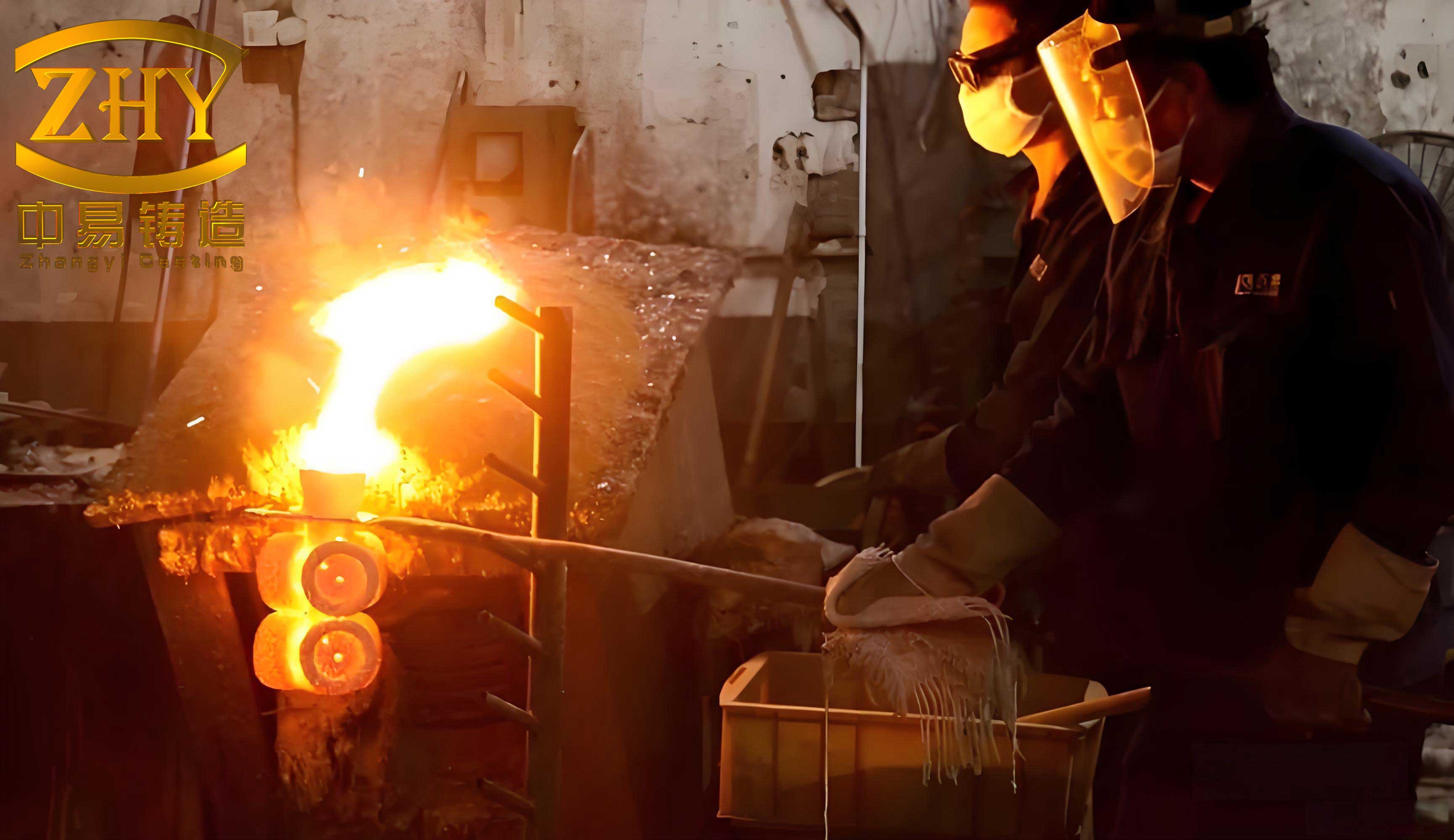
The investment casting process is integral to producing high-integrity components for the aerospace industry, where precision and material purity are paramount. Over the years, researchers have explored numerous ceramic materials for crucibles, each with unique thermodynamic and mechanical properties. The ideal crucible material must exhibit high thermal stability, low reactivity with molten alloys, excellent thermal shock resistance, and cost-effectiveness. In this article, I will analyze the most prominent crucible materials—MgO, Al2O3, CaO, ZrO2, Y2O3, and BaZrO3—based on extensive literature and experimental studies. I will incorporate tables and equations to summarize key findings, providing a holistic view of the current state and future prospects. Throughout, I emphasize the critical role of the investment casting process in driving innovations in crucible design and material science.
To set the stage, let’s consider the fundamental requirements for crucibles in the investment casting process. The vacuum induction melting (VIM) furnace is commonly used, as it allows for high vacuum levels that prevent oxidation and facilitate impurity removal. However, this environment also promotes the decomposition of ceramic materials, leading to vapor pressure issues and potential contamination. The thermodynamic stability of a crucible material can be assessed using Gibbs free energy calculations for decomposition reactions. For instance, the decomposition of MgO in a vacuum can be represented as:
$$ \text{MgO (s)} \rightleftharpoons \text{Mg (g)} + \frac{1}{2} \text{O}_2 (g) $$
where the equilibrium partial pressure of magnesium, $p(\text{Mg})$, must be evaluated under operating conditions. Studies have shown that at 1500°C and a vacuum of 0.1 Pa, $p(\text{Mg})$ can reach up to 5 × 10³ Pa, far exceeding the ambient pressure, leading to Mg evaporation and subsequent oxygen transfer into the melt. This phenomenon underscores the importance of material selection in the investment casting process. In the following sections, I will explore each material in detail, supported by data from recent research.
Overview of Crucible Materials and Their Properties
Before diving into specifics, it is helpful to compare the basic properties of common crucible materials. Table 1 summarizes key parameters such as melting point, thermal expansion coefficient, thermal conductivity, and relative cost. These factors influence the suitability of a material for the investment casting process, particularly in terms of thermal shock resistance and chemical inertness.
| Material | Melting Point (°C) | Thermal Expansion Coefficient (×10-6 K-1, 25–1000°C) | Thermal Conductivity (W/m·K, at 1000°C) | Relative Cost | Key Challenges |
|---|---|---|---|---|---|
| MgO | 2852 | 13.5 | 10–15 | Low | Decomposition under vacuum, Mg evaporation |
| Al2O3 | 2054 | 8.0 | 6–8 | Low to Medium | Interfacial reactions, inclusion formation |
| CaO | 2570 | 13.0 | 8–12 | Low | High hygroscopicity, water sensitivity |
| ZrO2 (stabilized) | 2715 | 10.5 | 2–3 | Medium | Poor thermal shock resistance, stabilizer leaching |
| Y2O3 | 2430 | 8.5 | 3–5 | High | High cost, limited thermal shock resistance |
| BaZrO3 | 2700 | 8.7 | 2–4 | High | Complex synthesis, niche applications |
This table highlights the trade-offs involved in selecting a crucible material for the investment casting process. For example, while MgO has a high melting point and low cost, its tendency to decompose in vacuum makes it less suitable for high-precision applications. On the other hand, Y2O3 offers excellent chemical stability but is prohibitively expensive for widespread use. In the subsequent sections, I will elaborate on each material, drawing from experimental studies and thermodynamic analyses.
MgO-Based Crucibles: Decomposition and Contamination Issues
My research into MgO crucibles for the investment casting process reveals significant challenges due to their thermodynamic instability under vacuum conditions. As mentioned earlier, MgO can decompose at high temperatures, releasing Mg vapor and oxygen into the melt. This process is governed by the equilibrium constant for the decomposition reaction. For a nickel-based superalloy melt at 1500°C, the carbon-oxygen equilibrium can be described by:
$$ \text{C (in melt)} + \text{O (in melt)} \rightleftharpoons \text{CO (g)} $$
with the equilibrium constant $K$ expressed as:
$$ K = \frac{p(\text{CO})}{a_{\text{C}} \cdot a_{\text{O}}} $$
where $a_{\text{C}}$ and $a_{\text{O}}$ are the activities of carbon and oxygen in the melt, and $p(\text{CO})$ is the partial pressure of CO. Under typical investment casting process conditions with $p(\text{CO}) = 0.1$ Pa and a carbon content $w(\text{C}) = 3 \times 10^{-5}$, the equilibrium oxygen content $w(\text{O})$ is calculated to be $3.11 \times 10^{-10}$. Using this, the partial pressure of Mg vapor, $p(\text{Mg})$, can be derived from the MgO decomposition equilibrium:
$$ \Delta G^\circ_{\text{MgO}} = -RT \ln \left( \frac{p(\text{Mg}) \cdot p(\text{O}_2)^{1/2}}{a_{\text{MgO}}} \right) $$
where $\Delta G^\circ_{\text{MgO}}$ is the standard Gibbs free energy change for MgO decomposition, $R$ is the gas constant, $T$ is the temperature, and $a_{\text{MgO}}$ is the activity of MgO (approximately 1 for pure MgO). At 1500°C, $p(\text{Mg})$ is estimated to be around 5 × 10³ Pa, which is orders of magnitude higher than the vacuum level of 0.1 Pa. This large pressure differential drives Mg evaporation, leading to oxygen pickup in the alloy melt and the formation of oxide inclusions such as Al2O3 and MgAl2O4. Experimental studies on IN738 superalloy melting in MgO crucibles have confirmed increased oxygen and nitrogen levels, along with sulfide inclusions, compromising the alloy’s mechanical properties. Therefore, while MgO crucibles are cost-effective, their use in the investment casting process for high-performance alloys is limited due to these contamination risks.
Al2O3-Based Crucibles: Interfacial Reactions and Inclusion Formation
In my investigations, Al2O3 crucibles, including corundum and spinel-bonded varieties, are widely used in the investment casting process for less demanding applications. However, they exhibit notable interfacial reactions with nickel-based superalloys. For instance, when melting H282 alloy at 1450°C for 30 minutes in a vacuum induction furnace, a reaction layer forms at the crucible-melt interface, enriched with Al, Ti, and O, and containing dissolved Cr, Ni, Fe, and Co. This suggests that Al2O3 can dissociate under vacuum, releasing Al and Al2O vapors. The decomposition reaction can be written as:
$$ \text{Al}_2\text{O}_3 (\text{s}) \rightleftharpoons 2\text{Al} (\text{g}) + 3\text{O} (\text{in melt}) $$
or through the formation of sub-oxides:
$$ \text{Al}_2\text{O}_3 (\text{s}) \rightleftharpoons \text{Al}_2\text{O} (\text{g}) + \text{O}_2 (\text{g}) $$
Using thermodynamic data, at 1500°C with an oxygen activity corresponding to $w(\text{O}) = 3.11 \times 10^{-10}$, the partial pressures $p(\text{Al}_2\text{O})$ and $p(\text{Al})$ are calculated to be 1.21 Pa and 0.833 Pa, respectively. Since these values exceed typical vacuum levels of 0.1 Pa in the investment casting process, Al2O3 decomposition occurs, contributing oxygen to the melt and promoting inclusion formation. Additionally, physical erosion of the crucible wall can lead to the entrainment of Al2O3 particles into the alloy, acting as nucleation sites for defects. My analysis of used corundum-spinel crucibles from K4169 alloy casting shows clear interfacial penetration and reaction zones, confirming these issues. Despite these drawbacks, Al2O3-based crucibles remain popular for standard investment casting process applications due to their affordability and moderate performance, but for high-purity alloys, alternatives are necessary.
CaO-Based Crucibles: Thermodynamic Stability vs. Hygroscopicity
From a thermodynamic perspective, CaO is an excellent candidate for crucibles in the investment casting process, thanks to its high melting point (2570°C) and stability. The Gibbs free energy of formation for CaO is highly negative, indicating strong resistance to reduction by reactive elements in high-temperature alloys. For example, in titanium alloy melting, CaO crucibles have been used to avoid carbon pickup from graphite crucibles. The reaction between CaO and Ti can be assessed using Ellingham diagrams, where the standard Gibbs free energy change $\Delta G^\circ$ for CaO formation is more negative than that for TiO2, suggesting CaO is stable in contact with Ti melts. However, the major impediment to CaO crucibles is their extreme hygroscopic nature. CaO readily reacts with atmospheric moisture to form Ca(OH)2, leading to swelling and degradation of the crucible structure. This reaction is represented as:
$$ \text{CaO} (\text{s}) + \text{H}_2\text{O} (\text{g}) \rightarrow \text{Ca(OH)}_2 (\text{s}) $$
The enthalpy change for this reaction is exothermic, further accelerating deterioration. In practice, this limits the storage and handling of CaO crucibles, making them unsuitable for industrial-scale investment casting process operations unless protective coatings or modified compositions are developed. Research on CaO crucibles for Ti-1100 alloy melting has shown minor chemical dissolution and physical erosion, but the hygroscopic issue remains unresolved. Thus, while CaO offers theoretical advantages for the investment casting process, practical challenges hinder its adoption.
ZrO2-Based Crucibles: Balancing Stability and Thermal Shock Resistance
My focus on ZrO2 crucibles stems from their promising thermodynamic stability, which is second only to CaO among common oxides. ZrO2 has a high melting point of 2715°C and low wettability by nickel-based superalloys, as evidenced by contact angle measurements. In studies, the initial contact angle between a nickel alloy and ZrO2 is around 132°, decreasing to 120° after 30 minutes at 1500°C, indicating non-wetting behavior that reduces metal penetration. However, pure ZrO2 undergoes phase transformations from monoclinic to tetragonal to cubic with temperature changes, accompanied by volume expansions that cause cracking and poor thermal shock resistance. To mitigate this, stabilizers such as MgO, CaO, or Y2O3 are added to form partially or fully stabilized zirconia (PSZ or FSZ). The stabilization mechanism involves the formation of solid solutions, with the ionic radius of dopants influencing the cubic phase stability. For example, the addition of Y2O3 can be described by the defect equation:
$$ \text{Y}_2\text{O}_3 \xrightarrow{\text{ZrO}_2} 2\text{Y}_{\text{Zr}}’ + 3\text{O}_\text{O}^x + V_\text{O}^{\bullet\bullet} $$
where $\text{Y}_{\text{Zr}}’$ represents yttrium substituting for zirconium with a negative effective charge, and $V_\text{O}^{\bullet\bullet}$ is an oxygen vacancy that enhances ionic conductivity. Despite stabilization, issues like stabilizer leaching in vacuum environments can occur. Research on MgO-PSZ crucibles with Al2O3 additions has shown improved erosion resistance and thermal shock performance for the investment casting process. Interfacial reactions with alloys containing Al and Hf can lead to the formation of HfO2 and Al2O3 layers, but these are often minimal compared to other materials. Therefore, ZrO2-based crucibles are considered ideal for high-quality investment casting process applications, provided their thermal shock resistance is enhanced through compositional and microstructural optimization.
Y2O3-Based Crucibles: Superior Purity at High Cost
In my assessment, Y2O3 crucibles offer exceptional chemical inertness in the investment casting process, particularly for titanium aluminide (TiAl) alloys. Comparative studies have shown that Y2O3 results in lower oxygen content in TiAl melts compared to ZrO2, CaO, and Al2O3 crucibles, due to its high thermodynamic stability. The standard Gibbs free energy of formation for Y2O3 is more negative than that of many other oxides, as illustrated in Ellingham diagrams. This can be expressed as:
$$ \Delta G^\circ_{\text{Y}_2\text{O}_3} < \Delta G^\circ_{\text{ZrO}_2} < \Delta G^\circ_{\text{Al}_2\text{O}_3} $$
for typical temperatures in the investment casting process. However, Y2O3 suffers from inherent brittleness and poor thermal shock resistance, leading to cracking after few cycles in the investment casting process. Its thermal expansion coefficient is relatively low (8.5 × 10⁻⁶ K-1), but microstructural defects can initiate cracks under rapid temperature changes. Efforts to improve durability through particle size optimization have had limited success. Moreover, the high cost of Y2O3 powder restricts its use to specialized applications, such as premium aerospace components. Thus, while Y2O3 crucibles provide top-tier performance in the investment casting process, their economic feasibility is a significant barrier.
BaZrO3-Based Crucibles: Niche Applications for Reactive Alloys
My exploration of BaZrO3 crucibles reveals their unique suitability for melting reactive alloys like Ti-based systems in the investment casting process. BaZrO3 has a cubic perovskite structure with a lattice constant of 0.4193 nm, a melting point of 2700°C, and a low thermal expansion coefficient of 0.87 × 10⁻⁵ K-1 (25–1080°C), contributing to good thermal stability. Its thermodynamic stability is evident from Ellingham diagrams, where the standard Gibbs free energy change for BaZrO3 formation is more negative than that for ZrO2, similar to CaZrO3 and SrZrO3. The formation reaction can be written as:
$$ \text{BaO} + \text{ZrO}_2 \rightarrow \text{BaZrO}_3 $$
with $\Delta G^\circ$ values indicating high stability under vacuum conditions. Experimental work on TiFe and TiNi alloy melting in BaZrO3 crucibles shows minimal interfacial reactions and easy metal release due to non-wetting behavior. The contact angle between TiAl melt and BaZrO3 exceeds 90°, further reducing adhesion. However, BaZrO3 synthesis is complex, requiring high-purity precursors and controlled sintering, which elevates costs. Additionally, its application is primarily focused on titanium alloys rather than nickel-based superalloys for the investment casting process. Table 2 summarizes the performance of BaZrO3 compared to other materials in terms of key metrics relevant to the investment casting process.
| Material | Thermodynamic Stability (Relative to ZrO2) | Wettability by Ni-Alloys (Contact Angle) | Thermal Shock Resistance | Suitability for Investment Casting Process |
|---|---|---|---|---|
| BaZrO3 | High (ΔG° more negative) | Non-wetting (>120°) | Moderate | Excellent for Ti alloys, limited for Ni alloys |
| ZrO2 (MgO-stabilized) | Moderate | Non-wetting (120–132°) | Poor to Moderate | Good, with improvements needed |
| Y2O3 | Very High | Data limited | Poor | Specialized high-purity applications |
| Al2O3 | Lower | Wetting (<90°) | Good | Standard applications |
Advanced Analyses and Future Directions
Building on the above discussions, I believe the future of crucible development for the investment casting process lies in composite and engineered materials. For instance, combining ZrO2 with secondary phases like Al2O3 or SiC can enhance thermal shock resistance through microcrack toughening or fiber reinforcement. The effective thermal stress $\sigma_{\text{th}}$ in a crucible wall during the investment casting process can be estimated using:
$$ \sigma_{\text{th}} = E \cdot \alpha \cdot \Delta T / (1 – \nu) $$
where $E$ is Young’s modulus, $\alpha$ is the thermal expansion coefficient, $\Delta T$ is the temperature gradient, and $\nu$ is Poisson’s ratio. By reducing $\alpha$ or increasing fracture toughness, composites can withstand the rapid heating and cooling cycles typical of the investment casting process. Additionally, computational modeling of interfacial reactions using CALPHAD (Calculation of Phase Diagrams) methods can predict stability limits. For example, the activity of oxygen in a nickel melt in contact with ZrO2 can be calculated from the equilibrium:
$$ \text{ZrO}_2 (\text{s}) \rightleftharpoons \text{Zr} (\text{in melt}) + 2\text{O} (\text{in melt}) $$
with the equilibrium constant $K_{\text{ZrO}_2} = a_{\text{Zr}} \cdot a_{\text{O}}^2 / a_{\text{ZrO}_2}$. Such models aid in tailoring crucible compositions for specific alloys. Moreover, surface coatings or graded structures could mitigate stabilizer leaching in ZrO2 crucibles. For instance, a thin Y2O3 layer on a ZrO2 substrate might provide enhanced stability without the cost of a full Y2O3 crucible. In terms of the investment casting process, automation and real-time monitoring of crucible conditions could further improve reliability.
Conclusion
In conclusion, my review of crucible materials for the investment casting process of high-temperature alloys underscores the complexity of balancing thermodynamic stability, mechanical properties, and cost. MgO and Al2O3 crucibles, while economically viable, face challenges with decomposition and inclusions in high-vacuum environments. CaO offers theoretical benefits but is impractical due to hygroscopicity. Y2O3 provides superior purity but at high expense and with thermal shock limitations. BaZrO3 excels for reactive alloys like titanium-based systems. Currently, ZrO2-based crucibles, especially those stabilized with MgO or Y2O3, emerge as the most promising for high-quality nickel-based superalloy investment casting process applications, provided their thermal shock resistance is improved through compositional tweaks or composite designs. Future research should focus on developing multi-material crucibles with optimized microstructures, leveraging advanced manufacturing techniques like additive manufacturing for complex geometries. As the investment casting process evolves to meet the demands of next-generation aerospace components, innovations in crucible technology will remain pivotal to achieving the desired material integrity and performance.
Throughout this article, I have emphasized the critical role of the investment casting process in shaping crucible material choices, and I hope this detailed analysis provides valuable insights for researchers and engineers in the field. The journey toward ideal crucibles is ongoing, and continued interdisciplinary efforts will undoubtedly yield breakthroughs that enhance the efficiency and sustainability of the investment casting process for high-temperature alloys.