
The investment casting process, with its origins in ancient lost-wax techniques, stands as a pivotal manufacturing method for producing components with exceptional dimensional accuracy, superior surface finish, and complex geometries. The relentless pursuit of larger, thinner-walled, and more intricate castings, particularly within the aerospace sector, places immense demands on every stage of the process. Among these, the preparation of the ceramic shell mold is arguably the most critical, with statistics indicating that approximately 60% of casting defects are attributable to shell-related issues. The shell’s performance, which directly dictates the final casting’s quality, is fundamentally governed by the materials from which it is constructed: refractories, binders, and additives. This article synthesizes the current research landscape concerning these materials, analyzing their applications, inherent challenges, and recent advancements from a contemporary research perspective.
The ceramic shell is built layer-by-layer onto a sacrificial wax pattern through a series of steps involving slurry coating, stuccoing, drying, and hardening. After building up the required thickness, the wax is melted out, and the shell is fired at high temperature to develop its final strength before metal pouring. This process is summarized in the following key stages:
| Process Stage | Primary Action | Key Material Functions |
|---|---|---|
| Slurry Preparation | Mixing refractory flour with binder and additives. | Refractories provide bulk; Binders enable cohesion; Additives modify properties. |
| Primary Coating | Applying the face coat slurry to the wax pattern. | Face-layer refractories define surface finish and reactivity; Binders ensure adhesion. |
| Stuccoing | Applying coarse refractory grains to the wet slurry. | Stucco grains build thickness, provide permeability, and prevent slurry runoff. |
| Drying & Hardening | Removing liquid medium (water/alcohol) via evaporation or chemical reaction. | Binders undergo gelation/solidification to create green strength. |
| Repeat Cycles | Applying subsequent backup coats (slurry + stucco). | Backup-layer refractories provide structural strength and thermal insulation. |
| Dewax & Firing | Removing wax and sintering the shell at high temperature. | All materials consolidate; Binders convert to ceramic bonds; Refractories sinter. |
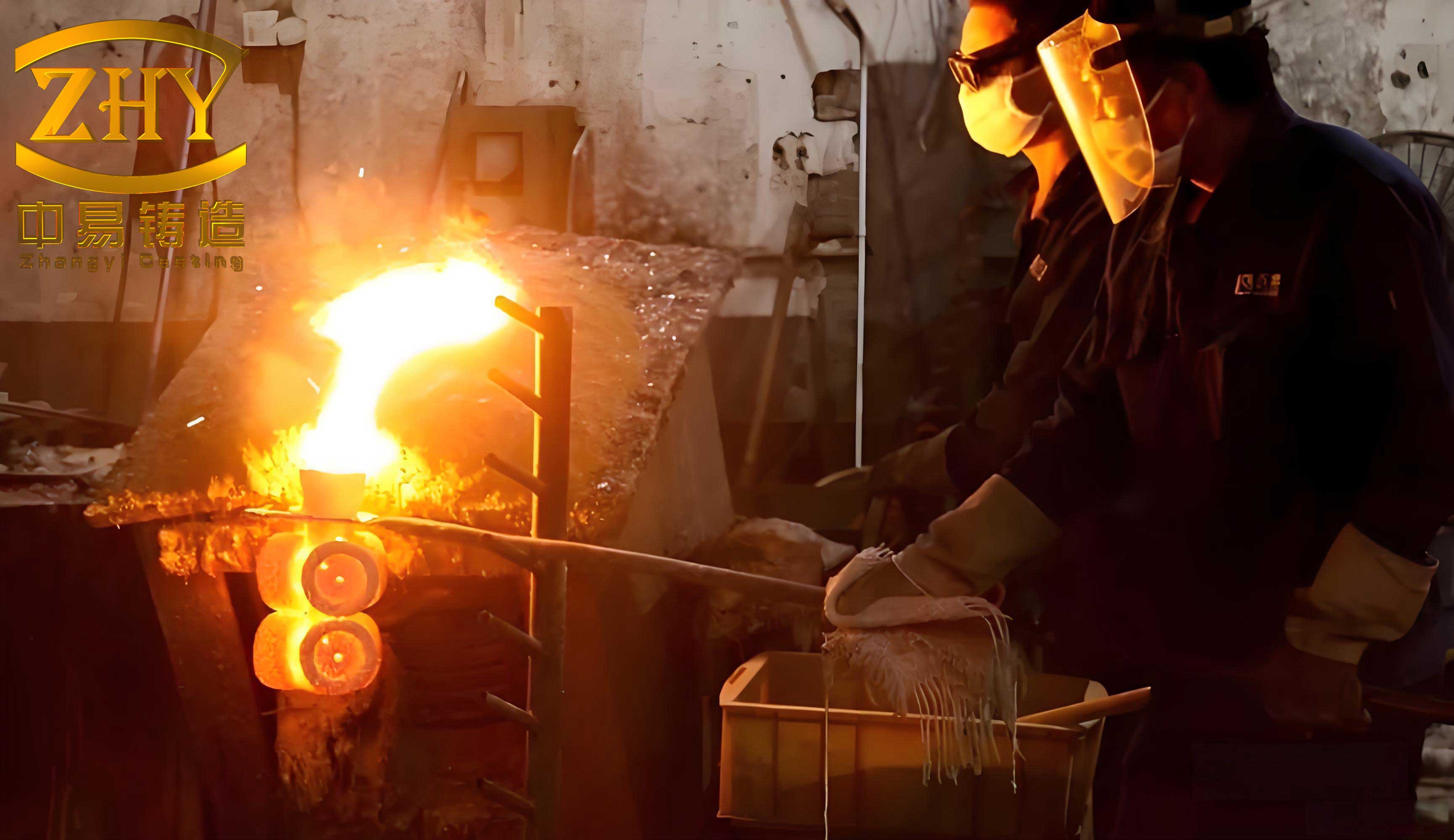
The drive towards automation and intelligence in manufacturing, embodied in concepts like Industry 4.0, is now reaching the investment casting process. The vision of an intelligent shell production line integrates programmable logic control (PLC) systems, robotic handling, real-time process monitoring, and adaptive control. This paradigm shift promises not only enhanced consistency and quality in shell fabrication but also significant reductions in environmental impact through optimized resource use and waste minimization, aligning with the principles of green manufacturing. The core of such an advanced investment casting process, however, remains rooted in the sophisticated understanding and engineering of its constituent materials.
1. Refractory Materials: The Structural Backbone
Constituting approximately 90% of the shell’s mass, refractory materials form its structural skeleton. Their selection is paramount and is guided by a set of stringent requirements: high refractoriness, low and uniform thermal expansion coefficient, good thermal shock resistance, chemical inertness towards the molten metal, and cost-effectiveness. Refractories are typically categorized based on their layer application: face coat (in contact with the metal), backup coats (providing structural support), and stucco (for building thickness).
1.1 Face Coat Refractories: The Critical Interface
The face coat refractory directly interacts with the molten alloy, making its chemical stability at high temperature the primary concern. Reactions at this interface can lead to surface defects such as roughness, penetration, or chemical contamination of the casting.
Zirconium-Based Systems: Zircon (ZrSiO4) and zirconia (ZrO2) are mainstays for casting high-temperature alloys. Zircon sand offers excellent properties: good slurry fluidity, high covering power, and spherical grain morphology that aids in coating uniformity and filling fine details. Its high melting point (~2550°C for ZrO2) provides excellent refractoriness. A key advantage of ZrO2 is its use in composite systems to mitigate the drawbacks of other refractories. For instance, introducing ZrO2 into MgO-based systems significantly improves their thermal shock resistance and reduces susceptibility to hydration, leading to the development of high-performance MgO-ZrO2 compositions. For reactive alloys like titanium aluminides, zirconates such as BaZrO3 are favored due to their exceptional chemical inertness. The interfacial stability can be described by considering the Gibbs free energy of reaction ($\Delta G$) between the refractory and metal melt:
$$ \Delta G = \Delta H – T\Delta S $$
Where a highly positive $\Delta G$ indicates thermodynamic stability and low reactivity, a desired state for face coat materials.
Calcium Oxide and Yttria Systems: CaO exhibits excellent thermodynamic stability, particularly in vacuum, but suffers from poor hydration resistance. It is rarely used alone but is valuable in composites. CaZrO3, for example, offers a favorable combination of stability and cost. Y2O3 is arguably the most inert refractory against molten titanium, but its high cost limits widespread use. Consequently, it is often employed as a potent additive or sintering aid. Research shows that adding small amounts (e.g., 3 wt.%) of Y2O3 to CaO or MgO systems can inhibit grain growth during sintering, enhancing the density and thermal shock resistance of the resultant shell. The role of such additives in controlling microstructure can be related to the Zener pinning pressure ($P_z$) which retards grain boundary movement:
$$ P_z = \frac{3 \gamma_{gb} f_v}{2 r} $$
where $\gamma_{gb}$ is the grain boundary energy, $f_v$ is the volume fraction of particles, and $r$ is their radius.
Alumina-Based Systems: Fused alumina (Al2O3) is a traditional, robust refractory widely used for steel castings. Modern developments focus on multi-component systems. The Al2O3-MgO-CaO system is particularly noteworthy. The presence of phases like spinel (MgAl2O4) and calcium dialuminate (CaAl4O7) imparts excellent hot strength, slag erosion resistance, and improved thermal shock behavior due to their tailored thermal expansion characteristics. The formation of these in-situ bonding phases during firing is crucial for high-temperature shell strength.
The properties of key face coat refractories are compared below:
| Refractory System | Key Characteristics | Primary Application/Consideration |
|---|---|---|
| Zircon (ZrSiO4) | Excellent fluidity, good inertness, spherical grain shape. | Standard for Ni/Co-based superalloys; also used as stucco. |
| Zirconia (ZrO2) & Composites (e.g., MgO-ZrO2) | Very high refractoriness, improves thermal shock resistance of matrices. | For demanding applications; composites enhance performance. |
| Barium Zirconate (BaZrO3) | Superior chemical inertness against reactive melts. | Specialized for TiAl and other reactive alloy casting. |
| Calcium Zirconate (CaZrO3) | Good stability, more cost-effective than some zirconates. | Used for steel and some non-ferrous alloys. |
| Yttria (Y2O3) | Extremely inert, low thermal conductivity, expensive. | Premium choice for Ti alloys; often used as additive/sintering aid. |
| Alumina-Based Systems (e.g., Al2O3-MgO-CaO) | High strength, good corrosion resistance, tunable properties. | Workhorse for ferrous alloy investment casting process. |
1.2 Backup Coat Refractories: Strength and Permeability
Backup coats do not contact molten metal directly, so the focus shifts to providing structural integrity, thermal insulation, and adequate permeability for gases to escape during pouring. Cost-effectiveness becomes a major factor.
Alumino-Silicates: Materials like molochite, calcined kaolin (e.g., coal-series kaolin), and mullite are extensively used. They offer good refractoriness, reasonable cost, and adequate strength. A critical aspect is their behavior during firing. The formation of mullite (3Al2O3·2SiO2) from kaolin precursors enhances high-temperature strength. However, the presence of fluxing impurities (Fe, K, Na, Ca oxides) can lead to the formation of low-melting glassy phases at high temperatures, causing shell distortion or softening. The firing temperature profile must be carefully controlled; excessive temperatures can lead to over-sintering and a drastic increase in “retained strength,” making shell removal after casting difficult.
Fused Silica: Fused silica (SiO2) is prized for its near-zero thermal expansion coefficient, resulting in exceptional thermal shock resistance. Its most unique property is the tendency for high-temperature strength to be inversely related to retained strength. Upon heating above 1200°C, fused silica undergoes a cristobalite transformation, which experiences a large volume contraction upon cooling, promoting shell friability and easy knockout. This makes it an excellent choice for complex castings where shell removal is challenging. Blending fused silica with other backup materials (e.g., kaolin, quartz) is a common strategy to balance permeability, strength, and collapsibility. Composite systems, such as fused silica with cordierite additions, have been shown to further improve thermal shock resistance and reduce firing shrinkage.
The evolution of the investment casting process increasingly relies on the strategic combination of different refractory materials across the shell’s cross-section to optimize performance for specific alloy systems and casting geometries.
2. Binders: The Ceramic Glue
Binders provide the cohesive force that holds refractory particles together, transitioning from a liquid medium to a solid bond during shell building. The choice of binder profoundly impacts drying kinetics, shell strength, surface finish, and environmental footprint.
Silica Sol: As an aqueous colloidal suspension of nano-silica particles, silica sol is the most widely used binder in precision investment casting. It is environmentally friendly (no volatile organic compounds or need for chemical hardeners), produces shells with excellent surface finish and high fired strength. Its main drawback has traditionally been long drying times due to the slow evaporation of water. Intensive research has led to the development of “fast-dry” modified silica sols. These advanced binders incorporate additives or have modified particle size distributions to accelerate gelling and drying, reducing layer drying times to 1-2 hours without compromising performance. Furthermore, modifications with hybrid fibers (e.g., carbon-nylon) have been explored to enhance green strength, thermal conductivity, and crack resistance of the shell.
Ethyl Silicate: Hydrolyzed ethyl silicate is an alcohol-based binder known for its rapid drying (due to alcohol evaporation) and excellent “green” (unfired) strength. It offers good wettability and slurry rheology. However, it releases alcohol vapors during processing, requiring ventilation, and typically produces shells with lower fired strength compared to silica sol. Its key advantage is superior high-temperature deformability or “yield,” which can be beneficial in reducing hot tearing in certain alloys. In practice, a hybrid approach is often employed: using silica sol for critical face coats to ensure surface quality and ethyl silicate for backup coats to speed up the investment casting process cycle. The hydrolysis reaction of ethyl silicate can be simplified as:
$$ \text{Si(OC}_2\text{H}_5)_4 + 2\text{H}_2\text{O} \rightarrow \text{SiO}_2 + 4\text{C}_2\text{H}_5\text{OH} $$
Sodium Silicate (Water Glass): This is a low-cost, rapid-drying binder, but its use has diminished due to significant drawbacks. It requires chemical hardening (typically with ammonium salts, producing ammonia fumes) and tends to yield shells with higher surface roughness and lower dimensional accuracy. Its primary modern application is in hybrid systems. A common cost-effective strategy is the “composite shell” process: using silica sol for the face coat and sodium silicate for backup coats. This combines the good surface finish of silica sol with the faster build time and lower cost of sodium silicate, while also mitigating environmental impact compared to a full sodium silicate process. Efforts to develop more environmentally acceptable hardeners for sodium silicate, such as aluminum salts, continue.
3. Additives: The Performance Modifiers
Additives are used in small quantities but play indispensable roles in tailoring slurry behavior, shell properties, and ultimate casting quality.
Wetting Agents & Defoamers: These chemicals modify the surface tension of the slurry. Wetting agents improve the coverage and uniformity of the slurry on the wax pattern. Defoamers are crucial for eliminating air bubbles entrapped during mixing, which could otherwise create weak spots or surface defects on the shell. Common defoamers include alcohols (e.g., octanol) and polyether-based compounds. Their mechanism involves reducing local surface tension, leading to bubble rupture. The effectiveness depends not only on the chemical type but also on process parameters like mixing time and method; over-mixing can re-entrain air.
Grain Refiners: Incorporated into the face coat slurry, grain refiners promote heterogeneous nucleation on the mold wall, resulting in a fine-grained, equiaxed surface layer on the casting. This improves mechanical properties and reduces susceptibility to surface defects like freckles or cracks. Cobalt aluminate (CoAl2O4) is a classic example for superalloys, where Co is released into the melt to act as a nucleant. The effectiveness depends on crystallographic matching with the solidifying alloy. The undercooling required for heterogeneous nucleation ($\Delta T_{het}$) is less than for homogeneous nucleation ($\Delta T_{hom}$):
$$ \Delta T_{het} = \phi \cdot \Delta T_{hom} $$
where $\phi$ is a factor (0 < $\phi$ < 1) dependent on the contact angle between the nucleant and the solid.
Mineralizers: These are additions that promote specific ceramic phase formations during the high-temperature firing of the shell. By facilitating reactions like mullitization or the development of high-temperature bonding phases, they significantly enhance the shell’s fired strength and refractoriness. Examples include small additions of oxides like MgO, Y2O3, or mixtures like Al-Si-Ca. They act by forming transient liquid phases that enhance sintering kinetics or by directly participating in solid-state reactions to form strengthening phases. Their concentration must be optimized, as excessive amounts can lead to unwanted low-melting phases or increased retained strength.
The mechanisms of common additive classes are summarized below:
| Additive Class | Primary Function | Typical Examples & Notes |
|---|---|---|
| Wetting Agents | Reduce slurry surface tension to improve coating uniformity. | Various surfactants. Critical for complex wax patterns. |
| Defoamers | Prevent/eliminate air bubbles in slurry. | Octanol, polyether glycols. Process control (mixing time) is key. |
| Grain Refiners | Promote fine equiaxed grain structure at casting surface. | Cobalt aluminate (CoAl2O4). Usage ~0.1-0.26 wt.% in face coat. |
| Mineralizers / Sintering Aids | Enhance ceramic bonding and high-temperature strength during firing. | MgO, Y2O3, Al-Si-Ca/Mg mixes. Low additions (2-6%) are typical. |
4. Conclusion and Future Perspectives
The advancement of the investment casting process is inextricably linked to the continuous innovation in shell materials. The current trajectory emphasizes:
- Material Synergy and Composites: The future lies not in single “perfect” materials but in engineered combinations and composites. This includes tailored blends of refractories across shell layers, hybrid binder systems, and sophisticated multi-functional additives. The use of computational thermodynamics and modeling to predict phase stability and reactions between the shell and alloy will become increasingly important.
- Performance-Driven Selection: Material choice is becoming more application-specific. For reactive alloys like titanium, the focus remains on maximizing inertness (e.g., via Y2O3 or advanced zirconates). For high-volume steel casting, the development revolves around cost-effective, high-strength alumina-based systems with optimized sintering behavior.
- Process Integration and Intelligence: The ultimate goal is the seamless integration of advanced materials into automated, intelligent shell production lines. This involves real-time monitoring of slurry parameters (viscosity, density), controlled drying environments, and adaptive process control to ensure unparalleled consistency. The investment casting process must evolve towards a data-driven operation.
- Sustainability (Green Casting): Environmental considerations are paramount. This drives the preference for water-based binders like silica sol, the development of less harmful hardeners for alternative systems, and the optimization of material usage to minimize waste. The recycling of spent ceramic shells is an area of growing research interest.
In conclusion, the journey towards producing the next generation of complex, high-integrity castings via the investment casting process relies on a deep and nuanced understanding of ceramic shell materials. By strategically advancing refractories, binders, and additives—and integrating them through intelligent manufacturing principles—the industry can meet the escalating demands of modern engineering while adhering to sustainable practices.