
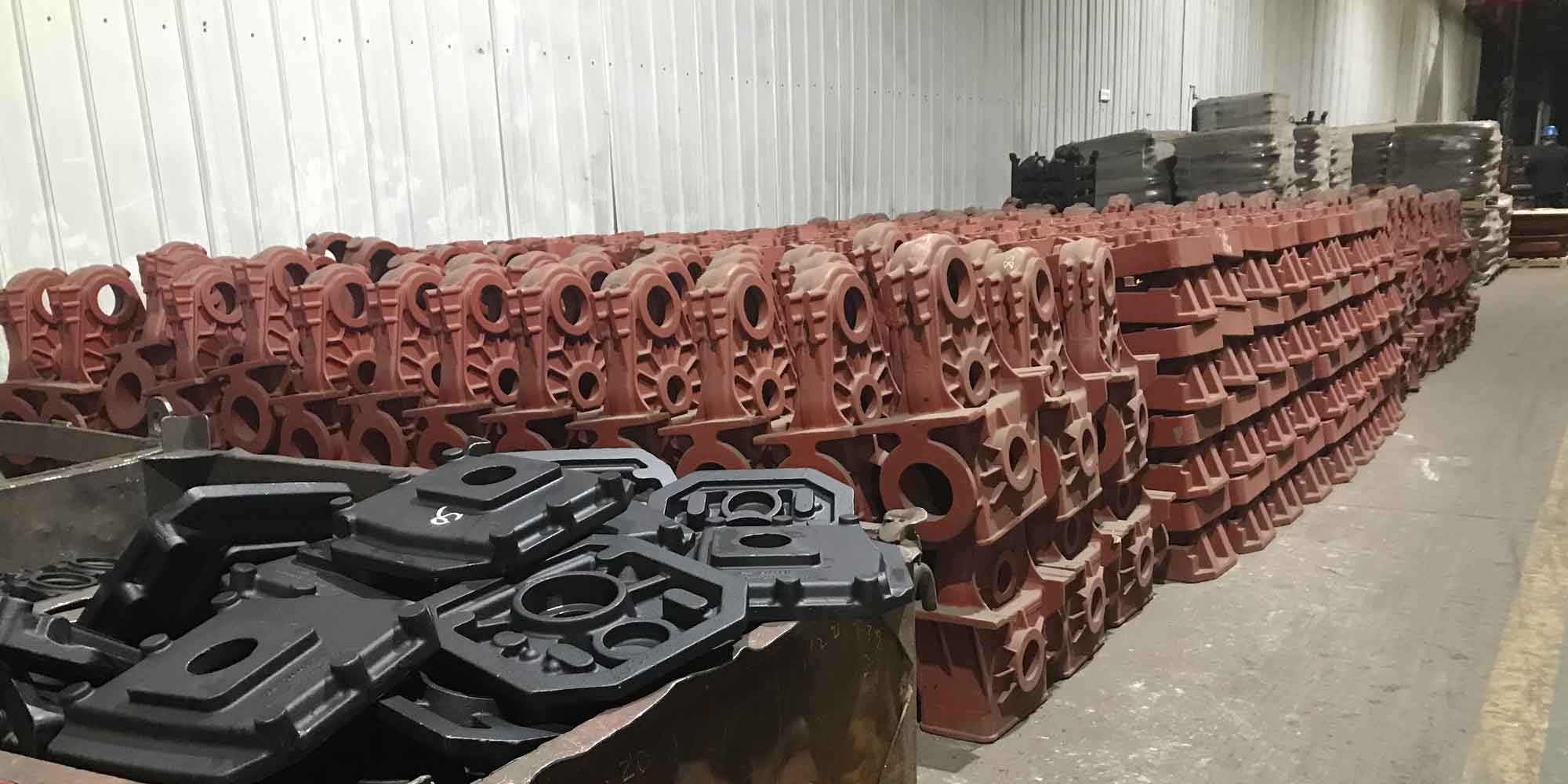
In the field of rail vehicle manufacturing, the bogie serves as a critical running gear, responsible for supporting, guiding, braking, and connecting the vehicle body to the wheelsets. Its performance directly impacts the stability, comfort, and safety of the entire vehicle. Among the various components of a bogie, steel castings are widely utilized due to their excellent design flexibility, high structural integrity, good weldability, and low susceptibility to cracking. These steel castings, often used in brackets and other structural parts, provide the necessary strength and durability required for demanding railway applications. However, during the casting process or in service, defects such as cracks or shrinkage porosity can occur in these steel castings. Rather than discarding entire components—which would be economically prohibitive—repair welding is often employed to rectify defects that fall within acceptable size limits. This approach not only reduces costs but also shortens production cycles, making it a standard practice in the industry.
The repair welding of steel castings is analogous to the first welding of the cast material. Due to the non-uniform heat input during welding, significant residual stresses are inevitably introduced into the weld joint, particularly tensile residual stresses. These residual stresses, if combined with operational stresses, can lead to high-strain cycles that may initiate fatigue cracks prematurely, thereby reducing the service life of the bogie frame. Therefore, understanding and controlling the residual stress in repair-welded joints of steel castings is of paramount importance. Moreover, fatigue failure is a predominant mode of failure in welded structures under cyclic loading. Bogie frames are subjected to alternating loads during service, and the fatigue performance of repair-welded joints in steel castings directly influences the overall fatigue life of the bogie. Thus, a comprehensive investigation into the residual stress and fatigue behavior of these joints is essential for ensuring the reliability and longevity of rail vehicles.
In this study, I focus on the repair welding of E260-450-MS steel castings, which are commonly used in bogie applications. These steel castings conform to the UIC-80-2O—1981 standard for technical delivery conditions of steel castings for rolling stock. The primary objective is to evaluate the effects of different pre- and post-weld treatment processes on the residual stress distribution and fatigue performance of the welded joints. Three distinct process routes are considered, involving variations in preheating and post-weld heat treatment. By conducting residual stress measurements using X-ray diffraction and axial tensile fatigue tests, I aim to identify the optimal repair welding process that minimizes residual stress and maximizes fatigue resistance. The findings from this research will provide valuable insights for optimizing repair welding procedures for steel castings in bogie manufacturing, contributing to enhanced safety and cost-effectiveness in the rail industry.
Materials and Experimental Methodology
The base material used in this investigation is E260-450-MS steel castings. This grade is a low-alloy cast steel with a nominal yield strength of 260 MPa and tensile strength of 450 MPa, offering a balanced combination of strength and toughness suitable for bogie components. The chemical composition of the E260-450-MS steel castings, as well as the welding wire employed for repair, is detailed in Table 1. The welding wire, designated as A-G46 4M21 4Si1 (hereafter referred to as “4Si1”), is a low-alloy wire with enhanced silicon content, designed to match the mechanical properties of the base steel castings.
| Material | C | Si | Mn | P | S | Cr | Cu | Ni | V |
|---|---|---|---|---|---|---|---|---|---|
| E260-450-MS | ≤0.25 | ≤0.50 | ≤1.00 | ≤0.040 | ≤0.040 | ≤0.25 | — | ≤0.35 | — |
| 4Si1 | 0.06–0.14 | 0.80–1.20 | 1.60–1.90 | ≤0.025 | ≤0.025 | ≤0.15 | ≤0.15 | ≤0.15 | ≤0.03 |
The mechanical properties of the base steel castings and the welding wire are summarized in Table 2. The E260-450-MS steel castings exhibit a minimum yield strength of 260 MPa, tensile strength of 450 MPa, and elongation of 20%, with Charpy impact energy of at least 25 J at 20°C. The 4Si1 welding wire offers higher strength, with a yield strength of 460 MPa and tensile strength ranging from 530 to 680 MPa, along with excellent impact toughness at low temperatures (≥47 J at -40°C). This combination ensures that the welded joint can meet the rigorous demands of bogie service.
| Material | Yield Strength (MPa) | Tensile Strength (MPa) | Elongation A (%) | Impact Test Temperature (°C) | Impact Energy (J) |
|---|---|---|---|---|---|
| E260-450-MS | ≥260 | ≥450 | 20 | 20 | ≥25 |
| 4Si1 | ≥460 | 530–680 | 20 | -40 | ≥47 |
To simulate the repair welding of defects in steel castings, test plates were prepared from E260-450-MS steel castings with dimensions of 500 mm × 150 mm × 12 mm. A single V-groove with a bevel angle of 30° and a root face of 2 mm was machined using wire cutting, representing a through-thickness defect requiring full penetration welding. The welding method employed was Metal Active Gas (MAG) welding, utilizing a SAF OPTIPULS 500IW welding machine. The shielding gas was a argon-rich mixture, with a flow rate of 18 L/min. The welding parameters for each pass are detailed in Table 3, with interpass temperature controlled below 180°C to prevent excessive heat accumulation.
| Weld Pass Sequence | Weld Layer | Current Polarity | Welding Current (A) | Welding Voltage (V) | Welding Speed (mm/s) | Heat Input (J/mm) |
|---|---|---|---|---|---|---|
| 1 | Root | Direct Current Reverse Polarity | 155–170 | 17–19 | 3–4 | 527–861 |
| 2 | Fill | Direct Current Reverse Polarity | 270–300 | 28–31 | 7–9 | 672–1063 |
| 3 | Fill | Direct Current Reverse Polarity | 280–310 | 29–32 | 4–5 | 1299–1984 |
| 4 | Cap | Direct Current Reverse Polarity | 280–310 | 29–32 | 4–5 | 1299–1984 |
Three different treatment processes were applied to the welded joints, as outlined in Table 4. These processes vary in preheating conditions and post-weld treatments to assess their influence on residual stress and fatigue performance. Process E1 involves preheating at 120–150°C before welding, followed by natural cooling and subsequent post-weld heat treatment (PWHT). Process E2 also includes preheating at 120–150°C but with natural cooling and no PWHT. Process E3 omits preheating and instead uses insulation covering for slow cooling after welding, without PWHT. The PWHT for E1 consists of heating to 590±15°C at a rate not exceeding 150°C/h, holding for 3 hours, and cooling at a rate below 120°C/h to below 200°C before removal from the furnace. This thermal cycle aims to relieve residual stresses and improve microstructure homogeneity in the steel castings.
| Welded Joint ID | Welding Method | Preheating | Post-Weld Treatment |
|---|---|---|---|
| E1 | MAG | 120–150°C | Natural Cooling + PWHT |
| E2 | MAG | 120–150°C | Natural Cooling (No PWHT) |
| E3 | MAG | No Preheating | Insulation Covering + Slow Cooling (No PWHT) |
Residual stress measurements were conducted using X-ray diffraction (XRD) with a portable μ-X360n fully automatic residual stress detection system. This non-destructive technique is based on the principle that lattice strain in crystalline materials, such as steel castings, causes shifts in diffraction peaks, which can be correlated to stress. A chromium target was used with a collimator diameter of 1 mm, operating at 30 kV and mA. Prior to testing, each measurement point was electrolytically polished using a MIR-EPLAB-01 electrolytic polishing corrosion instrument with saturated NaCl aqueous solution as the electrolyte to remove surface layers and obtain stress-free reference data. The measurement points were arranged symmetrically across the weld joint, at distances of 0 mm, ±5 mm, ±10 mm, ±20 mm, ±30 mm, ±45 mm, ±75 mm, and ±125 mm from the weld centerline. This grid allows for mapping of both longitudinal residual stress (σ_x, parallel to the weld) and transverse residual stress (σ_y, perpendicular to the weld).
Fatigue performance was evaluated through axial tensile fatigue tests in accordance with GB/T 3075—2021, “Metallic materials—Fatigue testing—Axial force-controlled method.” A QBG-250G high-frequency fatigue testing machine was employed, operating at room temperature with sinusoidal loading at a stress ratio R = 0 (fully reversed tension). The frequency ranged from 90 to 100 Hz to accelerate testing while maintaining validity. Fatigue specimens were machined from the welded joints with a gauge section designed to ensure failure occurs in the region of interest. The specimen dimensions are as follows: total length of 150 mm, gauge length of 40 mm, width of 12 mm, and thickness of 12 mm, with fillet radii to reduce stress concentration. The fatigue limit was defined as the stress amplitude at which the specimen endured 10^7 cycles without failure, representing the condition fatigue limit for infinite life design in steel castings.
The fatigue life data were analyzed using the S-N curve approach, where the relationship between stress amplitude S and number of cycles to failure N is modeled. For many metallic materials, including steel castings, this relationship can be linearized in logarithmic coordinates. Thus, I express the S-N curve as:
$$ \lg S = a – b \cdot \lg N $$
where a and b are material constants determined through linear regression of experimental data. The fatigue limit σ_0 at R=0 can then be estimated from this equation for N = 10^7 cycles. This formulation is crucial for predicting the fatigue life of repair-welded joints in steel castings under cyclic loading.
Results and Analysis
The residual stress distributions for the three welded joints (E1, E2, and E3) are presented in Figure 1, which plots longitudinal residual stress σ_x and transverse residual stress σ_y as functions of distance from the weld centerline. All three joints exhibit similar trends: tensile residual stresses dominate in the weld and heat-affected zone (HAZ), while compressive residual stresses prevail in the base metal region farther from the weld. This pattern is characteristic of welded joints in steel castings, arising from non-uniform heating and cooling during welding. The localized expansion and contraction are constrained by the surrounding cooler material, leading to plastic deformation and residual stress upon cooling.
For joint E1 (with PWHT), the residual stresses are significantly reduced, with all measured values below 100 MPa. The peak longitudinal tensile stress is 95 MPa, and the transverse stresses are predominantly compressive, with a peak compressive stress of 87 MPa. This demonstrates the effectiveness of PWHT in stress relief for steel castings, as the thermal cycle promotes microstructural recovery and stress relaxation. In contrast, joints E2 and E3 (without PWHT) show higher residual stress levels. Joint E2 has a peak longitudinal tensile stress of 209 MPa and a peak transverse tensile stress of 91 MPa, while joint E3 exhibits even higher peaks: 309 MPa longitudinally and 187 MPa transversely. These results highlight that the absence of PWHT leads to greater residual stress magnitudes, which could adversely affect fatigue performance in steel castings.
Comparing E2 and E3, it is evident that preheating (E2) results in lower residual stresses than slow cooling without preheating (E3). This can be attributed to the reduction in thermal gradient during welding when preheating is applied. The preheating temperature of 120–150°C minimizes the temperature difference between the weld zone and the base steel castings, thereby decreasing the driving force for residual stress formation. In contrast, post-weld insulation covering in E3 only slows the cooling rate but does not mitigate the initial thermal gradient, leading to higher residual stresses. This insight is vital for optimizing repair welding processes for steel castings, where controlling residual stress is key to ensuring component integrity.
The fatigue test results are summarized in the S-N curves shown in Figure 2, where stress amplitude S is plotted against cycles to failure N on logarithmic scales. The data points for each joint are fitted with linear regression lines according to the equation $$ \lg S = a – b \cdot \lg N $$. The fitted parameters and calculated fatigue limits σ_0 at R=0 are presented in Table 5. Joint E2 exhibits the highest fatigue limit of 204.46 MPa, followed by E3 at 173.94 MPa and E1 at 164.17 MPa. The fatigue ratio, defined as σ_0 divided by the average tensile strength R_m of the joint, is 0.409 for E2, 0.370 for E3, and 0.345 for E1. These ratios are relatively low, indicating that the fatigue strength of repair-welded joints in steel castings is significantly lower than their static strength, a common phenomenon due to stress concentrations and defects.
| Joint ID | Stress Ratio R | Linear Fit Equation (lg S vs. lg N) | Fatigue Limit σ_0 (MPa) | Average Tensile Strength R_m (MPa) | Fatigue Ratio σ_0 / R_m |
|---|---|---|---|---|---|
| E1 | 0 | lg S = 2.9958 – 0.1115 · lg N | 164.17 | 475.7 | 0.345 |
| E2 | 0 | lg S = 2.8461 – 0.0765 · lg N | 204.46 | 500.3 | 0.409 |
| E3 | 0 | lg S = 2.9142 – 0.0964 · lg N | 173.94 | 469.7 | 0.370 |
Fractographic analysis of the fatigue specimens using scanning electron microscopy (SEM) reveals common features across all joints. All fractures occurred in the base metal region of the steel castings, away from the weld metal or HAZ. The fatigue origins were consistently located near the specimen surface and were associated with microscopic shrinkage porosity—a common casting defect in steel castings. This porosity arises during solidification when interdendritic liquid fails to feed shrinkage, creating small voids that act as stress concentrators. Under cyclic loading, these defects initiate cracks that propagate through the material, leading to fatigue failure. The fatigue crack propagation regions exhibit characteristic fatigue striations, indicative of incremental crack advance per cycle, while the final fracture zones show dimpled morphology typical of ductile overload. These findings underscore the critical role of casting quality in the fatigue performance of steel castings, even after repair welding.
The superior fatigue performance of joint E2 can be correlated with its residual stress profile. Although E2 has higher residual stresses than E1, its peak tensile stresses are lower than those in E3, and the distribution may be more favorable. Moreover, preheating in E2 likely refines the microstructure in the HAZ, reducing susceptibility to crack initiation. The lower fatigue limit of E1, despite its low residual stresses, may be attributed to microstructural changes induced by PWHT, such as over-aging or precipitate coarsening, which could soften the material and reduce fatigue resistance. This complex interplay between residual stress, microstructure, and defects highlights the need for a balanced approach in optimizing repair welding processes for steel castings.
To further analyze the fatigue behavior, I consider the effect of mean stress, which can be influenced by residual stresses. The modified Goodman relation is often used to account for mean stress effects in fatigue design:
$$ \frac{S_a}{S_e} + \frac{S_m}{S_u} = 1 $$
where \( S_a \) is the stress amplitude, \( S_e \) is the fatigue limit at zero mean stress, \( S_m \) is the mean stress, and \( S_u \) is the ultimate tensile strength. In the case of welded joints in steel castings, residual stresses contribute to \( S_m \). For joints with high tensile residual stresses (e.g., E3), the effective mean stress is increased, reducing the allowable stress amplitude for a given life. This aligns with the lower fatigue limit observed for E3 compared to E2. For E1, the compressive residual stresses may introduce a negative \( S_m \), which could theoretically enhance fatigue life, but the observed lower fatigue limit suggests that other factors, such as microstructural degradation, dominate.
Discussion on Process Optimization for Steel Castings
Based on the residual stress and fatigue data, process E2 emerges as the optimal repair welding procedure for E260-450-MS steel castings. It combines preheating at 120–150°C with natural cooling and no PWHT, offering a balance between residual stress control and fatigue performance. This process is not only effective but also practical for industrial applications, as it avoids the time and energy costs associated with PWHT. Preheating is relatively easy to implement in workshop conditions for steel castings, and natural cooling simplifies post-weld handling.
The importance of preheating in welding steel castings cannot be overstated. For steel castings with moderate carbon equivalents, preheating slows the cooling rate, reducing the risk of hydrogen-induced cracking and minimizing thermal gradients. The preheating temperature of 120–150°C is sufficient for E260-450-MS steel castings, which have a carbon content below 0.25%. This temperature range is high enough to mitigate cracking but low enough to avoid excessive microstructural changes. In contrast, omitting preheating, as in E3, leads to rapid cooling and high residual stresses, which are detrimental to fatigue life. While insulation covering can slow cooling, it is less effective than preheating in reducing the initial thermal gradient, as evidenced by the higher residual stresses in E3.
Post-weld heat treatment, while beneficial for stress relief, may not always be advantageous for fatigue performance in steel castings. In this study, PWHT (E1) reduced residual stresses but resulted in the lowest fatigue limit. This could be due to the tempering effect of PWHT, which may soften the HAZ or alter precipitate distributions, reducing resistance to crack initiation and propagation. Moreover, PWHT involves additional processing steps, increasing costs and production time. Therefore, for repair welding of steel castings where fatigue is a critical design criterion, avoiding PWHT may be preferable if preheating is adequately applied.
The fatigue failure origins at microscopic shrinkage porosity highlight a fundamental challenge in steel castings: inherent casting defects can limit fatigue life even after repair welding. This emphasizes the need for stringent quality control during the casting of steel components. Non-destructive testing methods, such as ultrasonic or radiographic inspection, should be employed to detect and assess defects before welding. Additionally, welding procedures should be designed to minimize the introduction of new defects, such as porosity or lack of fusion, which could further compromise fatigue performance.
From a design perspective, the fatigue data obtained in this study can be used to establish allowable stress ranges for repair-welded joints in steel castings under bogie loading conditions. Using the fatigue limit σ_0 and S-N curve parameters, the fatigue life at any stress amplitude can be estimated. For example, for joint E2, the fatigue life equation is:
$$ \lg S = 2.8461 – 0.0765 \cdot \lg N $$
Rearranging for N gives:
$$ N = 10^{\left( \frac{2.8461 – \lg S}{0.0765} \right)} $$
This equation allows engineers to predict the number of cycles to failure for a given stress amplitude, facilitating safe-life design approaches for steel castings in bogies. Furthermore, the residual stress data can be incorporated into finite element models to simulate the combined effect of residual and operational stresses, enabling more accurate fatigue assessments.
Conclusions
In this investigation, I examined the residual stress and fatigue performance of repair-welded joints in E260-450-MS steel castings for bogie applications. Three different treatment processes were evaluated, involving variations in preheating and post-weld heat treatment. The residual stress distributions showed consistent patterns across all joints, with tensile stresses in the weld and HAZ and compressive stresses in the base metal. Post-weld heat treatment effectively reduced residual stress magnitudes, but joints without PWHT exhibited higher residual stresses, particularly when preheating was omitted.
The fatigue tests revealed that the joint with preheating and no PWHT (E2) had the highest fatigue limit of 204.46 MPa, followed by the joint with slow cooling and no PWHT (E3) at 173.94 MPa, and the joint with PWHT (E1) at 164.17 MPa. All fatigue failures originated in the base metal region at microscopic shrinkage porosity, underscoring the influence of casting defects on fatigue behavior in steel castings. The optimal process for repair welding of E260-450-MS steel castings is preheating at 120–150°C before welding, followed by natural cooling without post-weld heat treatment. This process balances residual stress control and fatigue performance while being cost-effective and practical for industrial implementation.
These findings contribute to the body of knowledge on welding of steel castings and provide guidance for optimizing repair procedures in the rail industry. Future work could explore the effects of different welding parameters, such as heat input or welding sequence, on residual stress and fatigue in steel castings. Additionally, long-term fatigue testing under variable amplitude loading, simulating actual bogie service conditions, would further validate the results. By continuing to refine repair welding techniques for steel castings, we can enhance the durability and safety of bogie frames, supporting the advancement of rail transportation.