
Shrinkage in casting is arguably one of the most pervasive and challenging defects to control in metal casting processes. It represents the voids or porosity formed within a solidified casting due to the volume contraction of the metal as it transitions from liquid to solid and continues to cool in the solid state. The successful prediction and mitigation of shrinkage in casting are critical for ensuring the structural integrity, pressure tightness, and mechanical performance of cast components, especially in high-reliability industries like aerospace and defense. My focus in this discussion is to delve into the underlying mechanisms, present a sophisticated predictive methodology that addresses a significant gap in existing models, and demonstrate its practical verification. Traditional models often fall short, particularly for alloys with wide solidification ranges, because they inadequately account for the immense flow resistance within the mushy zone—a semi-solid region where liquid metal coexists with a solid dendritic network. This oversight can lead to inaccurate predictions of shrinkage in casting for critical materials like beryllium-aluminum (Be-Al) alloys.
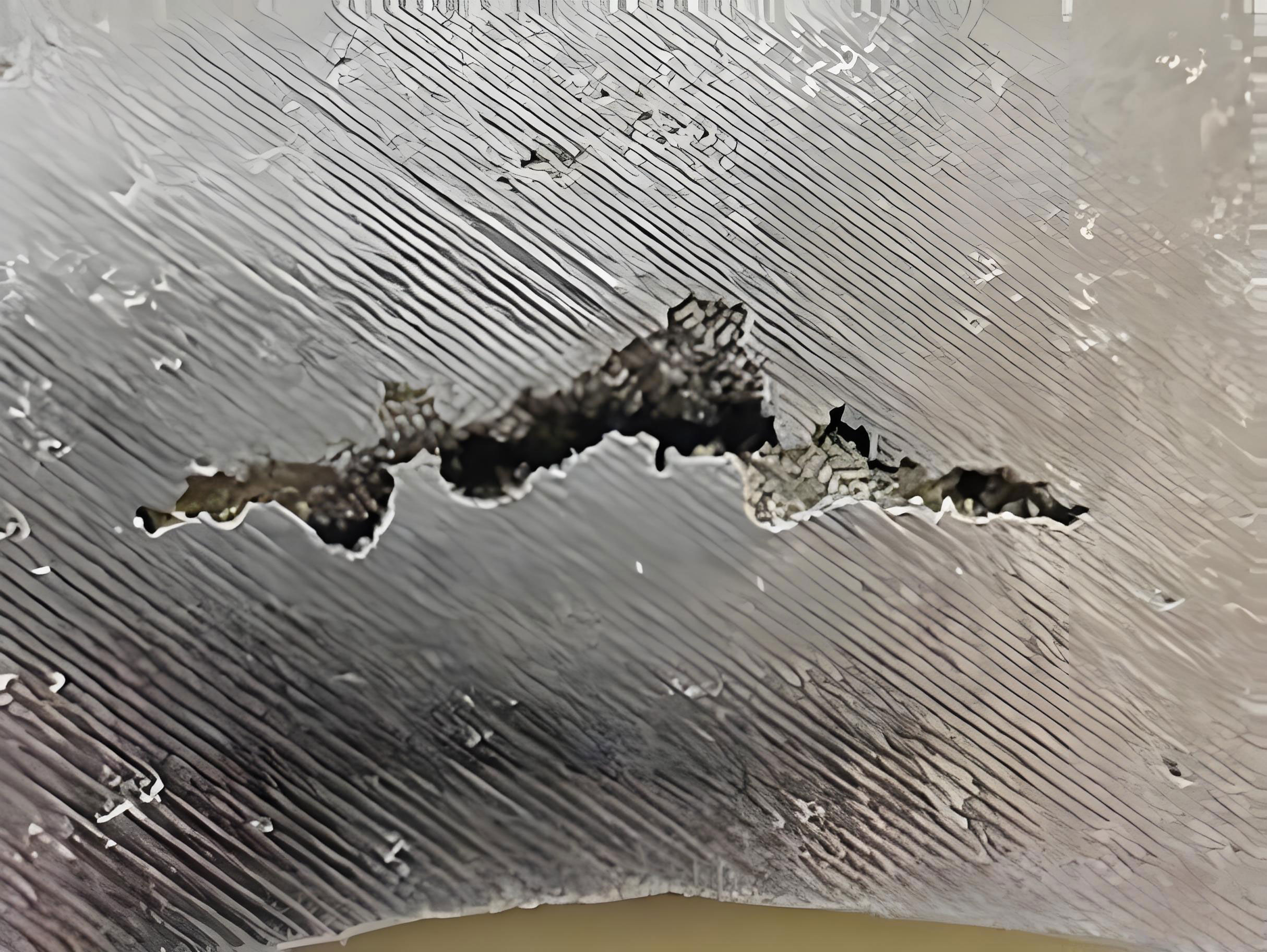
Understanding the Defect: Mechanisms and Types of Shrinkage in Casting
The formation of shrinkage in casting is fundamentally a consequence of density differences. Most metals and alloys are denser in the solid state than in the liquid state. As solidification proceeds, this phase change contraction must be compensated for by the inflow of liquid metal from other parts of the casting or the feeding system (e.g., risers). If this feeding is obstructed or insufficient, a void—shrinkage porosity—forms. We can categorize shrinkage in casting into two primary types based on their morphology and location:
- Macroscopic Shrinkage Cavities (Pipe Shrinkage): These are large, concentrated voids often visible to the naked eye. They typically occur in the last regions to solidify, such as hot spots or the top of a riser, where a continuous liquid feed path is cut off. The shrinkage cavity forms as a single, sizable pore.
- Microscopic Shrinkage Porosity (Dispersed Shrinkage): This type consists of numerous small, interconnected or isolated pores distributed throughout a region of the casting. It is particularly common in alloys that solidify over a wide temperature range (mushy solidification), where an extensive network of dendrites impedes liquid flow during the final stages of solidification. Predicting this dispersed shrinkage in casting is often more complex than predicting a single cavity.
The key challenge in predicting shrinkage in casting, especially micro-porosity, lies in accurately modeling the fluid flow and pressure drop through the mushy zone. This zone acts as a porous medium, and the ease with which liquid can traverse it to feed solidification shrinkage is quantified by its permeability.
The Critical Role of Mushy Zone and Predictive Challenges
For alloys like Be-Al, which possess an extremely wide solidification interval (e.g., ~646°C to ~1082°C), the mushy zone is dominant. A dense, interlocking network of dendrites forms, creating immense resistance to liquid flow. Standard casting simulation software often treats solidification simplistically, either ignoring this resistance or using crude thresholds (e.g., a critical solid fraction beyond which flow stops). These approaches fail to capture the continuous and spatially varying nature of the feeding difficulty, leading to significant inaccuracies in predicting shrinkage in casting for such alloys.
A more physically sound approach models the mushy zone using Darcy’s law for flow in porous media. The pressure gradient $\nabla P$ required to drive a feeding flow with velocity $\vec{u}$ is given by:
$$\vec{u} = -\frac{K}{\mu} \nabla P$$
where $\mu$ is the dynamic viscosity of the liquid metal and $K$ is the permeability of the mushy zone. The permeability is not constant; it is a strong function of the liquid fraction $f_l$ and the dendritic microstructure, particularly the secondary dendrite arm spacing (SDAS), $\lambda_2$. A common model is the Carman-Kozeny equation:
$$K = \frac{f_l^3}{(1 – f_l)^2} K_0, \quad \text{with} \quad K_0 = \frac{d^2}{180}$$
Here, $d$ is a characteristic length scale of the pores, often related to $\lambda_2$. The core of an advanced prediction method lies in accurately calculating the cumulative pressure drop along any potential feeding path from a liquid source (like a riser) to a solidifying region. If the available metallostatic pressure (from the liquid head) is less than this cumulative pressure drop, feeding ceases, and shrinkage in casting forms.
An Advanced Model for Predicting Shrinkage in Casting
I propose and have developed a comprehensive model that specifically addresses the mushy zone resistance problem for predicting shrinkage in casting. The workflow integrates thermal simulation with a novel pressure-field solver and defect allocation logic.
1. Mushy Zone Pressure Drop Model
The incremental pressure drop $dP$ for liquid flowing through a small mushy zone element of length $dx$ can be derived by combining Darcy’s law with conservation of mass during solidification. The feeding velocity is related to the solidification shrinkage ($\beta = (\rho_s – \rho_l)/\rho_l$), the cooling rate $\dot{T}$, and the temperature gradient $G$:
$$\vec{u} = \beta \frac{\dot{T}}{G} \frac{1}{f_l}$$
Combining this with the Darcy-Carman-Kozeny formulation leads to an expression for the pressure drop across a cell with temperatures changing from $T_1$ to $T_2$:
$$\Delta P_{cell} = \frac{\rho_s – \rho_l}{\rho_l} \cdot \frac{180 \mu}{C_T^2} \cdot \frac{\dot{T}^{5/3}}{G^2} \cdot \Gamma_c$$
where $C_T$ is the secondary dendrite arm spacing coefficient ($\lambda_2 = C_T \dot{T}^{-1/3}$), and $\Gamma_c$ is a temperature integral term:
$$\Gamma_c = \int_{T_1}^{T_2} \frac{\left( \frac{T_l – T}{T_l – T_s} \right)^2}{\left( \frac{T – T_s}{T_l – T_s} \right)^2} dT = T_2 – T_1 – 2(T_l – T_s) \ln\frac{T_2-T_s}{T_1-T_s} – (T_l-T_s)^2 \left( \frac{1}{T_2-T_s} – \frac{1}{T_1-T_s} \right)$$
This equation is pivotal. It shows that the pressure drop is highly sensitive to the solidification interval $(T_l – T_s)$—the wider the interval, the greater the potential pressure loss, explaining why predicting shrinkage in casting for Be-Al alloys is so difficult with conventional methods.
2. Isolated Liquid Region Search and Pressure Field Solution
To determine where shrinkage in casting will occur, we must identify regions that become hydraulically isolated from any pressure source (e.g., riser, atmosphere). This is a “shortest path” problem but for maximum available pressure. We need to find, for every cell in the liquid/mushy zone, the feeding path from a pressure source that results in the *minimum total pressure loss*. If this minimum loss is greater than the available pressure head at the source, the cell cannot be fed.
I implemented an optimized algorithm based on a priority queue (a min-heap variant) to solve this efficiently. Instead of a simple breadth-first search which has prohibitive complexity, this algorithm has a time complexity of $O(n \log n)$, making it feasible for meshes with millions of cells. The core steps are:
- Initialize a priority queue with all source cells (e.g., top surface cells in contact with atmosphere in an open riser), keyed by their available pressure (head).
- Repeatedly extract the cell with the *highest* available pressure from the queue.
- For each of its neighbors that is still liquid/mushy, calculate the new available pressure (current cell pressure minus the inter-cell pressure drop $\Delta P_{cell}$). If this new pressure is higher than the neighbor’s previously recorded best pressure, update the neighbor’s pressure and insert it into the queue.
- Repeat until the queue is empty. Cells whose final calculated pressure is zero or negative are deemed “unfeedable.”
Clusters of connected cells that are all feedable constitute an “isolated liquid region” that can feed itself internally but is cut off from other regions. Shrinkage in casting will form within these regions as they solidify.
3. Shrinkage Volume Allocation
Within each isolated liquid region, the total volumetric shrinkage $\Delta V$ occurring in a time step $\Delta t$ is calculated based on the density change and the volume of metal transitioning from liquid to solid:
$$\Delta V = \frac{\rho_l – \rho_s}{\rho_l} \left( \sum_{\Omega_{parent}} f_l \Omega_{cell} – \sum_{\Omega_{children}} f_l \Omega_{cell} \right)$$
This shrinkage volume must be allocated as porosity. The allocation follows a priority rule based on the cell’s “feeding potential,” defined as its available pressure (from the pressure field solution). Cells with the lowest (or zero) available pressure are the most likely sites for pore nucleation. The shrinkage volume is assigned first to these critical cells. If the local volume of a cell is insufficient to accommodate its allocated shrinkage, the excess is redistributed to the next most critical cells. This logic effectively models how shrinkage in casting initiates in the most difficult-to-feed spots and can grow or coalesce.
Determining a Critical Material Parameter: Secondary Dendrite Arm Spacing
The accuracy of the pressure drop model heavily depends on the secondary dendrite arm spacing coefficient $C_T$. I developed an integrated measurement system to determine this parameter reliably, combining numerical simulation, image processing, and experimental metallography.
The relationship is $\lambda_2 = C_T \dot{T}^{-1/3}$. To find $C_T$, we need pairs of $\lambda_2$ and the corresponding local average solidification rate $\dot{T}$.
- Obtaining $\dot{T}$: A casting (like a step-shaped test casting) is simulated to obtain its temperature field. A module developed using NX secondary development allows picking specific points on the 3D CAD model of the casting. The system maps these points to the simulation mesh, extracts their thermal history, and calculates the local $\dot{T}$ as $(T_l – T_s) / t_{local}$, where $t_{local}$ is the local solidification time. Results are saved in a location file.
- Measuring $\lambda_2$: Metallographic samples are taken from the corresponding physical locations on the cast step block. An automated image analysis system built with OpenCV processes these micrographs:
- Scale Recognition: The system uses adaptive binarization and template matching to automatically identify the scale bar and its real-world length.
- Dendrite Core Detection: The region of interest is binarized and morphologically processed (erosion) to isolate dendritic cores. Contours are detected, and their centroid positions are calculated.
- Spacing Calculation: The distances between neighboring centroids are measured in pixels, converted to real lengths using the scale, and averaged to obtain $\lambda_2$ for that sample.
The data from multiple locations is then compiled. A representative dataset might look like the following:
| Sample Location | Avg. Solidification Rate $\dot{T}$ (°C/s) | Measured SDAS $\lambda_2$ (μm) |
|---|---|---|
| A1 (Thin Section) | 0.692 | 54.7 |
| B1 | 0.710 | 53.4 |
| C1 | 0.713 | 52.2 |
| D1 (Thick Section) | 0.599 | 50.5 |
| E1 | 0.588 | 59.3 |
| F1 | 0.611 | 56.1 |
Plotting $\lambda_2$ against $\dot{T}^{-1/3}$ and performing a linear fit yields the slope, which is the coefficient $C_T$. For a Be-Al alloy, a value around 47.5 μm/(°C/s)^{-1/3} might be determined. This precise coefficient is then fed into the pressure drop model, completing the physically-based prediction system for shrinkage in casting.
Model Implementation and Experimental Verification
The advanced shrinkage prediction model was implemented as a dynamic-link library (DLL) and integrated into a commercial casting simulation system (InteCast). This allows it to access the computed temperature field ($T$, $G$, $\dot{T}$) at each time step and return the predicted porosity distribution.
Verification via Be-Al Step Casting
A Be-Al step casting was produced via investment casting. X-ray computed tomography (CT) was used to map the actual shrinkage in casting defects. The simulation using the new model predicted a high propensity for shrinkage in casting, particularly in the thicker (20mm) step, with porosity concentrated in the thermal center. The CT scan confirmed a significant shrinkage cavity in exactly that location. By comparing the predicted high-porosity region ($\text{Porosity} > 0.4\%$) with the actual defect region from CT, a prediction accuracy of approximately 87% was achieved. In contrast, a standard shrinkage prediction method (e.g., a thermal criterion like Niyama or a basic pressure-based method) that neglects mushy zone resistance predicted most defects only in the top riser, failing to capture the critical internal shrinkage in casting in the thick section.
Application to a Complex Be-Al Casting
The model was further applied to a real, thin-walled Be-Al aerospace component with a complex gating system. The advanced model predicted dispersed micro-porosity throughout the feeder system and in isolated hot spots within the casting itself—a result aligned with foundry experience for such alloys. The traditional model again predicted a defect-free casting with all shrinkage in casting relegated to the main riser, which is non-conservative and misleading for process qualification. This comparison underscores the necessity of the advanced model for reliably predicting shrinkage in casting for wide-freezing-range alloys.
Conclusion and Perspective
Accurately predicting shrinkage in casting, especially for advanced materials like beryllium-aluminum alloys, requires moving beyond simplistic geometric or thermal rules. The governing physics involves a delicate balance between the metallostatic pressure driving feeding and the cumulative pressure loss through the tortuous, dendritic mushy zone. The model presented here, centered on a precise mushy zone pressure drop calculation and an efficient hydraulic isolation algorithm, provides a robust framework for this prediction. The integration of a systematic method for determining the key microstructural parameter $C_T$ ensures the model is grounded in material-specific data.
This approach significantly improves the predictive capability for shrinkage in casting, transforming simulation from a qualitative guide to a quantitative engineering tool. It enables foundry engineers to design feeding systems and optimize process parameters with greater confidence, ultimately reducing scrap rates, improving mechanical properties, and accelerating the development of high-performance cast components. Future work will focus on extending the model to account for other factors influencing shrinkage in casting, such as gas precipitation and deformation of the dendritic network, to achieve even greater universality and accuracy.