
In the field of metallurgy and materials engineering, the solidification process of metals is critical as it directly influences the microstructure and mechanical properties of cast components. Traditional methods for designing casting processes rely heavily on empirical knowledge, which can be inefficient and costly. This study focuses on applying the Cellular Automata-Finite Element (CAFE) method to simulate the solidification microstructure of 16Cr20Ni14Si2 high-temperature steel, commonly used in aerospace and military applications due to its excellent oxidation resistance and high-temperature performance. Precision casting, particularly investment casting, is the preferred manufacturing technique for complex thin-walled components like engine connectors, as it allows for near-net-shape production with high dimensional accuracy. The CAFE approach bridges macro-scale thermal analysis with micro-scale grain evolution, providing insights into nucleation and growth phenomena during solidification. By integrating mathematical models of heat transfer, fluid dynamics, and crystallography, this research aims to optimize process parameters such as mold thickness, preheat temperature, pouring temperature, cooling rate, and pouring speed to enhance grain refinement and minimize defects. The findings demonstrate that CAFE simulations accurately predict grain size and morphology, with experimental validation showing minimal error, thus affirming the method’s reliability for investment casting processes.
The solidification of metals involves phase transformation from liquid to solid, encompassing nucleation and growth stages. In precision casting, controlling these stages is essential to achieve fine equiaxed grains, which improve mechanical properties. Heterogeneous nucleation predominates in practical casting scenarios, where impurities or mold walls act as nucleation sites, reducing the energy barrier compared to homogeneous nucleation. The nucleation rate can be expressed as:
$$ I = I_0 \exp\left(-\frac{\Delta G^* + \Delta G_d}{k_B T}\right) $$
where \( \Delta G^* \) is the critical nucleation energy, \( \Delta G_d \) is the diffusion activation energy, \( k_B \) is the Boltzmann constant, and \( T \) is temperature. For investment casting, factors like mold properties and cooling conditions significantly influence nucleation kinetics. Growth kinetics, particularly dendrite tip velocity, are governed by undercooling, described by the Kurz-Giovanola-Trivedi (KGT) model for multicomponent alloys like 16Cr20Ni14Si2. The growth velocity \( v \) relates to undercooling \( \Delta T \) as:
$$ v = a_2 \Delta T^2 + a_3 \Delta T^3 $$
where \( a_2 \) and \( a_3 \) are growth kinetics coefficients derived from alloy thermodynamics.
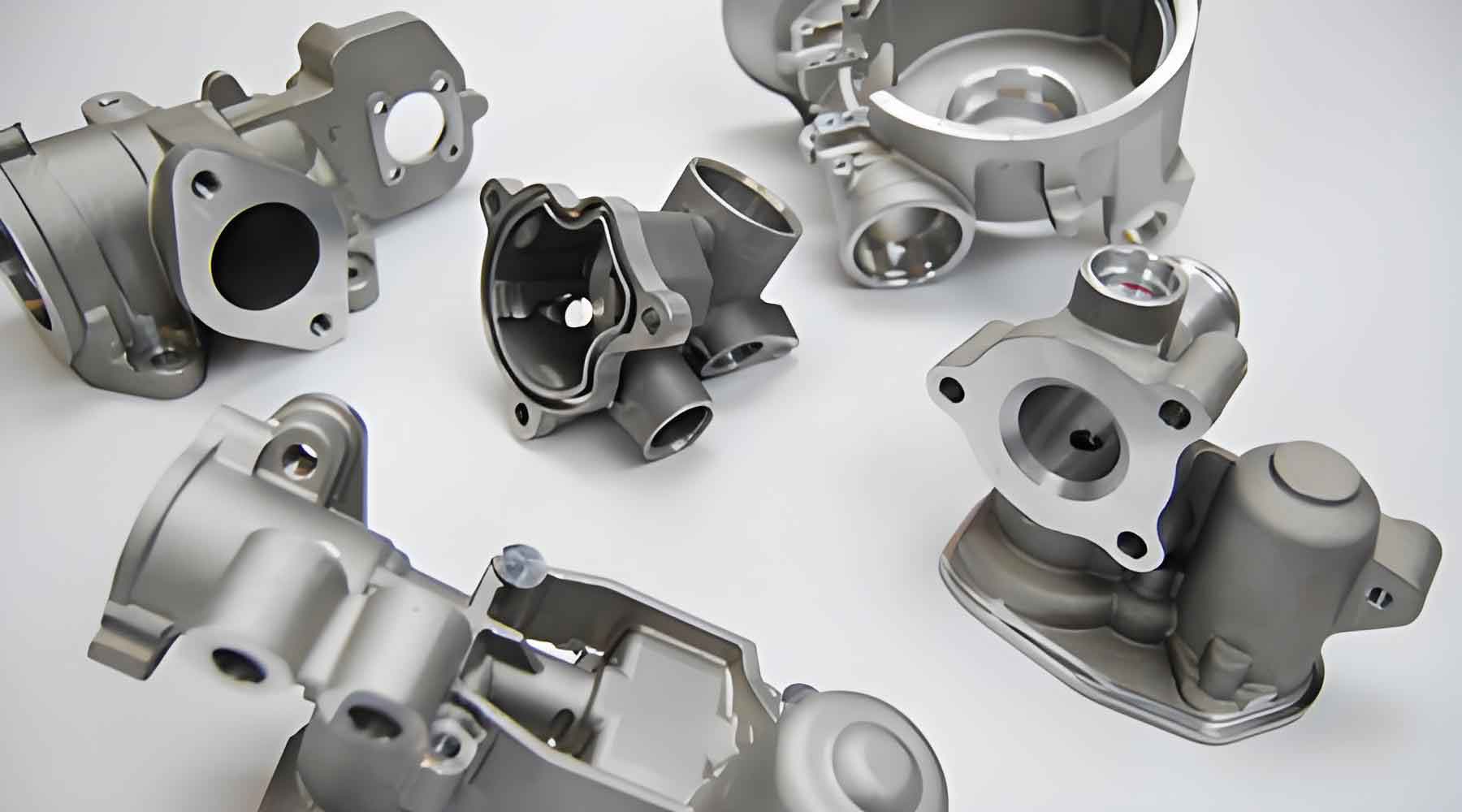
Investment casting, a form of precision casting, involves creating a wax pattern, coating it with ceramic slurry to form a shell, dewaxing, and pouring molten metal. This process is ideal for complex geometries, as it ensures high surface finish and dimensional precision. Key steps include pattern formation, shell building, dewaxing, and solidification. Numerical simulations, such as finite element analysis, are employed to predict defects like shrinkage and porosity, but they often overlook microstructural evolution. The CAFE method addresses this by coupling macro-scale heat transfer with micro-scale cellular automata (CA) models. In CA, the domain is discretized into cells, each representing a state (liquid, solid, or interface), and evolution follows predefined rules based on neighbor interactions. For 16Cr20Ni14Si2, which has an austenitic face-centered cubic structure, CA models incorporate nucleation parameters, solute diffusion, and dendritic growth to simulate grain structures.
The mathematical foundation of CAFE involves thermodynamical models for heat transfer—conduction, convection, and radiation—governed by Fourier’s law, Newton’s cooling law, and Stefan-Boltzmann law, respectively. The energy equation accounts for latent heat release during solidification:
$$ \rho C_p \frac{\partial T}{\partial t} = \nabla \cdot (k \nabla T) + \rho L \frac{\partial f_s}{\partial t} $$
where \( \rho \) is density, \( C_p \) is specific heat, \( k \) is thermal conductivity, \( L \) is latent heat, and \( f_s \) is solid fraction. Macro-scale fluid flow during mold filling is described by Navier-Stokes equations with gravity effects:
$$ \frac{\partial \rho}{\partial t} + \nabla \cdot (\rho \vec{v}) = 0 $$
$$ \rho \left( \frac{\partial \vec{v}}{\partial t} + \vec{v} \cdot \nabla \vec{v} \right) = -\nabla p + \mu \nabla^2 \vec{v} + \rho \vec{g} $$
For micro-scale CA, nucleation is modeled using a continuous Gaussian distribution, where nucleation density \( n(\Delta T) \) varies with undercooling:
$$ n(\Delta T) = \int_0^{\Delta T} \frac{dn}{d(\Delta T’)} d(\Delta T’) $$
$$ \frac{dn}{d(\Delta T)} = \frac{n_{\text{max}}}{\sqrt{2\pi} \Delta T_\sigma} \exp\left(-\frac{(\Delta T – \Delta T_{\text{max}})^2}{2 \Delta T_\sigma^2}\right) $$
Here, \( n_{\text{max}} \) is maximum nucleation density, \( \Delta T_{\text{max}} \) is mean undercooling, and \( \Delta T_\sigma \) is standard deviation. Solute redistribution during solidification follows Fick’s law, and for non-equilibrium conditions, the Scheil-Gulliver equation applies:
$$ C_s = k_p C_0 (1 – f_s)^{(k_p – 1)} $$
where \( C_s \) is solid composition, \( k_p \) is partition coefficient, and \( C_0 \) is initial composition.
In this study, the CAFE model was implemented using ProCAST software, with material properties for 16Cr20Ni14Si2 derived from its composition: Fe-balanced, 0.1% C, 1.61% Si, 0.55% Mn, 20.24% Cr, and 14.03% Ni. Thermal parameters, such as conductivity and enthalpy, were obtained from databases, and growth kinetics coefficients were calculated as \( a_2 = 6.63 \times 10^{-8} \) and \( a_3 = 1.18 \times 10^{-6} \). Nucleation parameters included surface nucleation density \( n_s = 8.55 \times 10^5 \, \text{m}^{-2} \) and volume nucleation density \( n_v = 6.32 \times 10^8 \, \text{m}^{-2} \), with undercooling parameters set to \( \Delta T_{v,n} = 8 \, \text{K} \) and \( \Delta T_{v,\sigma} = 0.1 \, \text{K} \).
To investigate the effects of investment casting parameters on microstructure, a cylindrical specimen (30 mm diameter, 80 mm height) was simulated. An orthogonal experimental design was used to analyze mold thickness, mold preheat temperature, pouring temperature, and cooling method, as shown in Table 1.
| Experiment | Mold Thickness (mm) | Mold Temperature (K) | Pouring Temperature (K) | Cooling Method |
|---|---|---|---|---|
| 1 | 7 | 1203.15 | 1933.15 | Air Cooling |
| 2 | 7 | 1173.15 | 1923.15 | Water Cooling |
| 3 | 7 | 1143.15 | 1913.15 | Oil Cooling |
| 4 | 8 | 1203.15 | 1923.15 | Oil Cooling |
| 5 | 8 | 1173.15 | 1913.15 | Air Cooling |
| 6 | 8 | 1143.15 | 1933.15 | Water Cooling |
| 7 | 9 | 1203.15 | 1913.15 | Water Cooling |
| 8 | 9 | 1173.15 | 1933.15 | Oil Cooling |
| 9 | 9 | 1143.15 | 1923.15 | Air Cooling |
Cooling methods were defined with specific heat transfer coefficients: air cooling (10 W/m²·K), water cooling (5000 W/m²·K), and oil cooling (1500 W/m²·K). Simulation results for grain count at the specimen’s bottom section are summarized in Table 2, indicating that water cooling, thinner molds, lower preheat temperatures, and lower pouring temperatures promote finer grains.
| Experiment | Grain Count | Average Radius (cm) | Equiaxed Grain Percentage (%) |
|---|---|---|---|
| 1 | 81 | 0.229 | ~70 |
| 2 | 981 | 0.169 | ~93 |
| 3 | 943 | 0.177 | ~91 |
| 4 | 826 | 0.179 | ~85 |
| 5 | 85 | 0.215 | ~69 |
| 6 | 970 | 0.179 | ~82 |
| 7 | 918 | 0.169 | ~84 |
| 8 | 847 | 0.176 | ~69 |
| 9 | 102 | 0.178 | ~68 |
The optimal parameters for maximizing grain refinement were identified as 7 mm mold thickness, 1173.15 K mold temperature, 1923.15 K pouring temperature, and water cooling. Additionally, pouring speed was varied from 0.5 to 4.5 kg/s, revealing that higher speeds increase grain count and align grain orientation with the heat flow direction, as described by the average deviation angle \( \theta \):
$$ \theta = \frac{1}{N} \sum |\phi_i – \phi_{<001>}| $$
where \( \phi_i \) is the grain orientation angle and \( \phi_{<001>} \) is the preferred growth direction. At 3.5 kg/s, grain count peaked at 1221 with a deviation of 31.999°, indicating efficient dendritic fragmentation and competitive growth.
For complex thin-walled engine connector housing (216 mm × 180 mm × 240 mm, 70% wall thickness 3.5 mm), a gating system was designed with top pouring to ensure directional solidification. Riser dimensions were calculated using thermal modulus methods: riser neck diameter \( D_g = 80 \) mm, riser diameter \( D_r = 96 \) mm, and riser height \( H_r = 100 \) mm. The volumetric shrinkage \( \varepsilon \) was computed as:
$$ \varepsilon = 1.9943 + 7.459w_C – 4.73w_C^2 + \sum K_i w_i + K_T (T_p – T_s) $$
where \( w_C \) is carbon content (0.1%), \( K_i \) are coefficients for alloying elements, \( K_T = 0.014 \), \( T_p = 1923.15 \) K, and \( T_s = 1714.15 \) K (liquidus temperature). This yielded \( \varepsilon = 3.69\% \), and riser volume \( V_r = 679,300 \) mm³. Macro-scale simulations confirmed complete filling within 3.6 s and sequential solidification, with shrinkage defects confined to the riser, validating the gating design for investment casting.
CAFE simulations on the 3D model examined nucleation parameters’ impact. Variations in volume nucleation density \( n_v \) and undercooling \( \Delta T_{v,n} \) showed that higher values increase grain count and equiaxed fraction, as summarized in Table 3.
| Model | \( n_v \) (m⁻³) | \( \Delta T_{v,n} \) (K) | Grain Count | Equiaxed Grain Percentage (%) |
|---|---|---|---|---|
| a | 1.54 × 10⁹ | 10 | 3040 | 94.72 |
| b | 1.54 × 10⁹ | 8 | 2843 | 92.58 |
| c | 1.54 × 10⁹ | 6 | 2649 | 90.97 |
| d | 6.32 × 10⁸ | 10 | 1383 | 84.53 |
| e | 6.32 × 10⁸ | 8 | 1259 | 83.42 |
| f | 6.32 × 10⁸ | 6 | 1106 | 82.37 |
| g | 3.31 × 10⁸ | 10 | 377 | 69.87 |
| h | 3.31 × 10⁸ | 8 | 346 | 69.33 |
| i | 3.31 × 10⁸ | 6 | 303 | 68.81 |
These results align with the principle that increased nucleation density and undercooling enhance heterogeneous nucleation, leading to finer microstructures. Furthermore, solution heat treatment at 1100°C with holding times of 20, 30, and 40 minutes was simulated. Longer holding times coarsened grains without altering morphology, as grain growth follows Ostwald ripening:
$$ \bar{r}^3 – \bar{r}_0^3 = k t $$
where \( \bar{r} \) is average grain radius, \( \bar{r}_0 \) is initial radius, \( k \) is a rate constant, and \( t \) is time. A 20-minute holding time was selected to minimize grain growth while ensuring carbide dissolution.
Experimental validation involved fabricating the connector housing via investment casting. Wax patterns were injected, assembled into trees, and coated with zircon-based slurries. After dewaxing and preheating, molten 16Cr20Ni14Si2 was poured at 1923.15 K with a speed of 3.5 kg/s. Post-casting, solution treatment was applied, followed by shell removal and surface finishing. Macroscopic inspection revealed no defects like cold shuts or shrinkage, and metallographic analysis showed an average grain radius of 12.8 μm, compared to 11.91 μm from CAFE simulations—a mere 0.07% error. This confirms the CAFE method’s accuracy in predicting microstructure for precision casting applications.
In conclusion, the CAFE method effectively simulates the solidification microstructure of 16Cr20Ni14Si2 in investment casting. Key parameters such as mold thickness, preheat temperature, pouring temperature, cooling rate, and pouring speed significantly influence grain refinement, with optimal conditions yielding fine equiaxed grains. Nucleation parameters directly control grain density and morphology, while holding time during heat treatment affects grain size without inducing columnar-to-equiaxed transitions. The close agreement between simulation and experiment underscores CAFE’s utility in optimizing precision casting processes for high-performance components.