
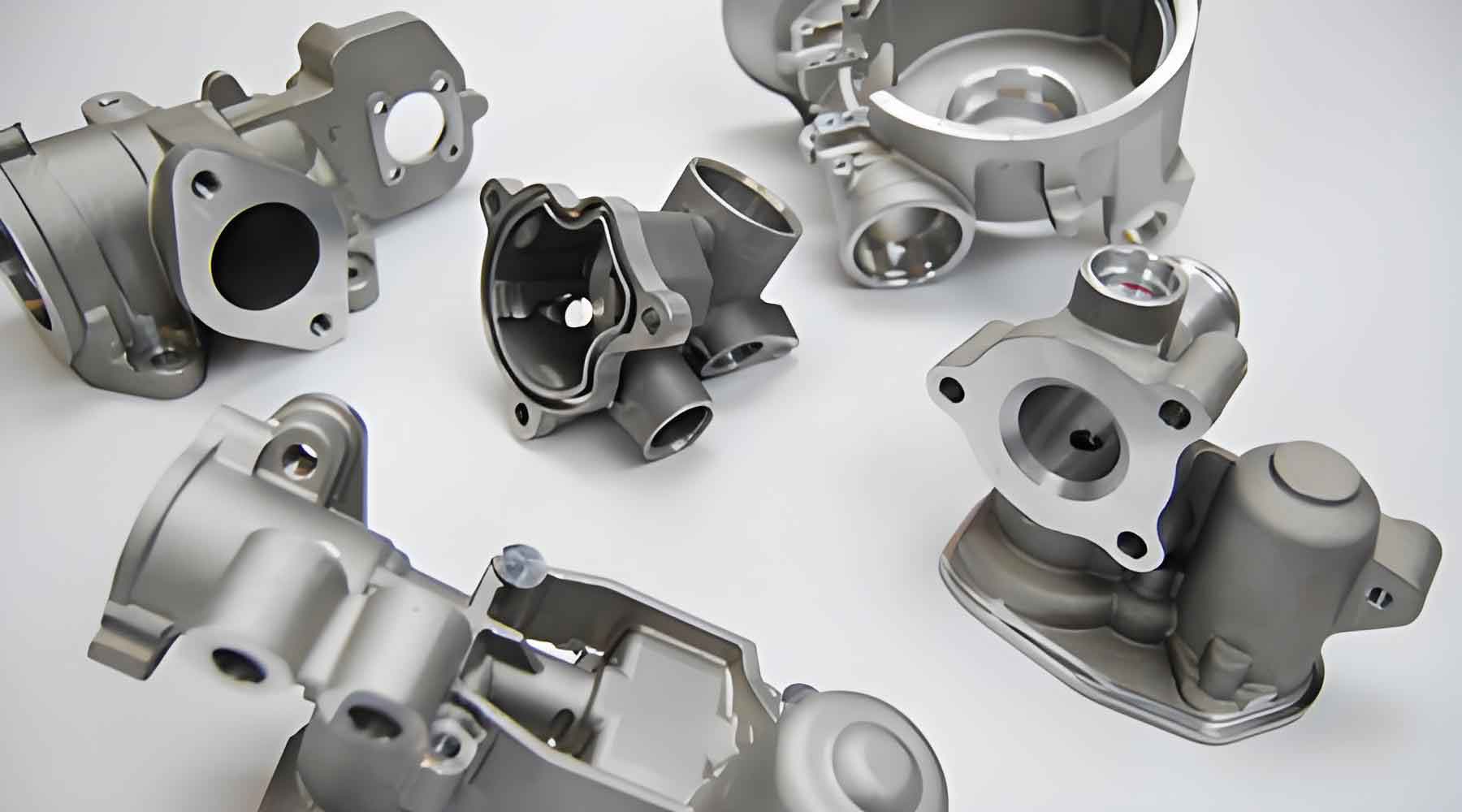
In the field of railway engineering, couplers play a critical role in connecting train carriages and ensuring operational safety by transmitting dynamic tensile and compressive loads. As a key component, the coupler must withstand significant longitudinal impacts during train startup and braking, which can lead to fatigue failure if not properly designed and manufactured. Lost wax investment casting, a precision manufacturing process, is widely used to produce complex and high-strength couplers due to its ability to create intricate geometries with excellent surface finish and dimensional accuracy. This method involves creating a wax pattern, coating it with a ceramic shell, and then melting out the wax to form a mold for casting. In this study, I focus on evaluating the performance of a locomotive coupler fabricated through lost wax investment casting, specifically examining its working stress distribution and fatigue life using finite element analysis (FEA). The objective is to provide a rapid and effective assessment method that leverages material testing and simulation to ensure reliability under various operational conditions.
The use of lost wax investment casting for producing couplers offers several advantages, including the ability to achieve fine microstructural details and high mechanical properties. However, the process must be optimized to avoid defects such as porosity or inclusions that could compromise fatigue resistance. To begin, I conducted material sampling and testing on the coupler material, which is an E-grade steel (ZG25MnCrNiMo), commonly employed in railway applications for its superior strength and toughness. Microstructural analysis was performed using optical microscopy (OM) and scanning electron microscopy (SEM) to examine the as-cast and heat-treated conditions. The as-cast microstructure consisted primarily of pearlite and ferrite, with grain sizes exceeding the standards specified in industry guidelines. After heat treatment, which included normalizing followed by quenching at 910°C and tempering at 590°C for 2 hours, the microstructure transformed into a fine, uniform tempered sorbite. This refinement significantly enhanced the mechanical properties, as confirmed by tensile tests.
The tensile testing results, averaged from multiple samples, are summarized in Table 1. The as-cast material exhibited an average tensile strength of 626 MPa and elongation of 2.1%, indicating brittle behavior. In contrast, the heat-treated material achieved an average tensile strength of 1020 MPa, yield strength of 920 MPa, and elongation of 14.5%, meeting the requirements of railway standards. The improvement is attributed to the homogenization of the microstructure and reduction of defects through the lost wax investment casting process combined with appropriate heat treatment. Fracture surface analysis further revealed that the as-cast specimens displayed cleavage features characteristic of brittle fracture, while the heat-treated ones showed quasi-cleavage patterns with tear ridges, indicating enhanced ductility. These material properties form the basis for the subsequent finite element simulations.
| Material Condition | Elongation δ (%) | Reduction in Area ψ (%) | Tensile Strength σ_b (MPa) | Yield Strength σ_s (MPa) | Elastic Modulus E (MPa) | Hardness (HBW) |
|---|---|---|---|---|---|---|
| As-Cast | 2.1 | 3.9 | 626 | — | 78,220 | 235–241 |
| Heat-Treated | 14.5 | 34.5 | 1020 | 920 | 215,470 | 315–320 |
| Industry Standard (Heat-Treated) | ≥14 | ≥30 | ≥830 | ≥690 | 174,000 | 241–311 |
To simulate the coupler’s behavior under operational loads, I developed a finite element model in ANSYS Workbench. The coupler geometry, with overall dimensions of 594 mm × 370 mm × 350 mm, was meshed using tetrahedral elements. A global mesh size of 1.75 mm was adopted after convergence studies, with local refinement to 0.5 mm in stress concentration areas, resulting in a model with 3,369,299 nodes and 1,924,534 elements. The connections and loading conditions were modeled based on the coupler’s working principles: during train startup, the coupler experiences tensile forces primarily on the hook jaw’s arc surface, while during braking, compressive forces act on the connection interface and hook jaw. Three typical load cases were considered: steady-state operation (600 kN tension), startup (800 kN tension), and emergency braking (1000 kN compression). Additionally, for fatigue analysis, two load spectra were applied: a modified Daqin Line spectrum (adjusted for urban rail conditions) and a sinusoidal spectrum representing Chongqing Metro Line 3, with amplitudes up to 800 kN.
The fatigue life prediction in this study employs the strain-life (E-N) approach, which is more accurate for high-cycle fatigue assessments. The relationship between strain amplitude and fatigue life is given by the Manson-Coffin equation:
$$ \frac{\Delta \varepsilon}{2} = \frac{\sigma_f’}{E} (2N_f)^b + \varepsilon_f’ (2N_f)^c $$
where \(\Delta \varepsilon\) is the total strain range, \(\sigma_f’\) is the fatigue strength coefficient, \(\varepsilon_f’\) is the fatigue ductility coefficient, \(b\) is the fatigue strength exponent, \(c\) is the fatigue ductility exponent, and \(N_f\) is the number of cycles to failure. For the E-grade steel used in lost wax investment casting, the parameters were derived from material tests: \(\sigma_f’ = 1051\) MPa, \(b = -0.05927\), \(\varepsilon_f’ = 13.2987\), and \(c = -1.03023\). Substituting these into the equation yields:
$$ \frac{\Delta \varepsilon}{2} = \frac{1051}{2.1 \times 10^5} (2N_f)^{-0.05927} + 13.2987 (2N_f)^{-1.03023} $$
This formulation allows for the calculation of fatigue damage per cycle, which is integrated over the load spectra to estimate total life. The Brown-Miller multiaxial fatigue model and Goodman mean stress correction were applied in the ANSYS nCode module to account for complex loading conditions and surface effects, such as those inherent in lost wax investment casting where surface roughness can influence fatigue initiation.
Static strength simulations revealed that under steady-state operation (600 kN tension), the maximum von Mises stress in the coupler was 362.04 MPa, with a deformation of 2.41 mm. During startup (800 kN tension), the stress increased to 482.72 MPa and deformation to 3.21 mm, primarily concentrated at the hook head base due to asymmetric loading. In emergency braking (1000 kN compression), the stress peaked at 603.4 MPa with 4.01 mm deformation, localized at the connection interface and hook jaw protrusion. These values are well below the material’s yield strength of 920 MPa, confirming that the coupler meets strength requirements. The stress concentrations align with areas prone to fatigue, emphasizing the importance of design optimization in lost wax investment casting to mitigate these effects.
Fatigue life analysis using the Daqin Line load spectrum, which simulates heavy-haul railway conditions, indicated a minimum fatigue life of \(10^{5.2}\) cycles at critical locations, such as the hook head base and connection areas. Given the spectrum’s length of 15,000 km, the total safe operating distance was calculated as:
$$ C = l \cdot n = 15,000 \, \text{km} \times 10^{5.2} \approx 1,578,000 \, \text{km} $$
For urban rail applications, such as Chongqing Metro Line 3 (56.4 km length with 6 daily trips), this translates to a service life of approximately 12.8 years based on the Daqin spectrum. However, to better represent urban operations, a sinusoidal load spectrum with amplitudes ranging from 580 kN to 1440 kN was applied to generate a fatigue life curve, as shown in Table 2. The results demonstrate that at normal operating loads (600 kN), the coupler can endure over \(5.1 \times 10^7\) cycles, far exceeding the typical fatigue limit of \(10^7\) cycles for steel components. At higher loads, such as 1440 kN, the life drops to \(2.6 \times 10^4\) cycles due to increased stress levels up to 868.6 MPa. The fatigue strength at 800 kN was 482.7 MPa, which is below the theoretical endurance limit, validating the conservatism of the simulation.
| Load Amplitude (kN) | Maximum Stress (MPa) | Fatigue Life (Cycles) | Estimated Service Life (Years)* |
|---|---|---|---|
| 1440 | 868.6 | 2.6 × 10^4 | 0.26 |
| 800 | 482.7 | 3.15 × 10^7 | 31.5 |
| 600 | 361.9 | 5.1 × 10^7 | 740.7 |
| 580 | 349.9 | > 10^7 | Theoretically Infinite |
*Based on Chongqing Metro Line 3 operations (45 stations, 6 trips/day).
The integration of lost wax investment casting with advanced simulation techniques provides a robust framework for rapid performance evaluation. The microstructural homogeneity achieved through this casting process, combined with heat treatment, ensures that the coupler exhibits consistent mechanical properties, reducing the risk of premature failure. In the fatigue simulations, the use of strain-life methods accounts for the material’s cyclic behavior, which is crucial for accurately predicting life under variable amplitudes. The results indicate that the coupler’s design is adequate for urban rail environments, but areas of stress concentration identified in the simulations—such as the hook head base—should be monitored during routine maintenance. Furthermore, the ability to model different load spectra allows for tailored assessments, making lost wax investment casting a versatile choice for custom coupler production.
In conclusion, this study demonstrates that lost wax investment casting produces E-grade steel couplers with excellent microstructural and mechanical properties, suitable for demanding railway applications. The finite element analysis confirms that the coupler withstands operational stresses within safe limits, and fatigue life predictions exceed industry standards. The methodologies developed here offer a efficient approach for evaluating and optimizing couplers, highlighting the synergy between precision manufacturing and computational simulation. Future work could explore the effects of environmental factors or alternative materials to further enhance performance, solidifying the role of lost wax investment casting in advancing railway safety and reliability.