
The pursuit of high-performance, complex geometry components, such as impellers for turbo-machinery, consistently pushes the boundaries of manufacturing. These parts demand exceptional dimensional accuracy, surface finish, and internal integrity, often coupled with challenging thin-walled and intricate internal passage designs. Traditional pattern-making for precision investment casting using hard tooling can be prohibitively expensive and time-consuming, especially for prototypes or low-volume production. This article explores the integration of Selective Laser Sintering (SLS) 3D printing technology with the precision investment casting process to overcome these limitations, detailing a complete workflow from pattern fabrication and process design to final casting validation and heat treatment analysis.
The core principle of precision investment casting involves creating a sacrificial pattern, building a ceramic shell around it, melting out the pattern, and pouring molten metal into the resulting cavity. The fidelity of the final metal part is intrinsically linked to the quality of the initial pattern. SLS, a powder-bed fusion additive manufacturing process, offers unparalleled freedom in creating complex patterns directly from digital models without the need for molds. In SLS, a laser selectively scans and sinters layers of polymer powder (e.g., Polystyrene – PS), gradually building the 3D object. While SLS provides excellent geometric capability, as-built parts often exhibit surface roughness and internal porosity, which can compromise pattern strength and final casting surface quality. Therefore, process optimization for pattern fabrication is critical.
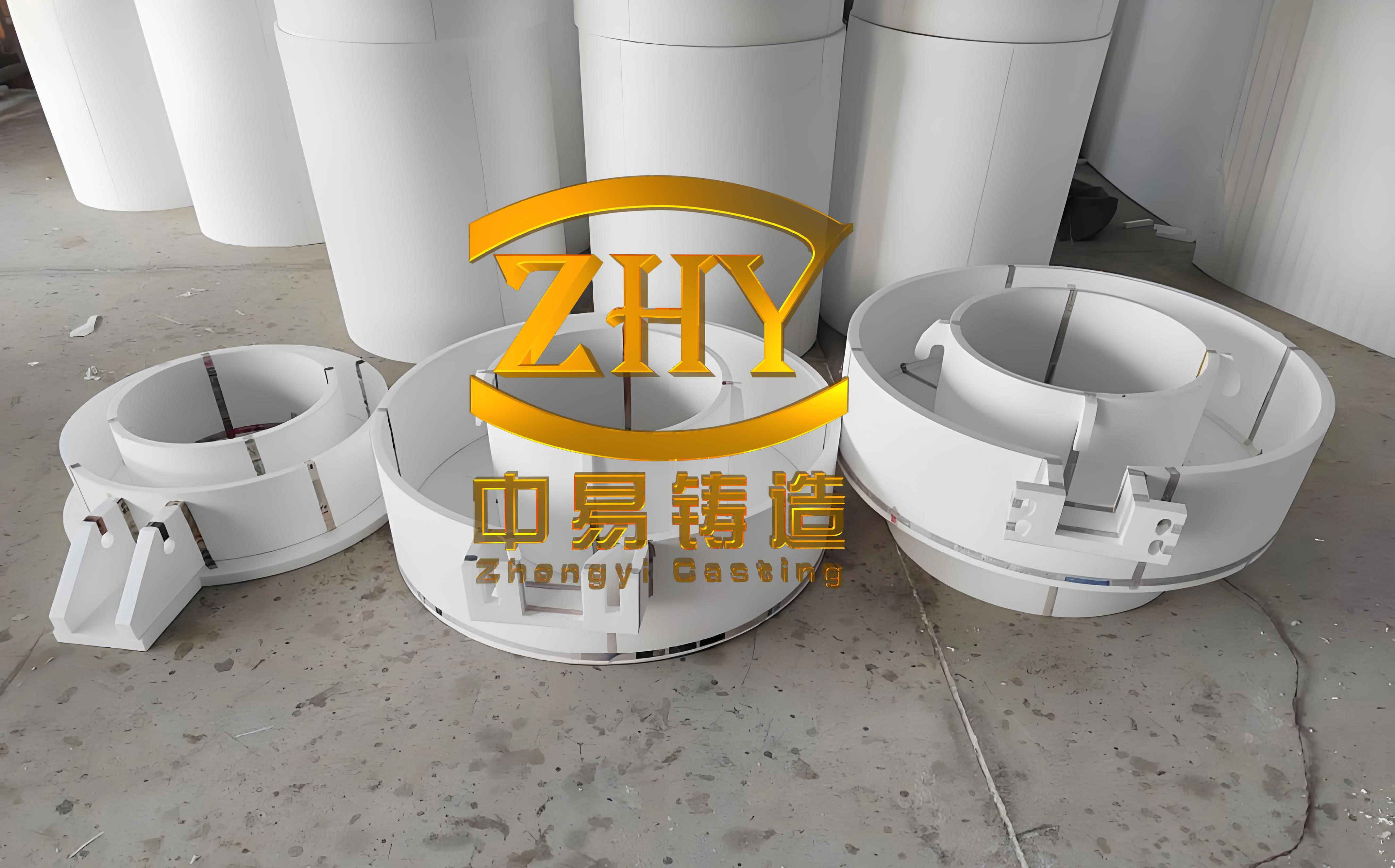
To evaluate and optimize the SLS pattern for precision investment casting, a systematic study on build orientation and post-processing was conducted. Mechanical test specimens were printed in three primary orientations relative to the build platform: flat (XY-plane major faces), on-edge (side), and upright (Z-axis aligned). The key printing parameters are summarized below.
| Parameter | Value |
|---|---|
| Laser Power | 40 W |
| Layer Thickness | 0.15 mm |
| Scan Speed | 3000 mm/s |
| Material | Polystyrene (PS) Powder |
A critical post-processing step for SLS patterns in precision investment casting is wax infiltration. The porous sintered structure is dipped in molten semi-refined paraffin wax (≈72°C) until bubbling ceases, filling the internal voids. The mechanical properties of specimens, both untreated and wax-infiltrated, were tested. The results clearly demonstrate the anisotropic nature of SLS parts and the significant benefit of wax infiltration.
| Sample Condition | Build Orientation | Flexural Strength (MPa) | Impact Strength (kJ/m²) |
|---|---|---|---|
| As-Printed | Flat | 3.9 | 0.79 |
| On-Edge | 2.7 | 1.23 | |
| Upright | 1.6 | 0.54 | |
| Wax-Infiltrated | Flat | 8.4 (+115%) | 1.09 (+38%) |
| On-Edge | 5.2 (+93%) | 1.61 (+31%) | |
| Upright | 2.4 (+50%) | 0.73 (+35%) |
The anisotropy can be explained by the layer-wise nature of SLS. When force is applied perpendicular to the print layers (Flat orientation), it acts on the well-sintered faces of the particles within a layer. When force is applied parallel to the layers (On-Edge and Upright), it acts on the inter-layer bonds, which are typically weaker. The upright orientation, having the smallest cross-sectional area of inter-layer bonds, shows the lowest strength. Wax infiltration dramatically improves strength by filling pores and acting as a binder, with the degree of improvement related to the initial porosity and failure mode. The effectiveness of wax filling can be quantified. The density of an as-printed cubic specimen was measured at approximately 0.416 g/cm³. Given the bulk PS density of 1.05 g/cm³, the initial porosity $n$ is calculated as:
$$ n = 1 – \frac{\rho_{\text{as-printed}}}{\rho_{\text{bulk}}} = 1 – \frac{0.416}{1.05} \approx 0.6038 \text{ or } 60.38\% $$
After wax infiltration, the density $\rho_{\text{infiltrated}}$ increased to 0.921 g/cm³. Using the density of wax $\rho_{\text{wax}} \approx 0.9$ g/cm³, the wax filling ratio $D$ within the available pore space is:
$$ D = \frac{\rho_{\text{infiltrated}} – \rho_{\text{as-printed}}}{n \times \rho_{\text{wax}}} \times 100\% = \frac{0.921 – 0.416}{0.6038 \times 0.9} \times 100\% \approx 92.93\% $$
This high filling ratio directly translates to the observed mechanical enhancement, making the pattern robust enough for handling during mold making. For the impeller pattern, the upright orientation was selected for the thin, complex blades to align the stronger sintered layer planes with the primary stress direction during mold slurry pouring. After SLS printing and wax infiltration, a high-quality pattern with an average surface roughness (Ra) of 2.3 µm was achieved, suitable for high-resolution precision investment casting.
The next phase involves designing the precision investment casting process. The impeller, made from ZL105A aluminum alloy, features a thick hub, a thick shroud, and thin, curved blades connecting them—a classic geometry prone to shrinkage in the thick sections if not properly fed. A top-gating system with a sprue, horizontal runner, and multiple ingates was designed. The ingate cross-sectional area $A_g$ is a critical parameter, often sized based on the choke principle to control fill time and minimize turbulence. A simplified estimation can be derived from Bernoulli’s equation and the continuity equation:
$$ A_g = \frac{V_c}{t_f \cdot v_g} $$
$$ v_g = \mu \sqrt{2 g H_p} $$
Where $V_c$ is the cavity volume, $t_f$ is the desired fill time, $v_g$ is the theoretical velocity at the ingate, $\mu$ is a friction factor (typically 0.3-0.6 for ceramic systems), $g$ is gravity, and $H_p$ is the effective metallostatic head. For this impeller, four ingates (two on the shroud top, two on the hub side) with a cross-section of 14 mm x 11 mm each were initially calculated. Furthermore, to enforce directional solidification from the thin blades towards the heavy hub and finally to the feeder, steel chill blocks were placed at strategic locations on the hub. The solidification time $t_s$ for a section can be approximated by Chvorinov’s rule:
$$ t_s = B \left( \frac{V}{A} \right)^n $$
Where $B$ is the mold constant, $V$ is volume, $A$ is surface area, and $n$ is an exponent (often ~2). The chills increase the local $A$, reducing $t_s$ for the hub and establishing the desired thermal gradient.
To validate this precision investment casting design, numerical simulation using ProCAST was performed. The process parameters for the simulation are listed below.
| Simulation Parameter | Value |
|---|---|
| Pouring Temperature | 680 °C |
| Mold Initial Temperature | 250 °C |
| Pouring Rate | 0.358 kg/s |
| Interface Heat Transfer Coefficient | 200 W/(m²·K) |
The filling simulation showed a sequential and relatively tranquil fill, with metal first entering through the lower hub ingates before the upper shroud ingates became active, minimizing free-fall and turbulence. The solidification simulation confirmed the efficacy of the chills. The thermal analysis showed that the thin blades and chilled hub began solidifying first, creating a temperature gradient that pushed the final solidifying liquid metal towards the top feeder (sprue). The Niyama criterion-based shrinkage prediction indicated that porosity was successfully isolated to the feeder, confirming a sound casting design for the impeller itself.
The validated precision investment casting process was executed. The SLS-wax pattern was used to create a plaster mold. To further enhance casting quality by reducing gas entrapment and improving metal feeding, vacuum-assisted pouring followed by pressure solidification was employed. The mold was placed in a chamber, evacuated to 0.04 MPa, and the metal was poured. Immediately after pouring, pressure was increased to 0.6 MPa, forcing dissolved gases into solution and improving interdendritic feeding. The resulting aluminum impeller casting was visually sound and dimensionally accurate.
To meet the required mechanical specifications (HB 962-2001), the as-cast impeller underwent T5 heat treatment, which consists of a solution heat treatment followed by artificial aging. Tensile and hardness tests were conducted on samples from the castings in both the as-cast and T5 conditions.
| Condition | Tensile Strength (MPa) | Brinell Hardness (HB) | Specification (HB 962-2001) |
|---|---|---|---|
| As-Cast | 184 | 57 | N/A |
| T5 Treated | 330 | 109 | ≥280 MPa, ≥80 HB |
The T5 treatment resulted in a remarkable 79% increase in tensile strength and a 91% increase in hardness, exceeding the specification requirements. Microstructural analysis reveals the reason for this improvement. The as-cast ZL105A microstructure consists of α-Al dendrites, a network of coarse, plate-like eutectic silicon, and intermetallic phases like Al₂Cu. During solution treatment, several key transformations occur: 1) The brittle, plate-like eutectic silicon undergoes spheroidization and fragmentation, significantly reducing its stress-concentration effect. The driving force for this morphological change is the reduction of interfacial energy, which can be related to the curvature $\kappa$ and the change in chemical potential $\Delta \mu$:
$$ \Delta \mu = \gamma \Omega \kappa $$
where $\gamma$ is the interfacial energy and $\Omega$ is the atomic volume. 2) Soluble secondary phases like Al₂Cu dissolve into the α-Al matrix, creating a supersaturated solid solution. Subsequent artificial aging promotes the controlled precipitation of fine, coherent or semi-coherent strengthening phases (e.g., Guinier-Preston zones, θ”) from this supersaturated matrix. The strengthening increment $\Delta \sigma$ from such precipitates can be described by the Orowan bypassing mechanism:
$$ \Delta \sigma \approx \frac{G b}{L} $$
where $G$ is the shear modulus, $b$ is the Burgers vector, and $L$ is the inter-precipitate spacing. The combination of a refined, homogenized silicon phase and a precipitation-strengthened α-Al matrix is responsible for the superior mechanical properties achieved after the T5 treatment.
In conclusion, this work successfully demonstrates a robust and efficient pathway for manufacturing complex, high-integrity components by integrating SLS-based pattern fabrication with advanced precision investment casting. Key findings include: 1) The mechanical performance of SLS patterns is anisotropic and significantly enhanced by wax infiltration, with performance dictated by whether the stress plane aligns with the sintered layer plane. 2) Process simulation is an indispensable tool for optimizing the gating and feeding system in precision investment casting, ensuring sound solidification. 3) Vacuum-pressure casting further augments the quality achievable with this hybrid process. 4) Post-casting T5 heat treatment fundamentally alters the microstructure, transforming the brittle as-cast structure into a high-strength material via eutectic silicon spheroidization and age-hardening precipitation. This integrated approach from digital model to heat-treated part offers a powerful solution for rapid prototyping and low-volume production of demanding geometries like impellers, showcasing the synergy between additive manufacturing and traditional metal casting in the realm of precision investment casting.