
In my experience with aluminum alloy die casting, the issue of porosity in casting is a persistent challenge that affects product quality and manufacturing efficiency. Porosity in casting arises primarily from gases trapped during the rapid filling process, leading to voids that compromise mechanical properties and surface integrity. This problem is exacerbated in thick-walled components, where gas entrapment is more likely, and subsequent machining exposes these defects. Through extensive trials and innovations, I have developed and implemented a method involving the use of inserts to mitigate porosity in casting, significantly improving yield and performance. This article delves into the technical details, supported by tables and formulas, to elaborate on this solution.
Porosity in casting originates from multiple sources: gases in the mold cavity, the shot sleeve, the molten alloy itself, and from lubricants or coatings. During the high-speed injection phase, these gases cannot be fully evacuated, becoming entrapped within the metal. The manifestation of porosity in casting varies with wall thickness; in thin sections, pores may be microscopic and concentrated near gates, while in thick sections, they tend to be macroscopic and centrally located, visible after machining removes the surface chill layer. The fundamental equation for gas behavior can be described by the ideal gas law: $$PV = nRT$$, where $P$ is pressure, $V$ is volume, $n$ is the amount of gas, $R$ is the gas constant, and $T$ is temperature. In die casting, rapid pressure changes and temperature gradients exacerbate gas entrapment, leading to porosity in casting.
The severity of porosity in casting is quantified by porosity fraction $\phi$, defined as: $$\phi = \frac{V_p}{V_t}$$, where $V_p$ is the pore volume and $V_t$ is the total casting volume. For thick-walled parts, $\phi$ can exceed 5%, causing significant quality issues. Table 1 summarizes common sources and effects of porosity in casting:
| Source of Gas | Contribution to Porosity | Typical Mitigation Methods |
|---|---|---|
| Mold Cavity Air | High in complex geometries | Vacuum systems, venting |
| Shot Sleeve Gases | Moderate, depends on filling speed | Optimized plunger velocity |
| Molten Alloy Gases | Low if degassed properly | Degassing treatments |
| Coating/Lubricant Vapor | Variable, can be significant | Low-gas coatings |
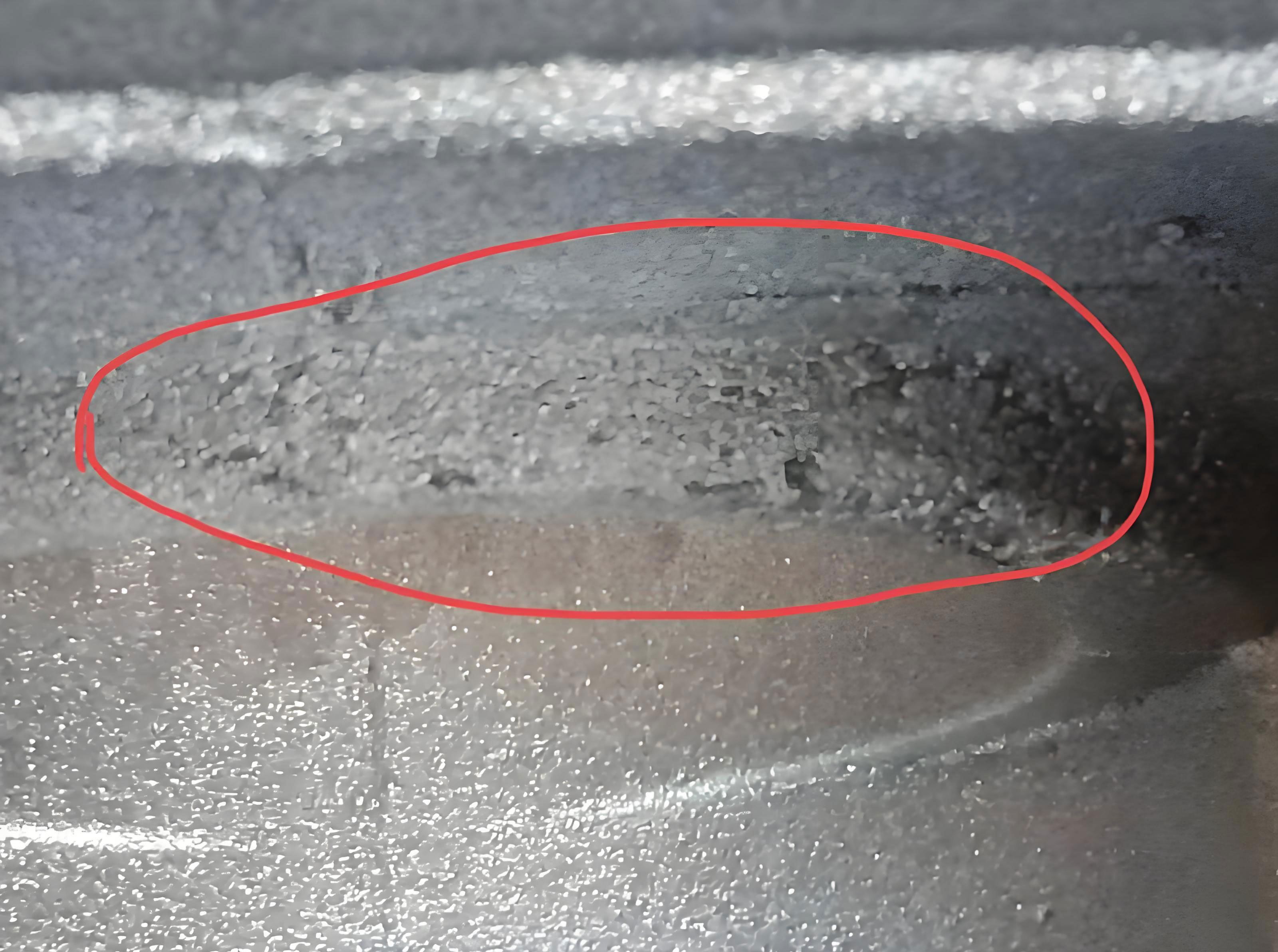
In a specific case, I encountered a thick-walled rotary component where porosity in casting was severe. Machining depths exceeded the chill layer, exposing large pores that led to excessive wear in application, halting production. Traditional approaches—adjusting process parameters like injection pressure, temperature, and venting—reduced porosity but not sufficiently. The inherent geometry made gas evacuation nearly impossible, highlighting the limitations of conventional methods for controlling porosity in casting.
To address this, I proposed incorporating an insert into the die casting mold. The insert, a pre-cast aluminum ring with a thickness of 10 mm, was placed in the mold cavity before injection. This transformed the thick-walled section into two thin-walled sections, each 10 mm thick, altering the gas entrapment dynamics. The insert’s lower temperature relative to the mold promoted a thicker chill layer, encapsulating pores within thinner walls. After machining to remove the insert, the remaining walls retained a dense chill layer with minimal porosity in casting. The effectiveness of this approach can be modeled using heat transfer equations. The temperature gradient $\nabla T$ near the insert influences solidification rate: $$\frac{\partial T}{\partial t} = \alpha \nabla^2 T$$, where $\alpha$ is thermal diffusivity. Faster cooling reduces gas solubility, minimizing porosity in casting.
The design of the insert is critical. It must be smaller than the machined area to ensure complete removal, avoiding residual material that could affect dimensions. Dimensional accuracy is paramount; any deformation or excess material (flash) can lead to defects. The insert must be securely positioned in the mold cavity to prevent displacement during clamping, and centered to avoid asymmetrical machining. Table 2 outlines key design parameters for inserts to combat porosity in casting:
| Parameter | Requirement | Rationale |
|---|---|---|
| Insert Thickness | 10-15 mm (case-specific) | Creates thin walls for reduced porosity |
| Material | Similar alloy to casting | Prevents thermal stress and bonding issues |
| Positioning Tolerance | ±0.1 mm | Ensures machining accuracy |
| Surface Finish | Smooth, no defects | Avoids gas traps and improves chill layer |
The process trial involved several steps. First, I designed and produced the insert using a separate die casting mold, ensuring it met specifications. Then, I integrated it into the main mold, which was designed with a vertical parting line along the axis to avoid visible parting lines on the exterior surface. This simplified mold construction, reduced costs, and minimized external machining. However, this design initially resulted in a thick-walled part with an unmachinable slot, exacerbating porosity in casting. The insert solution resolved this by allowing the slot to be formed via machining after casting, with the insert acting as a placeholder.
During injection, the presence of the insert alters the flow dynamics. The Reynolds number $Re$ governs flow turbulence: $$Re = \frac{\rho v L}{\mu}$$, where $\rho$ is density, $v$ is velocity, $L$ is characteristic length, and $\mu$ is viscosity. By reducing $L$ (wall thickness), turbulence decreases, lowering gas entrainment and thus porosity in casting. Experimental data showed a reduction in pore size from macroscopic to microscopic levels, with porosity fraction $\phi$ dropping from over 5% to below 1%. The yield strength $\sigma_y$ of the casting can be related to porosity by empirical formulas: $$\sigma_y = \sigma_0 (1 – k\phi)$$, where $\sigma_0$ is the strength of pore-free material and $k$ is a constant (typically 2-4). This underscores how reducing porosity in casting enhances mechanical properties.
Key considerations for implementing inserts include thermal management. The insert’s initial temperature $T_i$ versus mold temperature $T_m$ affects solidification. The heat flux $q$ across the interface is: $$q = h (T_m – T_i)$$, where $h$ is the heat transfer coefficient. A lower $T_i$ promotes rapid chilling, but too low can cause thermal shock. I optimized this by preheating inserts to 150°C, balancing chill layer formation and mold life. Additionally, the insert must be free of oxides or contaminants to prevent gas generation during casting, which would counteract efforts to reduce porosity in casting.
The economic impact is substantial. By adopting inserts, scrap due to porosity in casting was reduced from 30% to less than 5%, achieving a qualification rate over 95%. This translated to lower costs and faster production cycles. The table below compares traditional vs. insert-based methods for managing porosity in casting:
| Aspect | Traditional Method | Insert Method |
|---|---|---|
| Porosity Reduction | Moderate (10-20% improvement) | Significant (50-80% improvement) |
| Machining Allowance | High, due to thick walls | Low, as walls are thin |
| Mold Complexity | High with side cores | Simplified with vertical parting |
| Production Cost | Elevated from scrap and machining | Reduced via higher yield |
In conclusion, the use of inserts is a potent strategy for mitigating porosity in casting, especially for thick-walled components requiring machining. By transforming thick sections into thin ones, inserts alter solidification patterns and gas entrapment, leading to a denser chill layer and smaller pores. This method not only addresses porosity in casting but also enhances dimensional accuracy and surface quality. Future work could involve simulating insert effects using computational fluid dynamics (CFD) models, with governing equations like the Navier-Stokes equations: $$\rho \left( \frac{\partial \mathbf{v}}{\partial t} + \mathbf{v} \cdot \nabla \mathbf{v} \right) = -\nabla p + \mu \nabla^2 \mathbf{v} + \mathbf{f}$$, where $\mathbf{v}$ is velocity, $p$ is pressure, and $\mathbf{f}$ is body force. Such simulations could further optimize insert design for minimal porosity in casting. Ultimately, this approach has proven effective in real-world applications, delivering robust solutions to the enduring challenge of porosity in casting.